Comparing lengths Extra Challenge Worksheets for Ages 6-8
6 filtered results
-
From - To
Enhance your child's understanding of measurement with our "Comparing Lengths Extra Challenge Worksheets for Ages 6-8." Perfectly designed to stretch their skills in comparing and contrasting lengths, these engaging worksheets introduce fun and interactive exercises. Children will encounter various objects and scenarios, encouraging critical thinking and precise measurement application. From finding the shortest pencil to identifying the longest ribbon, our worksheets provide dynamic challenges to boost learning engagement. These printables are ideal for helping your child grasp essential measurement concepts, improve their math confidence, and enjoy the learning journey. Download now and watch their skills soar!
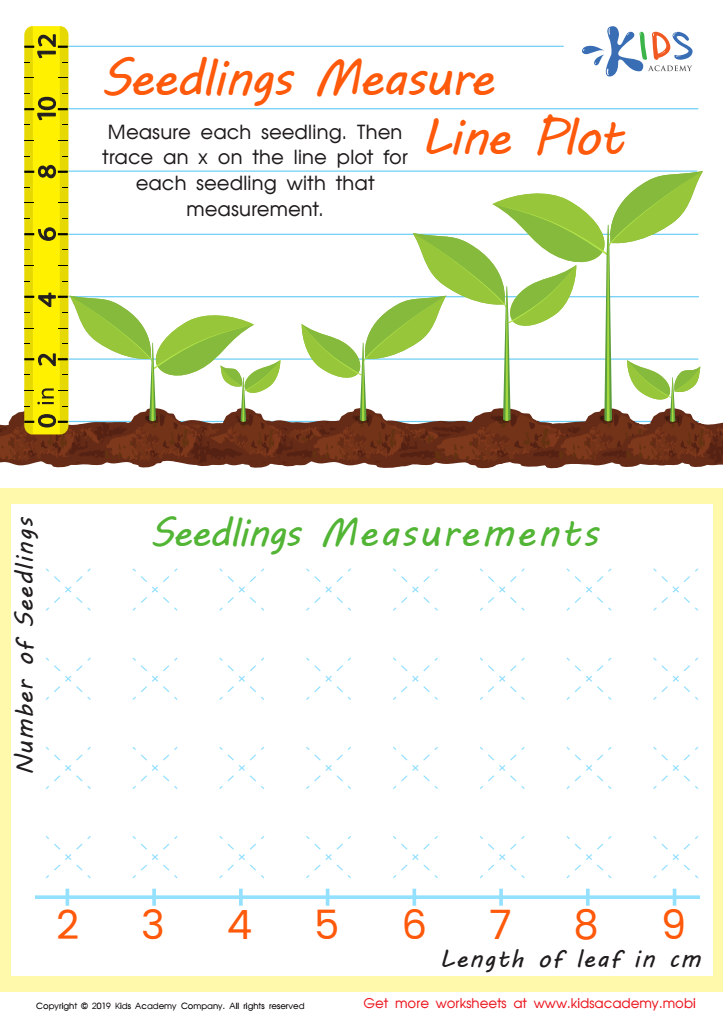
Seedling Measure Line Plot Worksheet
 Assign to My Students
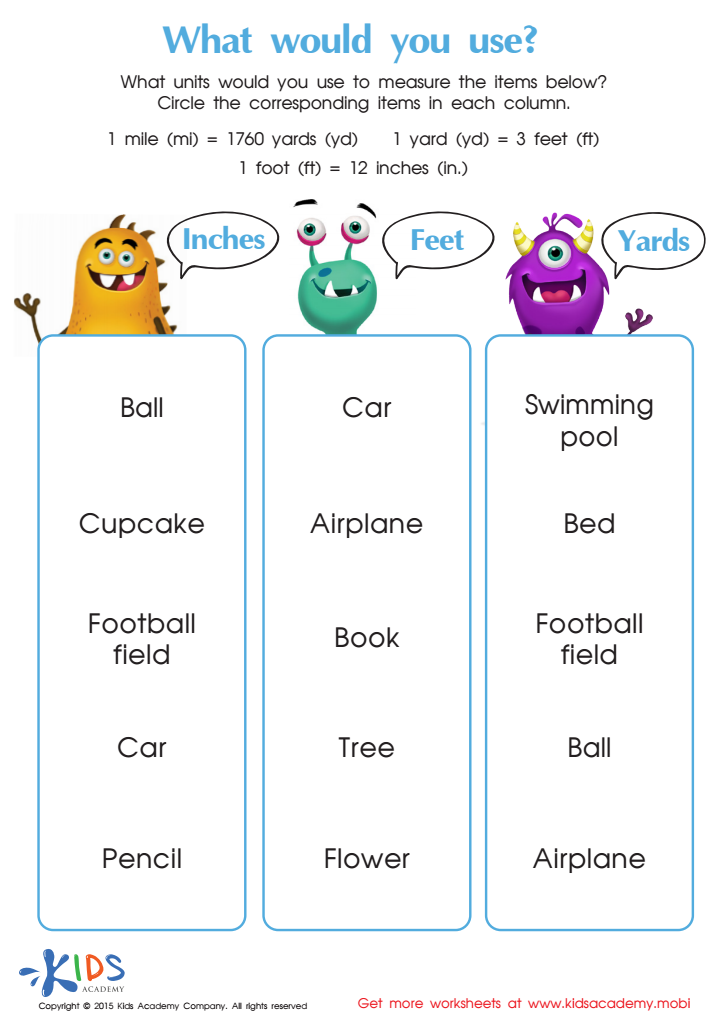
Learning about measuring objects in inches, feet and yards Worksheet
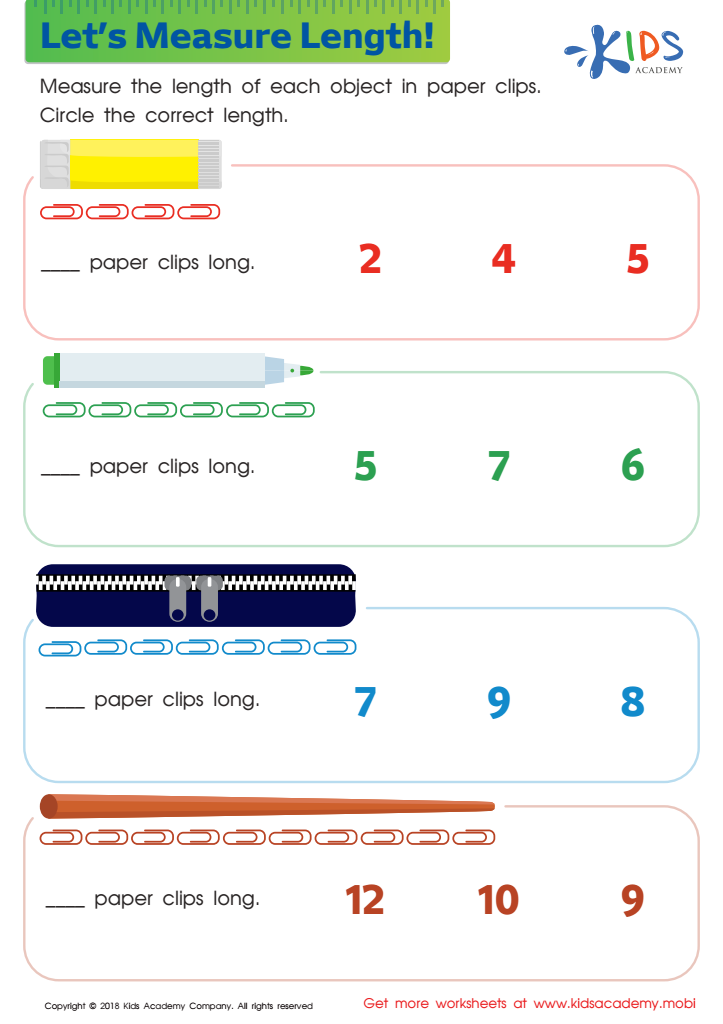
Lets Measure Length Worksheet
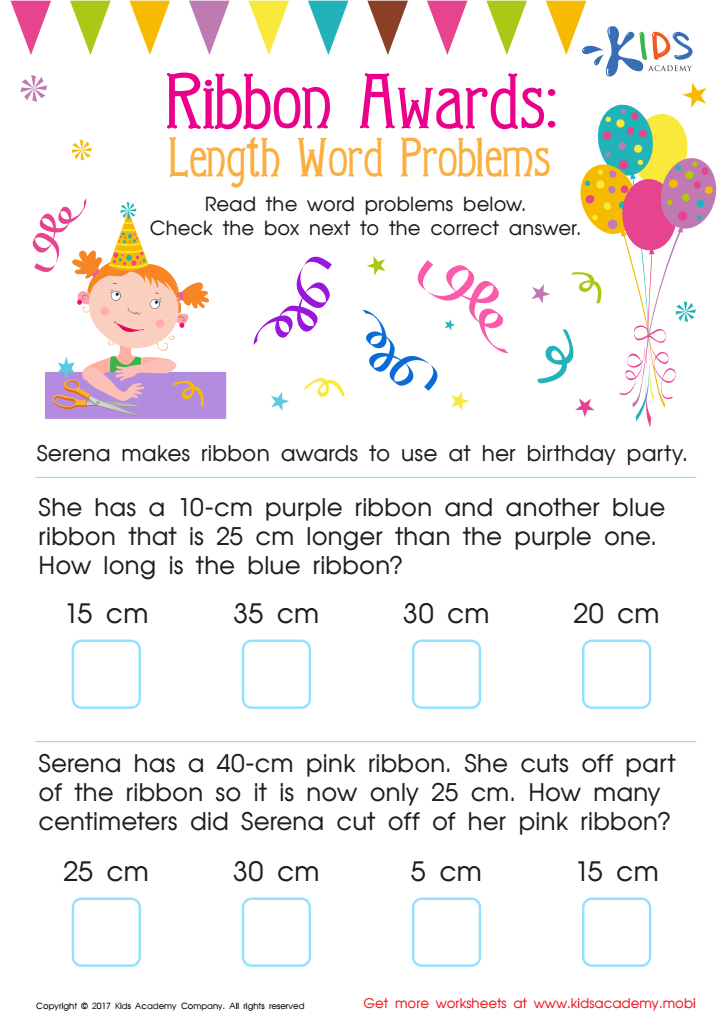
Length Word Problems Worksheet
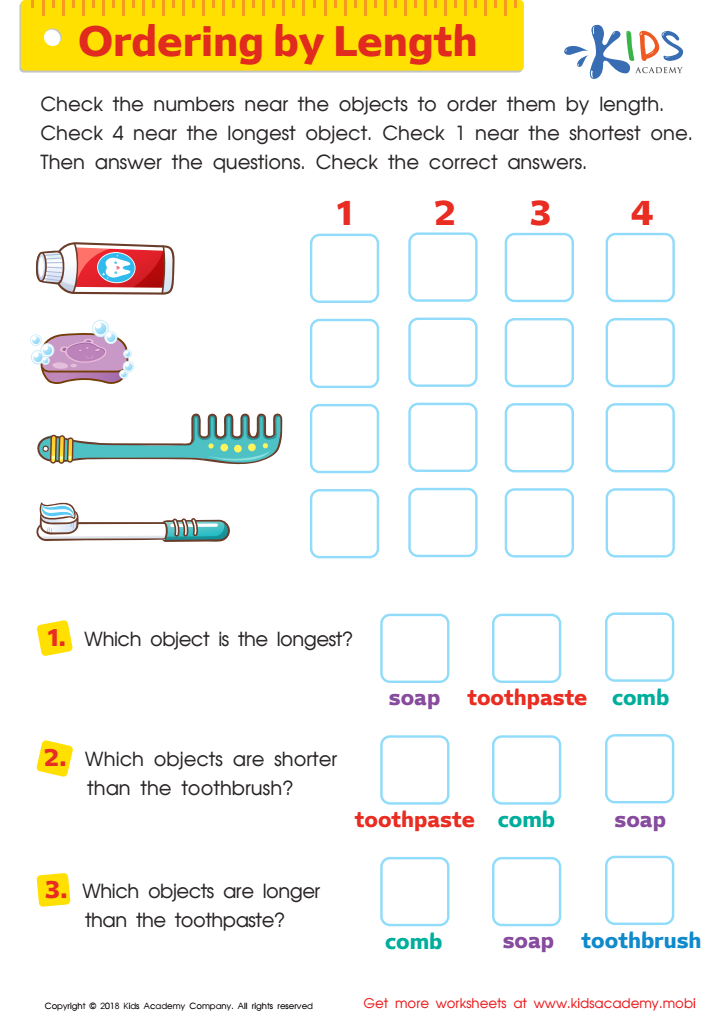
Ordering by Length Worksheet
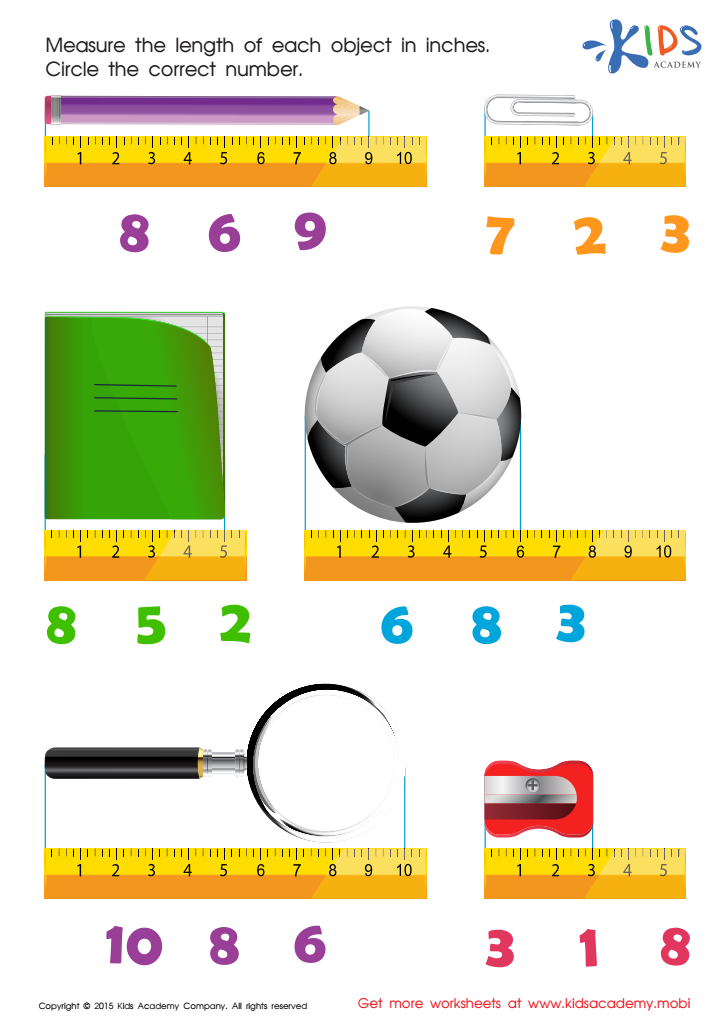
Learning measuring objects in inches Worksheet


.jpg)





Children aged 6-8 are in a critical developmental stage where fundamental mathematical concepts take root. Engaging them in comparing lengths through extra challenges serves several beneficial purposes.
First, it enhances their understanding of measurement, a core aspect of everyday life. Mastering the ability to compare lengths helps children grasp relationships between different objects, providing a practical foundation for more complex math skills.
Second, these challenges bolster cognitive development. They require skills such as observation, critical thinking, and problem-solving. By comparing lengths, children engage in hands-on, experiential learning that stimulates their brains, fostering neuronal connections that are vital for future learning.
Third, introducing extra challenges cultivates a growth mindset. When children face and overcome slightly difficult tasks, they develop persistence and resilience. They learn that effort and strategies can overcome challenges, promoting a positive attitude toward learning and problem-solving.
Additionally, working on length comparison in small groups or pairs enhances social skills. They learn to communicate their thinking, listen to others, and collaborate on finding solutions—key skills beyond mathematics.
Therefore, parents and teachers should prioritize these activities to not only strengthen mathematical abilities but also support broad cognitive and social development. These experiences prepare children to tackle more complex mathematical concepts and life challenges with confidence and critical thinking.








