
Comparing sizes Extra Challenge Worksheets for Ages 6-8
6 filtered results
Difficulty Level
Grade
Age
-
From - To
Subject
Activity
Standards
Explore our "Comparing Sizes Extra Challenge Worksheets" designed for children aged 6-8! These engaging worksheets promote critical thinking and enhance math skills by challenging young learners to compare sizes in a fun and interactive way. Perfect for diverse learning environments, these worksheets feature vibrant illustrations and captivating exercises that make size comparison easy and enjoyable. Kids will practice their analytical skills while learning to identify bigger, smaller, taller, and shorter objects. Our resources support foundational math concepts, ensuring students build confidence as they master size comparisons. Download the worksheets today to give your child a fantastic learning experience!
Favorites
With answer key
Interactive
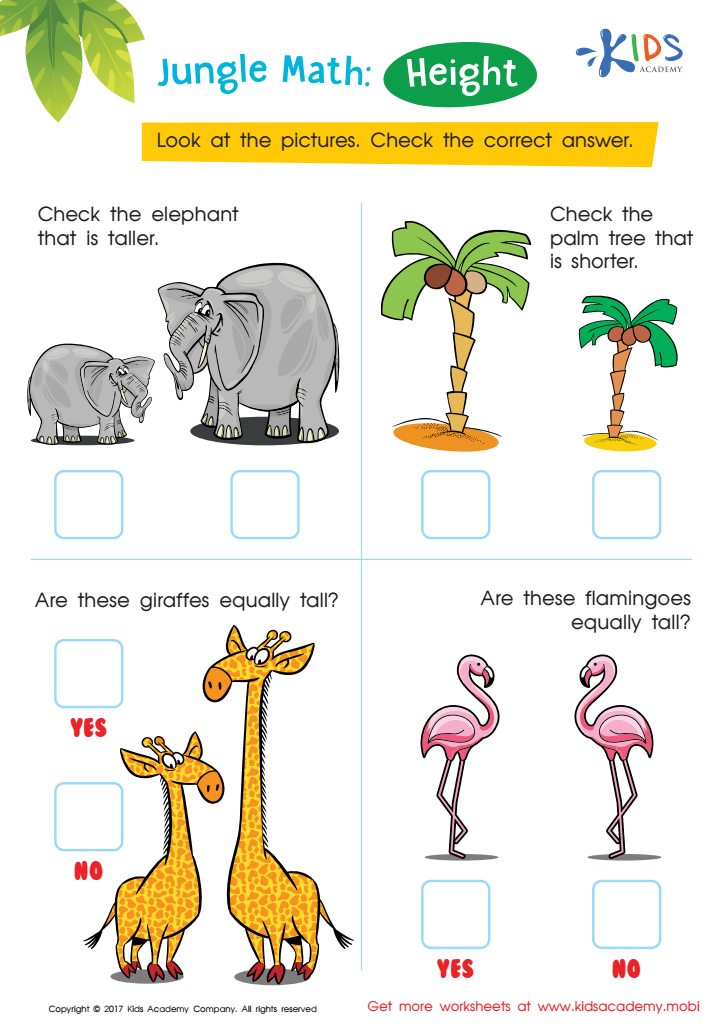
Which Is Taller Worksheet
Help your kindergartner learn about height with this fun worksheet! They'll love comparing zoo animals and deciding which are taller, shorter, or equal. It's a great way to practice math and have fun!
 Assign to My Students
Which Is Taller Worksheet
Worksheet
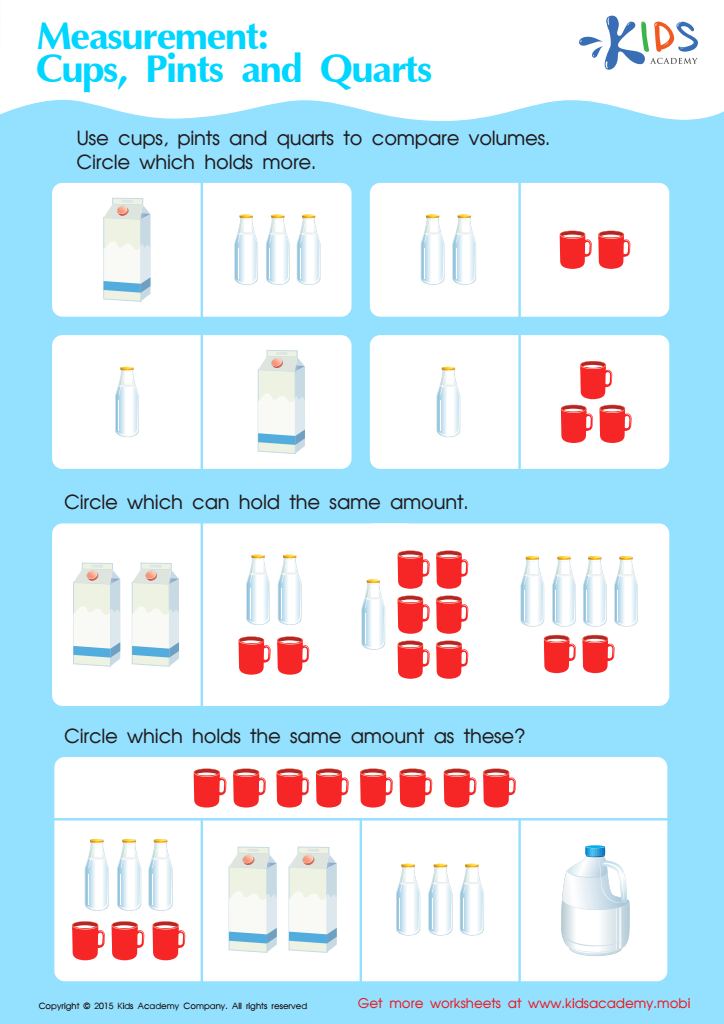
Measurement: Compare Volumes Worksheet
Compare volumes with Kids Academy and have fun! (80 words)
Practice measuring with Kids Academy and have fun! Compare volumes in pictures and circle which holds more. Keep learning with free math worksheets available on our website. Enjoy the process and have fun!
Measurement: Compare Volumes Worksheet
Worksheet
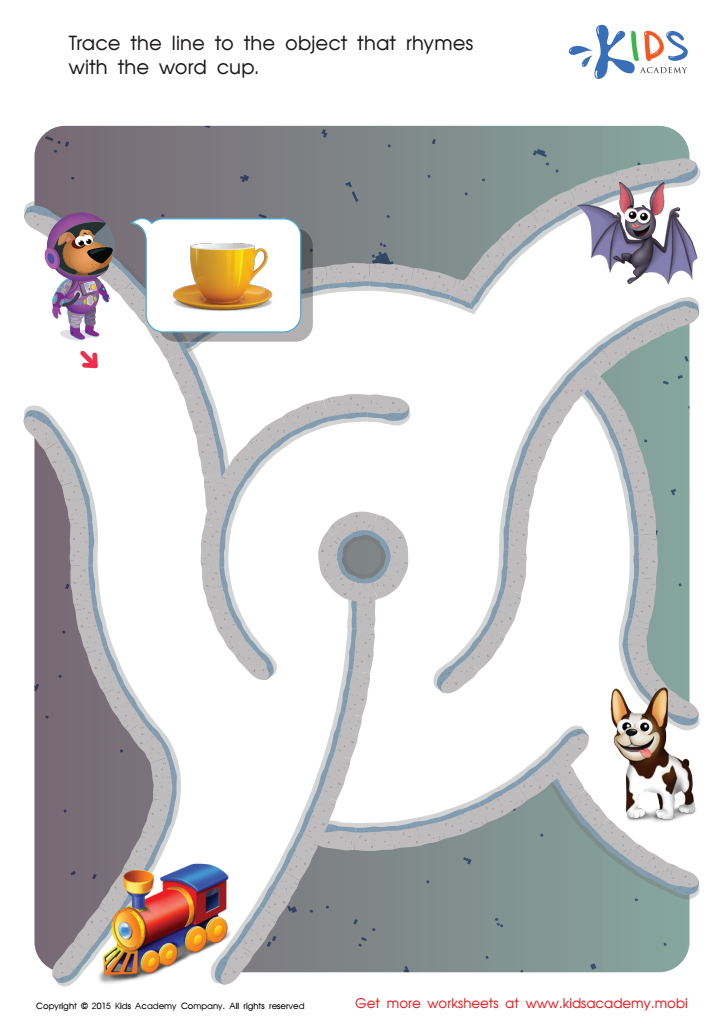
Cup Rhyming Words Worksheet
Kids Academy offers funny worksheets to help kids practice their vocabulary. Try the new one with the dog, matching objects to their rhyming words! Explore more activities and worksheets to learn English Language words and phrases.
Cup Rhyming Words Worksheet
Worksheet
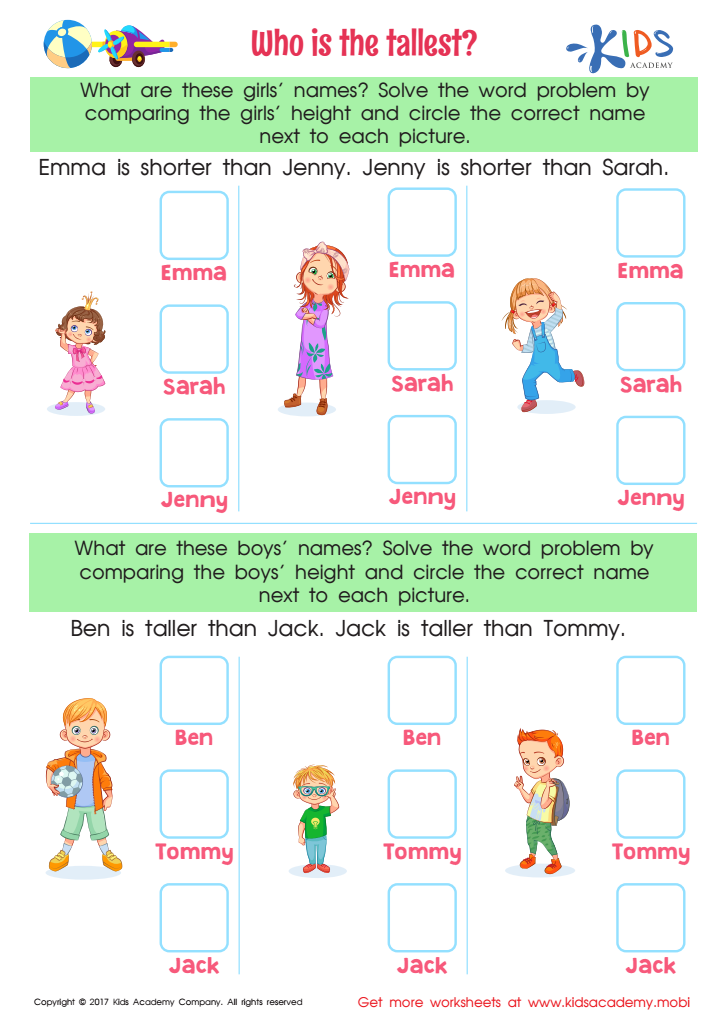
Who Tallest Printable
Help your child observe the kids in the worksheet and compare their heights to answer the question: Who is the Tallest? This is an excellent way for them to practice and better understand measurement concepts.
Who Tallest Printable
Worksheet
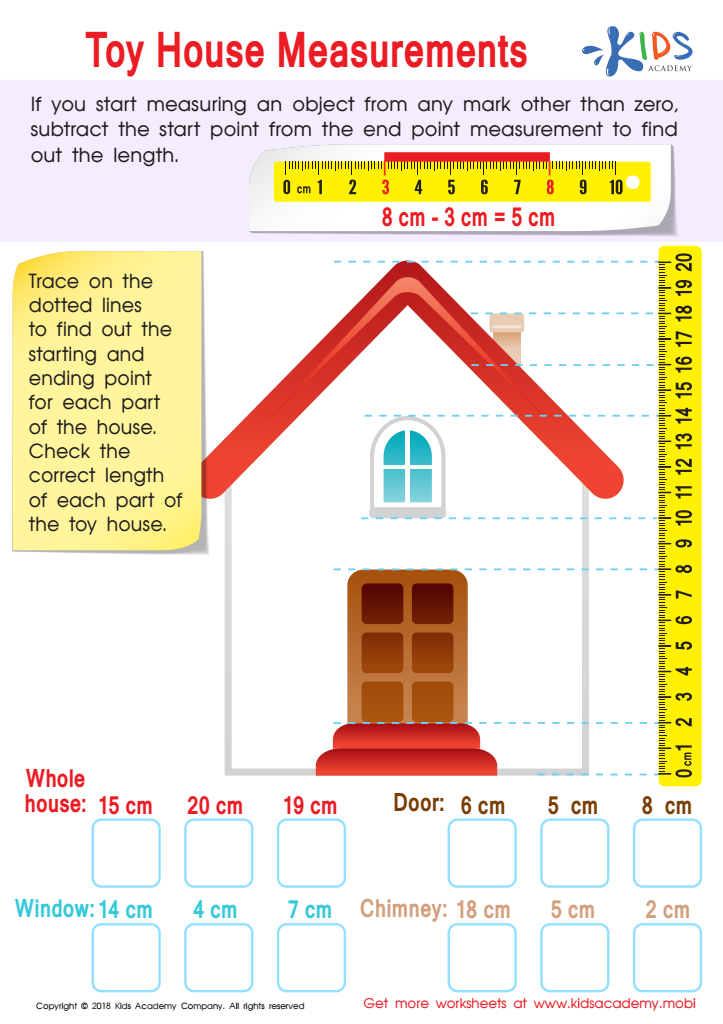
Toy House Measurements Worksheet
This worksheet requires math and measuring skills. When measuring an object from a non-zero starting point, subtract the start point from the end point to get the correct length. Kids must trace the dotted lines to get the right length for each part of the house.
Toy House Measurements Worksheet
Worksheet
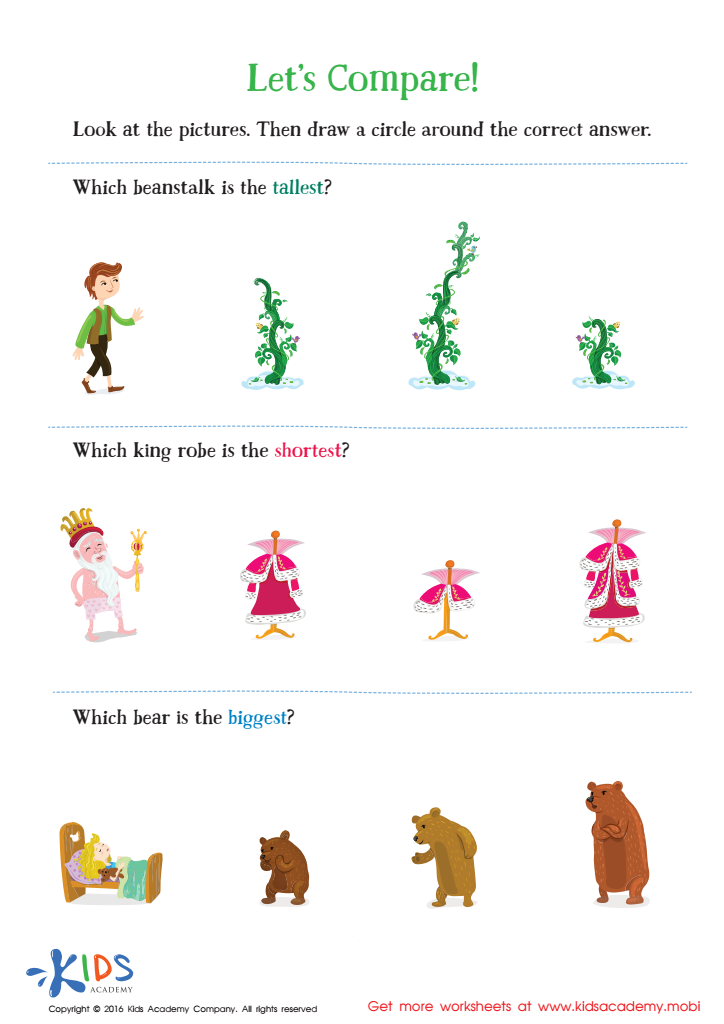
Fairy Tale Worksheet: Let's Compare
Preschoolers need to recognize different sizes of objects. This worksheet combines fun fairy tales with size practice, helping them read, problem solve, and sort through pictures. Your child will love the images and be eager to complete it. Enhance their learning by talking about the tales to build comprehension.
Fairy Tale Worksheet: Let's Compare
Worksheet
Join Kids Academy for Free
Who is primarily going to use this learning content?







Comparing sizes is a fundamental mathematical concept that significantly contributes to children's cognitive development, especially for those aged 6-8. Understanding size comparisons not only develops essential math skills but also fosters critical thinking and problem-solving abilities. At this age, children are naturally curious and eager to engage in hands-on activities, making comparisons a perfect avenue for experiential learning.
By focusing on this concept, parents and teachers help nurture spatial awareness and encourage children to make connections between numbers and the real world. Comparing sizes also lays the groundwork for more advanced mathematical operations, such as measurements, fractions, and geometry.
Additionally, participating in fun activities related to comparing sizes enhances children's social and communication skills, as they often work collaboratively, discussing their findings and reasoning. This cooperative learning builds confidence and encourages positive interactions.
Ultimately, by prioritizing size comparison exercises, parents and teachers help instill foundational skills that are critical for academic success and everyday life. Supporting children in this learning journey empowers them to think analytically and prepares them for future challenges in math and beyond.








