Math fact fluency Extra Challenge Worksheets for Ages 6-8
3 filtered results
-
From - To
Boost your child's math skills with our Math Fact Fluency Extra Challenge Worksheets for Ages 6-8. Designed for young learners, these printable worksheets focus on enhancing speed and accuracy in basic arithmetic operations, including addition, subtraction, multiplication, and division. Each worksheet introduces fun, engaging activities that challenge students while reinforcing essential math skills. With a variety of problems set at a higher difficulty, these worksheets are perfect for advanced young mathematicians looking to sharpen their fluency. Ideal for both classroom use and home practice, they make mastering math facts an enjoyable experience for your child.
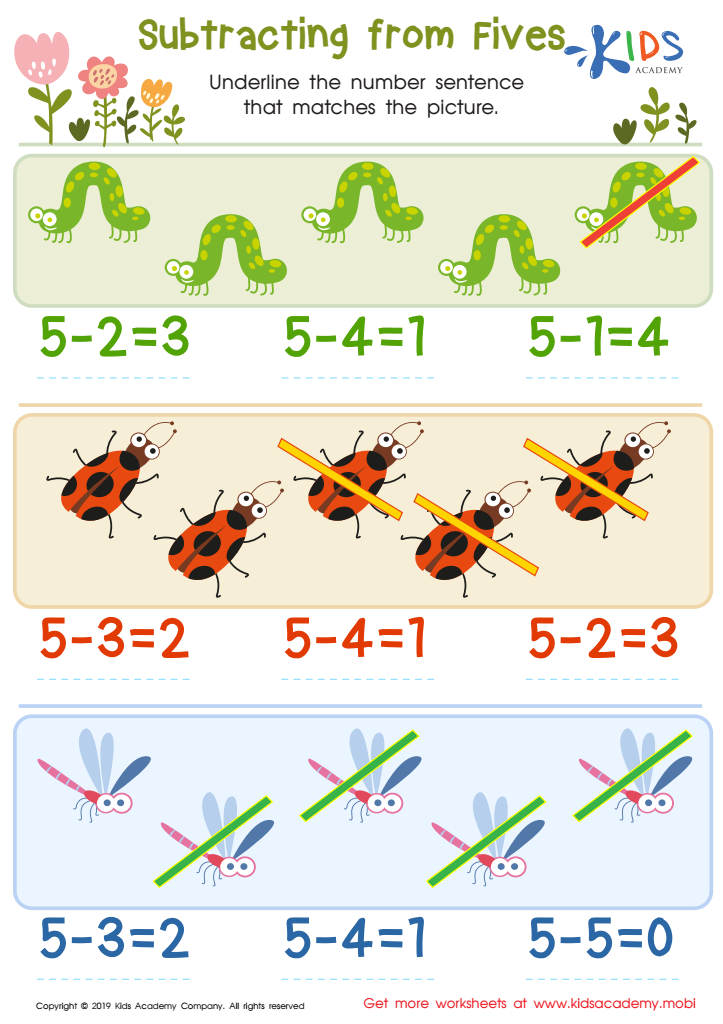
Subtracting From Fives Worksheet
 Assign to My Students
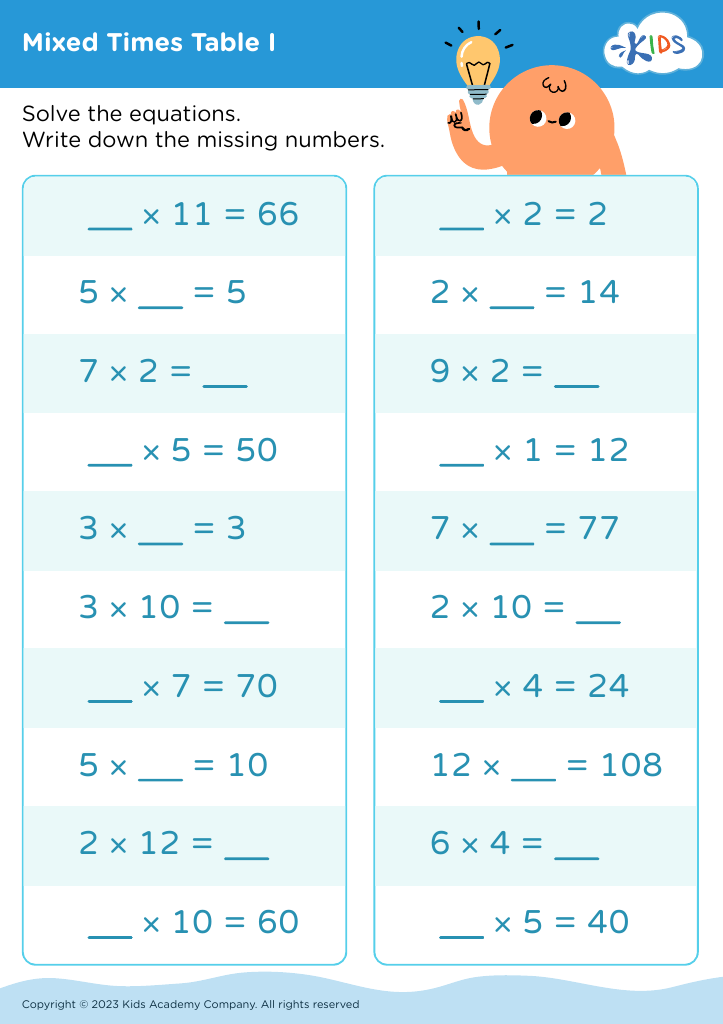
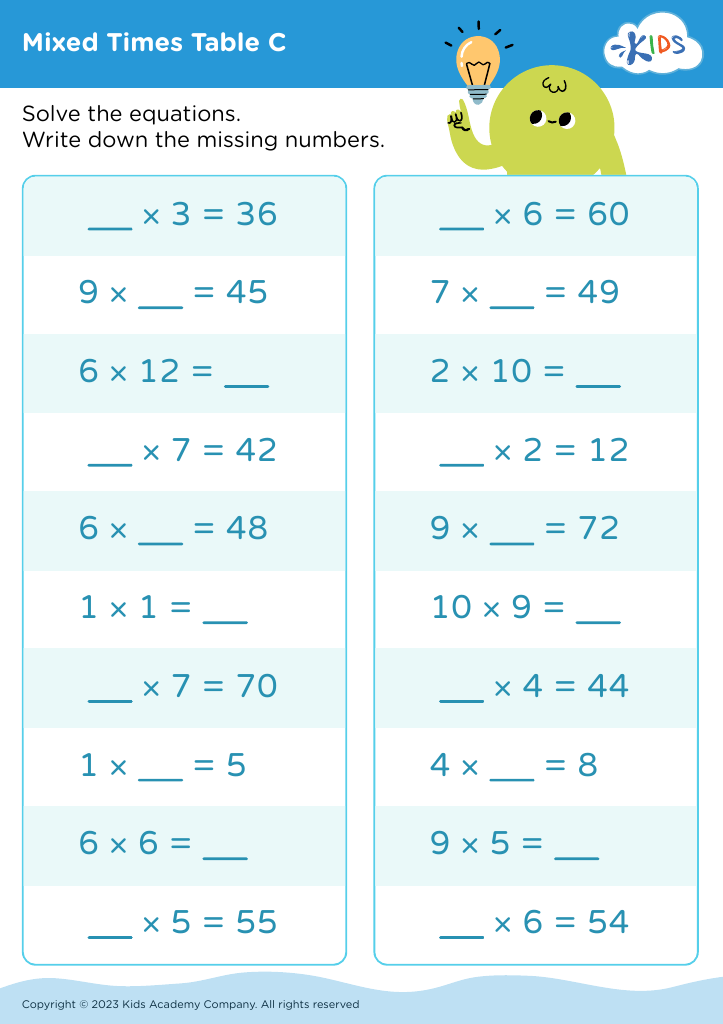








Math fact fluency is crucial for young learners, particularly those aged 6-8, as it forms the foundation for future mathematical concepts and problem-solving skills. Ensuring that children reach a level of automaticity with basic math facts such as addition, subtraction, multiplication, and division is critical at this age because it enables them to tackle more complex problems with confidence and ease. When these foundational skills are automatic, children can dedicate more cognitive resources to understanding higher-level math concepts rather than being bogged down by simple calculations.
For parents and teachers, this means there should be a proactive approach to instilling math fact fluency. Engaging extra challenges can make this process enjoyable and stimulating for young minds, increasing their motivation to practice regularly. Games, timed drills, or interactive apps can be valuable tools in enhancing fluency, making math practice part of a fun routine rather than a chore.
Moreover, solid math fact fluency can boost a child’s overall confidence and positive attitude towards math. Children who struggle with basic facts often find advanced math daunting and may develop a fixed mindset where they believe they are just not good at math. Early intervention with fun and challenging activities helps prevent this, fostering a growth mindset where children see mistakes as learning opportunities. Therefore, both parents and teachers play a critical role in ensuring that young learners develop strong, fluent foundations in mathematics.








