Mental math practice Extra Challenge Worksheets for Ages 6-8
3 filtered results
-
From - To
Enhance your child’s mathematical prowess with our "Mental Math Practice Extra Challenge Worksheets" designed specifically for ages 6-8. These engaging and educational worksheets from Kids Academy-perfectly balance fun and learning to develop critical thinking and problem-solving skills. Each sheet presents extra challenges to boost speed and accuracy in mental calculations. Ideal for early learners, these exercises cover various essential topics while keeping young minds motivated and confident. Foster a lifelong love for math with a blend of games, puzzles, and brainteasers that make mental math a thrilling adventure. Download now to empower your child’s mathematical journey!
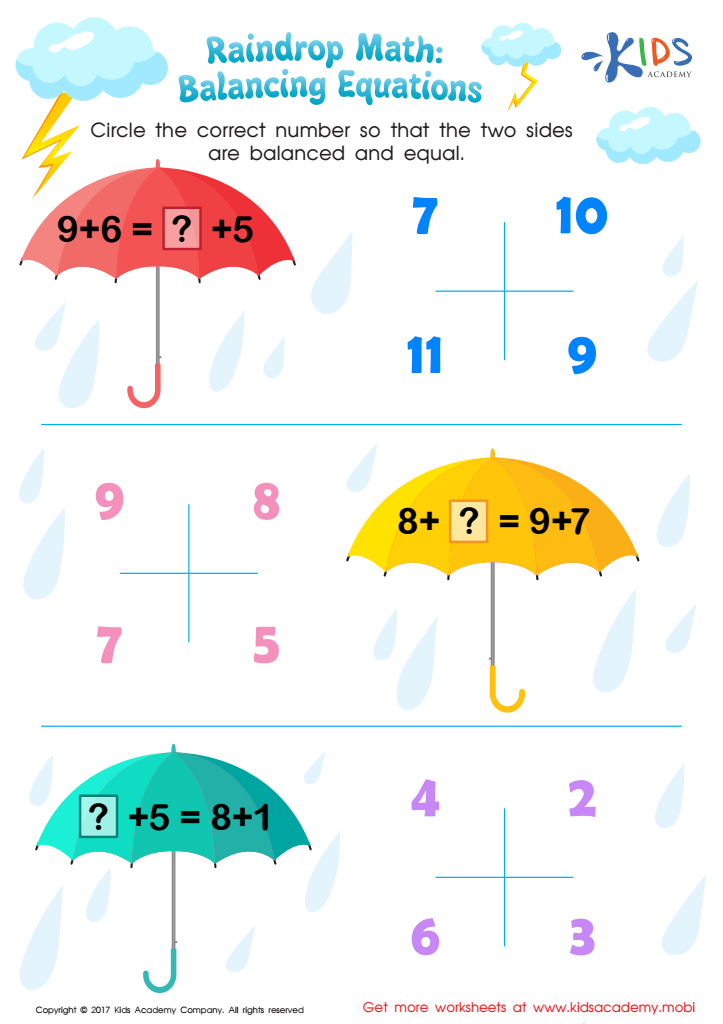
Raindrop Math Printable
 Assign to My Students
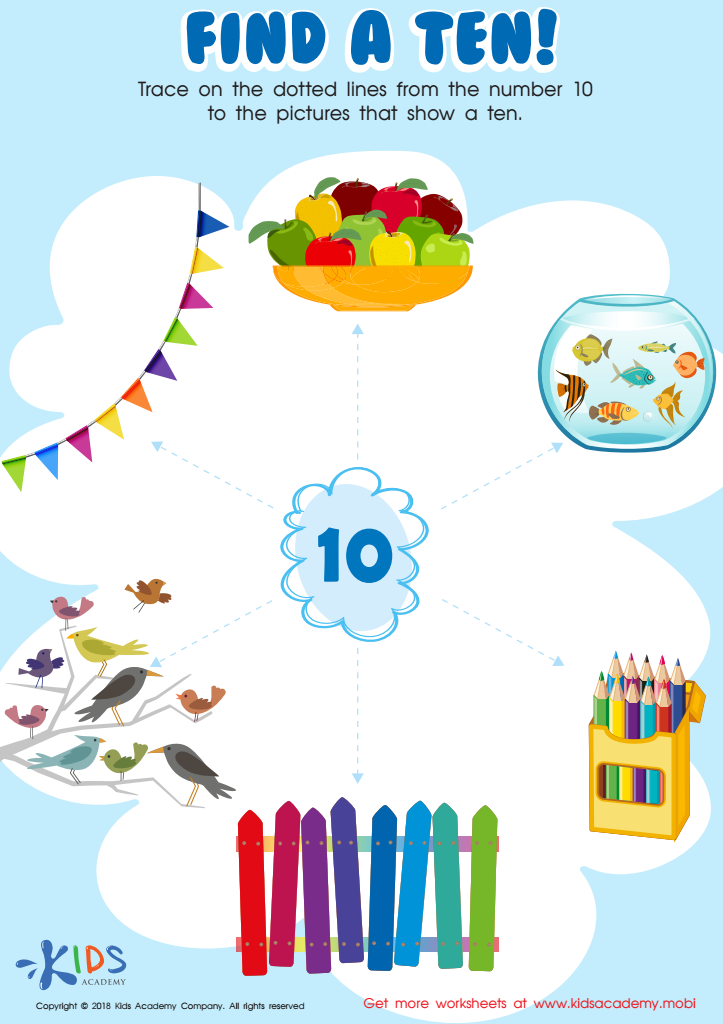
Kindergarten Math Worksheet: Find a Ten
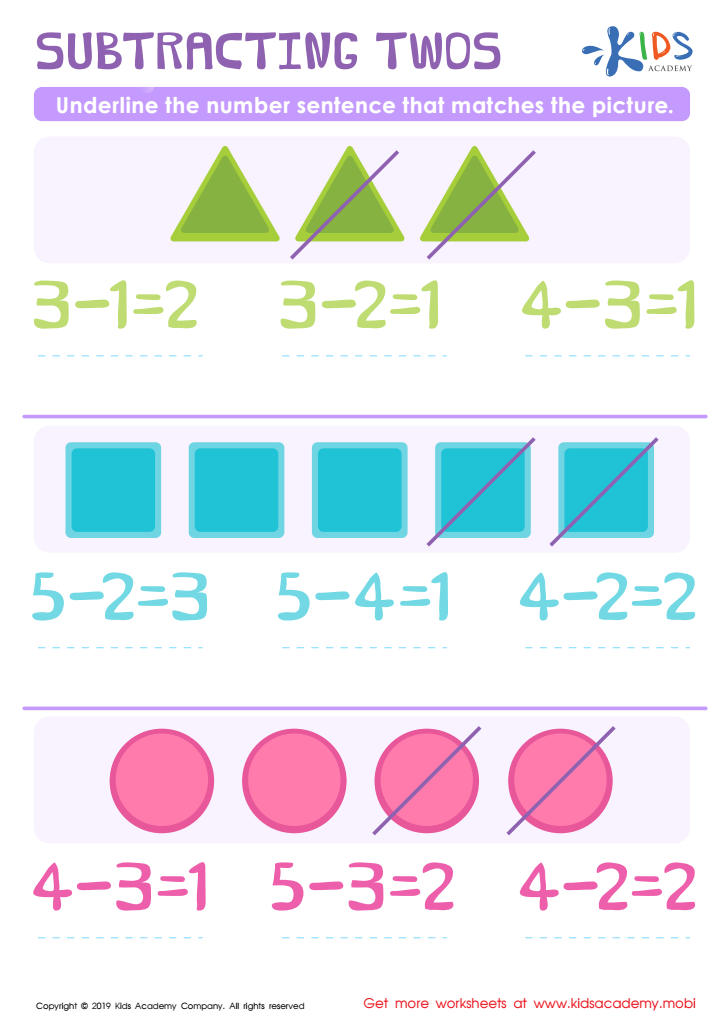
Subtracting Twos Worksheet








Mental math practice is essential for children aged 6-8 because it helps build a strong foundation for their future mathematical understanding and problem-solving abilities. At this formative stage, fostering mental math skills enhances number sense, which is the intuitive understanding of numbers and their relationships. This early competence allows children to progress to more complex mathematical concepts with confidence.
Parents and teachers should care about mental math because it encourages cognitive development. Mental math practice boosts memory, concentration, and logical thinking skills. These exercises also promote flexibility in thinking because children learn to approach problems in multiple ways, enhancing their creativity and adaptability in tackling various tasks.
Additionally, mental math practice can build a child's self-esteem and confidence in their academic abilities. When children can quickly solve problems in their heads, they often experience a sense of achievement that motivates them to engage more fully with math and other subjects.
Finally, incorporating extra mental math challenges can make learning engaging and fun. Games, puzzles, and interactive activities grab children's interest and make practicing math a more enjoyable experience. This positive attitude toward learning can be pivotal in shaping their lifelong attitudes toward education and problem-solving. In essence, investing in mental math practice for young learners prepares them for academic success and bolsters their overall intellectual growth.








