Time reading skills Extra Challenge Worksheets for Ages 6-8
5 filtered results
-
From - To
Enhance your child's understanding of time with our "Time Reading Skills Extra Challenge Worksheets" designed specifically for ages 6-8. These engaging worksheets provide diverse activities to help young learners master reading clocks and understanding time intervals. From analog to digital time, kids will develop essential skills through fun exercises that stimulate critical thinking and reinforce learning. Empower your child to gain confidence while tackling challenges that make time concepts relatable and enjoyable. Ideal for home or classroom use, these worksheets serve as a valuable resource for parents and teachers aimed at building foundational math abilities in a fun and interactive way.
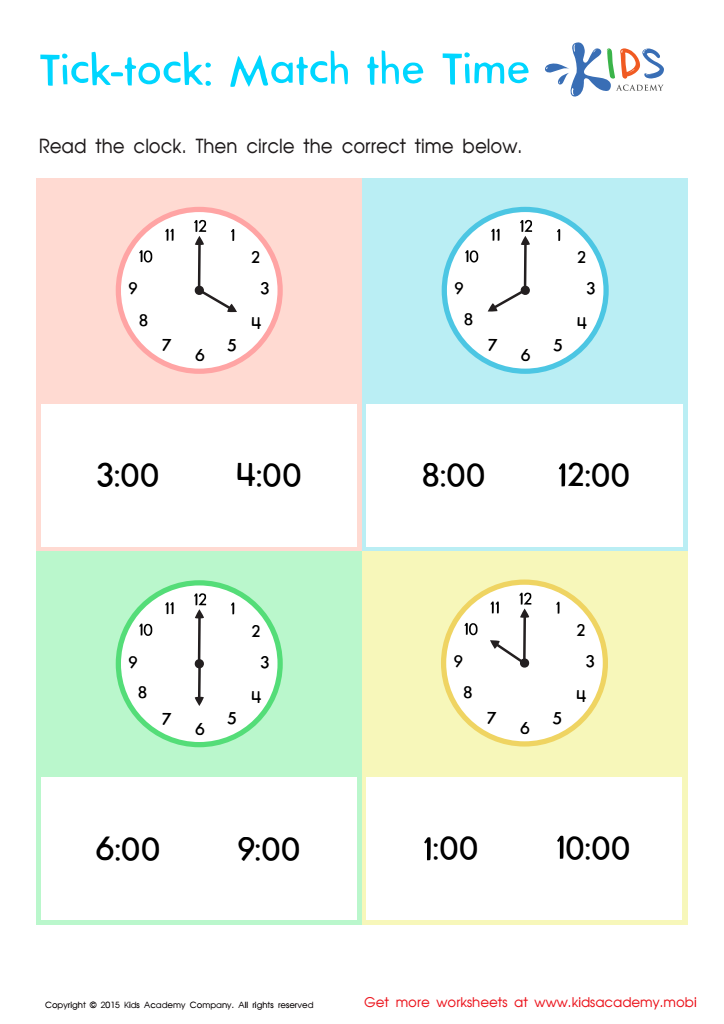
Telling The Time Worksheet: Part 4
 Assign to My Students
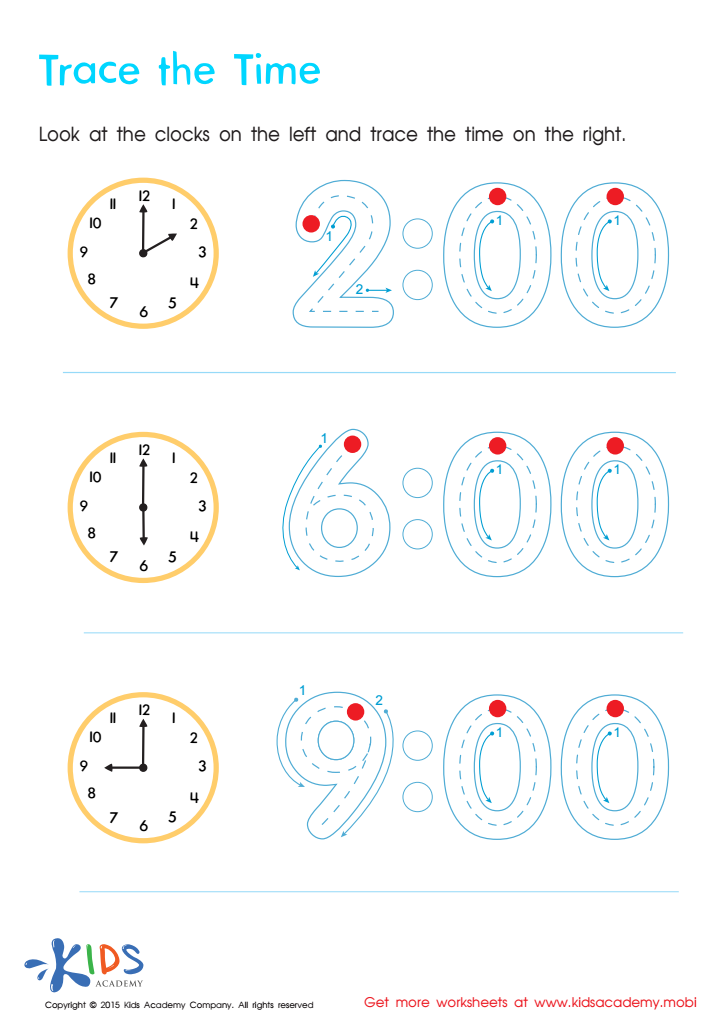
Telling The Time Worksheet: Part 2
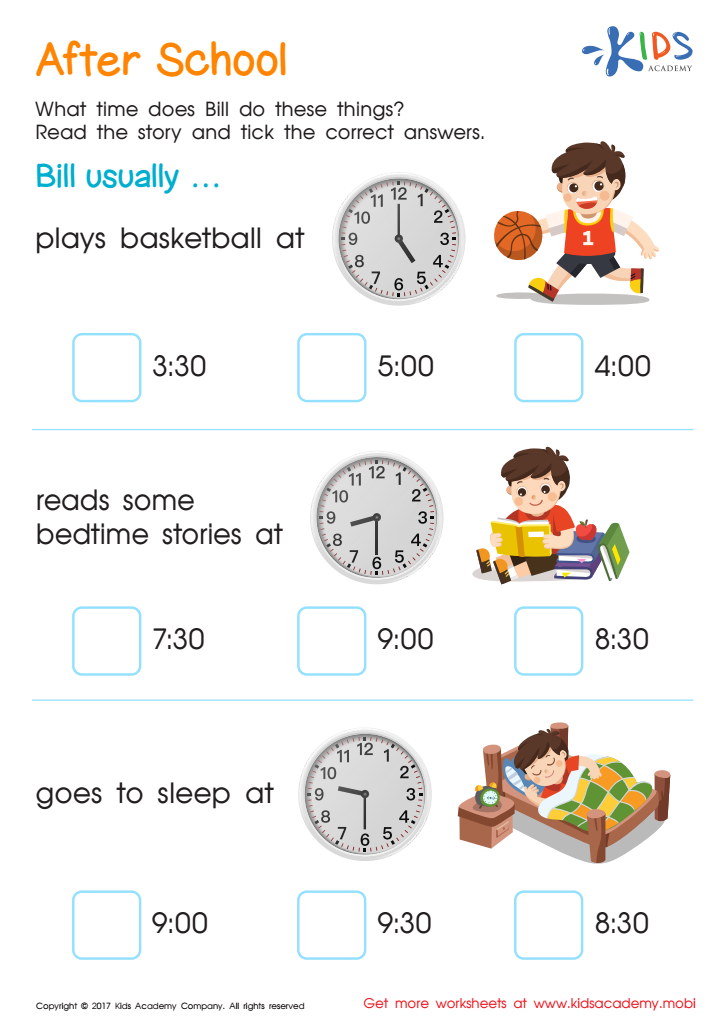
After School Time Printable
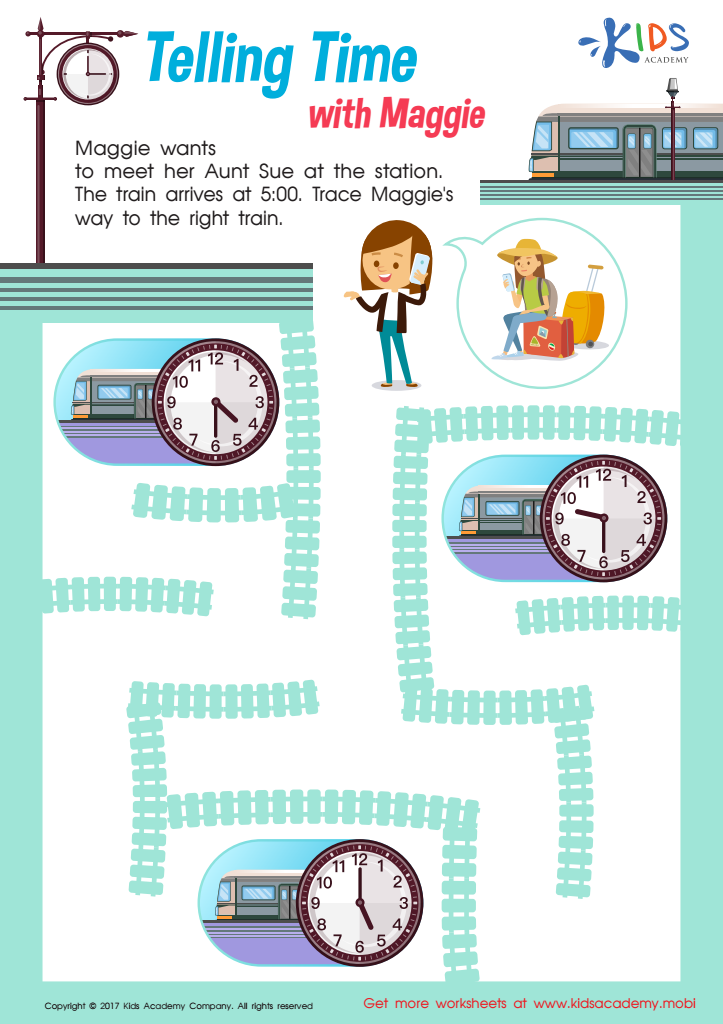
Telling Time With Maggie Time Worksheet
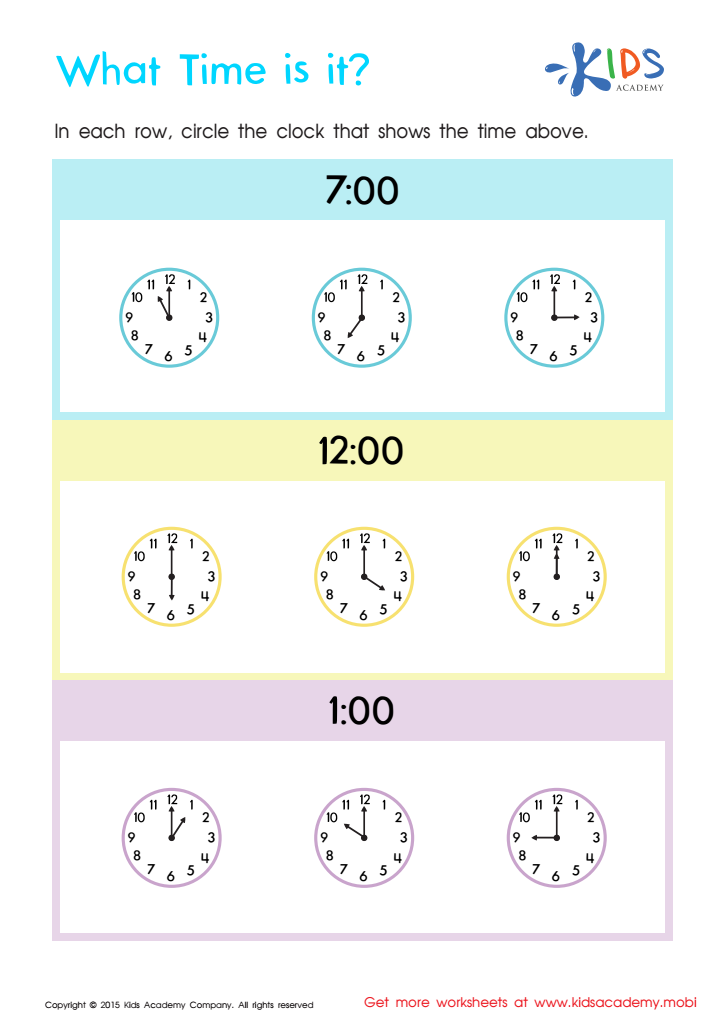
Telling The Time Worksheet: Part 3








Parents and teachers should prioritize reading skills for children aged 6-8 because these foundational abilities are crucial for lifelong learning and academic success. At this stage, children are not only developing basic reading proficiency but also starting to comprehend more complex ideas and narratives. Strong reading skills enhance vocabulary, improve critical thinking, and foster creativity, allowing children to engage more deeply with texts across subjects.
Inviting an Extra Challenge in reading can cultivate a love for literature and stimulates curiosity when they tackle more complex stories or topics. This can boost their confidence as they face and overcome challenges, invaluable for their emotional and intellectual growth. Furthermore, robust reading skills help children excel in standardized testing and classroom assessments, providing a solid foundation for advanced academic challenges in the future.
Moreover, consistent exposure and practice improve focus and comprehension, skills that are transferable to other areas. Engaging children in reading activities at home or in the classroom builds a supportive learning environment, encourages discussion, and enhances social skills as they share stories and insights. Ultimately, supporting young readers in developing these skills contributes not only to their educational accomplishments but also to their love for learning throughout their lives.








