Understanding plurals Extra Challenge Worksheets for Ages 6-8
5 filtered results
-
From - To
Boost your child's grammar skills with our "Understanding Plurals Extra Challenge Worksheets" designed for ages 6-8! These engaging and educational worksheets offer an exciting way for young learners to master plural forms of nouns. With a variety of activities tailored to different skill levels, children will practice converting singular words to plural, enhancing their vocabulary and comprehension. Each worksheet is not only visually appealing but also crafted to foster critical thinking and problem-solving. Ideal for at-home practice or classroom use, these extra challenge worksheets will make learning about plurals fun and rewarding. Help your child become a confident communicator today!
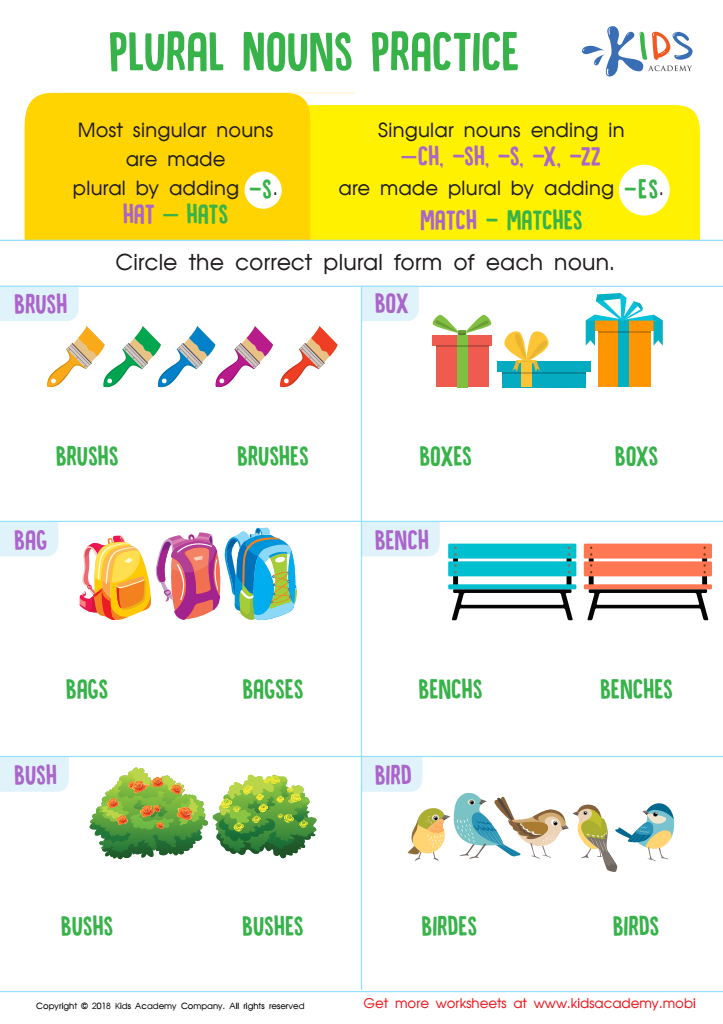
Plural Nouns Practice Worksheet
 Assign to My Students
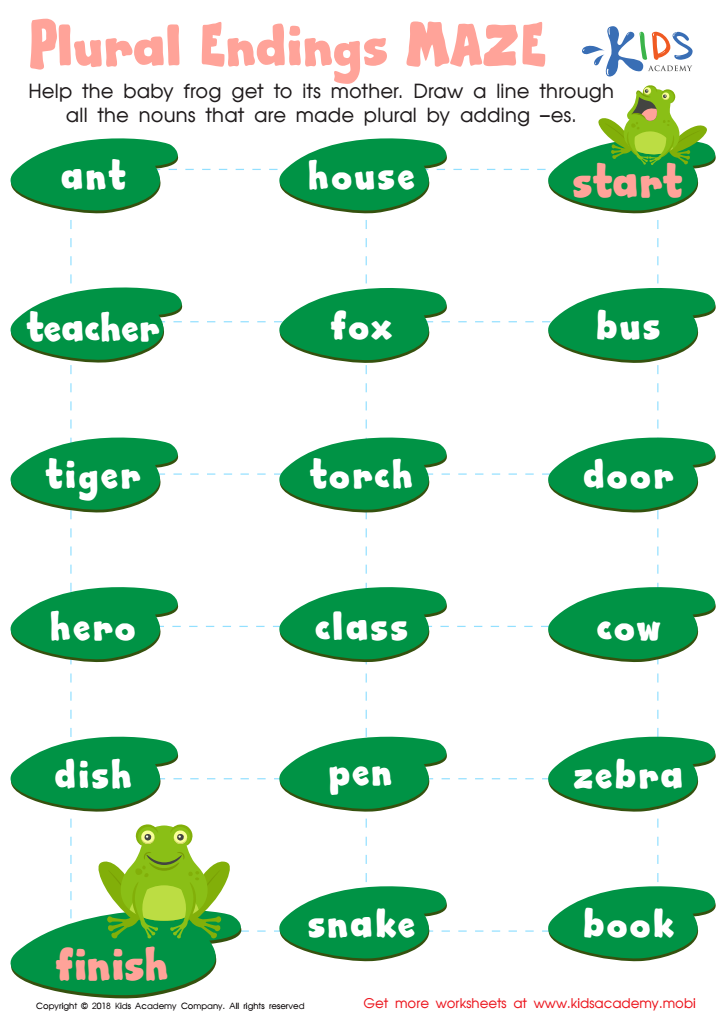
Plural Endings Maze Worksheet
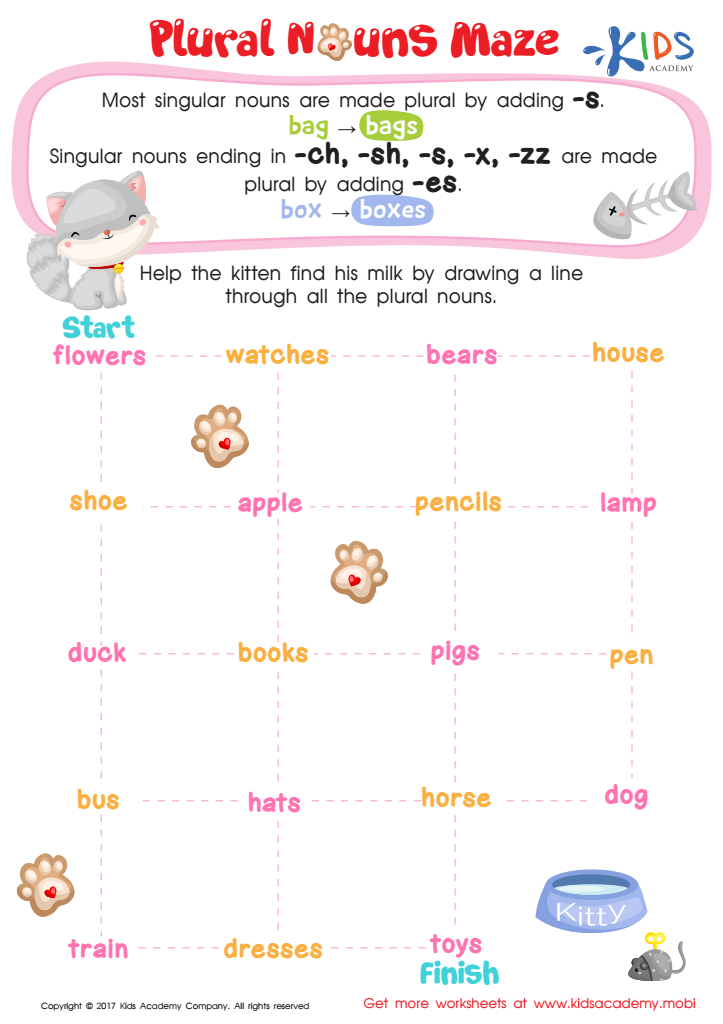
Plural Nouns Maze Worksheet
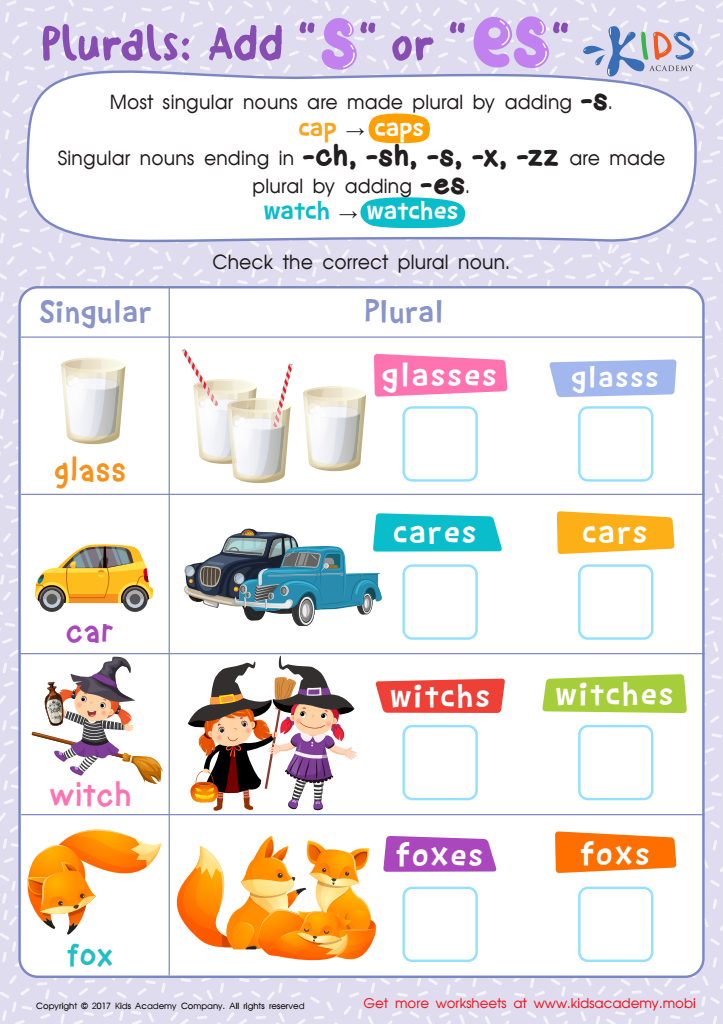
Plurals: "–es" or "–es"? Worksheet
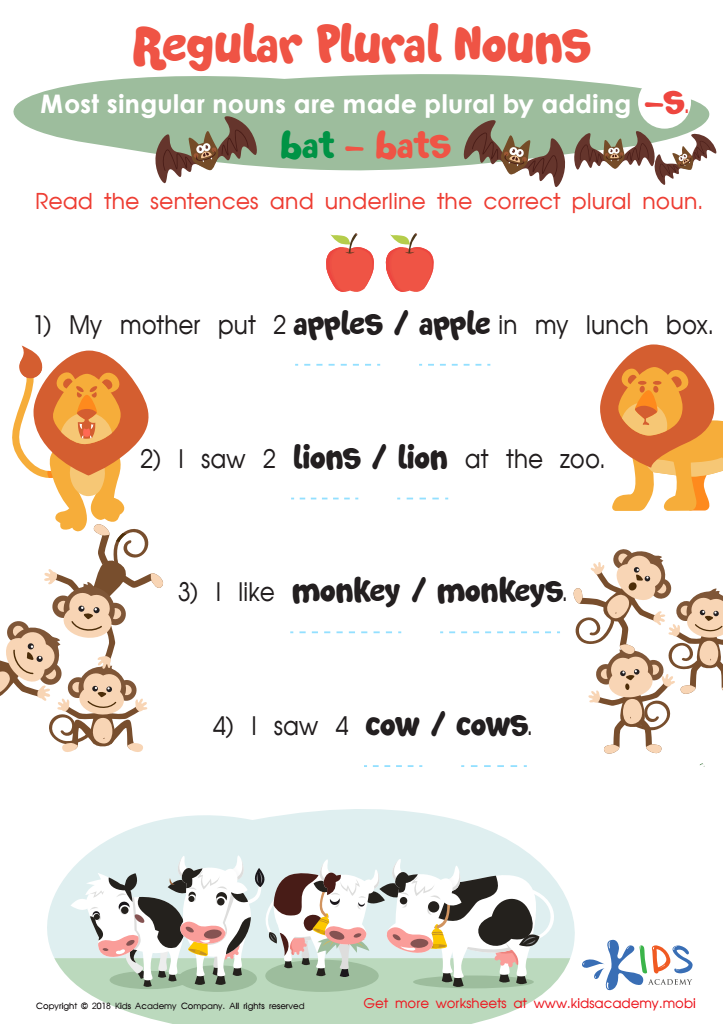
Regular Plural Nouns Worksheet








Understanding plurals is essential for young learners aged 6-8 as it plays a key role in their language development and communication skills. Parents and teachers should recognize that mastering plural forms helps children express themselves clearly and accurately. This understanding enhances their reading and writing abilities, allowing them to comprehend stories and instructions better.
Furthermore, using plurals correctly aids in developing social skills. When children can articulate their thoughts and describe multiple objects or people, they can engage in conversations more confidently, fostering better interactions with peers and adults alike. This foundation in language is crucial for their overall academic success, as it sets the stage for more complex grammar concepts in the future.
By incorporating plural exercises into daily activities—such as counting objects around the house or identifying plural nouns in storybooks—parents and teachers create engaging, practical learning experiences. Additionally, understanding how to form plurals can stimulate curiosity about language and encourage a love for reading.
In conclusion, learning plurals helps children not only in literacy but also in building confidence and effective communication skills, making it an important aspect of their early education. Engaging with this topic can pave the way for their academic journeys and social interactions.








