Cognitive Development Extra Challenge Addition & Subtraction Worksheets for Ages 6-8
8 filtered results
-
From - To
Boost your child's math skills with our Cognitive Development Extra Challenge Addition & Subtraction Worksheets for Ages 6-8. Designed for early learners, these engaging activities help children enhance their cognitive development through challenging addition and subtraction problems. Each worksheet aligns with educational standards, ensuring your child gains essential arithmetic skills while stimulating their critical thinking and problem-solving abilities. Perfect for classroom use or extra practice at home, these worksheets make learning fun and effective, fostering confidence in young mathematicians. Give your child the tools they need to excel in math with our expertly crafted resources.
 Assign to My Students
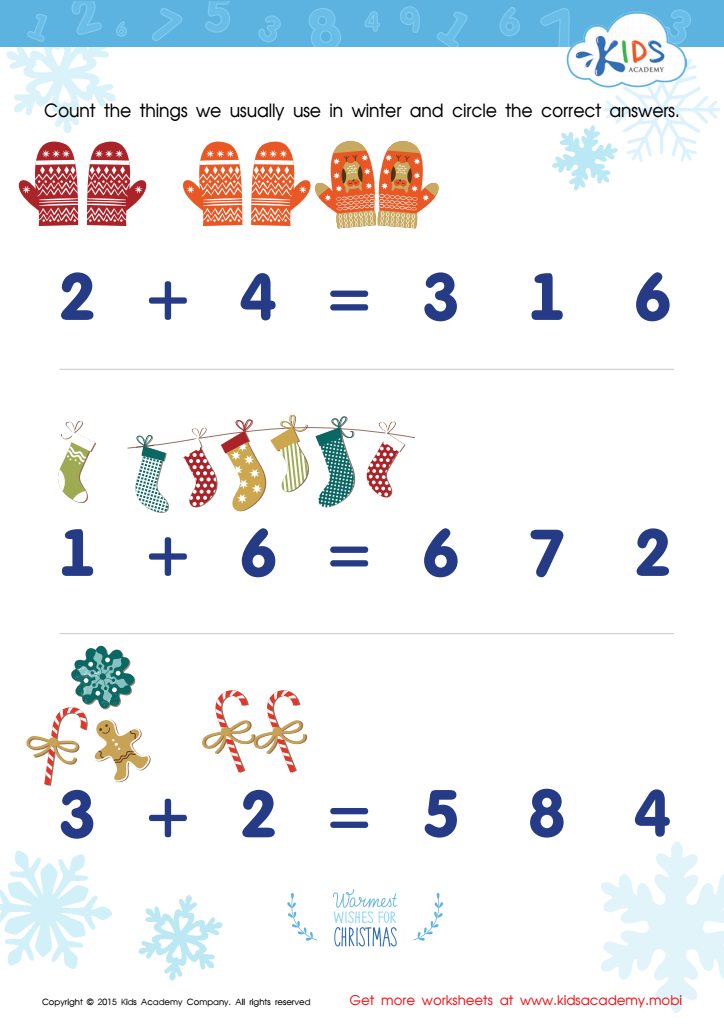
Count Winter Things Worksheet
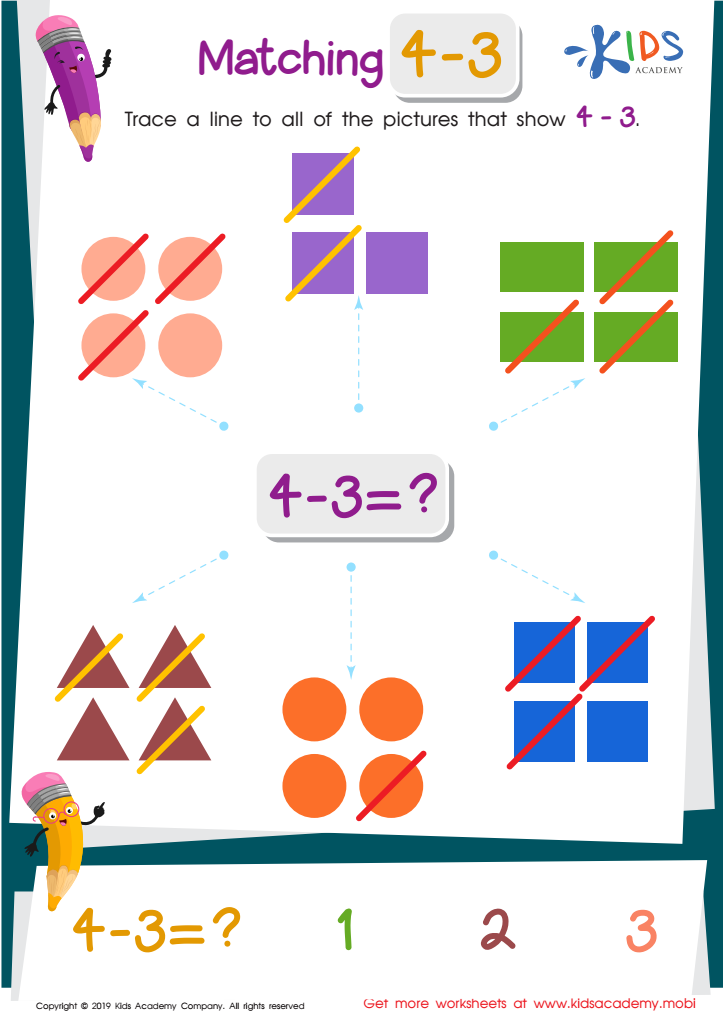
Matching 4 – 3 Worksheet
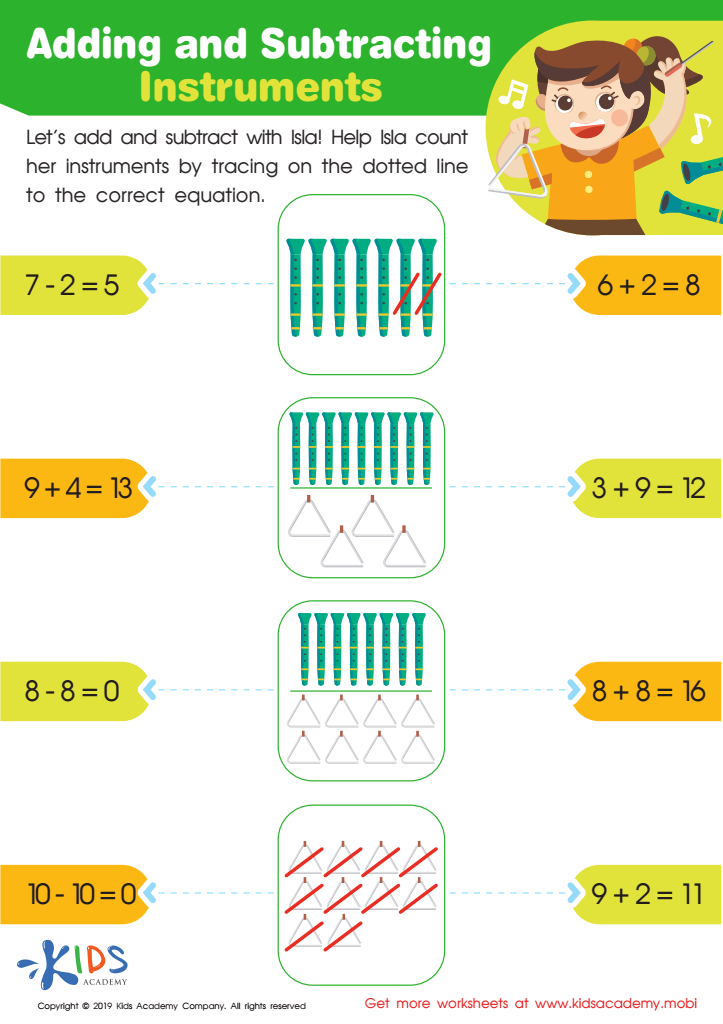
Adding and Subtracting: Instruments Worksheet
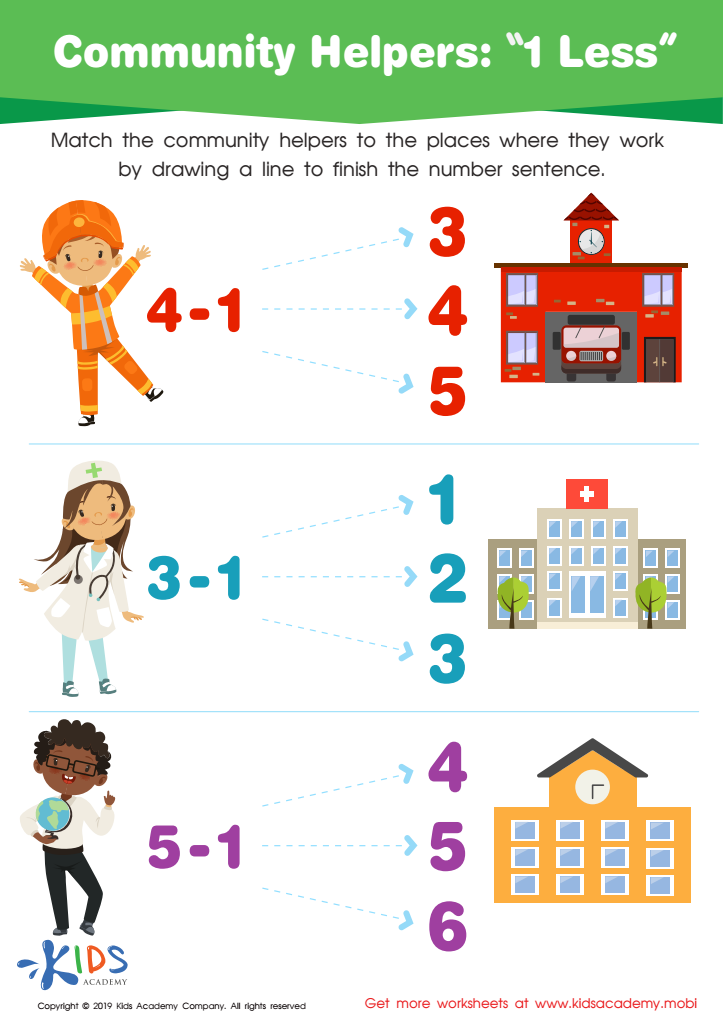
Community Helpers: 1 less Worksheet
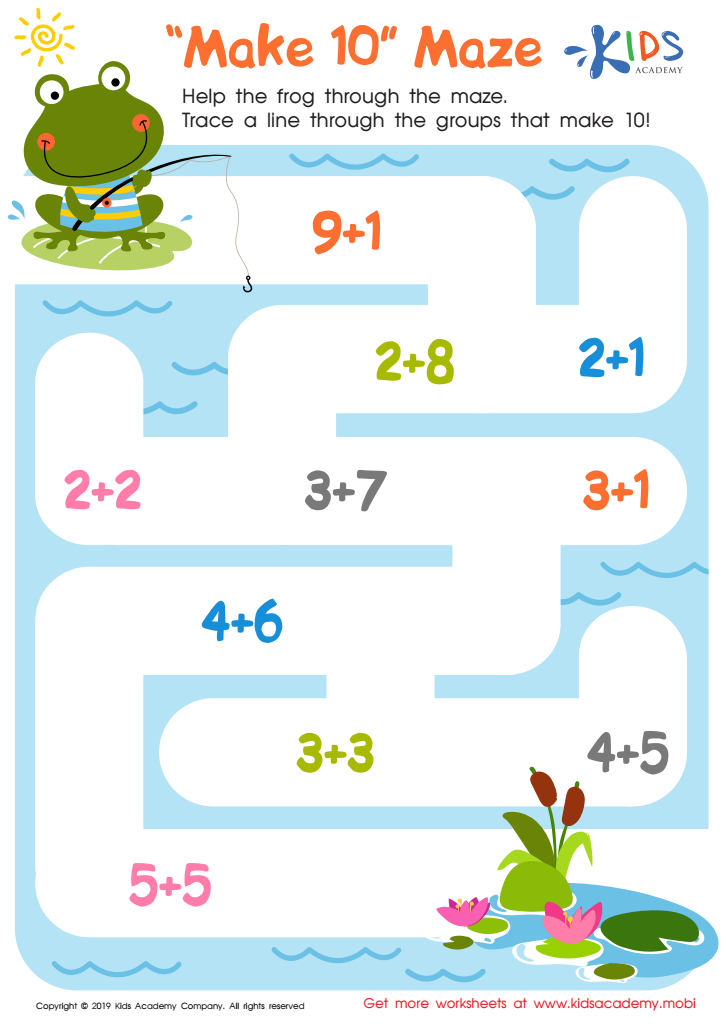
Make 10 Maze Worksheet
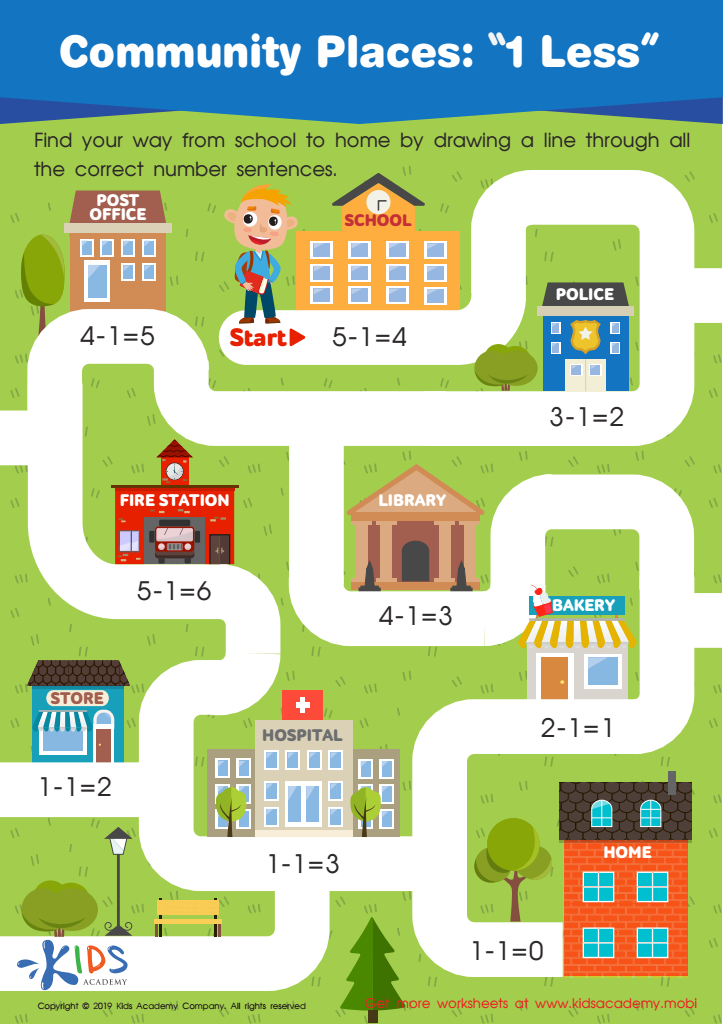
Community Places: 1 Less Worksheet
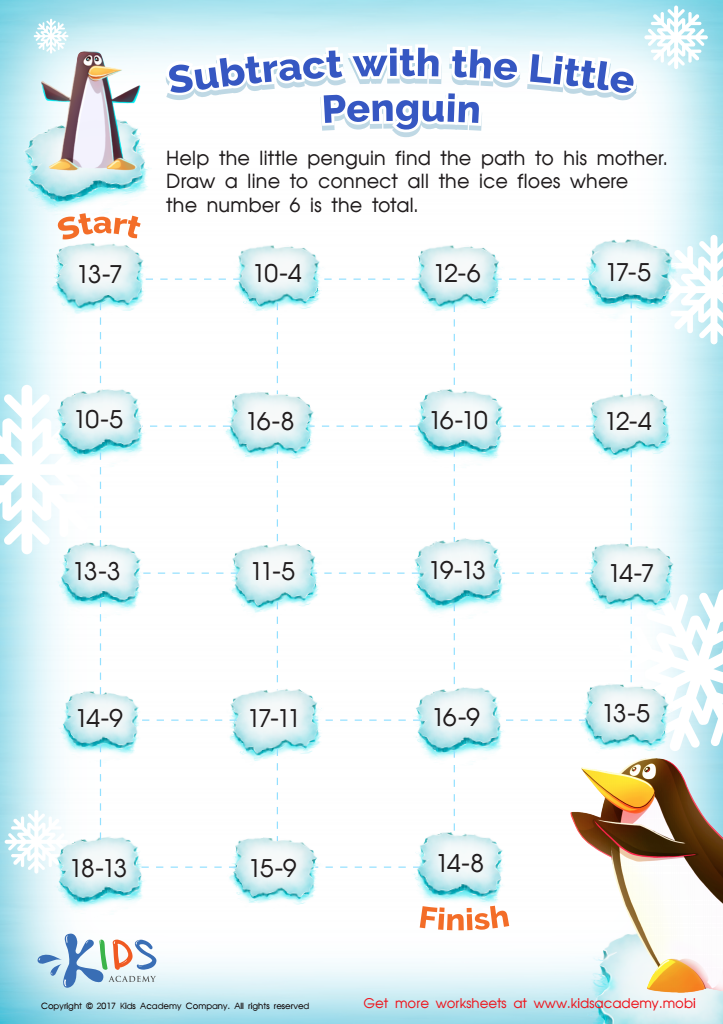
Subtract With The Little Penguin Substraction Worksheet








Parents and teachers should prioritize cognitive development through extra challenges in addition and subtraction for children aged 6-8, as this phase is critical for building foundational mathematical skills and cognitive abilities. At this age, children's brains are highly adaptable and capable of significant growth. Introducing additional problems in addition and subtraction fosters not only mathematical proficiency but also essential skills such as problem-solving, critical thinking, and mental agility.
Through challenging tasks, children learn to navigate complex scenarios, develop perseverance, and build confidence in their abilities. These activities help solidify their understanding of numbers and operations, forming a strong base for more advanced math concepts in later grades. Moreover, engaging with these extra challenges encourages a love for learning and a positive attitude towards mathematics, which is crucial for academic success.
Importantly, cognitive development in early education also influences other areas such as language, memory, and executive functioning. By mastering addition and subtraction through extra practice, children enhance their working memory and learn to process information more efficiently. For parents and teachers, fostering this growth through targeted practice ensures children are well-equipped not only for future math challenges but also for diverse learning experiences across subjects.