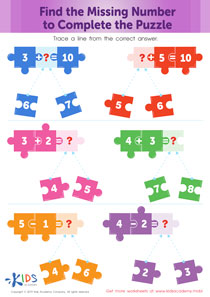
Counting skills Extra Challenge Addition Worksheets for Ages 6-8
6 filtered results
-
From - To
Boost your child's math proficiency with our Counting Skills Extra Challenge Addition Worksheets for Ages 6-8! Perfectly designed for young learners, these engaging worksheets provide an added challenge to enhance counting and addition skills. Each activity is thoughtfully crafted to keep children motivated and excited about learning. Numbers become fun as kids practice adding and counting in a structured yet enjoyable way, reinforcing their understanding through repetition and problem-solving. Our printable worksheets are ideal for extra practice at home or in the classroom, aiding in developing strong foundational math skills. Ideal for curious minds ready to excel!
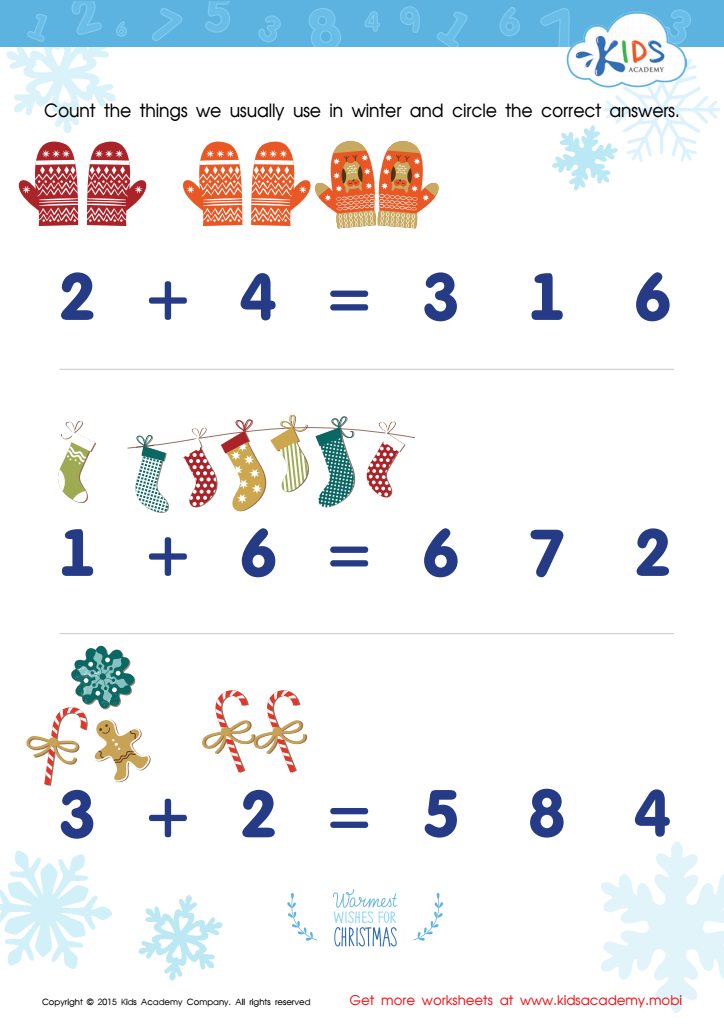
Count Winter Things Worksheet
 Assign to My Students
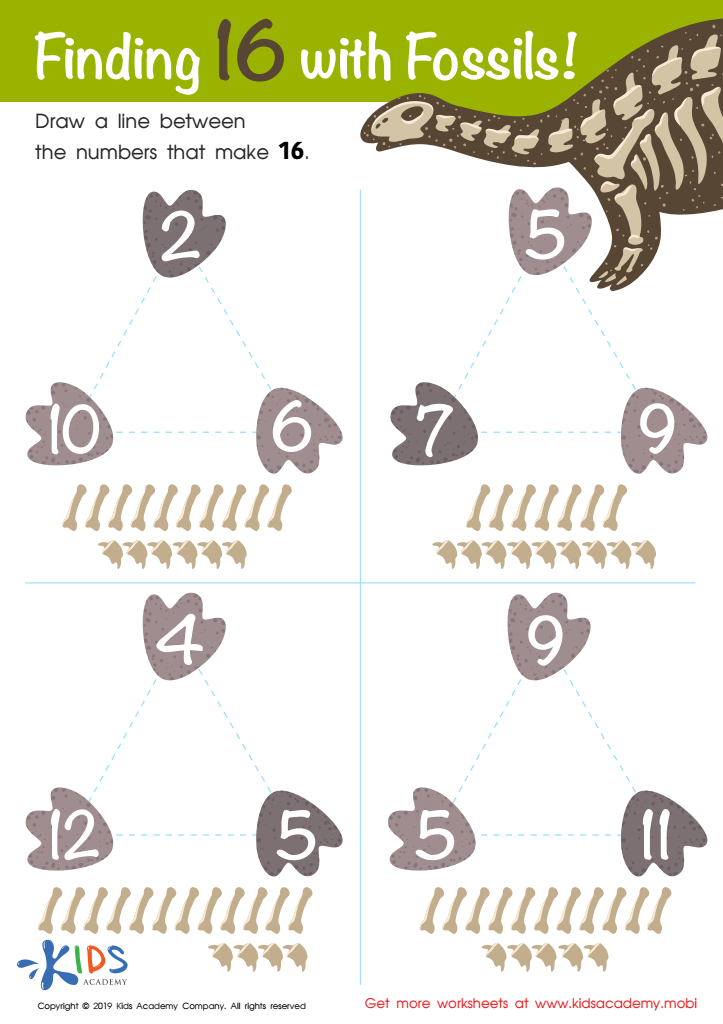
Finding 16 With Fossils Worksheet
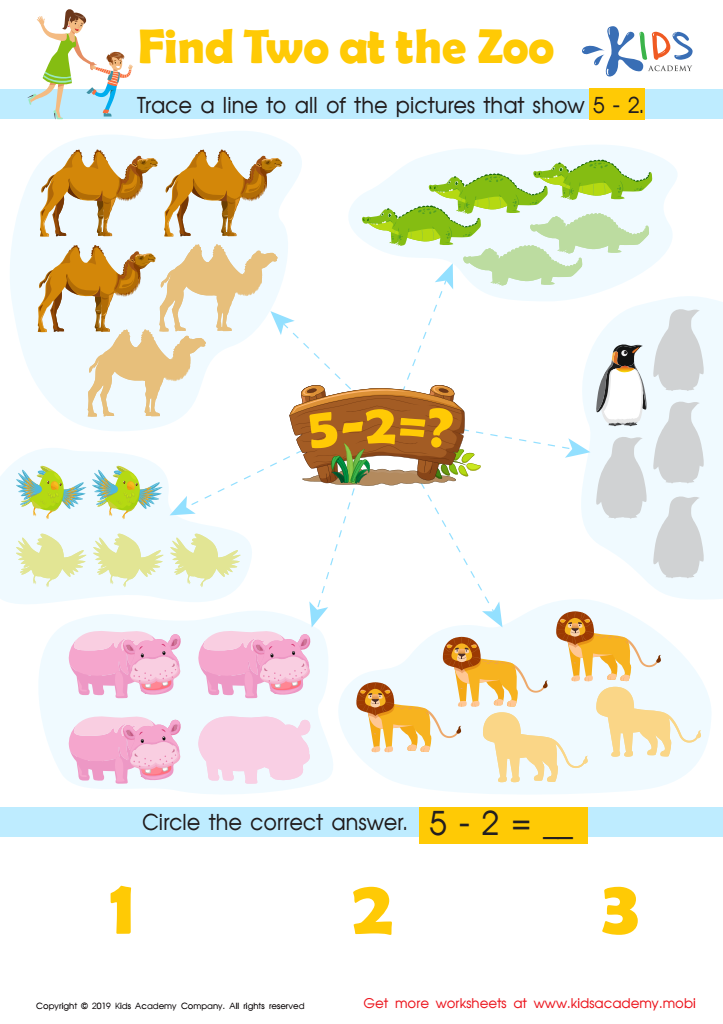
Find Two at the Zoo Worksheet
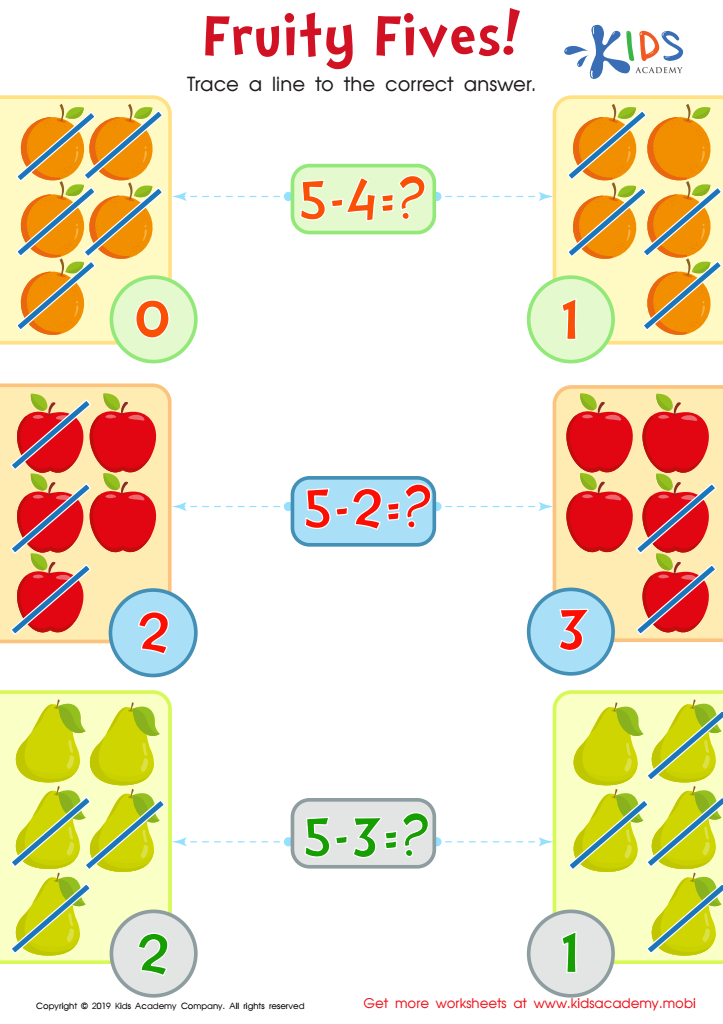
Fruity Fives! Worksheet
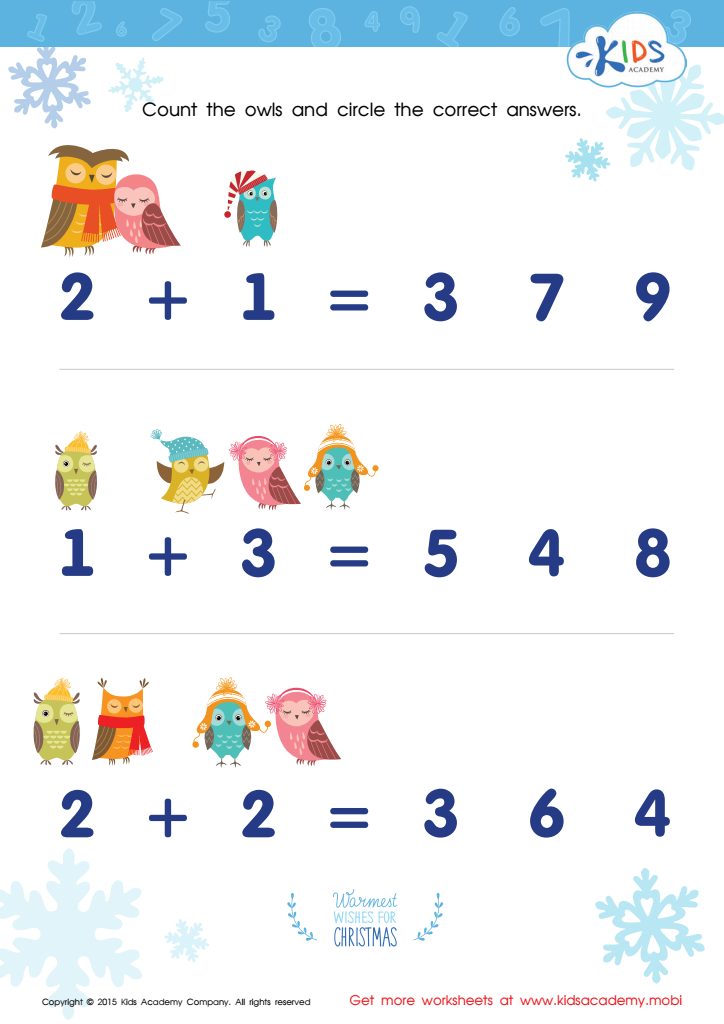
Count Little Owls Worksheet
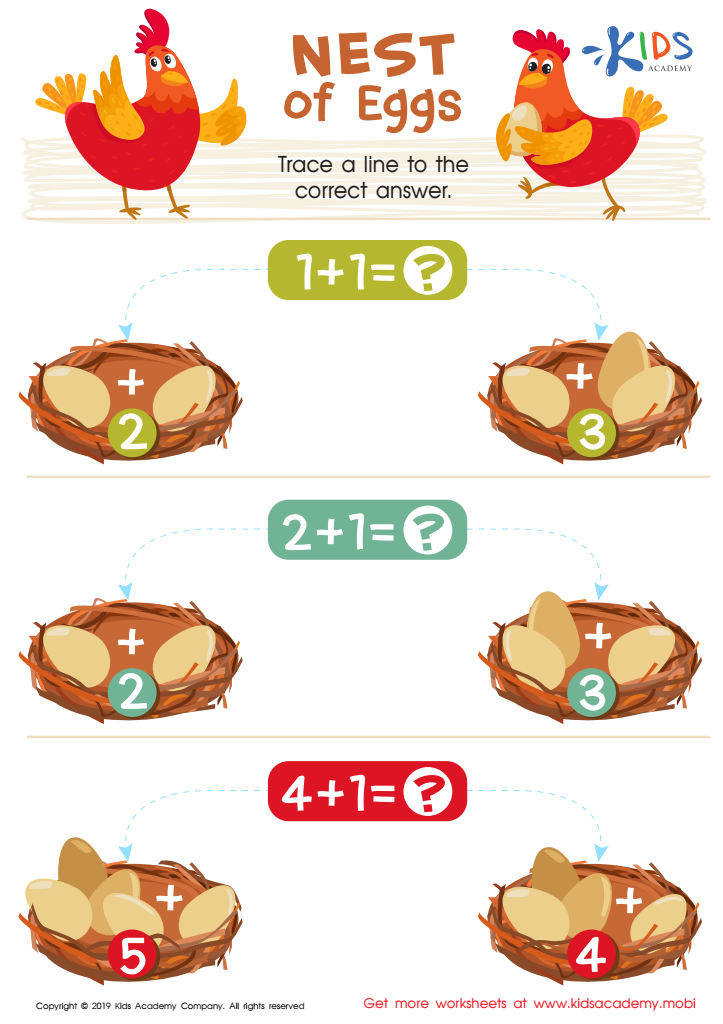
Nest of Eggs Worksheet








Counting skills and early addition are critical building blocks in a child's mathematical journey. For ages 6-8, enhancing these skills through extra challenges offers substantial benefits that parents and teachers should prioritize. First, mastering counting and addition fosters strong numerical fluency, which is fundamental for all higher-level math concepts, including multiplication and division.
In the developmental window of ages 6-8, children's brains are particularly receptive to learning numerical relationships. Introducing extra challenges allows for the engagement of their problem-solving and critical thinking skills. This not only reinforces classroom learning but also cultivates a love for math by making learning interactive and fun.
Beyond supporting academic achievement, counting skills and addition help in everyday life. Children begin to understand the value of money, tell time, and solve practical problems they encounter daily. Early competency in these areas boosts confidence, encourages independence, and can lead to superior academic performance later.
Finally, offering extra challenges shows children that learning doesn’t stop at school. It builds an environment of continuous improvement and curiosity, inspiring a lifelong interest in learning. Therefore, parents and teachers should view counting skills and addition challenges not just as educational tasks, but as essential tools for overall development.