Recognizing shapes Extra Challenge Geometry Worksheets for Ages 6-8
3 filtered results
-
From - To
Enhance your child's geometry skills with our "Recognizing Shapes Extra Challenge Geometry Worksheets" for ages 6-8! These engaging worksheets are designed to deepen understanding of basic shapes and encourage critical thinking. With fun activities tailored to challenge young learners, kids will explore various shapes, including circles, squares, triangles, and more. Perfect for reinforcing classroom concepts or providing extra practice at home, these worksheets feature colorful illustrations and interactive exercises. Watch your child delight in discovering the world of geometry while building confidence in their skills. Ideal for parents and educators seeking quality resources that make learning fun and effective!
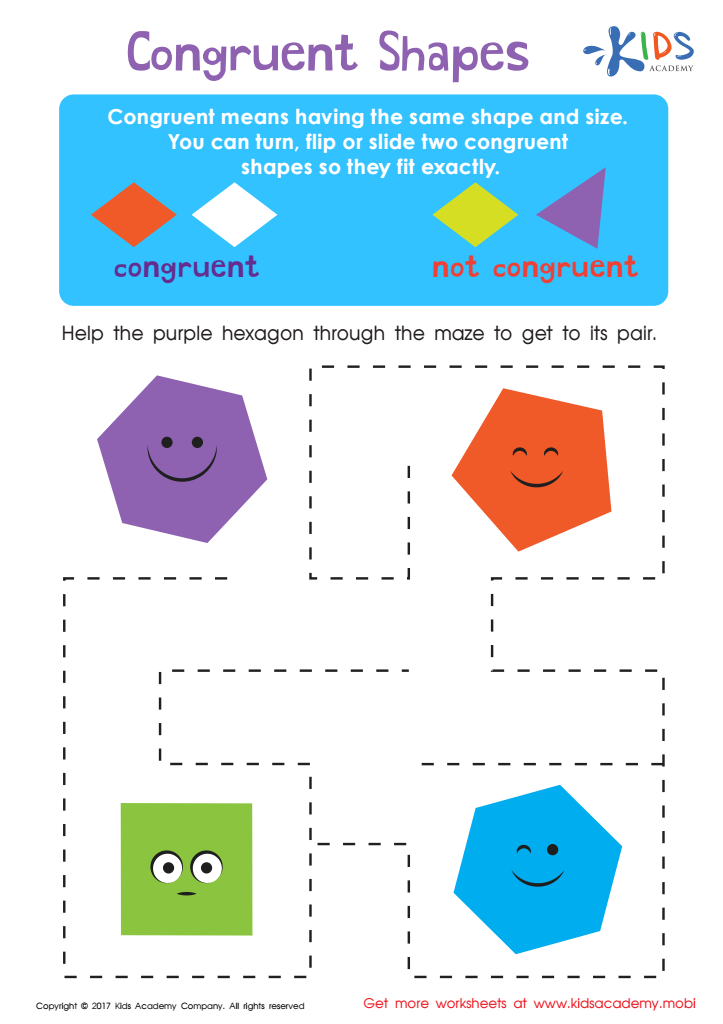
Congruent Shapes Worksheet
 Assign to My Students











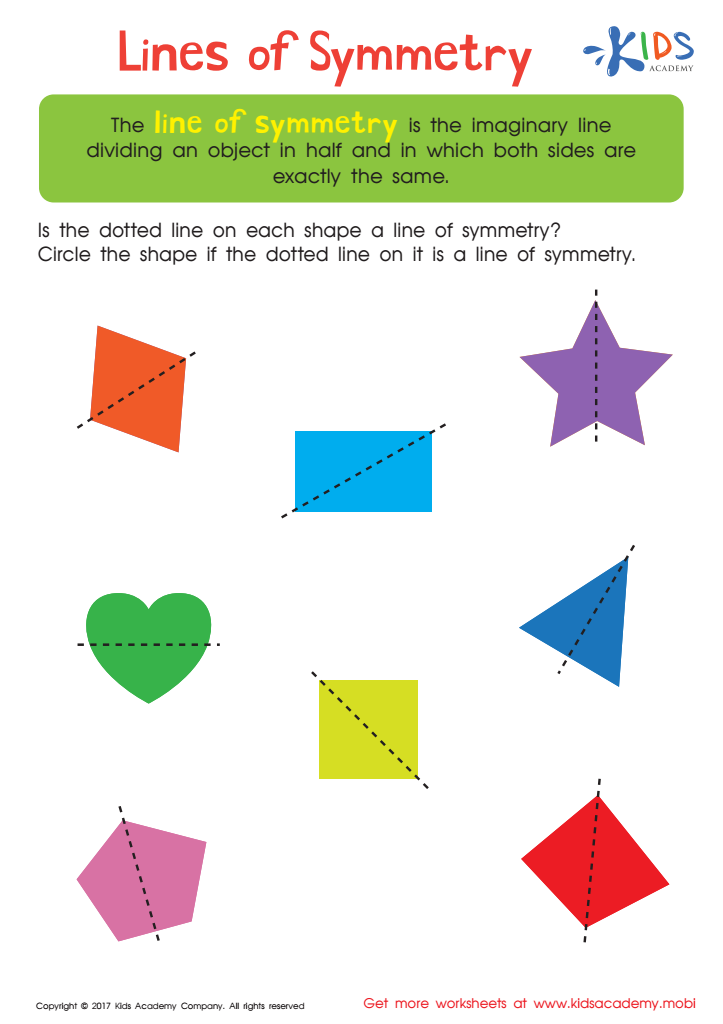
Lines of Symmetry Printable
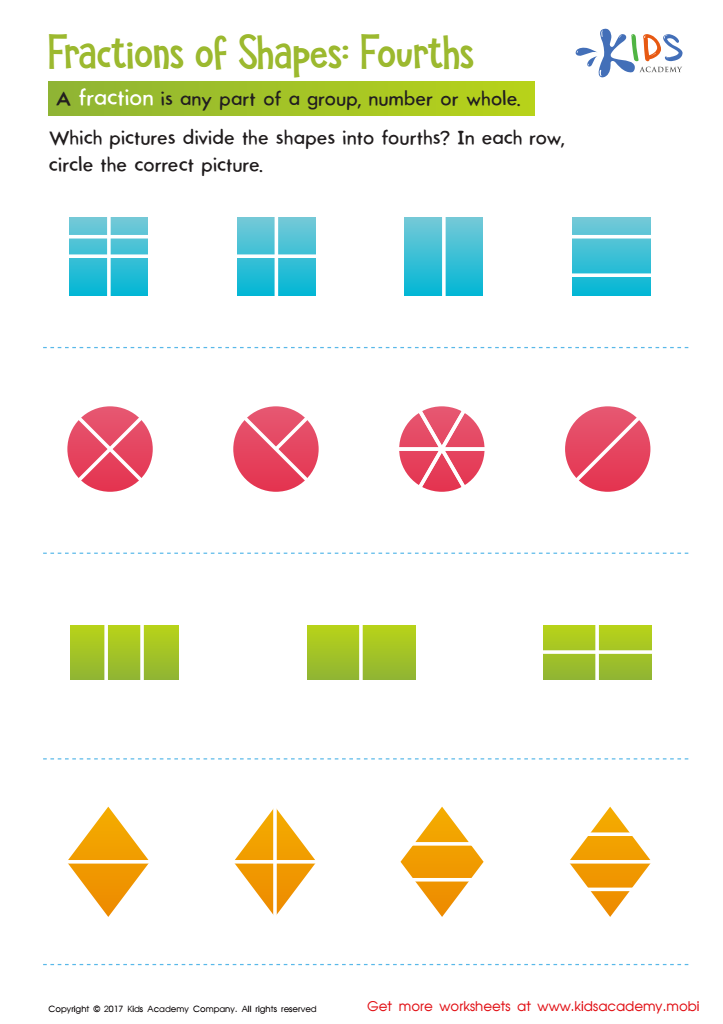
Fractions of Shapes Worksheet








Recognizing shapes is a fundamental aspect of early geometry education for children aged 6-8, and understanding this concept is crucial for their overall cognitive development. Parents and teachers should be invested in promoting shape recognition because it serves as the building block for more complex mathematical concepts. Spatial awareness developed through shape recognition enhances problem-solving skills, critical thinking, and logical reasoning.
Moreover, learning about shapes fosters creativity, as children engage in activities that incorporate design and construction. This can lead to a deeper appreciation for art and nature, where geometry is ubiquitous. For instance, recognizing shapes can help children notice patterns in their environment, enriching their observational skills and sense of curiosity.
Furthermore, early mastery of geometric shapes can improve a child's performance in later math classes, paving the way for success in STEM-related fields, which are increasingly important in today's technology-driven world. Engaging children through fun activities, such as puzzles or interactive games focused on shapes, not only enhances their learning experience but also strengthens the bond between parents, teachers, and children. Therefore, recognizing shapes is more than an academic task—it is a key ingredient in nurturing well-rounded, confident learners.








