Basic counting skills Extra Challenge Math Worksheets for Ages 6-8
4 filtered results
Difficulty Level
Grade
Age
-
From - To
Subject
Activity
Standards
Boost your child’s math abilities with our Basic Counting Skills Extra Challenge Math Worksheets for Ages 6-8. Specially designed to advance basic counting into complex problem-solving, these engaging worksheets deliver fun tasks while reinforcing numerical proficiency. Ideal for first and second graders, our challenges introduce advanced concepts through games, puzzles, and visual aids, ensuring each child’s learning journey is both exciting and educational. Perfect for classroom or at-home activities, Kid’s Academy worksheets foster confidence and create solid foundations in math, setting the stage for future academic success. Cultivate a love for math in your young learner with this incredible resource!
Favorites
With answer key
Interactive
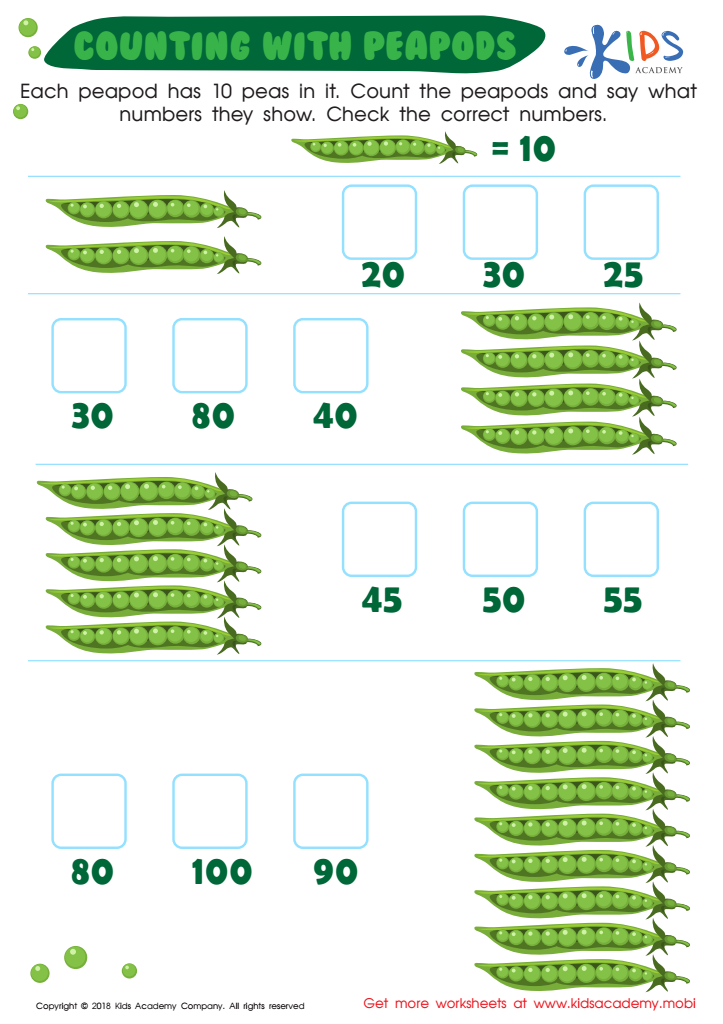
Number Worksheet: Counting With Peapods
Help your child learn multiplication and develop their place value skills in a fun way with this number worksheet: Counting with Peapods! Each pod has 10 peas, and kids can simply count each one and add a zero to the ones place to get the answer. It's a great, colorful way to learn!
 Assign to My Students
Number Worksheet: Counting With Peapods
Worksheet
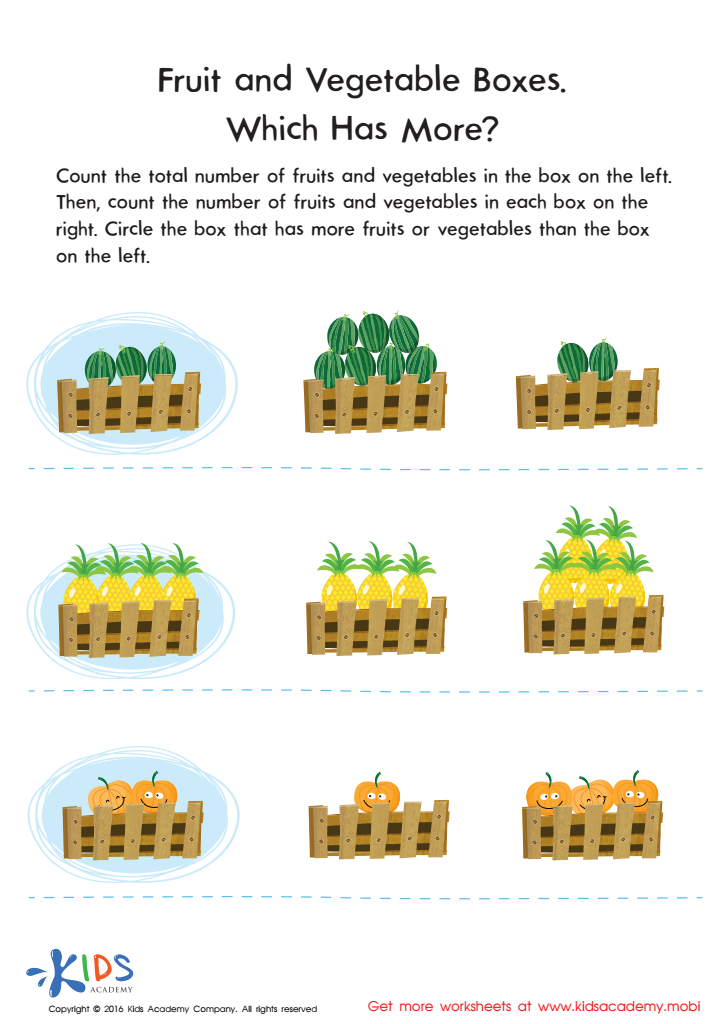
Which Has More? Size Worksheet
This worksheet is perfect for your child to practice critical thinking and logical reasoning. Your child will count and compare the fruits and veggies in the crates to decide which one has more. They will use complex cognitive skills and practice following precise rules. Guide them through the directions and help keep their focus, while enjoying the images.
Which Has More? Size Worksheet
Worksheet
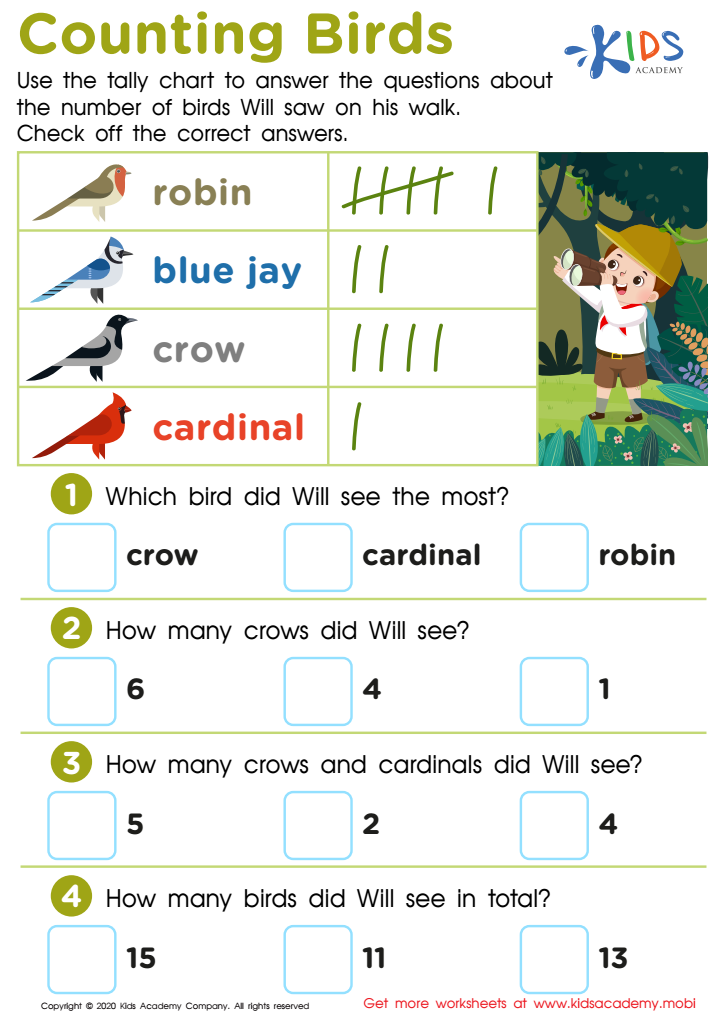
Counting Birds Worksheet
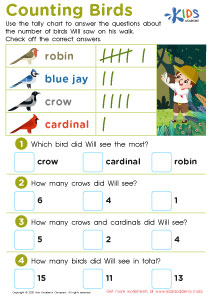
Introduce your child to the exciting activity of bird watching! This PDF worksheet features a tally chart of the different types of birds Will saw on his walk. Have your kid use the tally chart to organize information and use it to answer the questions that follow, thus boosting early science and math skills.
Counting Birds Worksheet
Worksheet
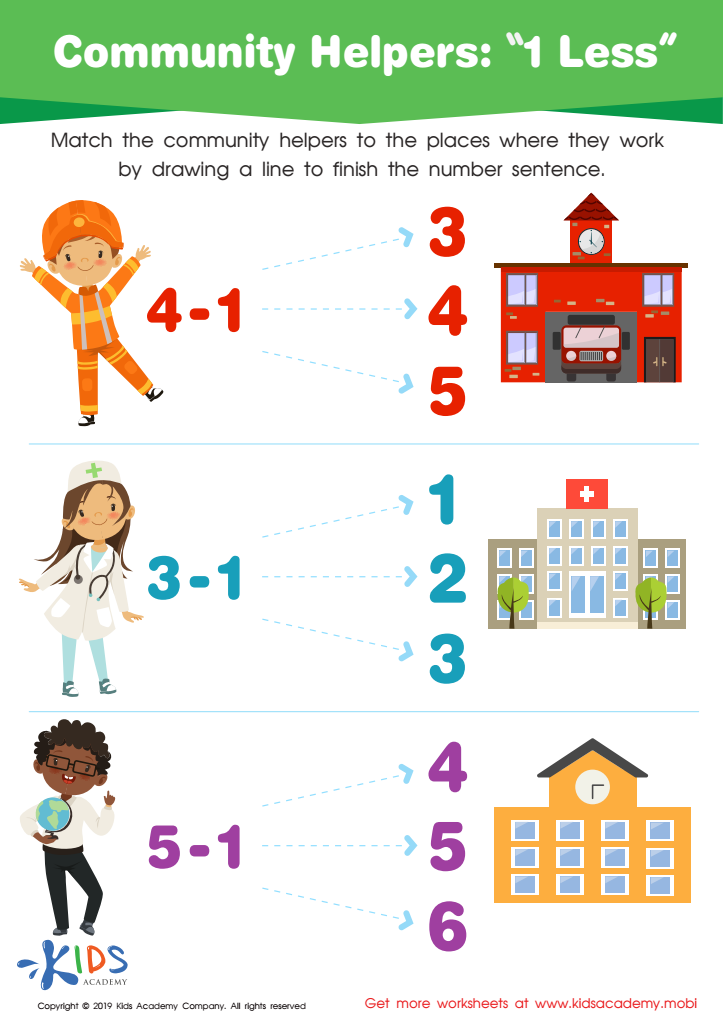
Community Helpers: 1 less Worksheet
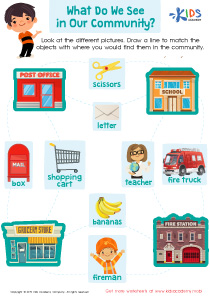
Look at this worksheet with your child and ask them to identify the different community helpers. Match them to the places where they work by drawing a line to finish the number sentence. This helps them identify the people that help keep the community organized and running smoothly. Examples of community helpers include doctors, police officers, firefighters, teachers, etc.
Community Helpers: 1 less Worksheet
Worksheet
Join Kids Academy for Free
Who is primarily going to use this learning content?




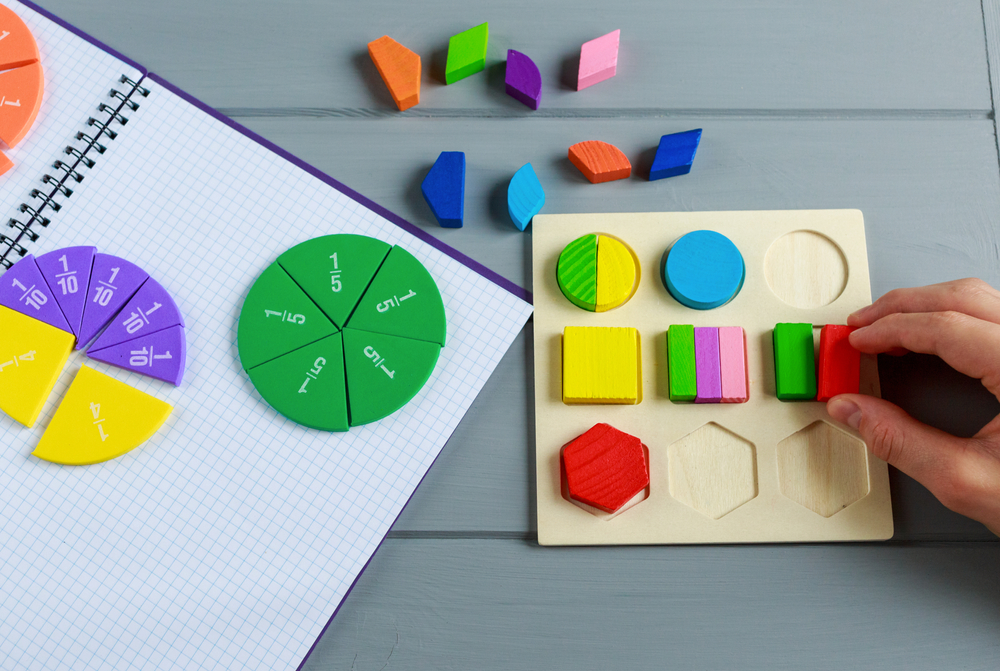



Basic counting skills are foundational for young students, and introducing an extra challenge in math for ages 6-8 can bring numerous benefits. At this developmental stage, children are naturally curious and eager to learn. By incorporating extra challenges, parents and teachers can stimulate their intellectual growth and keep their interest alive.
Challenges help solidify understanding of fundamental concepts. Instead of rote memorization, children start thinking critically to solve problems, enhancing their comprehension and retention of basic counting principles. This deepens their knowledge and prepares them for more advanced mathematical concepts.
Additionally, early exposure to challenges fosters important life skills such as perseverance, problem-solving, and a growth mindset. When children work through slightly more difficult problems, they learn that making mistakes and effort are part of the learning process, which builds resilience and confidence.
Extra challenges are also a tool for identifying and nurturing individual strengths. Teachers and parents can spot students with a natural aptitude for math who may benefit from advanced materials or activities, thus catering deeper to their educational needs.
In sum, caring about basic counting skills with extra challenges aids in building a solid educational foundation, developing critical thinking skills, promoting a growth mindset, and supporting individual strengths in young learners.