Comparing sizes Extra Challenge Math Worksheets for Ages 6-8
5 filtered results
-
From - To
Introduce young learners to the fundamental concepts of measurement with our Comparing Sizes Extra Challenge Math Worksheets, designed for ages 6-8. These engaging printable worksheets offer a variety of activities that inspire kids to observe, compare, and evaluate object sizes. By sorting and matching items based on size, students enhance their quantitative reasoning and critical thinking skills. Perfect for use at home or in the classroom, these worksheets make learning fun while laying the groundwork for more advanced mathematical concepts. Download and watch as your child gains confidence and excels in math through interactive and challenging exercises.
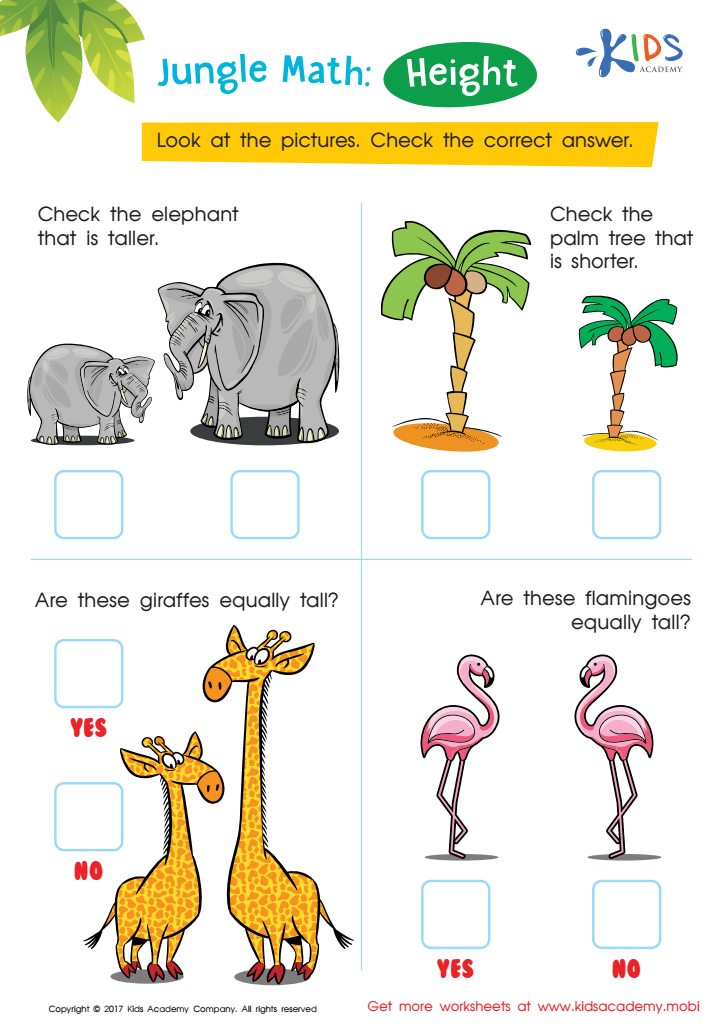
Which Is Taller Worksheet
 Assign to My Students
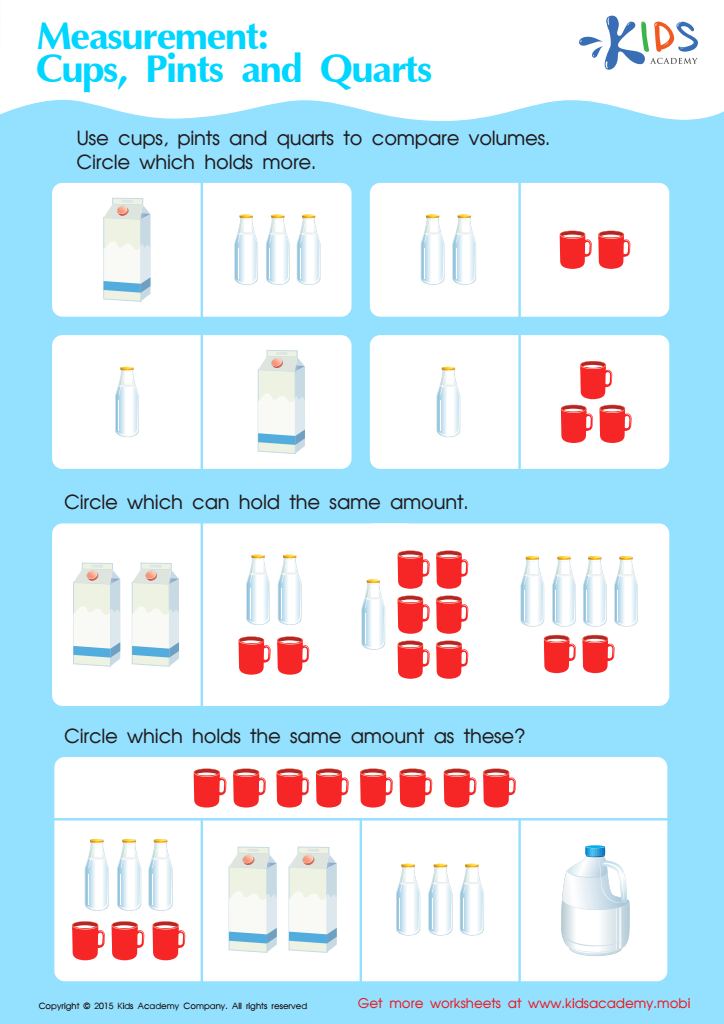
Measurement: Compare Volumes Worksheet
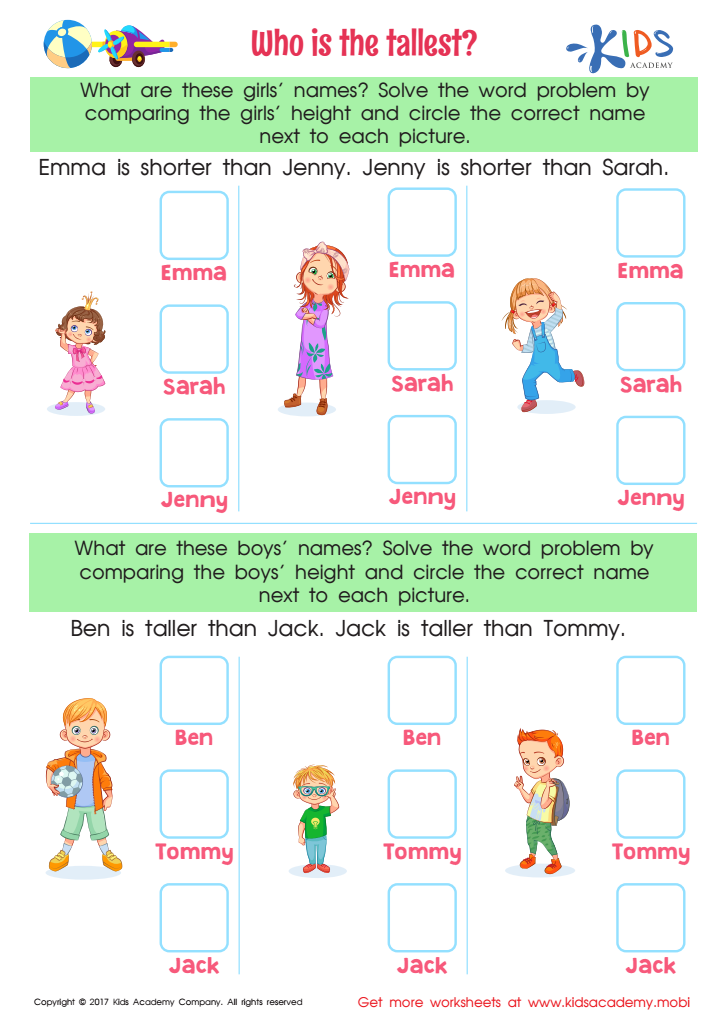
Who Tallest Printable
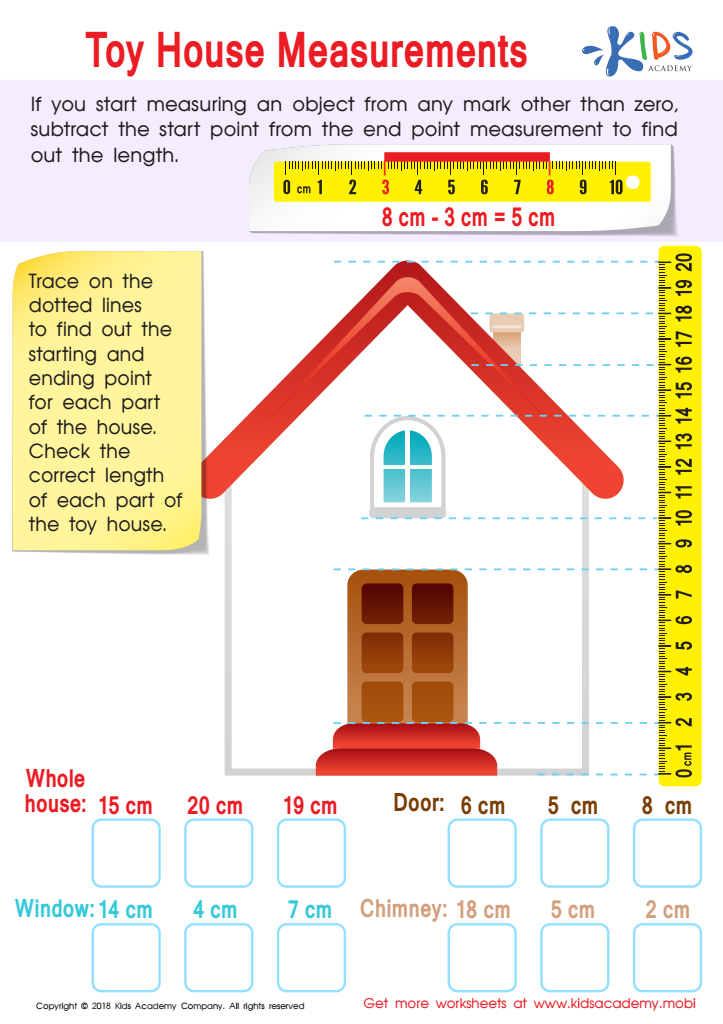
Toy House Measurements Worksheet
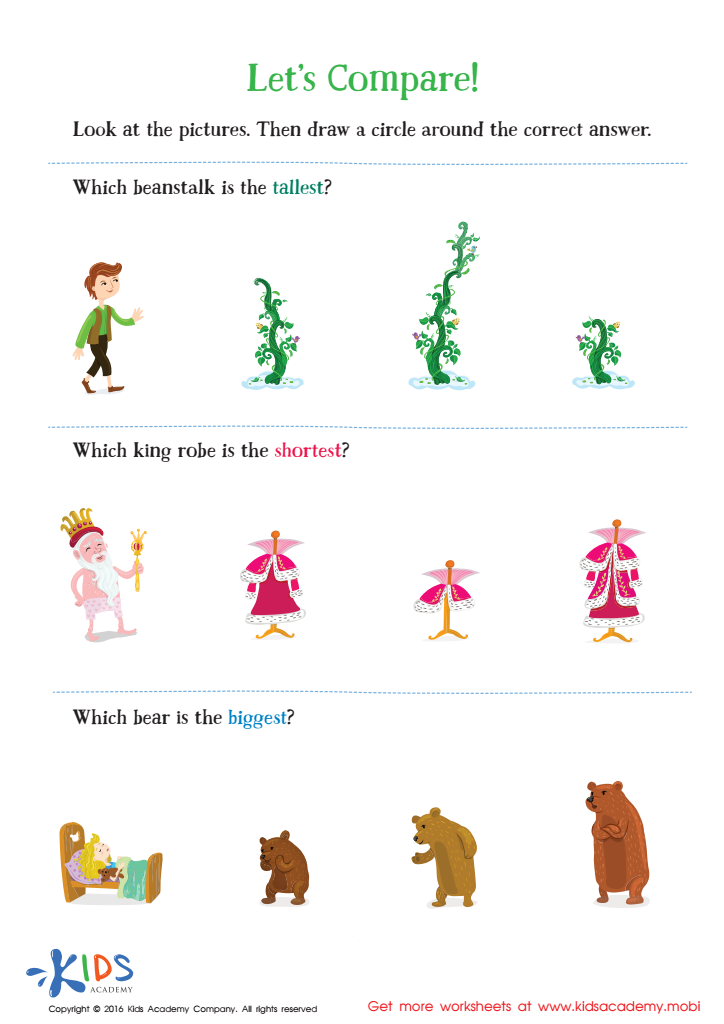
Fairy Tale Worksheet: Let's Compare








Comparing sizes is a fundamental skill integral to a child's cognitive development and mathematical understanding, especially among ages 6-8. At this stage, children are building the foundational skills that underpin more complex mathematical concepts. First and foremost, engaging in an Extra Challenge Math activity for comparing sizes helps cultivate critical thinking by encouraging children to observe, analyze, and deduce differences and similarities in objects' dimensions. This strengthens their ability to pay attention to details, a skill transferable to many academic subjects.
Moreover, comparing sizes improves spatial awareness and understanding of measurement concepts. It propels learners to understand and describe relationships between different objects, assisting in vocabulary expansion and communication skills as they express comparisons using terms like larger, smaller, taller, and shorter. Enhanced spatial reasoning also correlates with improved performance in STEM-related subjects later in life.
Furthermore, tackling extra math challenges nurtures a growth mindset, fostering resilience and perseverance in problem-solving. It boosts confidence as children realize they can solve progressively harder problems through effort and practice. Overall, focusing on comparing sizes in a structured, challenging environment builds a robust mathematical foundation and essential life skills, setting young learners on a path towards academic success and everyday competence.








