Money recognition Extra Challenge Math Worksheets for Ages 6-8
4 filtered results
-
From - To
Title: Money Recognition Extra Challenge Math Worksheets for Ages 6-8
Elevate your child's money skills with our Money Recognition Extra Challenge Math Worksheets designed for ages 6-8! Packed with fun and engaging exercises, these worksheets task young learners with identifying, counting, and comparing different denominations of coins and bills. Ideal for sharpening critical thinking and improving financial literacy, each worksheet boosts math skills in a practical context. Perfect for use at home or in the classroom, our expertly crafted worksheets support independent learning and continuous improvement. Enhance your child’s confidence and proficiency in recognizing money while making math an enjoyable adventure. Start exploring today!
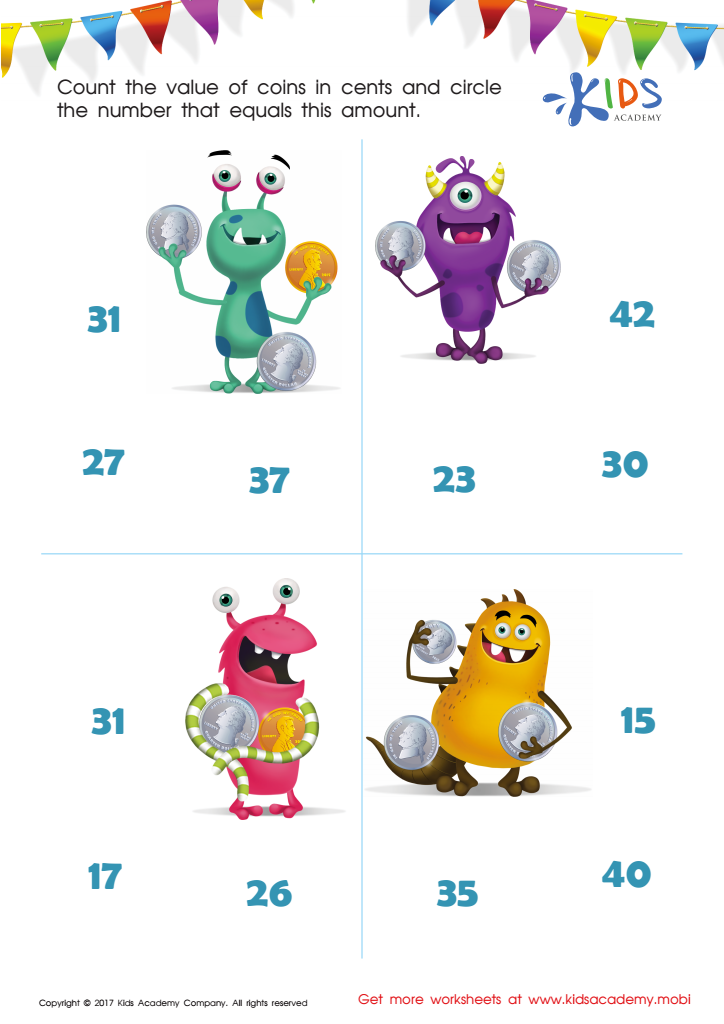
How Many Coins Money Worksheet
 Assign to My Students
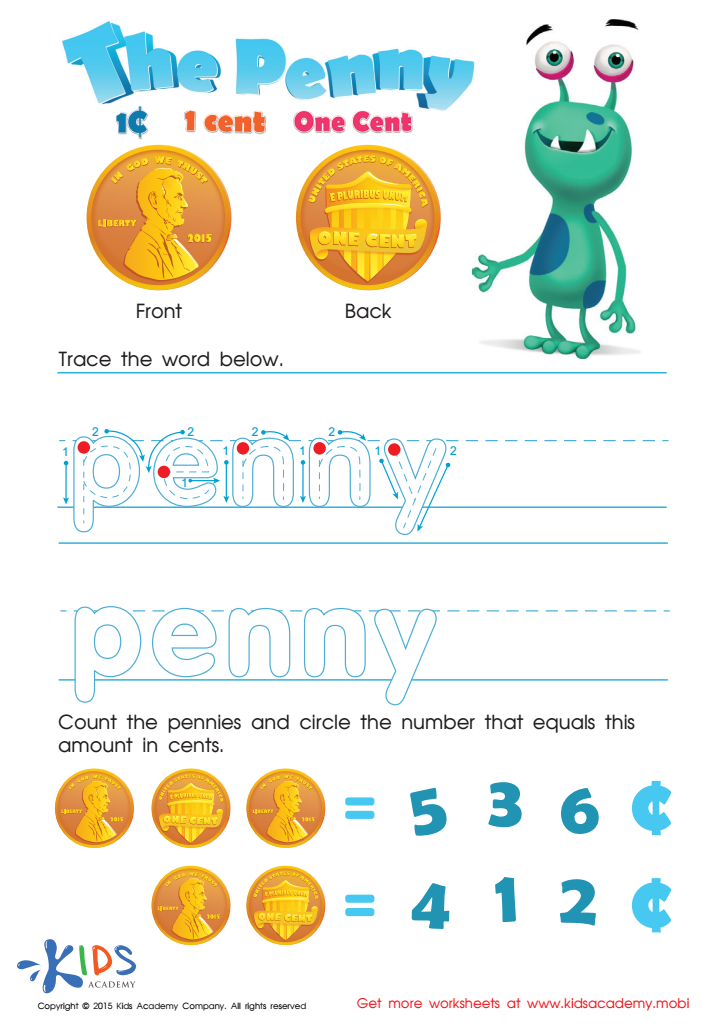
One Cent or the Penny Money Worksheet
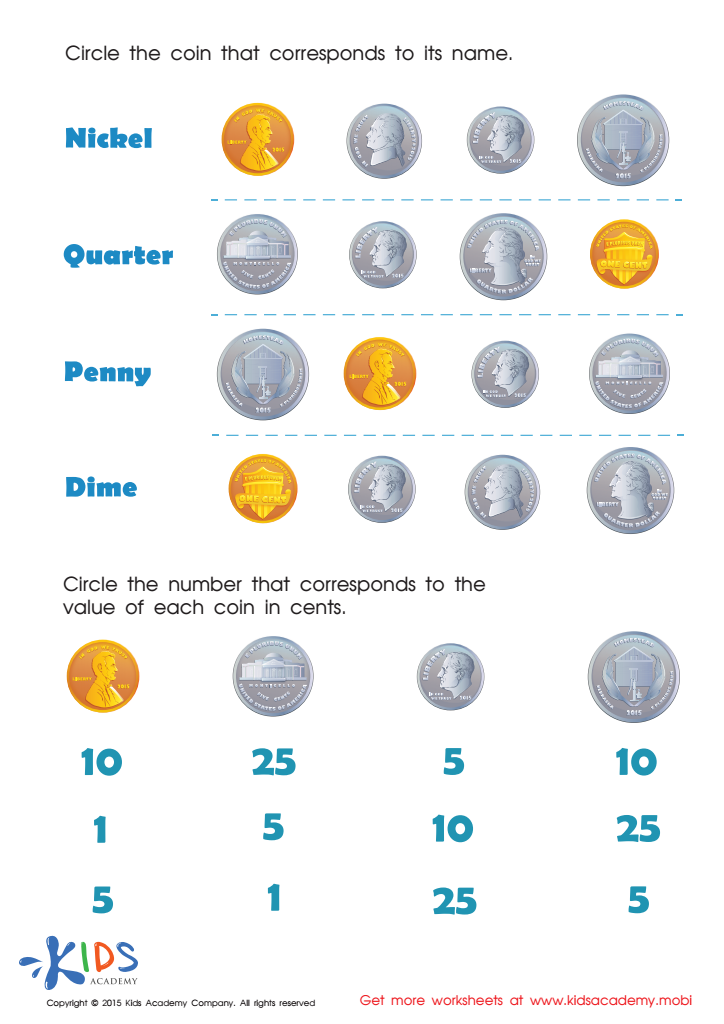
Coin Names and Values Money Worksheet
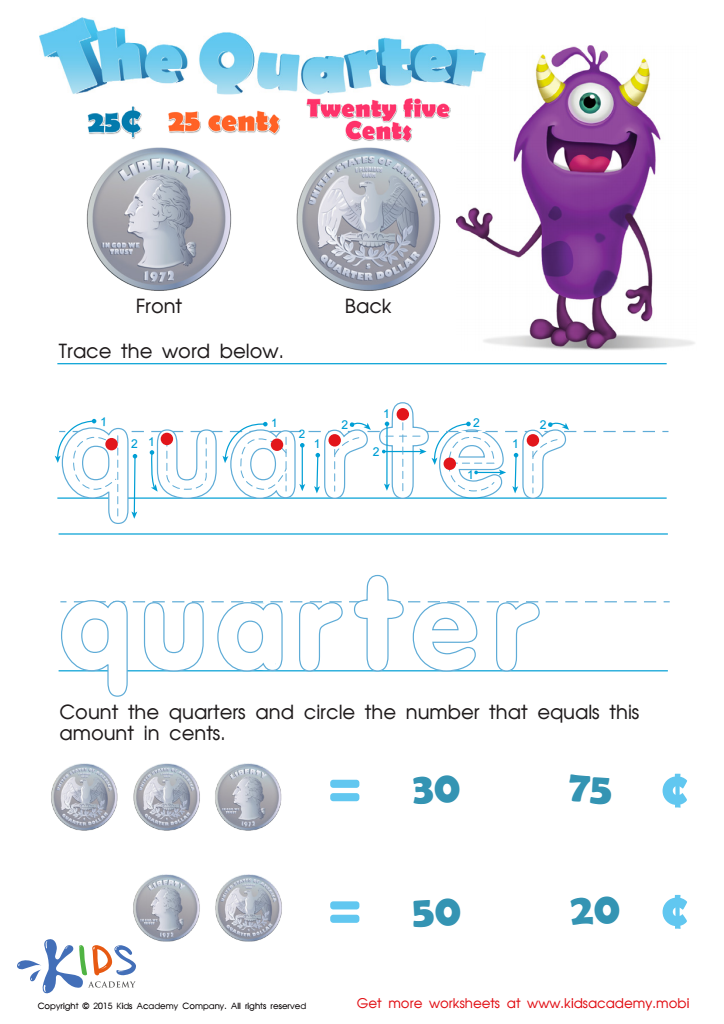
Twenty Five Cents or the Quarter Money Worksheet







Understanding money and its value is a crucial life skill, especially for children aged 6-8 who are beginning to grasp mathematical concepts and develop their cognitive abilities. Teaching money recognition through Extra Challenge Math activities not only improves their math skills but also instills financial wisdom early on.
Firstly, money recognition enhances basic arithmetic abilities such as counting, addition, and subtraction. Engaging in these activities helps children understand quantities, numeric values, and how to make change, which is foundational for more complex math problems they'll encounter in the future.
Secondly, early money recognition encourages responsible financial habits. By learning the value of coins and bills, children gain a sense of how money works in real life, fostering wise spending, saving, and budgeting practices.
Thirdly, money recognition activities enhance critical thinking and problem-solving skills. When children approach money problems, they need to think logically and sometimes creatively to find solutions, boosting their cognitive development.
Lastly, these activities are often designed to be fun and engaging, making learning enjoyable and motivating for young children. Fun games, hands-on practice, and real-world applications capture children's interest and can improve both their confidence and competence in math.
By prioritizing money recognition math challenges, parents and teachers equip children with essential skills that contribute to academic success and practical everyday competence.








