Time reading skills Extra Challenge Time Worksheets for Ages 6-8
5 filtered results
-
From - To
Enhance your child's time-reading skills with our Extra Challenge Time Worksheets for ages 6-8! Tailored to empower young learners, these engaging worksheets provide opportunities to master clock reading, understand time concepts, and solve practical time-related problems. With a variety of fun and challenging activities, kids will strengthen their abilities in recognizing both digital and analog clocks, calculating time intervals, and applying time in real-life scenarios. Ideal for supplementing classroom learning or for extra practice at home, these worksheets are designed to foster confidence and independence. Download now and watch your child shine as they conquer the concept of time!
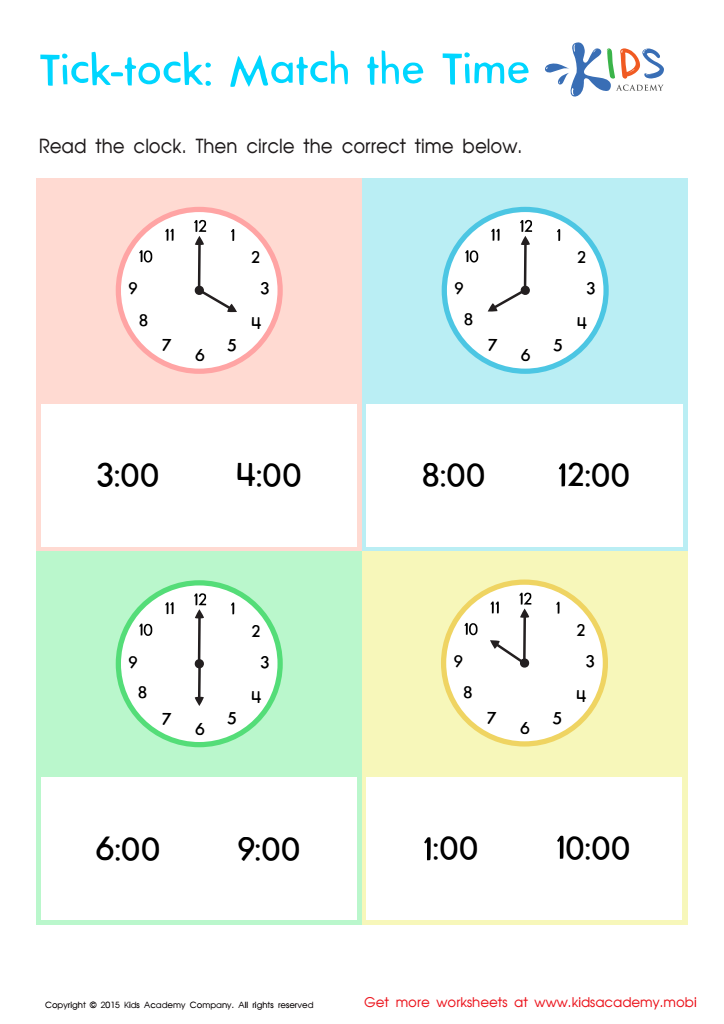
Telling The Time Worksheet: Part 4
 Assign to My Students
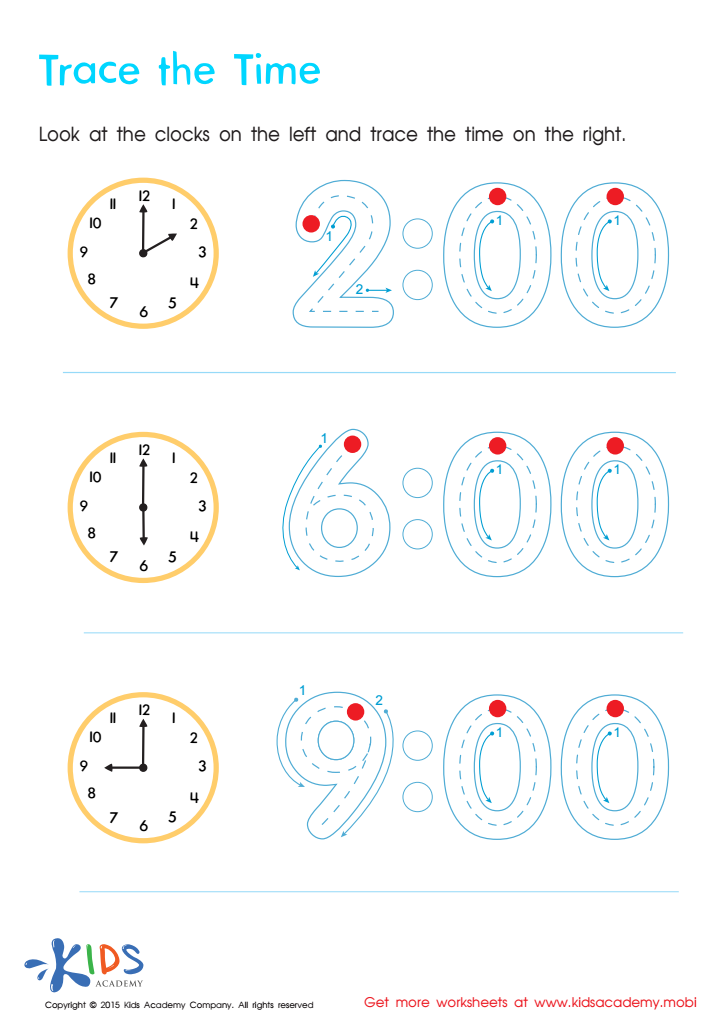
Telling The Time Worksheet: Part 2
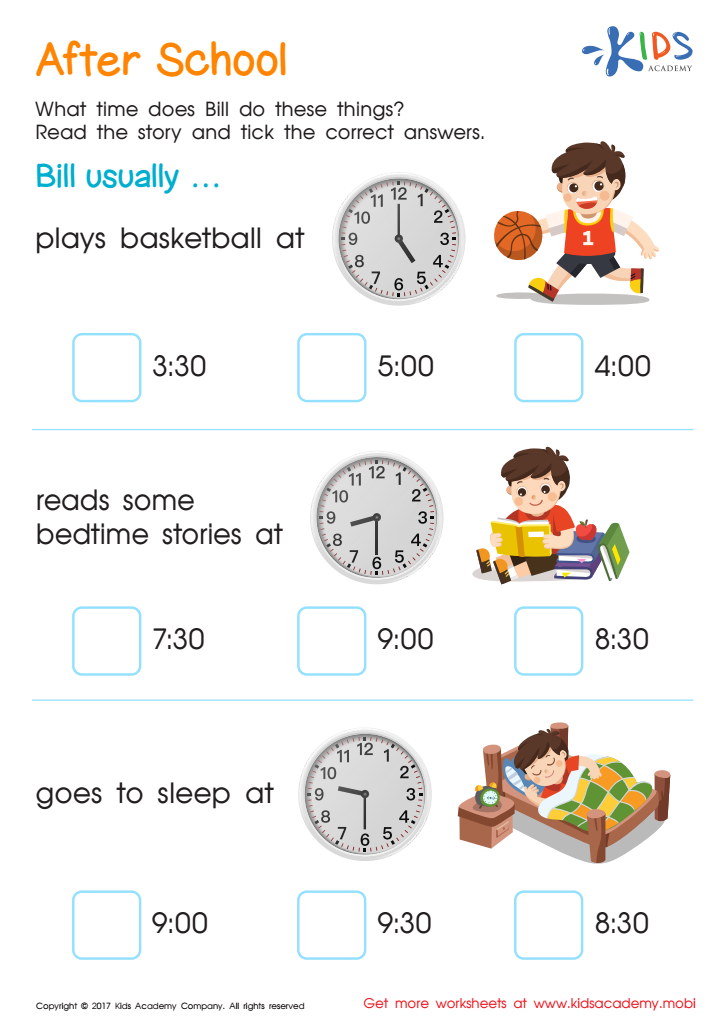
After School Time Printable
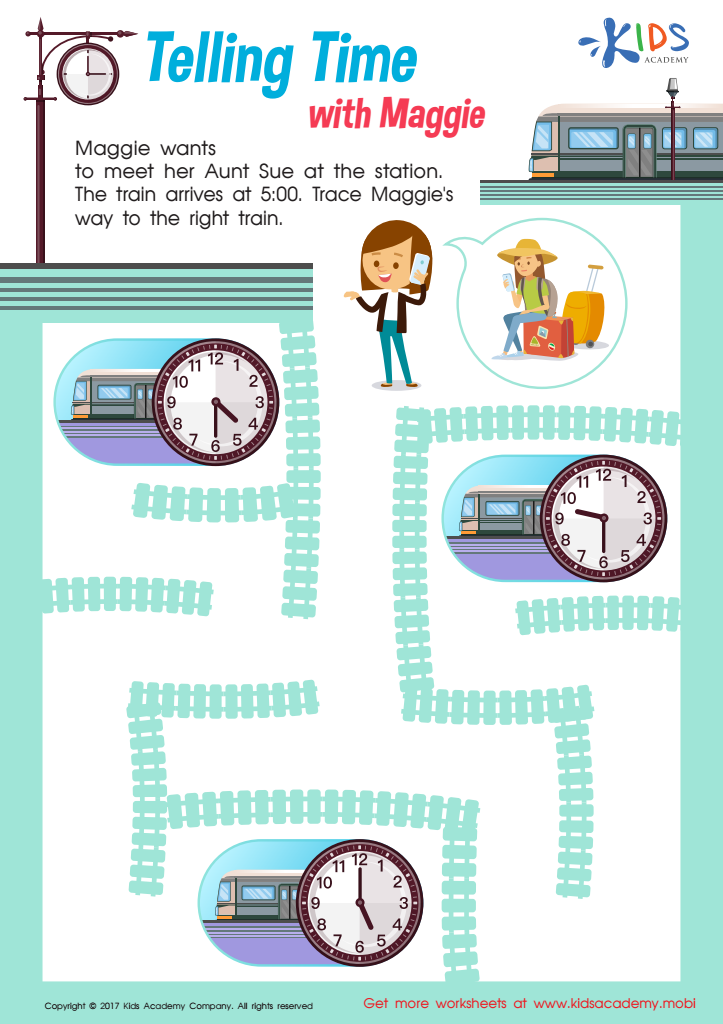
Telling Time With Maggie Time Worksheet
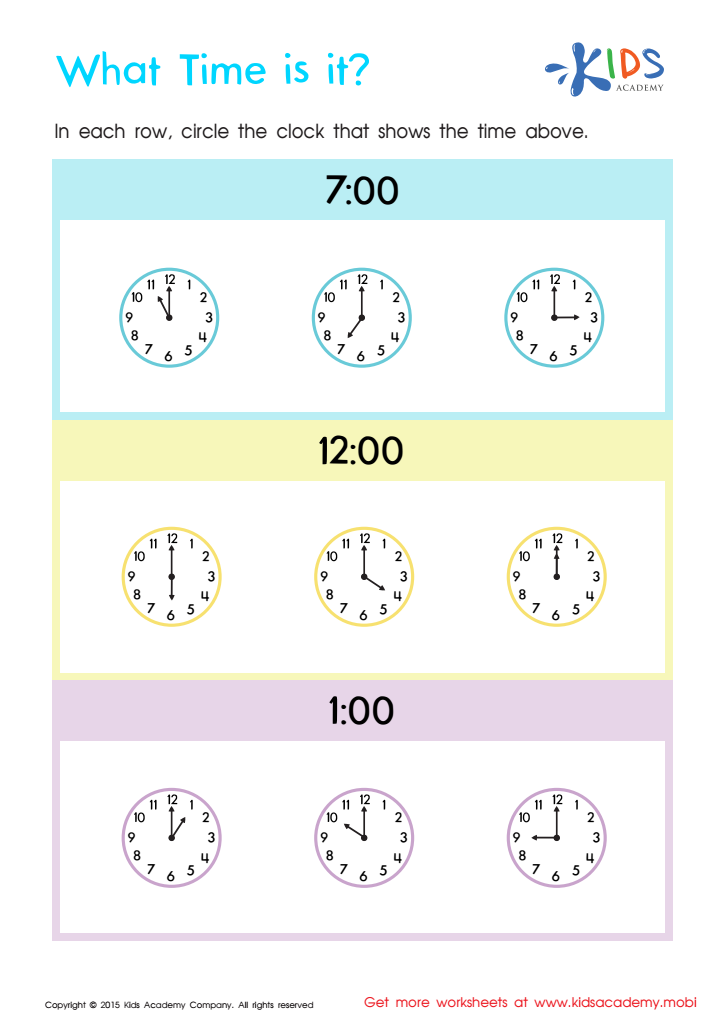
Telling The Time Worksheet: Part 3



.jpg)



Parents and teachers should prioritize Time reading skills for children aged 6-8 due to their fundamental role in developing critical life competencies. At this age, children begin to understand the concept of time, which impacts their daily routines, school activities, and social interactions. Mastering time-related skills helps foster responsibility, as children learn to manage schedules for homework, playtime, and other activities.
Moreover, strong time-telling abilities enhance cognitive development by introducing concepts such as sequencing and spatial awareness. Understanding time also aids in building mathematical skills, as children start to recognize patterns and relationships.
Additionally, Time reading skills promote independence and confidence. By learning to read clocks and schedules, children gain the ability to operate within the frameworks of their environment, leading to improved decision-making and problem-solving abilities.
Finally, consistent practice of these skills tailored to their developmental stage creates opportunities for meaningful engagements, whether through games or practical exercises. This builds a foundation not just for academic success but also for lifelong learning, enabling children to navigate their world with assurance and clarity. Overall, both parents and teachers play a crucial role in supporting this essential aspect of early childhood development.