Story sequencing Extra Challenge Reading Worksheets for Ages 6-8
3 filtered results
-
From - To
Introducing our Story Sequencing Extra Challenge Reading Worksheets for Ages 6-8! Designed to boost comprehension and critical thinking, these worksheets engage young readers with fun, challenging activities. Through rearranging story events, kids enhance their understanding of narrative flow and improve their sequencing skills. Each worksheet features intriguing tales and vibrant illustrations to capture your child's imagination. Ideal for classroom use or at-home practice, our worksheets support the development of essential learning skills in a fun and interactive way. Help your child excel in reading and storytelling with our expertly crafted resources! Explore now and spark a love for literacy.
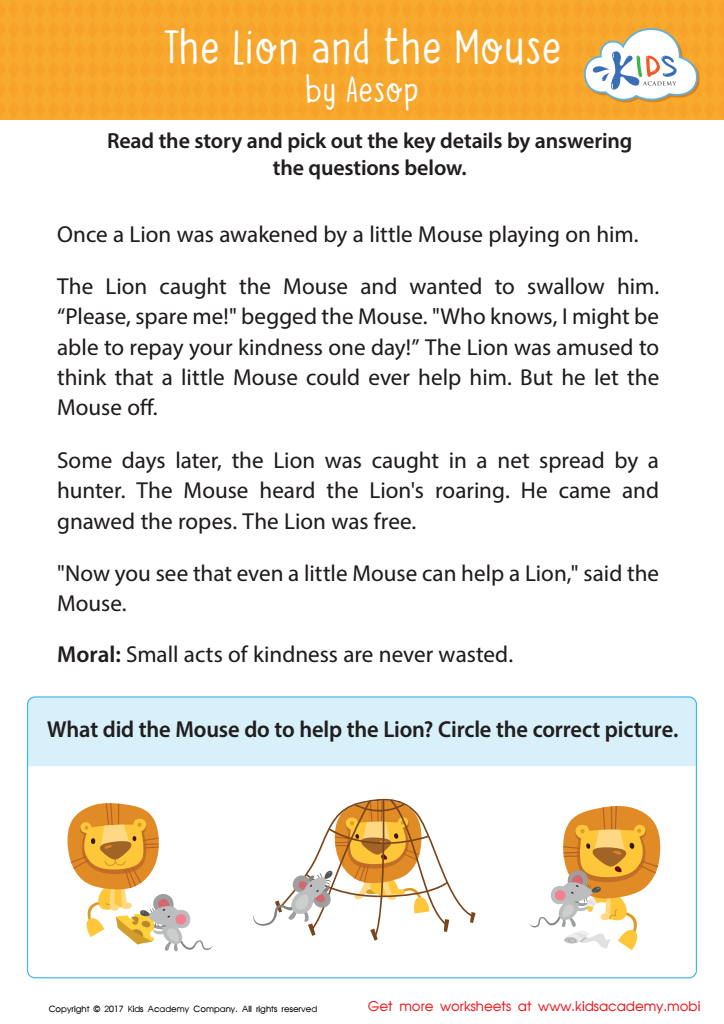
The Lion and The Mouse Sequencing Worksheet
 Assign to My Students
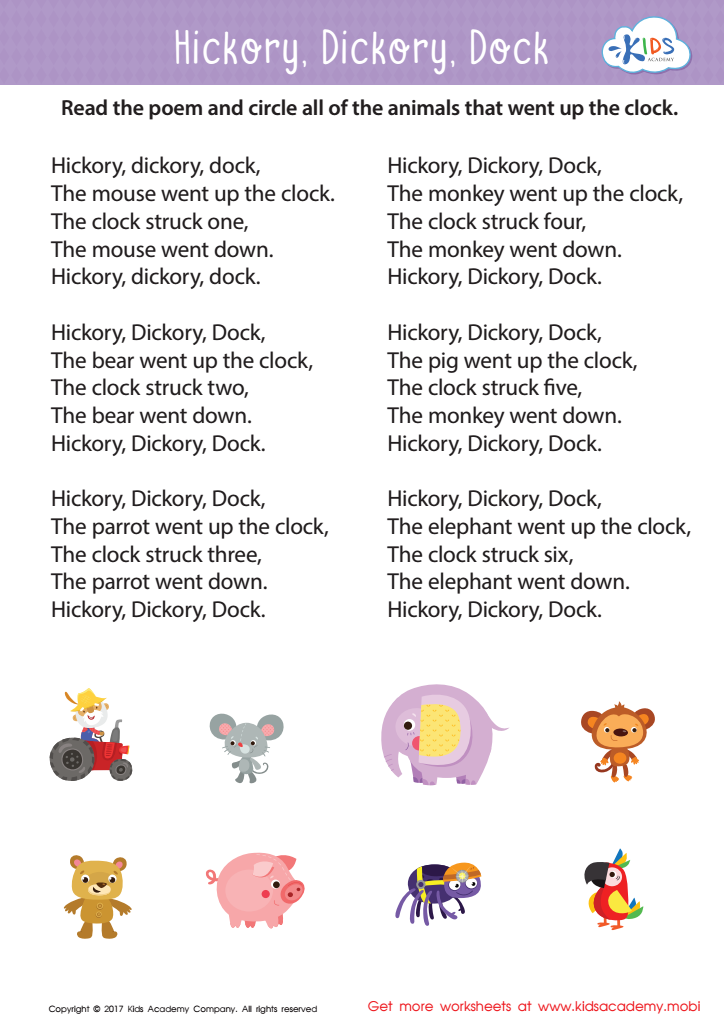
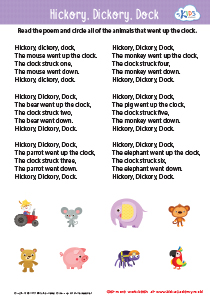
Hickory Dickory Dock Sequencing Worksheet
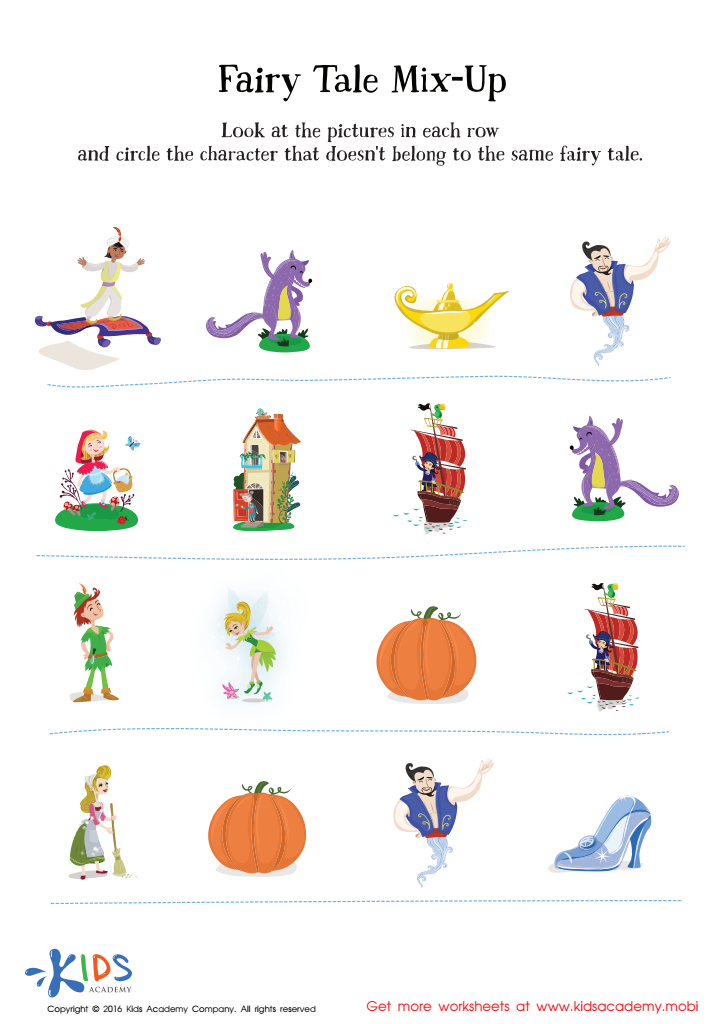
Fairy Tale Worksheet: Story Mix Up







Story sequencing is a foundational skill for young readers, especially for children aged 6-8. By focusing on story sequencing through an extra challenge in reading, parents and teachers can significantly boost the cognitive and literacy development of young children.
Firstly, story sequencing helps improve comprehension. By identifying the beginning, middle, and end of a story, children develop a better understanding of narrative structure, which is crucial for making sense of what they read. This skill transcends reading, aiding in logical thinking and problem-solving in other areas of learning and everyday life.
Secondly, story sequencing enhances memory. Young readers must recall details, events, and characters, ensuring they retain information over time. This strengthens their overall memory and enhances their ability to focus and stay attentive.
Furthermore, the extra challenge provided by sequencing activities fosters critical thinking. Children are prompted to analyze and synthesize information, predicting what might happen next and understanding cause-and-effect relationships within the story. This practice encourages deeper engagement with the text and nurtures a love for reading.
Lastly, sequencing activities support language development. As children recount stories in their own words and order the events correctly, they improve their vocabulary, sentence structure, and ability to narrate and describe.
In sum, investing in story sequencing provides a multifaceted educational benefit, laying a robust foundation for lifelong learning and literacy.