Alphabet Recognition Extra Challenge Letter Recognition Worksheets for Ages 6-9
3 filtered results
Difficulty Level
Grade
Age
-
From - To
Subject
Activity
Standards
Transform your child's letter recognition skills with our engaging Alphabet Recognition Extra Challenge Worksheets! Tailored for ages 6-9, these printable worksheets offer a fun and interactive way to reinforce essential literacy skills. Each activity is designed to challenge young learners, enhancing their ability to identify, match, and differentiate letters. Your child will love the colorful designs and varied exercises that spark curiosity and inspire learning. Perfect for parents and teachers, these worksheets are ideal for classroom activities or at-home practice. Foster a love for reading and writing while building confidence in letter recognition. Download now and watch your child's skills soar!
Favorites
With answer key
Interactive

Letter A Tracing Page
Trace and write the letter "A"! Start with the big red dot, then do the capital and lowercase versions. Then write it again with two words - apple and alligator. Download more tracing worksheets at Kids Academy.
 Assign to My Students
Letter A Tracing Page
Worksheet
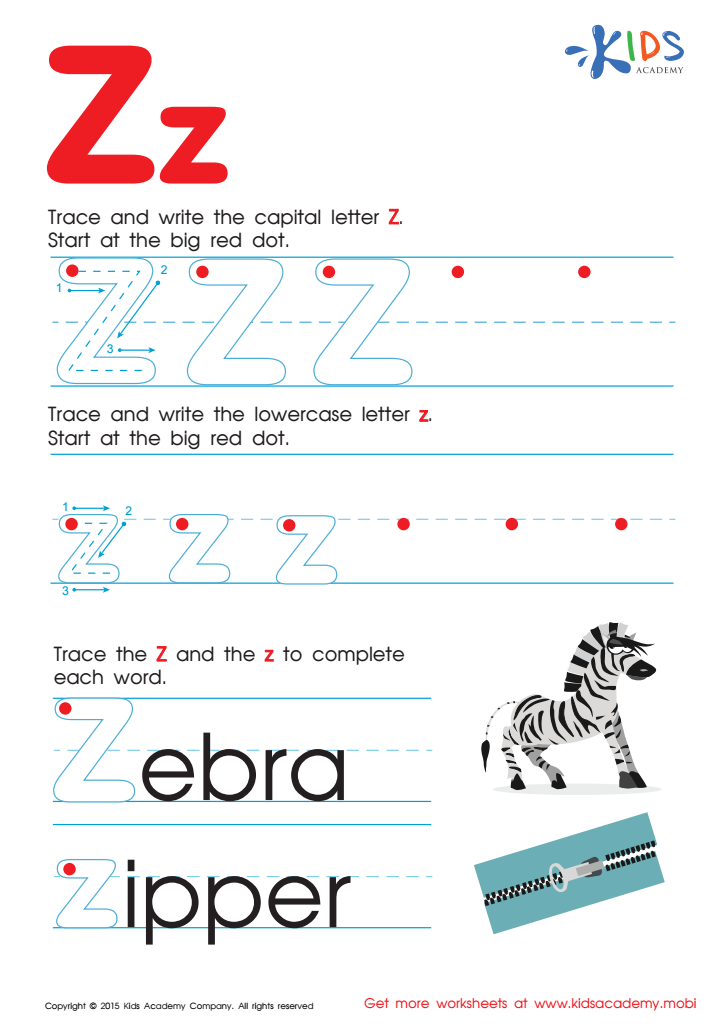
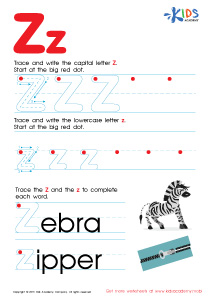
Letter Z Tracing Page
Trace and write capital "Z" and lowercase "z". Complete words "zebra" and "zipper". Be attentive and have fun! (80 words)
Letter Z Tracing Page
Worksheet
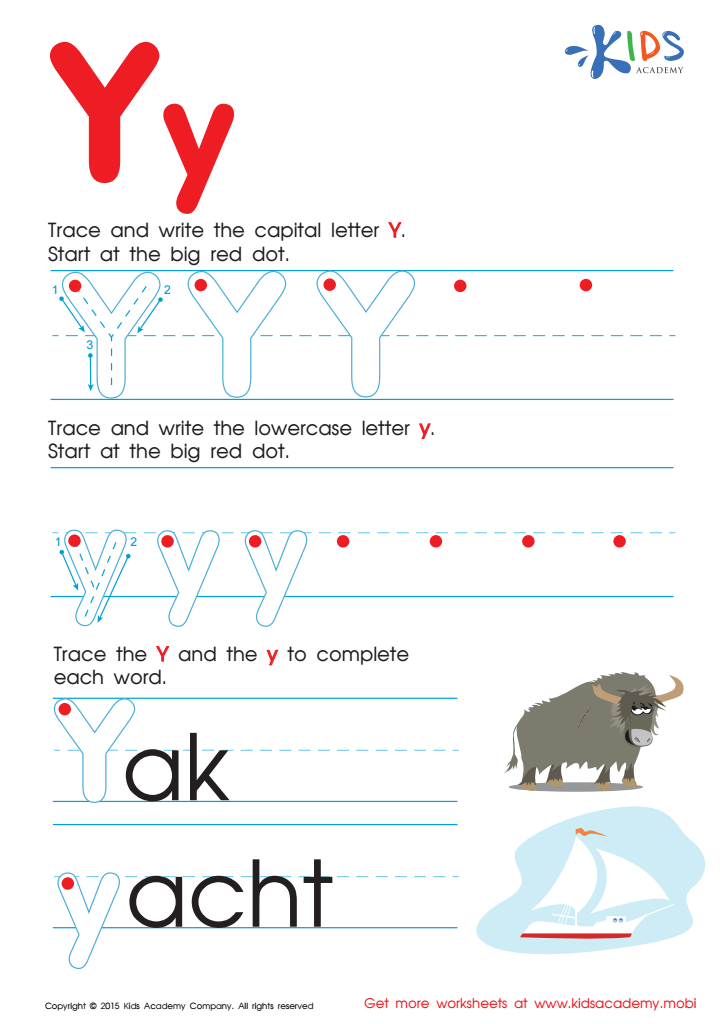
Letter Y Tracing Page
Trace the capital letter "Y" on the red dot, then trace and write the lowercase letter. Complete the words to help the Yak walk and the yacht swim. More worksheets at Kids Academy.
Letter Y Tracing Page
Worksheet
Join Kids Academy for Free
Who is primarily going to use this learning content?








Alphabet recognition is a foundational skill essential for young learners, especially those aged 6-9, as they transition into more complex literacy. Understanding the alphabet is a crucial stepping stone that influences not just reading and writing, but also overall academic success. By incorporating extra challenges in letter recognition, parents and teachers can effectively support cognitive development and enhance engagement.
First, mastering alphabet recognition promotes children’s confidence in reading. As they become more familiar with letters, they can decode words more easily, laying the groundwork for fluency. Enhanced letter recognition skills also improve their ability to write, leading to better composition skills.
Second, incorporating extra challenges can make learning fun and interactive. Creative activities, such as letter scavenger hunts or alphabet games, stimulate a child’s interest and motivation. This interactive approach caters to diverse learning styles, ensuring that all children can engage and progress at their own pace.
Finally, fostering strong alphabet recognition skills in these formative years helps prevent future academic challenges. By developing a solid literacy foundation early on, parents and teachers can empower children to succeed not just in school, but in lifelong learning. Thus, recognizing and enhancing alphabet skills is an investment in a child’s future.