Alphabet Recognition Extra Challenge Tracing Letters Worksheets for Ages 6-9
3 filtered results
-
From - To
Boost your child's alphabet recognition skills with our "Alphabet Recognition Extra Challenge Tracing Letters Worksheets" designed for ages 6-9! These engaging worksheets provide fun and interactive tracing activities to help young learners master letter shapes and sounds. Children will build fine motor skills and enhance their handwriting while exploring letters both in uppercase and lowercase. Perfect for homeschooling, classroom activities, or extra practice at home, these worksheets will keep kids motivated and excited about learning. With a mix of challenges, your child will progress confidently through the alphabet and reinforce their literacy foundation. Start their alphabet adventure today!

Letter A Tracing Page
 Assign to My Students
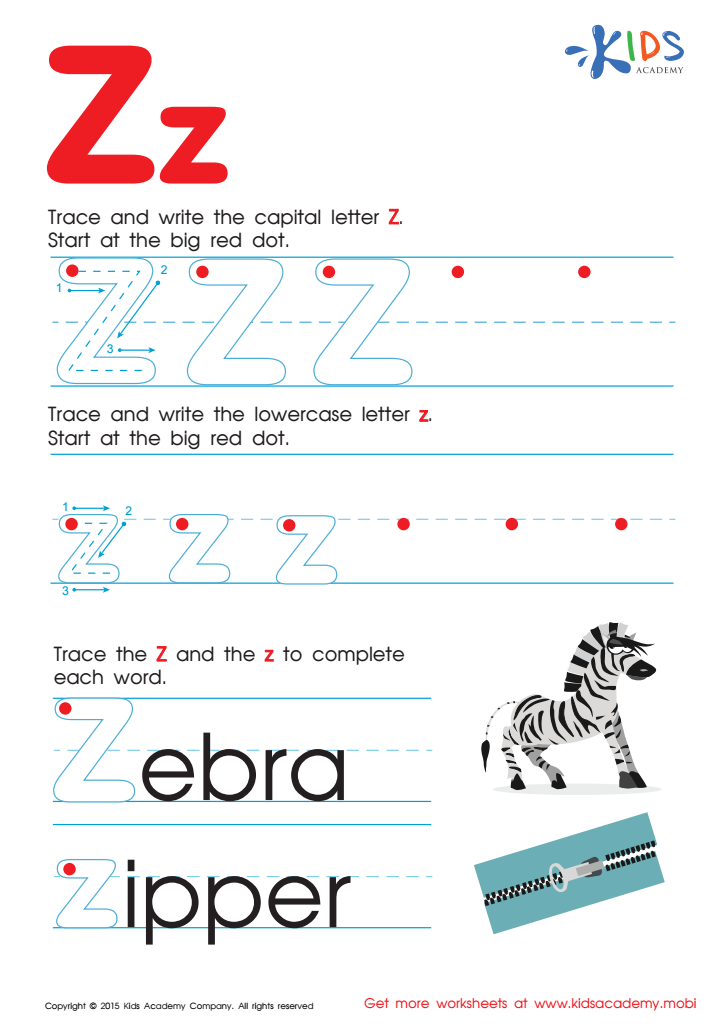
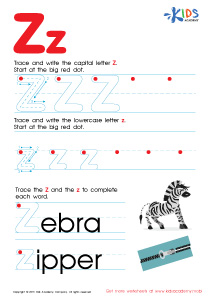
Letter Z Tracing Page
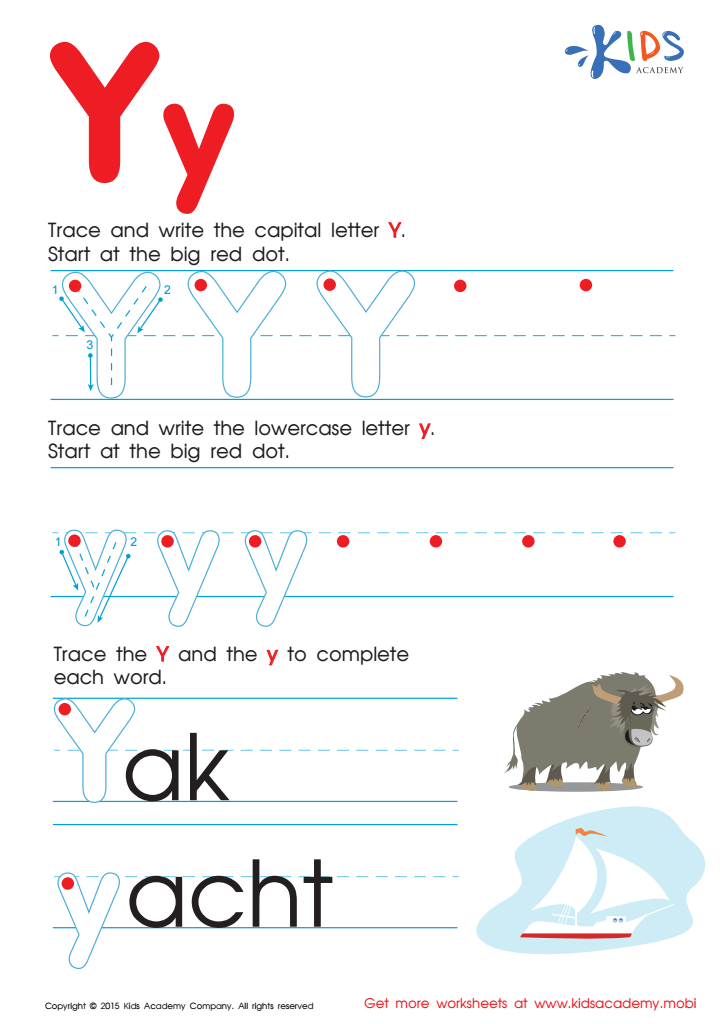
Letter Y Tracing Page







Parents and teachers should emphasize Alphabet Recognition Extra Challenge Tracing Letters for children ages 6-9 because this activity fosters essential literacy skills that are critical for early education. Recognizing letters is a foundational skill for reading and writing; it lays the groundwork for a child's ability to decode words and engage with texts effectively.
Tracing letters not only aids in recognition but also enhances fine motor skills, allowing children to develop control over writing instruments. This coordination is vital as it contributes to their overall handwriting proficiency, which is necessary for clear communication in both academic settings and everyday life.
Moreover, such activities can be tailored to meet individual learning paces. They can be introduced as fun, engaging tasks that parents and teachers can do together, fostering a love for learning. These tracing challenges can also reinforce memory retention through repetition and visual recognition, making the process enjoyable and effective.
Investing time in these activities helps to build confidence in young learners, preparing them for more complex literacy tasks ahead. Ultimately, prioritizing alphabet recognition through interactive tracing not only supports academic growth but also nurtures a child's curiosity and eagerness to learn.