Alphabet Recognition Extra Challenge English for Beginners Worksheets for Ages 6-9
3 filtered results
-
From - To
Welcome to our "Alphabet Recognition Extra Challenge English for Beginners Worksheets" designed specifically for children ages 6 to 9. These engaging worksheets enhance alphabet recognition skills through fun and interactive activities, perfect for ESL learners. Kids will explore letters with creative exercises, including matching, tracing, and colorful illustrations that capture their interest. Our worksheets encourage repetition and practice, laying a solid foundation for reading and writing. Designed to promote confidence, each worksheet ensures that children can master their letters while enjoying the learning process. Start your child's journey in English language acquisition and watch them thrive with our extra challenge worksheets!
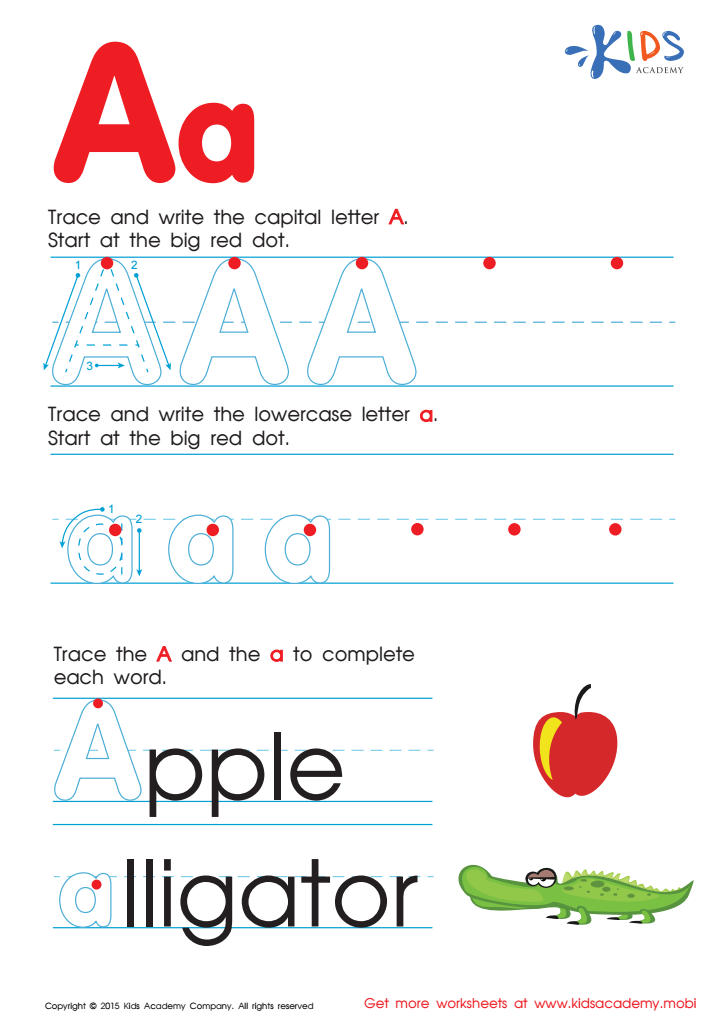
Letter A Tracing Page
 Assign to My Students
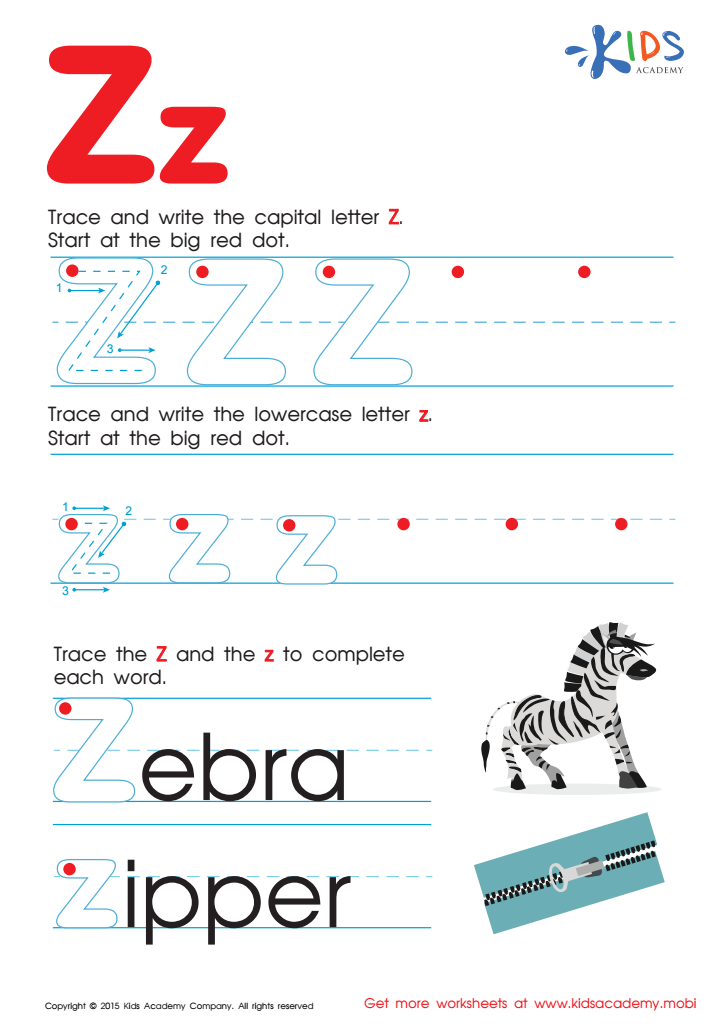
Letter Z Tracing Page
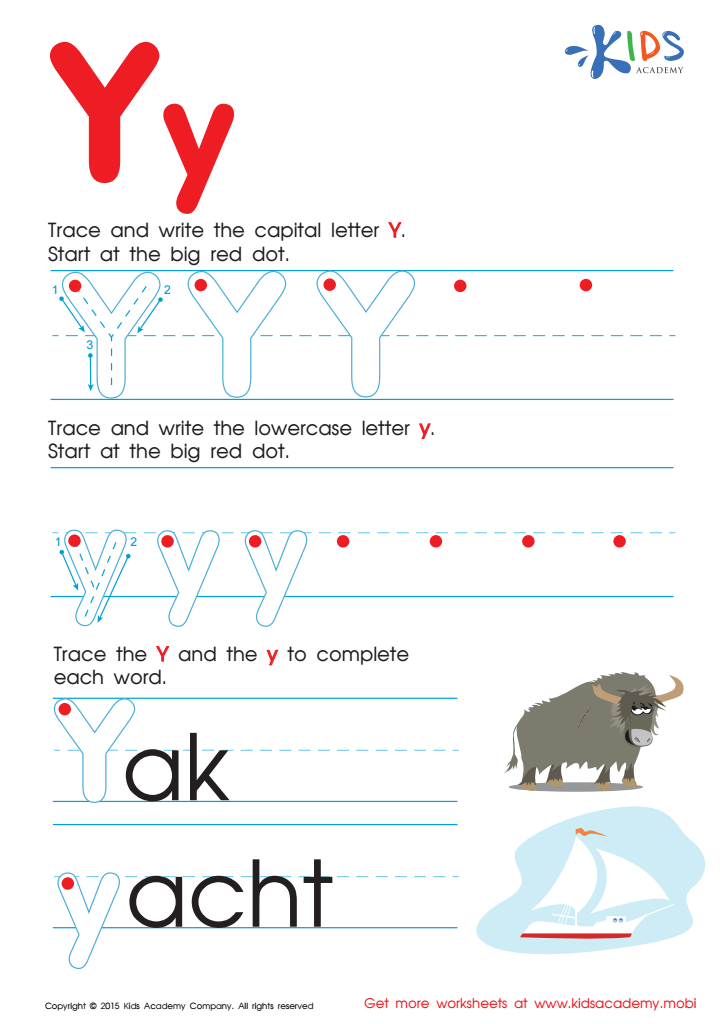
Letter Y Tracing Page





Alphabet recognition is a fundamental building block for literacy and a critical skill for children ages 6-9. Parents and teachers should prioritize programs, like "Alphabet Recognition Extra Challenge English for Beginners," as they provide targeted support that enhances students' reading and writing abilities. At this age, children are transitioning from phonemic awareness to actual reading, and mastering the alphabet is crucial for their confidence and competence in language arts.
This challenge not only reinforces letter recognition but also helps children associate sounds with their corresponding letters, facilitating phonics development. Engaging activities can keep learning fun and interactive, which is essential for maintaining a child’s interest. Moreover, by focusing on extra challenges, children can develop essential problem-solving skills and resilience when encountering new and difficult tasks.
Parents and teachers also play a pivotal role in shaping children's attitudes toward learning. By engaging in programs like this, they demonstrate the value of education and promote lifelong learning habits. Ultimately, investing in alphabet recognition effectively sets children up for future academic success, allowing them to tackle more complex literacy skills with confidence and ease.








