Animal recognition Extra Challenge Worksheets for Ages 6-9
5 filtered results
-
From - To
Welcome to our "Animal Recognition Extra Challenge Worksheets" specially designed for ages 6 to 9! These engaging and educational worksheets provide a fun way for children to enhance their animal recognition skills while exploring various species. With a variety of activities, including identification games, matching exercises, and creative illustrations, kids will develop their observational and cognitive skills. Perfect for the classroom or home learning, these extra challenge worksheets encourage curiosity about the animal kingdom through interactive learning. Dive into the adventure of discovery and watch your young learners thrive in their understanding and appreciation of wildlife!
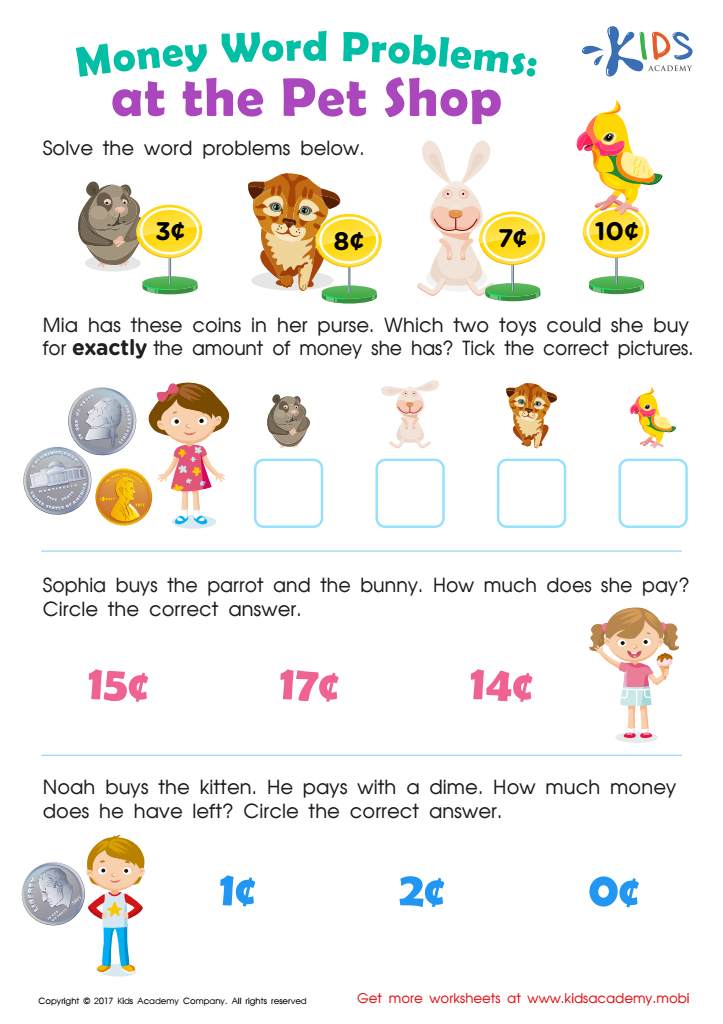
Pet Shop Worksheet
 Assign to My Students
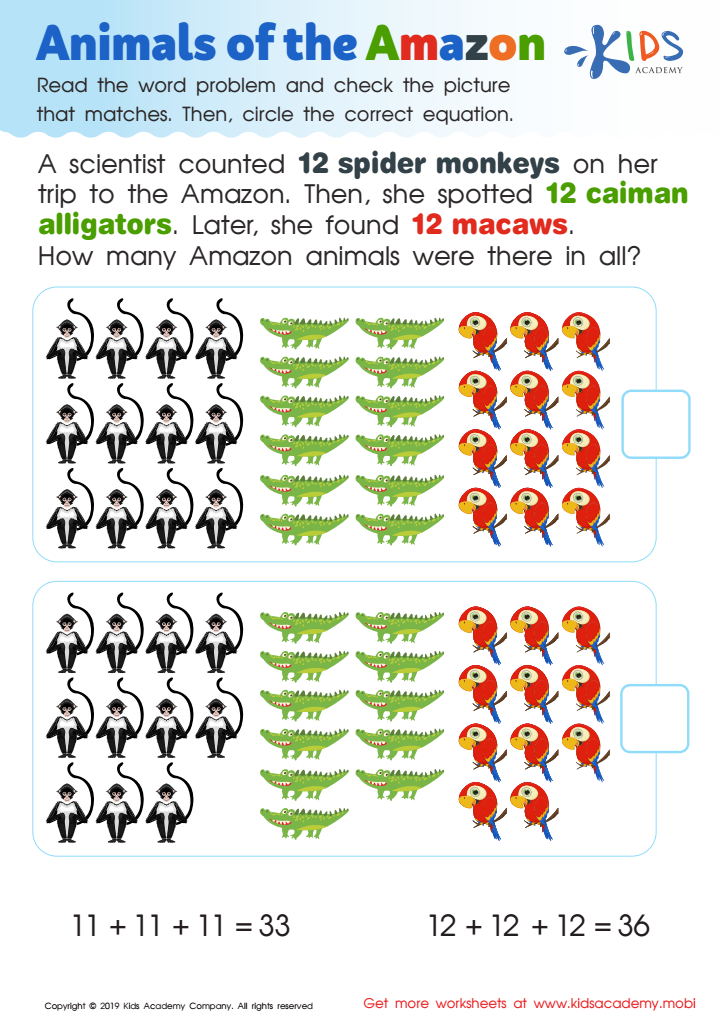
Animals of Amazon Worksheet
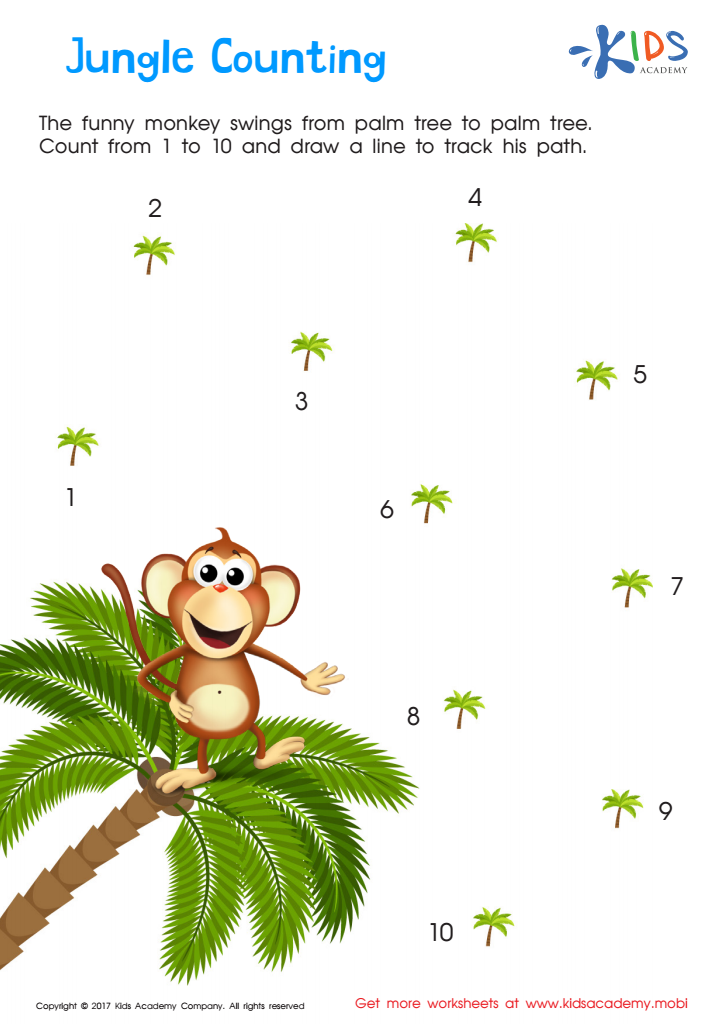
Jungle Counting Connect Dots Worksheet
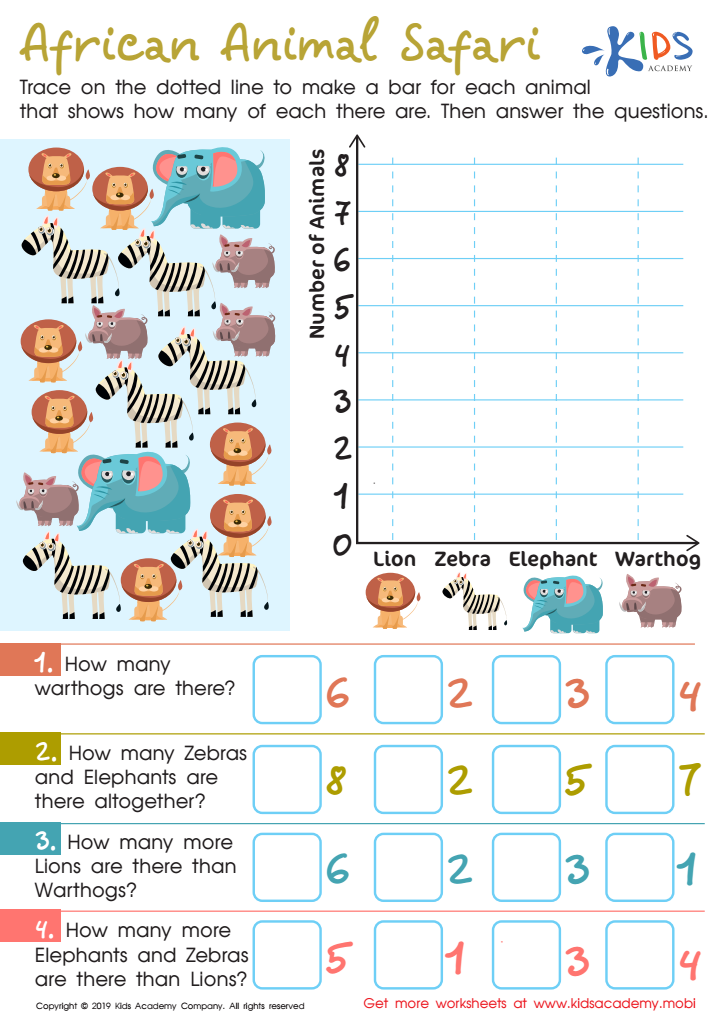
African Animal Safari Worksheet
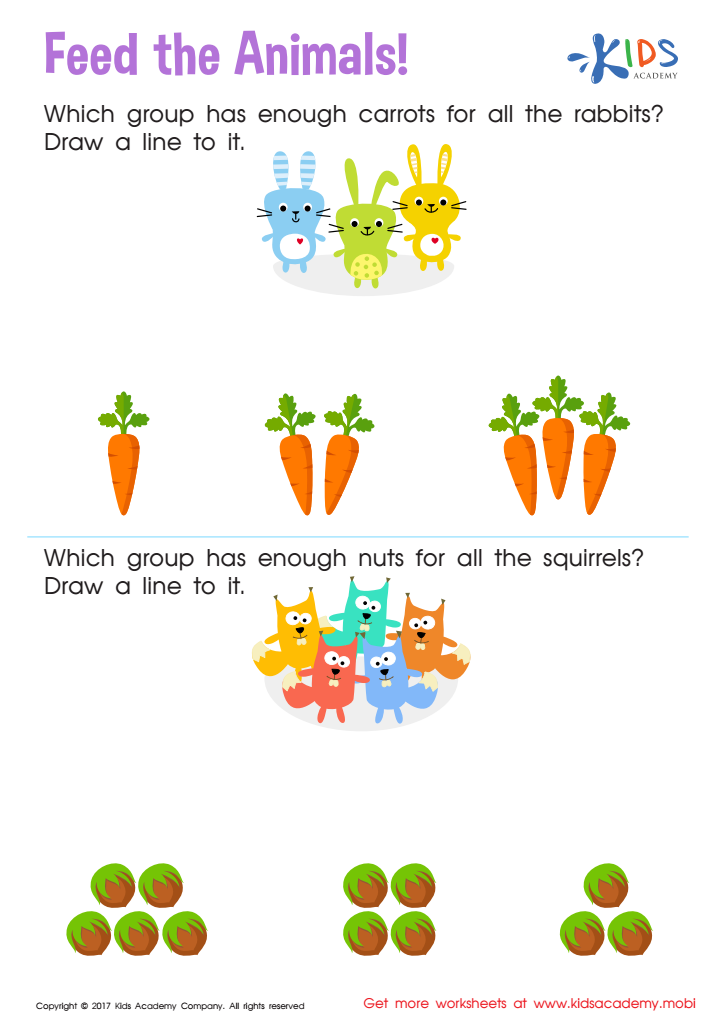
Count and Match: Feed the Animals Worksheet








Animal recognition is a vital skill for children aged 6-9, one that enhances their understanding of the natural world and nurtures their cognitive development. Parents and teachers should care about incorporating challenges that promote this skill because it fosters curiosity and engagement in young learners. Recognizing different animals not only encourages children to explore biodiversity but also strengthens observational skills, helping them to notice details and categorize information.
Importantly, animal recognition can lead to greater empathy towards living beings. By learning about various species and their habitats, children develop a sense of responsibility and a desire to protect these creatures, which is essential in cultivating environmentally conscious citizens. Furthermore, activities related to animal recognition can integrate various subjects, such as science, geography, and art, creating holistic learning experiences.
In a digital age filled with screens, kids can benefit from hands-on activities and outdoor exploration related to animal recognition, promoting active learning. This boosts their social skills, as they may partake in group discussions or projects that deepen their peer connections. Ultimately, animal recognition challenges can enrich the educational journey, instilling a love for nature, fostering critical thinking, and preparing children to become informed stewards of their environment.








