Data interpretation Extra Challenge Worksheets for Ages 6-9
3 filtered results
-
From - To
Unlock your child's potential with our "Data Interpretation Extra Challenge Worksheets" designed for ages 6-9! These engaging worksheets encourage critical thinking and analytical skills as young learners explore data through vivid charts, graphs, and tables. Perfect for classroom enrichment or home learning, each worksheet presents exciting challenges that help children interpret information, draw conclusions, and solve problems. Kids will enjoy enhancing their math abilities while gaining essential skills in data analysis. Promote confidence and curiosity in young minds with fun, interactive activities that make data interpretation a breeze. Explore our collection today and watch your child's love for learning grow!
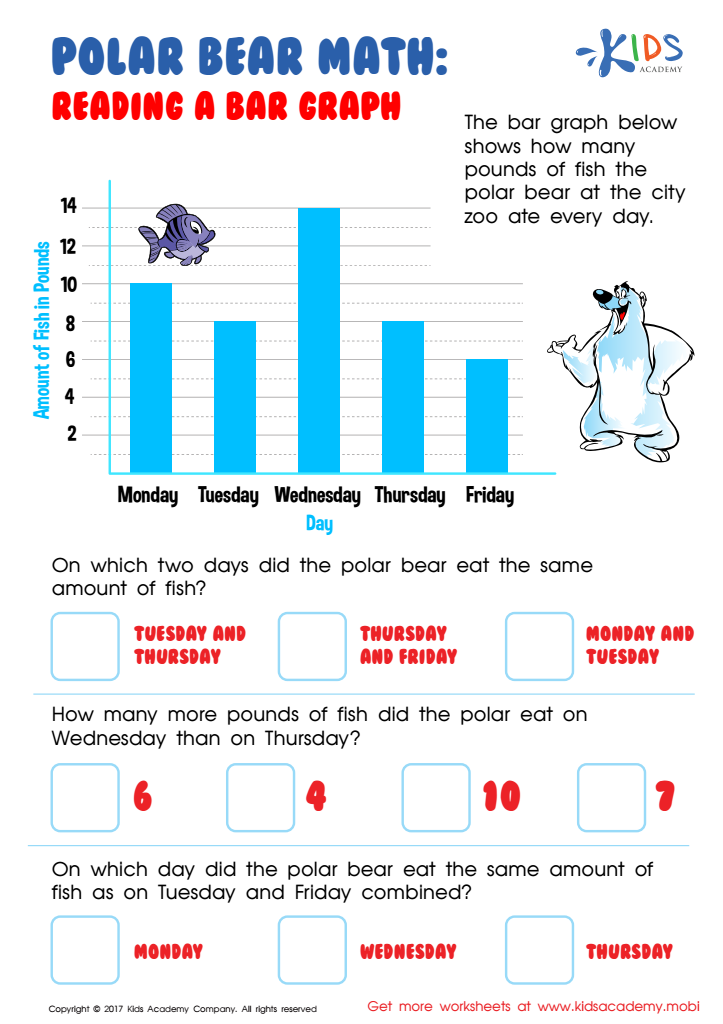
Reading Bar Graph Worksheet
 Assign to My Students
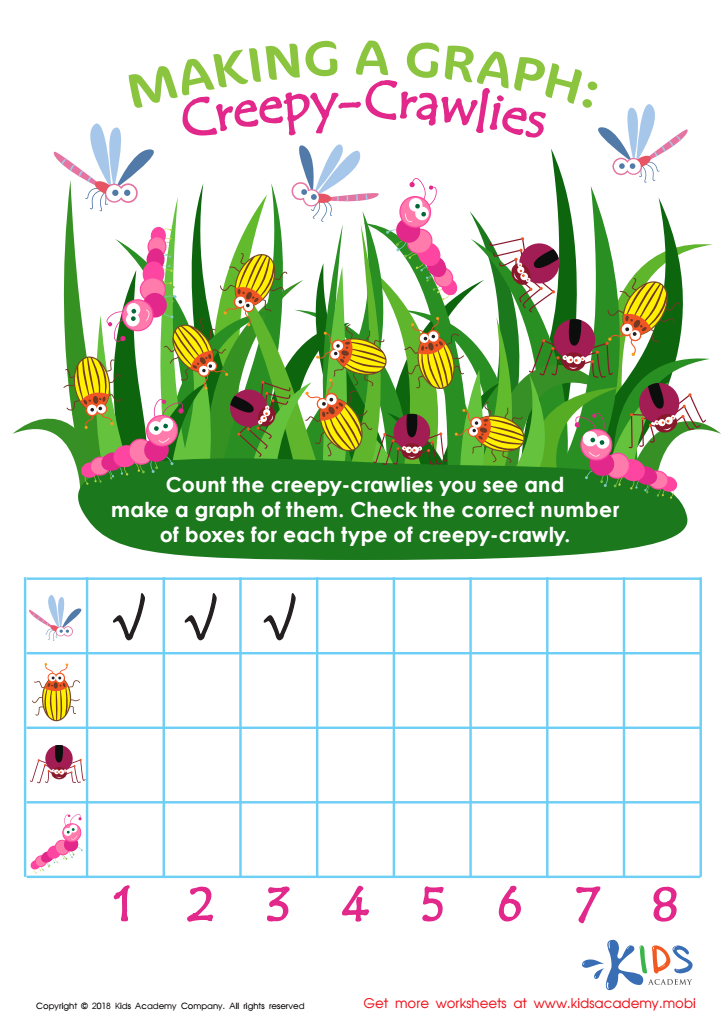
Making a Graph: Creepy Crawlies Worksheet
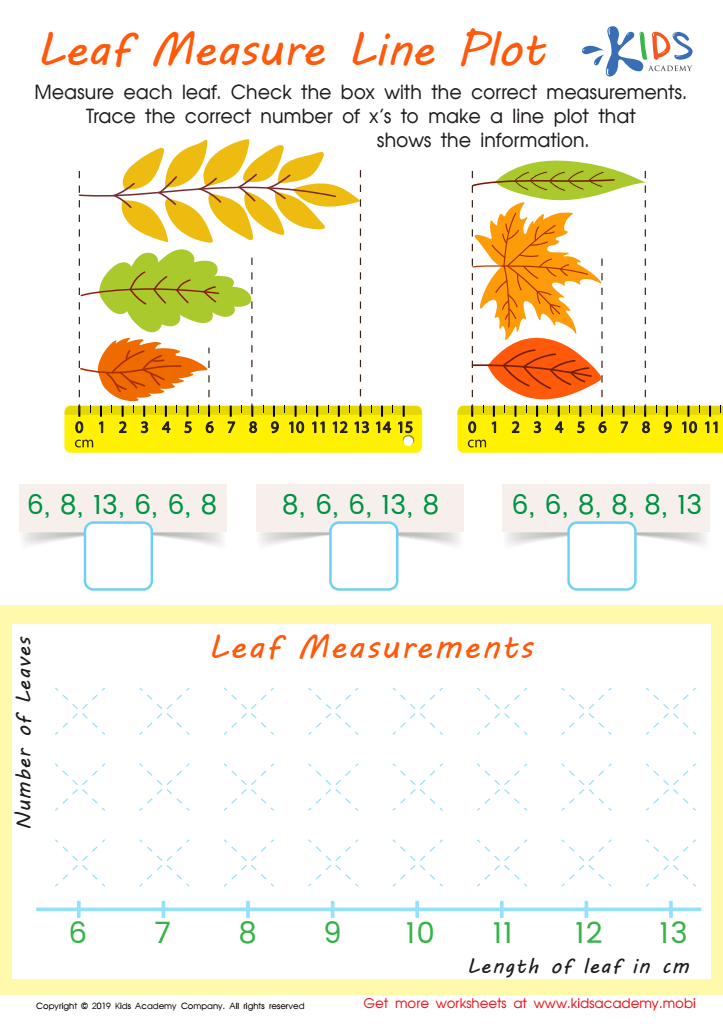
Leaf Measure Line Plot Worksheet






Data interpretation is a crucial skill for children aged 6-9, and it carries significant benefits for both parents and teachers. First, it fosters critical thinking. By engaging with data—from graphs to simple charts—children learn how to analyze information, draw conclusions, and make informed decisions. This skill is not only foundational for their academic journey but also valuable in everyday life.
Furthermore, interpreting data encourages curiosity. When students analyze real-world information, they become more inquisitive about the world around them. For instance, examining weather patterns can spark discussions about climate, seasons, and even science concepts, providing a rich learning context.
Working with data also promotes math proficiency. Understanding data helps solidify concepts like counting, addition, and fractions, bridging the gap between abstract math and tangible applications in real life.
Moreover, teaching children to decode data can enhance their communication skills. As they interpret findings, they practice expressing thoughts clearly—workshops often incorporate discussions and presentations that boost students' confidence.
In summary, fostering data interpretation skills in young learners equips them with essential tools for analysis, promotes mathematical understanding, and enhances communication—skills that benefit children long-term, both academically and personally. Parents and teachers play a pivotal role in guiding this learning journey.








