Understanding plurals Extra Challenge Worksheets for Ages 6-9
5 filtered results
-
From - To
Unlock the wonders of language with our "Understanding Plurals Extra Challenge Worksheets for Ages 6-9." These engaging worksheets are designed to enhance children's comprehension of plural forms in a fun and interactive manner. By utilizing everyday objects, kids will explore both regular and irregular plurals while developing critical thinking skills. Each worksheet presents unique challenges that promote creativity and reinforce learning. Perfect for classrooms or home use, these activities cater to different learning styles, ensuring every child can grasp the concept of plurals. Empower your young learners with the tools they need for a solid linguistic foundation—download and start the adventure today!
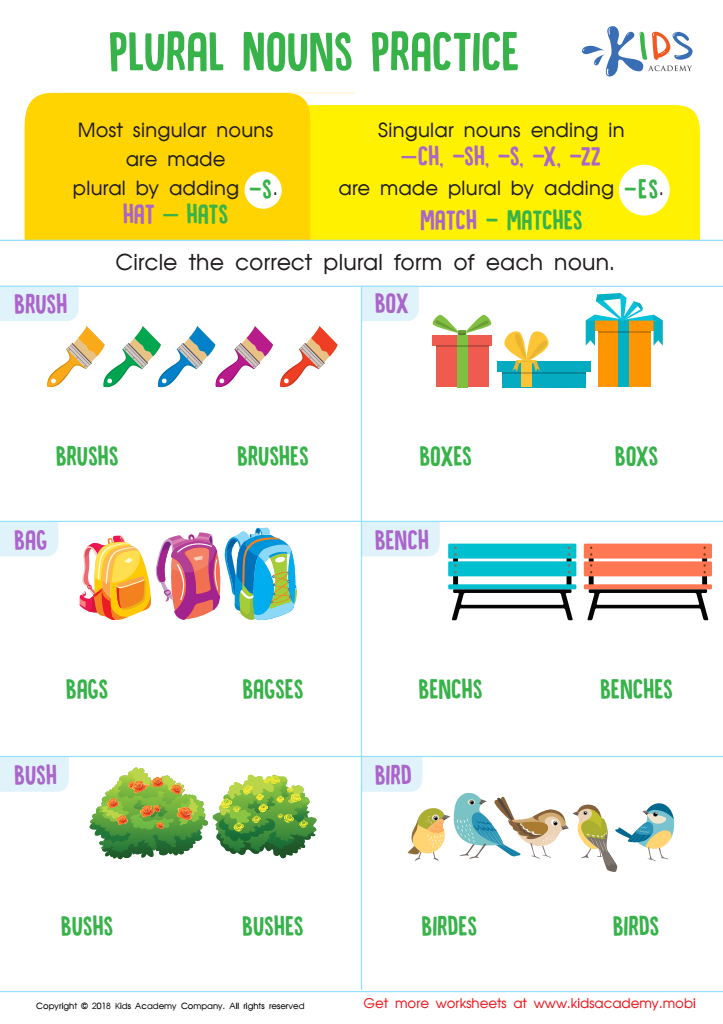
Plural Nouns Practice Worksheet
 Assign to My Students
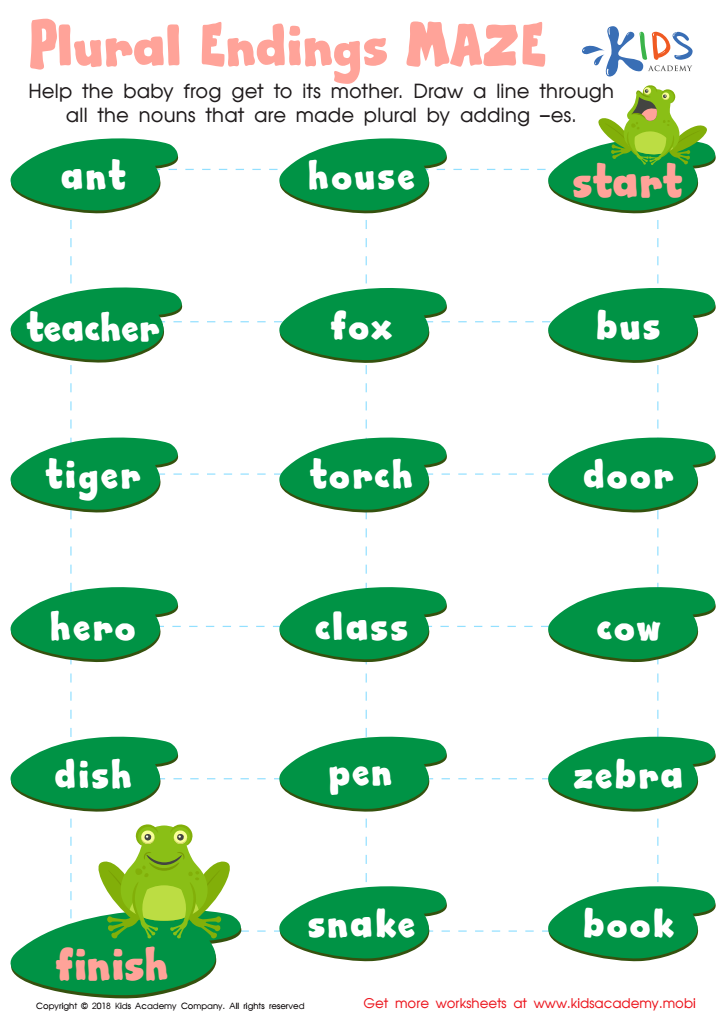
Plural Endings Maze Worksheet
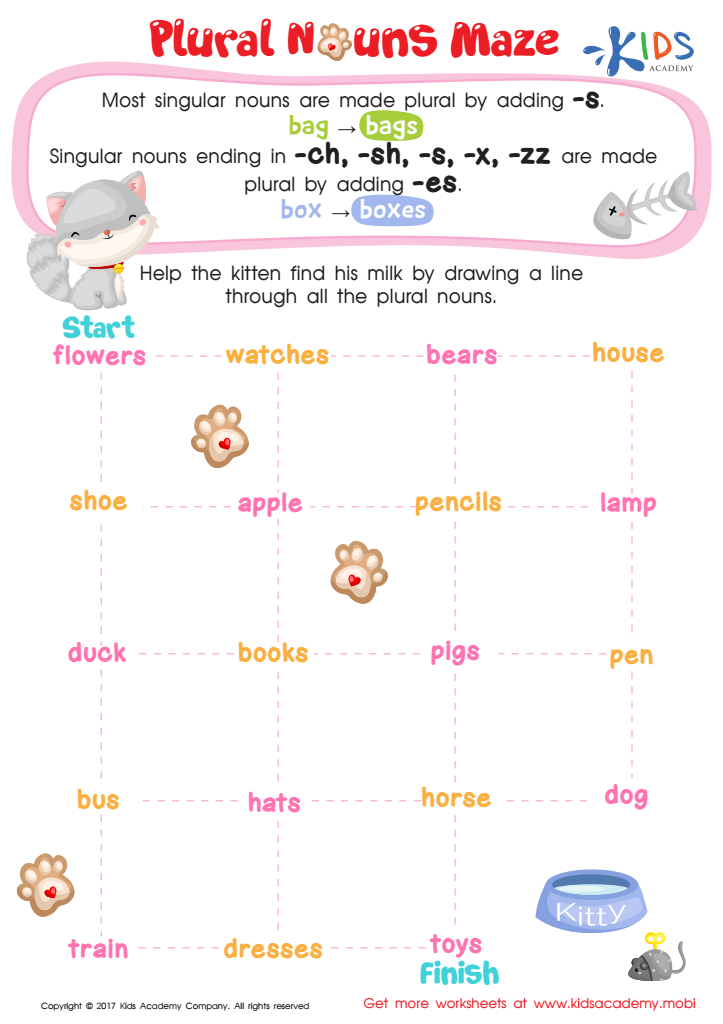
Plural Nouns Maze Worksheet
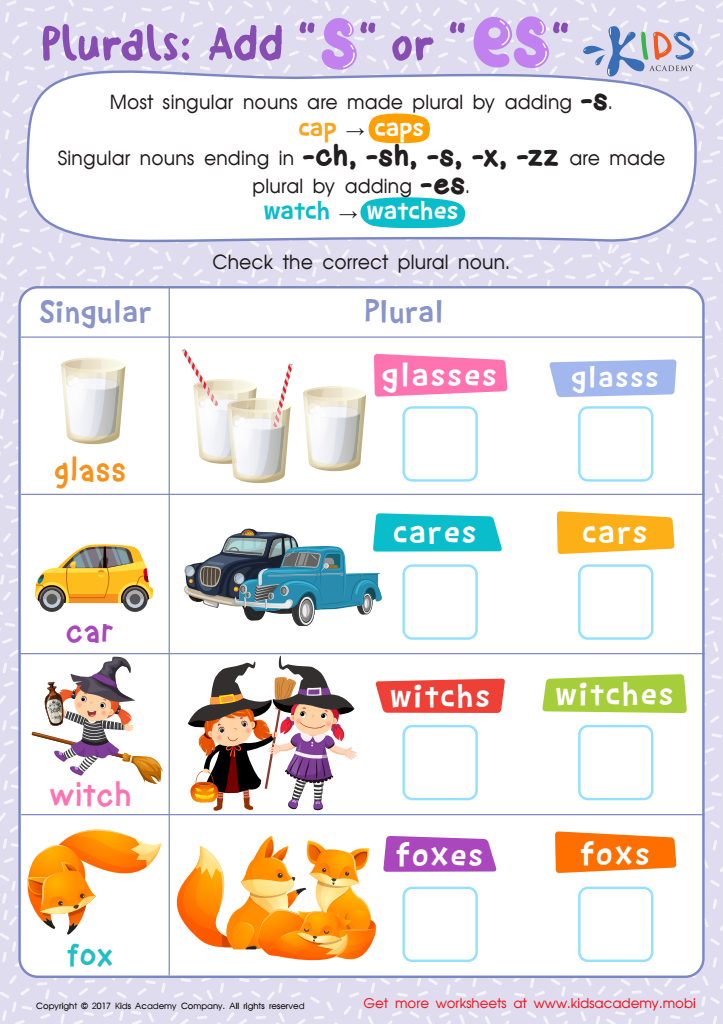
Plurals: "–es" or "–es"? Worksheet
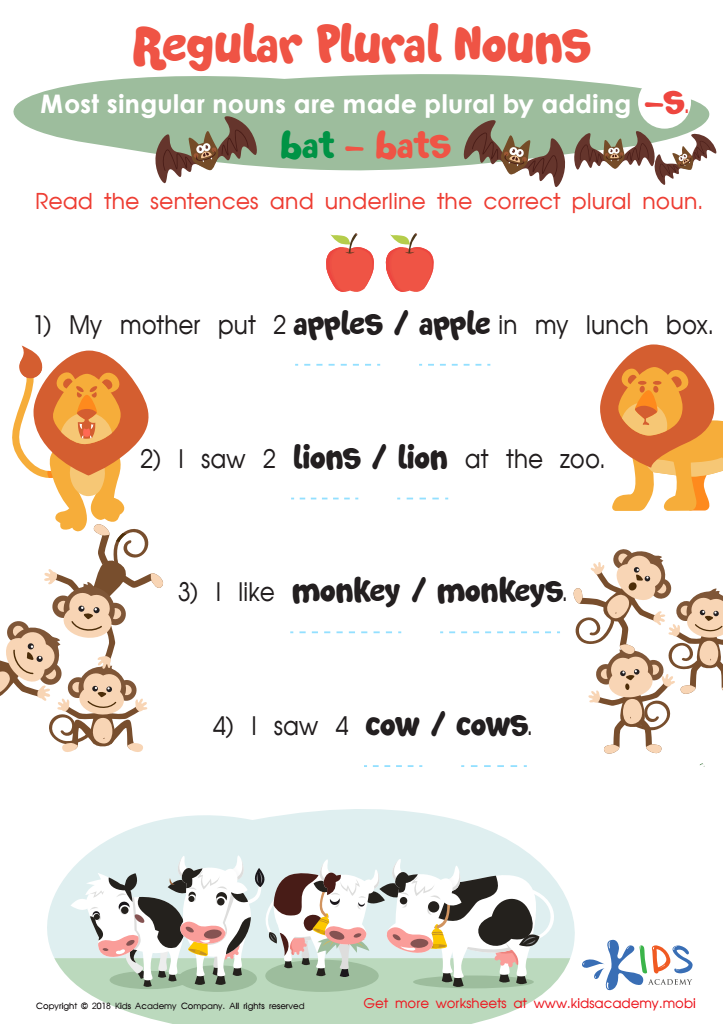
Regular Plural Nouns Worksheet




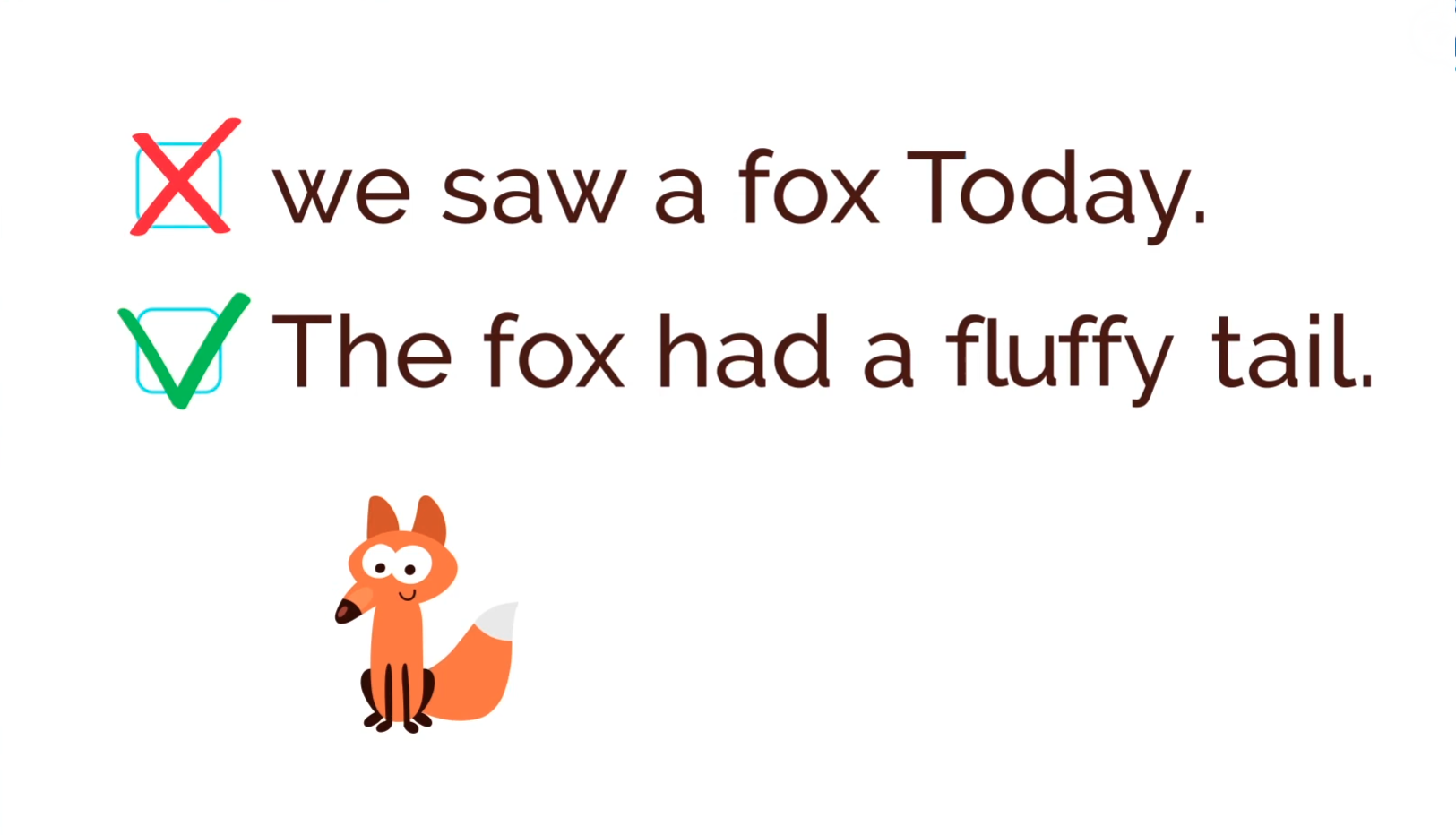



Understanding plurals is essential for children aged 6-9 as it plays a crucial role in their language development and literacy skills. Knowing the difference between singular and plural forms helps children communicate more clearly and effectively. When they understand how to form plurals, they are better equipped to construct complete sentences, enhancing their overall writing and speaking capabilities.
Additionally, learning plurals develops critical thinking and problem-solving skills. Children must identify when to use plural forms, which encourages observation and attention to detail. This understanding promotes a deeper grasp of grammar, essential for reading comprehension and expressing ideas accurately.
Introducing plural forms through engaging activities and games makes learning fun, fostering a love for language. Parents and teachers can reinforce these concepts through everyday conversations, encouraging children to connect language and meaning in their world.
Moreover, understanding plurals aids in building vocabulary; as children learn more words, they expand their ability to express nuanced ideas and gain confidence in their language use. Supporting children in mastering plurals sets a strong foundation for future learning, ensuring they are ready to tackle more complex grammatical rules as they progress in their educational journey.








