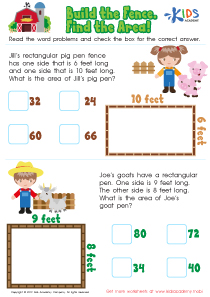
Sequencing numbers Extra Challenge Numbers Worksheets for Ages 6-9
3 filtered results
-
From - To
Enhance your child's math skills with the Sequencing Numbers Extra Challenge Worksheets designed for ages 6-9! These engaging and interactive worksheets encourage young learners to master number sequences and improve their understanding of order and patterns. Each worksheet offers a variety of fun exercises that challenge students while reinforcing essential sequencing concepts in an enjoyable way. Perfect for classroom or at-home learning, these resources help promote critical thinking and mathematical proficiency. Perfect for educators and parents looking to provide extra challenges for their children, these worksheets make learning fun and effective! Visit us today and start boosting your child's numerical skills.
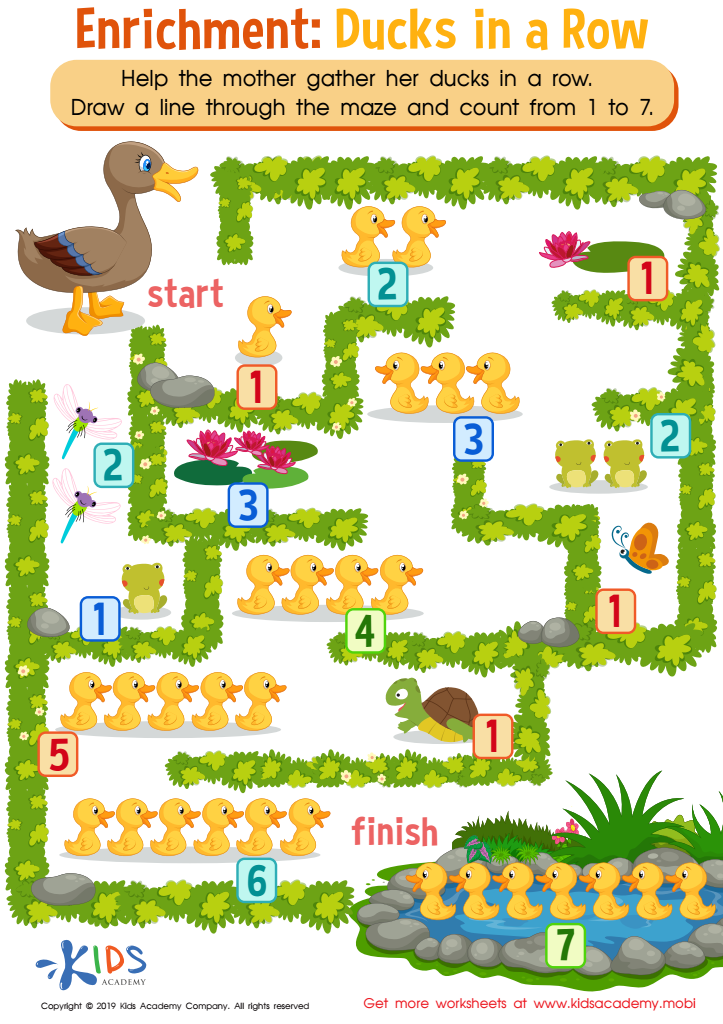
Ducks in a Row Worksheet
 Assign to My Students
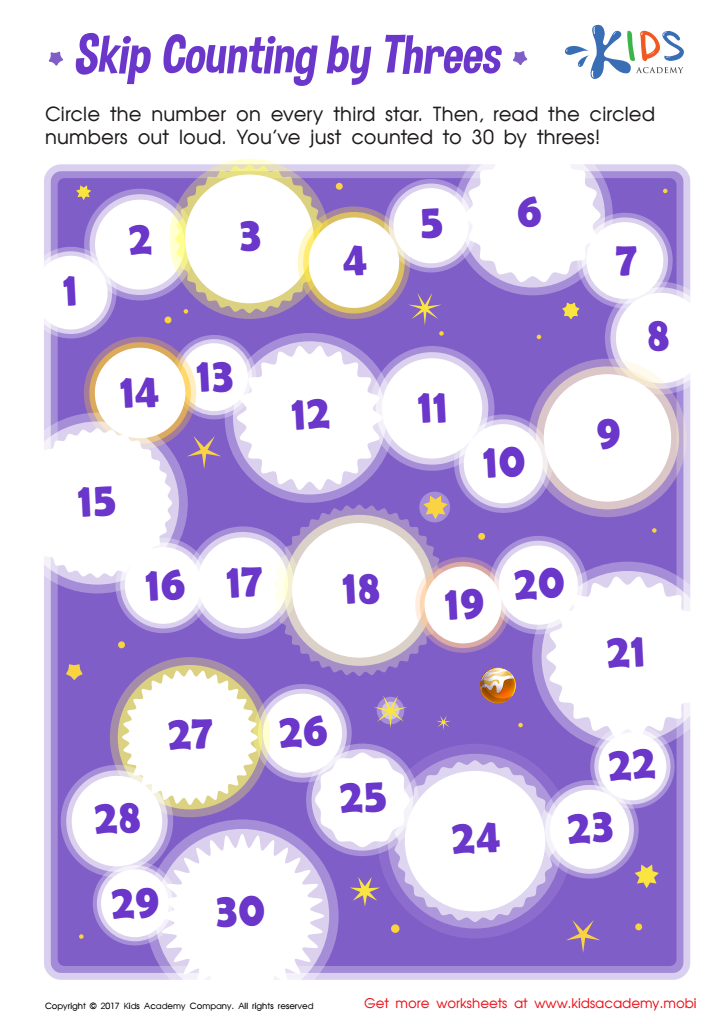
Skip Counting By Three Printable
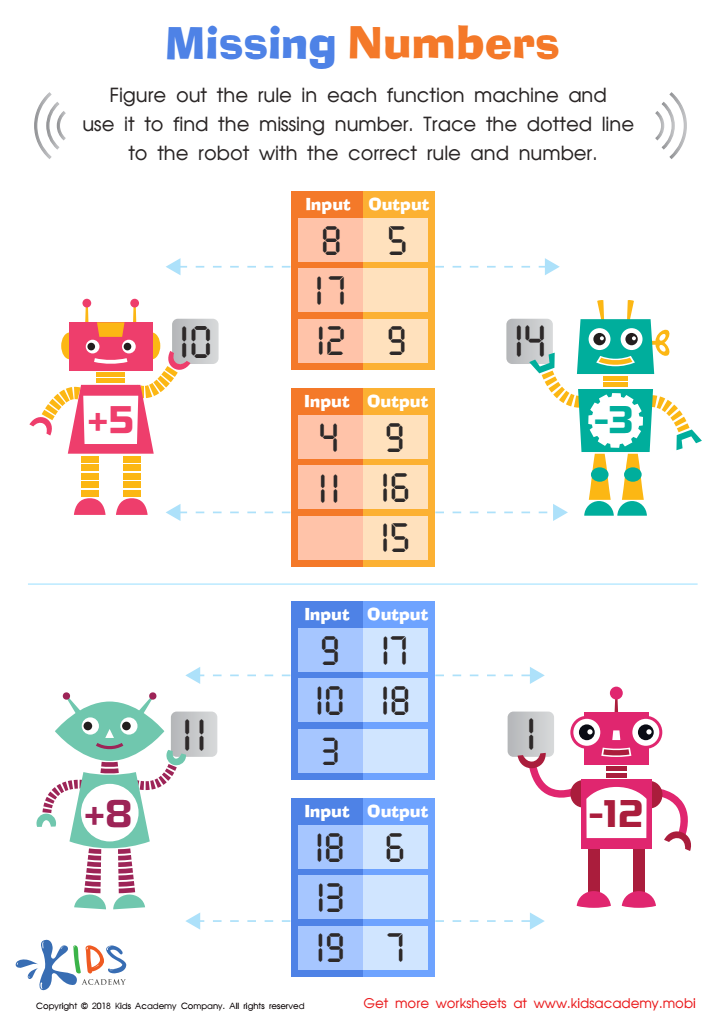
Missing Numbers Worksheet








Sequencing numbers is a foundational skill essential for young learners aged 6-9. For parents and teachers, fostering proficiency in this area can significantly impact a child's overall mathematical development and cognitive abilities.
Firstly, understanding sequences lays the groundwork for more complex math concepts, such as addition, subtraction, and patterns. Children begin to recognize relationships between numbers, enhancing their problem-solving skills and critical thinking. This practice also prepares them for topics like multiplication and division, which rely on a solid grasp of number order.
Moreover, sequencing activities can actively engage children, making learning both fun and interactive. Through games, songs, and hands-on activities, they can improve their skills in an enjoyable manner. Furthermore, sequencing extends beyond math; it cultivates organizational and planning skills, encouraging children to approach tasks methodically.
Lastly, young learners develop a sense of confidence as they master sequencing, fostering a positive attitude towards mathematics. When parents and teachers prioritize this critical skill, they equip children's minds, fostering lifelong learners who can approach challenges with strategy and enthusiasm. Therefore, integrating sequencing numbers into everyday learning is crucial not just for academic development, but for holistic growth in children.