Alphabet Recognition Extra Challenge Alphabet Worksheets for 6-Year-Olds
3 filtered results
Difficulty Level
Grade
Age
-
From - To
Subject
Activity
Standards
Introduce your child to the exciting world of letters with our "Alphabet Recognition Extra Challenge Alphabet Worksheets for 6-Year-Olds." Specifically designed for growing minds, our worksheets offer an engaging mix of tracing, letter matching, and fun activities that reinforce each letter of the alphabet. Ideal for young learners ready for a greater challenge, these educational resources enhance letter identification, boosting reading readiness and overall language skills. With colorful, expertly crafted exercises, kids stay motivated while mastering core alphabet recognition skills. Make learning fun and effective with our comprehensive worksheet collection. Explore, learn, and excel today!
Favorites
With answer key
Interactive
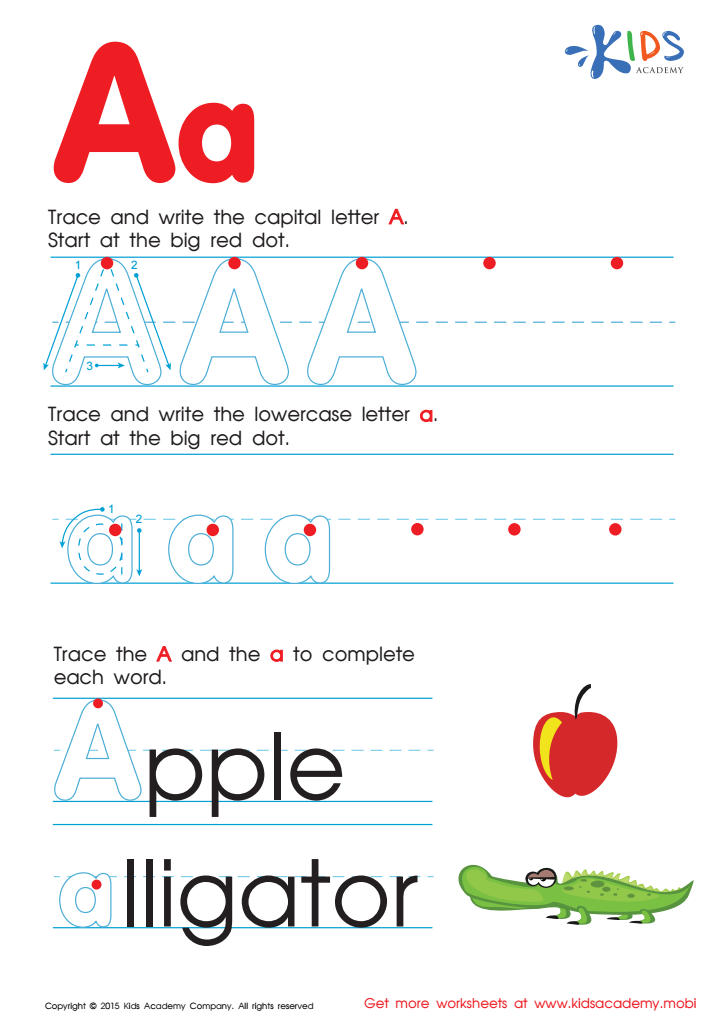
Letter A Tracing Page
Trace and write the letter "A"! Start with the big red dot, then do the capital and lowercase versions. Then write it again with two words - apple and alligator. Download more tracing worksheets at Kids Academy.
 Assign to My Students
Letter A Tracing Page
Worksheet
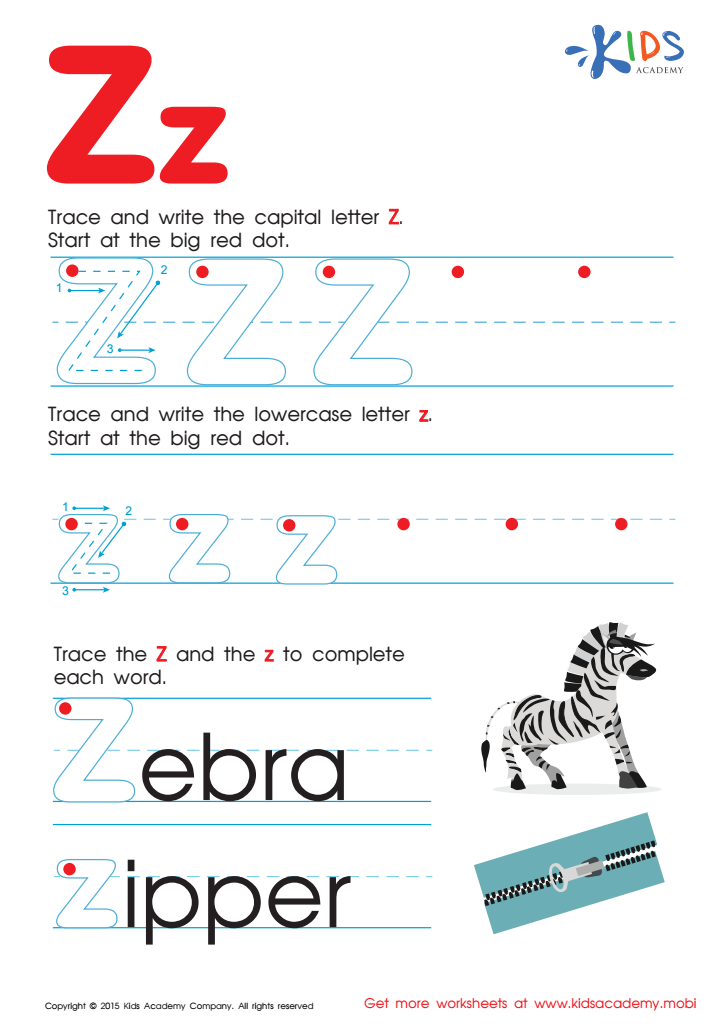
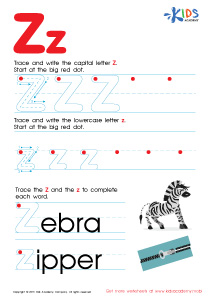
Letter Z Tracing Page
Trace and write capital "Z" and lowercase "z". Complete words "zebra" and "zipper". Be attentive and have fun! (80 words)
Letter Z Tracing Page
Worksheet
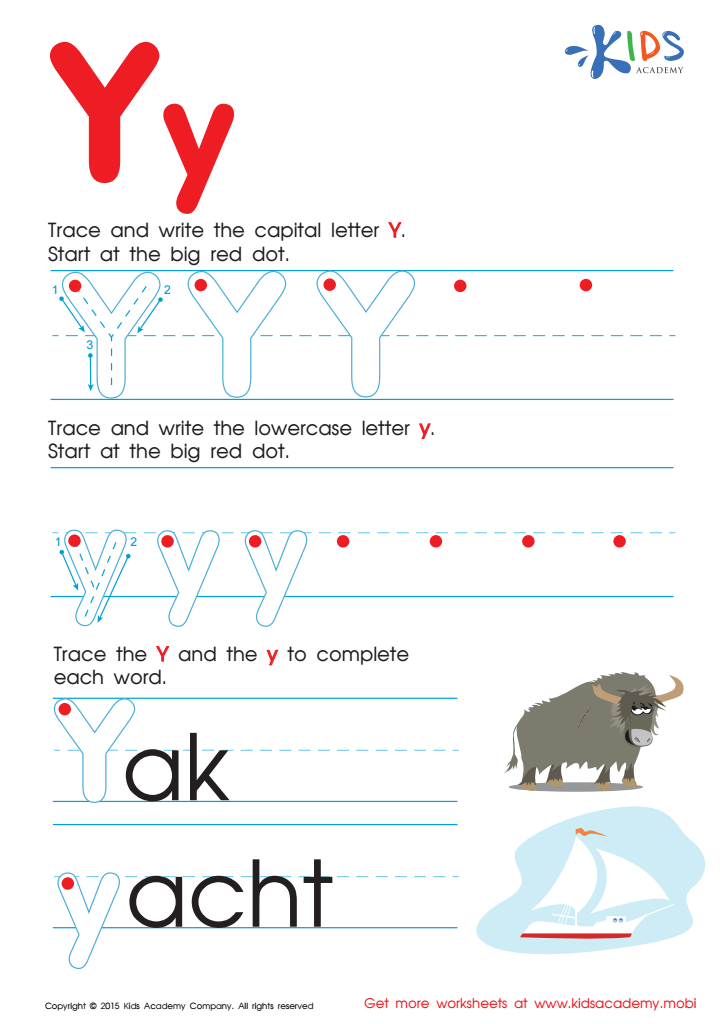
Letter Y Tracing Page
Trace the capital letter "Y" on the red dot, then trace and write the lowercase letter. Complete the words to help the Yak walk and the yacht swim. More worksheets at Kids Academy.
Letter Y Tracing Page
Worksheet
Join Kids Academy for Free
Who is primarily going to use this learning content?








Alphabet Recognition is a fundamental skill that serves as a building block for early literacy and sets the stage for more complex language skills. An extra challenge in recognizing the alphabet for 6-year-olds can have lasting benefits. These activities foster an engaging and enriching learning environment that captivates young minds, ensuring that they are not only familiar with but thoroughly understand the letters of the alphabet. Recognition games and exercises stimulate cognitive development, improving memory retention and problem-solving skills.
At this age, children are highly receptive and capable of developing their phonetic awareness rapidly. Challenges beyond mere rote memorization encourage them to think critically about letter shapes, sounds, and combinations. This can also bridge their understanding to more advanced learning stages, such as reading simple words and sentences.
Moreover, offering diverse and engaging alphabet challenges nurtures a child’s motivation to learn. When parents and teachers collaborate to incorporate innovative and playful methods—such as puzzles, songs, or interactive worksheets—children are more likely to develop a positive attitude towards learning.
A strong foundation in alphabet recognition directly translates to improved reading and writing skills. Therefore, caring about this aspect of early education equips children with the requisite tools for academic success and instills in them a lifelong love for learning.