Alphabet Recognition Extra Challenge Tracing Letters Worksheets for 6-Year-Olds
3 filtered results
-
From - To
Enhance your child's alphabet recognition skills with our Alphabet Recognition Extra Challenge Tracing Letters Worksheets for 6-Year-Olds. These engaging printables are designed to help young learners improve their letter tracing and identification abilities. Each worksheet presents a unique challenge to stimulate fine motor skills, promote accuracy, and reinforce the knowledge of uppercase and lowercase letters. Ideal for both classroom and at-home practice, these worksheets make learning the alphabet fun and effective. Give your child the extra practice they need to succeed with our expertly crafted tracing letters worksheets tailored specifically for six-year-olds.
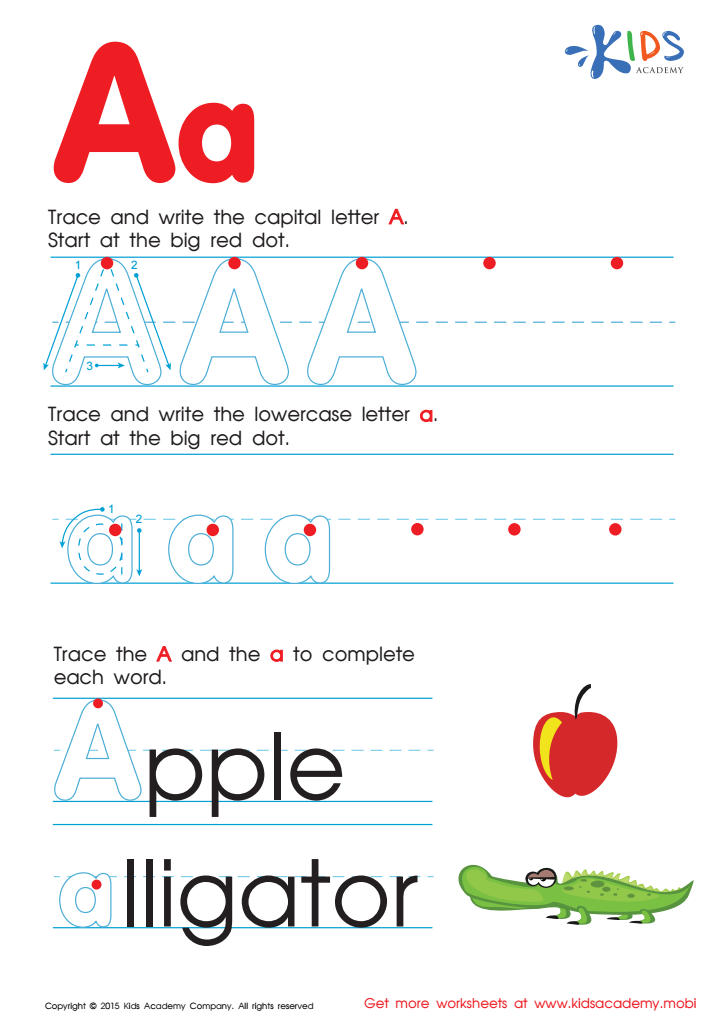
Letter A Tracing Page
 Assign to My Students
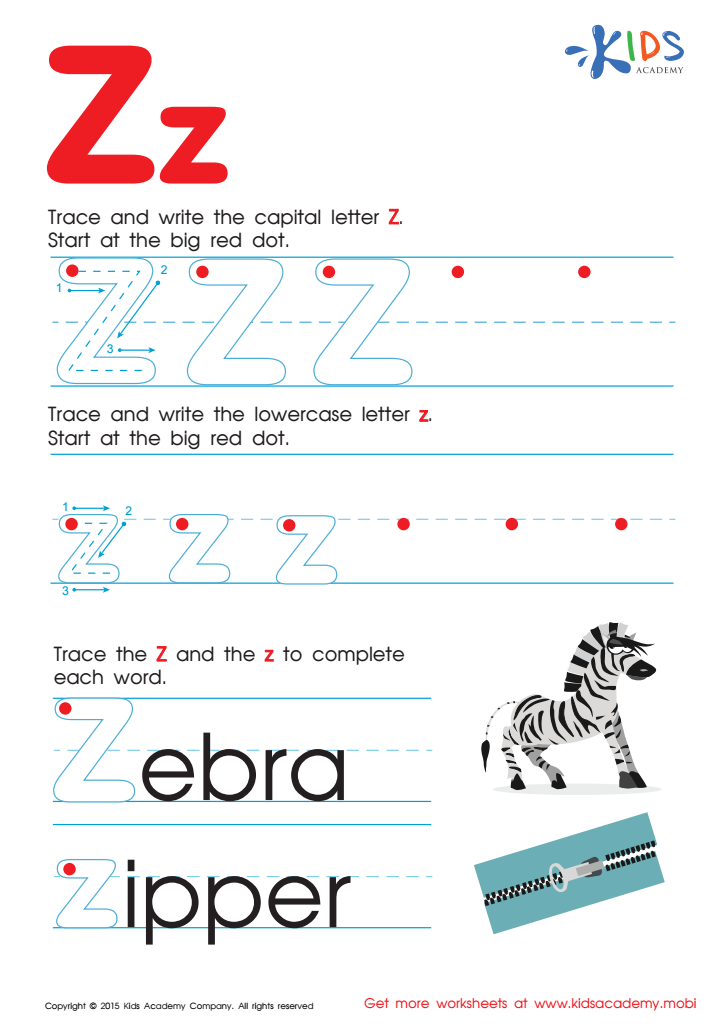
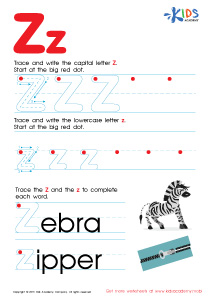
Letter Z Tracing Page
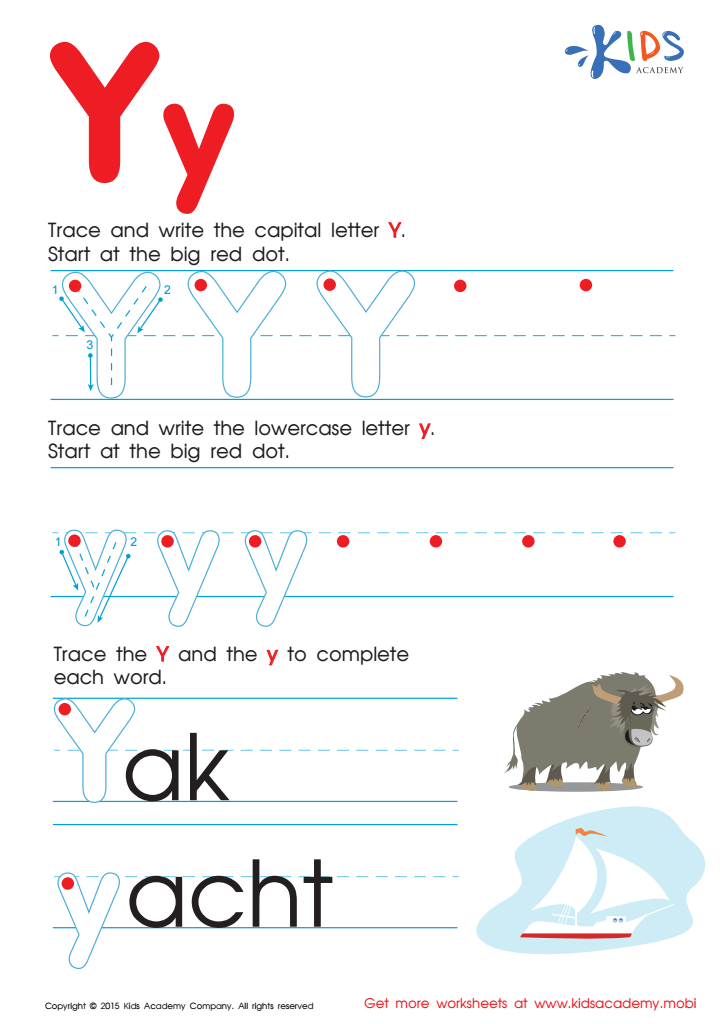
Letter Y Tracing Page







Parents and teachers should pay attention to Alphabet Recognition Extra Challenge Tracing Letters for 6-year-olds because early literacy skills are foundational for future academic success. At this age, children are transitioning from recognizing letters to forming them, which is crucial for developing writing skills. Tracing letters can significantly enhance fine motor skills, hand-eye coordination, and attention to detail, all of which are essential for writing proficiency.
Moreover, alphabet recognition helps with phonemic awareness, where children learn that letters correspond to specific sounds. By tracing letters, children reinforce their understanding of letter shapes, making it easier to associate these shapes with sounds. This is a fundamental step in learning to read and spell.
The extra challenge component encourages perseverance, problem-solving, and cognitive development. It helps children recognize patterns, improving memory and deepening their understanding through repetition and variation. Engaging, well-structured exercises can also boost a child's confidence and motivation by giving them a sense of achievement.
In a classroom or at home, such activities foster a love for learning and provide opportunities for parents and teachers to interact with children, offering praise and support, thereby creating a positive and enriching educational environment. This early investment sets the stage for a lifetime of reading and writing fluency.