Alphabet Recognition Extra Challenge English for Beginners Worksheets for 6-Year-Olds
3 filtered results
-
From - To
Boost your child's alphabet skills with our "Alphabet Recognition Extra Challenge Worksheets" designed specifically for beginners aged 6. These engaging worksheets are an excellent resource for young learners, helping them recognize letters and practice their sounds through fun activities. Each worksheet presents unique challenges that promote critical thinking and enhance letter recognition while making learning enjoyable. Perfect for classrooms or home practice, these resources cater to diverse learning styles and can aid in developing a strong foundation in English. Discover the joy of learning with colorful, interactive designs that keep your child motivated and excited about mastering the alphabet!

Letter A Tracing Page
 Assign to My Students
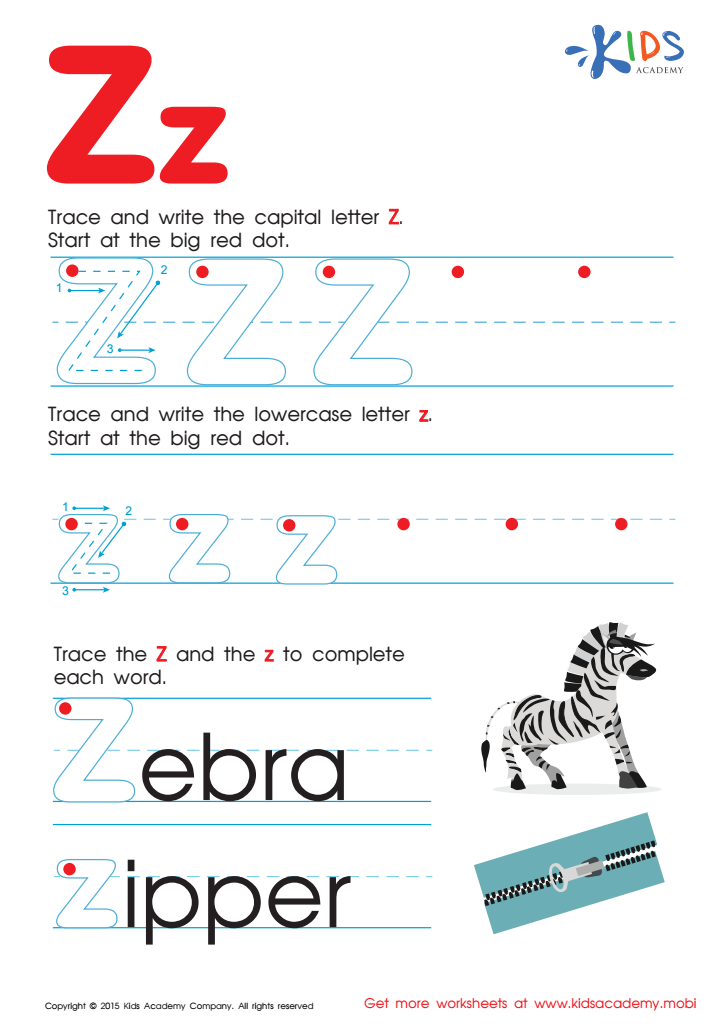
Letter Z Tracing Page
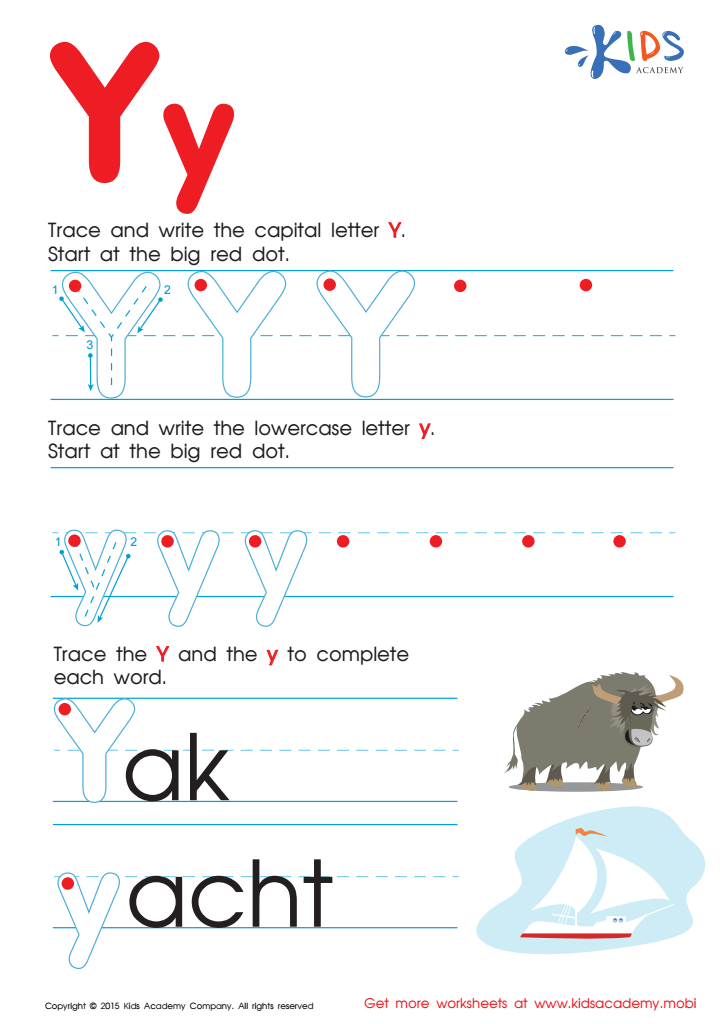
Letter Y Tracing Page





Alphabet Recognition is fundamental for children's early literacy development, particularly for beginners around the age of 6. It's crucial for parents and teachers to emphasize this skill as it lays the foundation for reading and writing. When children can recognize letters, they can start to connect sounds with their corresponding letters, facilitating phonemic awareness—an essential component in learning to read.
The "Extra Challenge" component introduces varied and engaging activities that capture children's attention, ensuring that learning remains enjoyable. It caters to different learning styles, helping each child discover their unique way to engage with letters. For instance, using games, songs, and hands-on materials can deepen the understanding of alphabet recognition while preventing boredom.
Additionally, strengthening alphabet recognition prepares children for more complex literacy skills, such as spelling and composing sentences. Parents and teachers can foster a supportive learning environment by regularly incorporating these challenges into everyday activities, reinforcing alphabet learning both at home and in the classroom.
Ultimately, developing this foundational skill not only boosts a child’s confidence but also paves the way for academic success, making it essential for parents and teachers to support and care about this aspect of early learning.








