Basic counting skills Extra Challenge Worksheets for 6-Year-Olds
4 filtered results
-
From - To
Our Basic Counting Skills Extra Challenge Worksheets for 6-Year-Olds are designed to foster essential numeracy and analytical skills. Each engaging worksheet pushes young learners to go beyond simple counting, helping them grasp complex concepts through stimulating activities. These specially designed exercises cater to your child's cognitive development, sharpening their counting proficiency and mathematical thinking. Perfect for both classroom and home use, these challenges ensure a fun, educational experience while building a robust foundation in math. Spark a passion for learning and boost your child’s confidence with our expert-crafted worksheets. Download now to elevate their counting abilities!
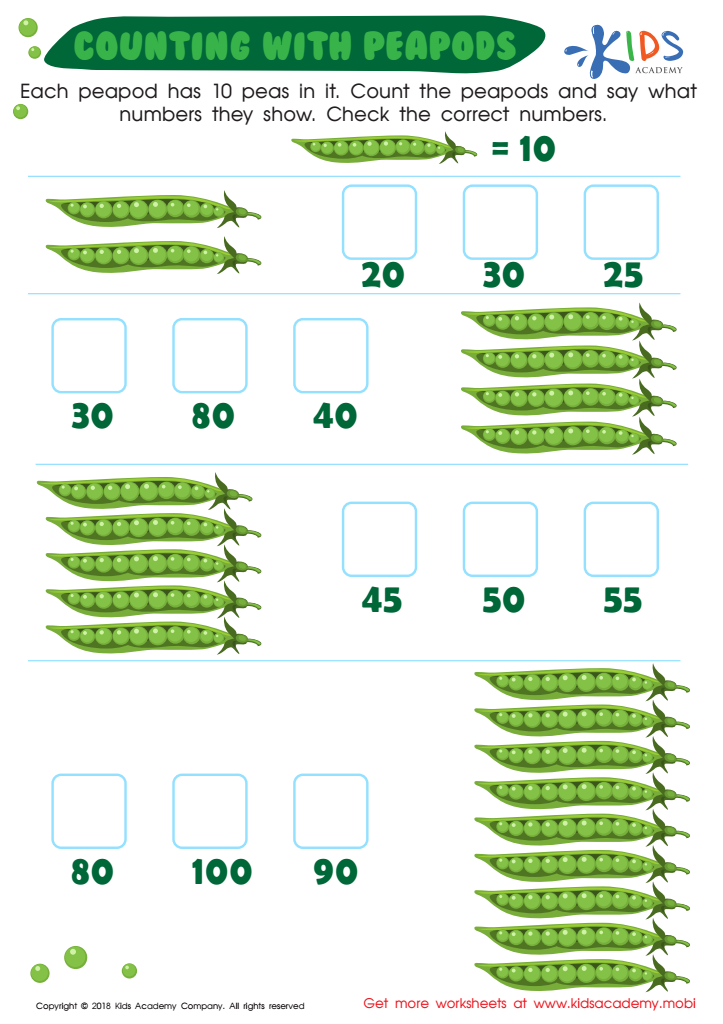
Number Worksheet: Counting With Peapods
 Assign to My Students
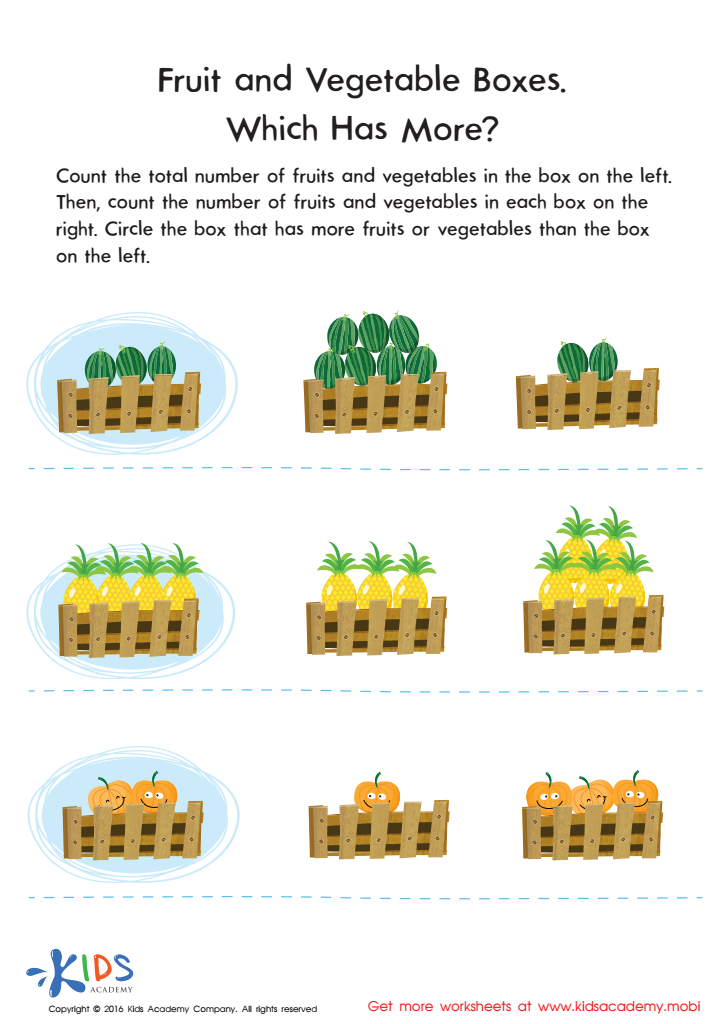
Which Has More? Size Worksheet
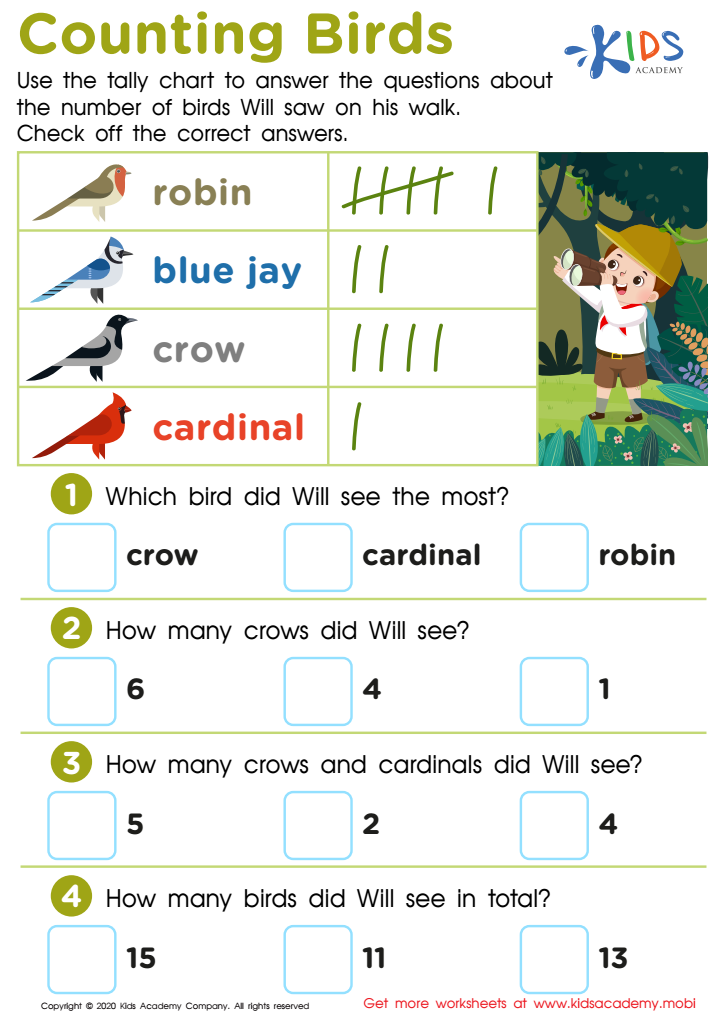
Counting Birds Worksheet
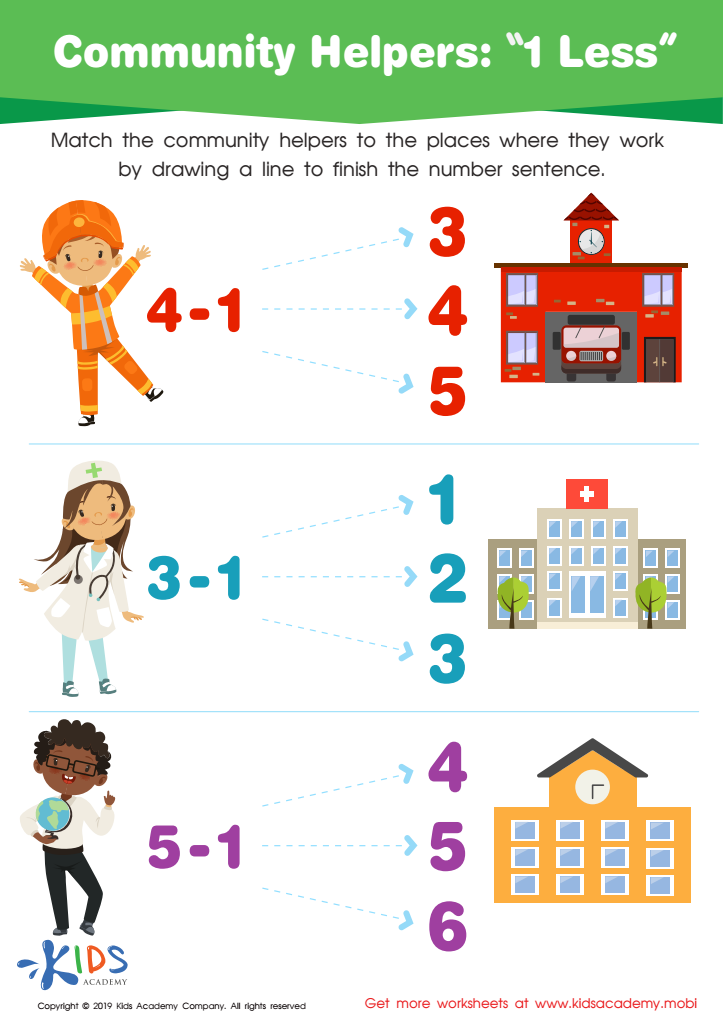
Community Helpers: 1 less Worksheet








Basic counting skills are a fundamental aspect of early childhood education, providing the foundation for more complex mathematical concepts. Just like learning to read opens the doors to all subjects, mastering counting is crucial for developing numerical literacy. Hence, parents and teachers should prioritize these skills to set children on a successful educational trajectory.
Firstly, strong counting skills enhance cognitive development. They help kids understand the concept of numerosity, or the "how many-ness" of a group of items, which is essential for all areas of math. Number recognition and sequential counting also bolster other cognitive functions, such as memory and attention to detail.
Secondly, proficiency in counting fosters a positive attitude towards learning. When children feel confident in their counting abilities, they are more likely to approach more difficult tasks with a growth mindset. This confidence can inspire a love for learning, permeating all academic subjects.
Lastly, applying these basics through extra challenges will nurture problem-solving skills and creativity. Activities that go beyond mere rote counting, such as counting backward, skip counting, or using physical objects in counting games, can make learning more engaging. These practices encourage kids to think differently and develop critical thinking abilities that will serve them throughout their education and beyond.
Investing time in developing counting proficiency during early childhood pays off immensely by cultivating analytical skills, a robust academic foundation, and a lifelong positive relationship with learning.








