Chess strategy learning Extra Challenge Worksheets for 6-Year-Olds
7 filtered results
-
From - To
Explore our engaging Chess Strategy Learning Extra Challenge Worksheets designed specifically for 6-year-olds! These fun and educational resources introduce young learners to essential chess strategies while enhancing critical thinking and problem-solving skills. With colorful illustrations and age-appropriate activities, kids will enjoy mastering tactics like controlling the center, developing pieces, and understanding basic checkmate patterns. Our worksheets promote concentration and creativity, making learning chess an exciting adventure! Perfect for classroom use or at-home practice, these worksheets ensure your child builds a strong foundation in chess strategy while having a great time. Start the journey to becoming a chess master today!
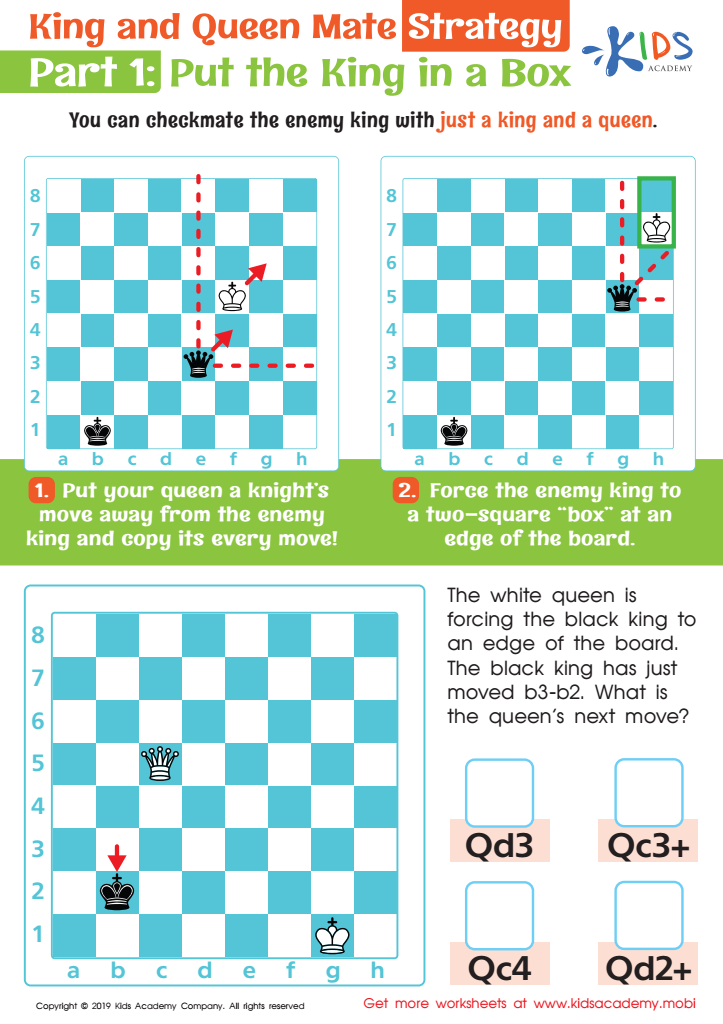
King and Queen Mate Strategy: Part 1 Worksheet
 Assign to My Students
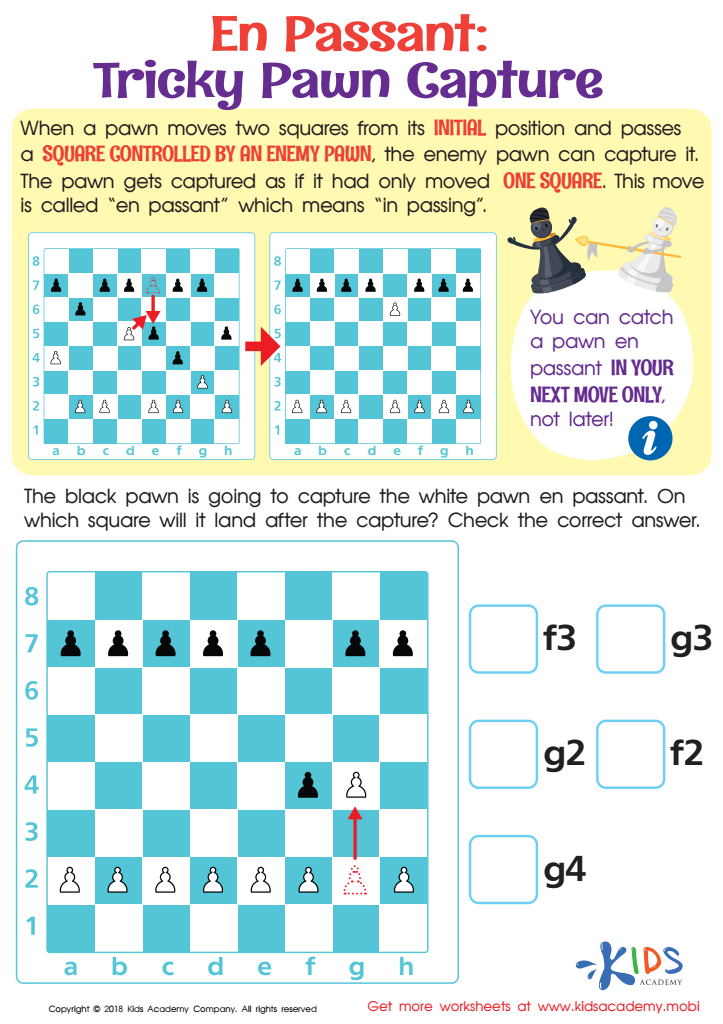
En Passant: Tricky Pawn Capture Worksheet
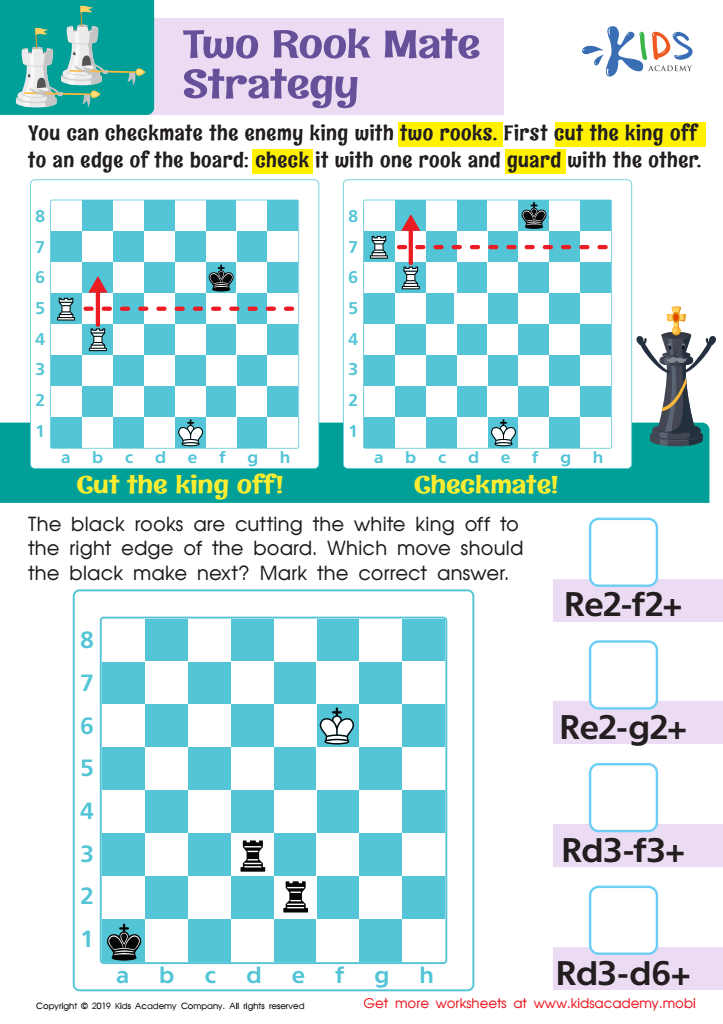
Two Rook Mate Strategy Worksheet
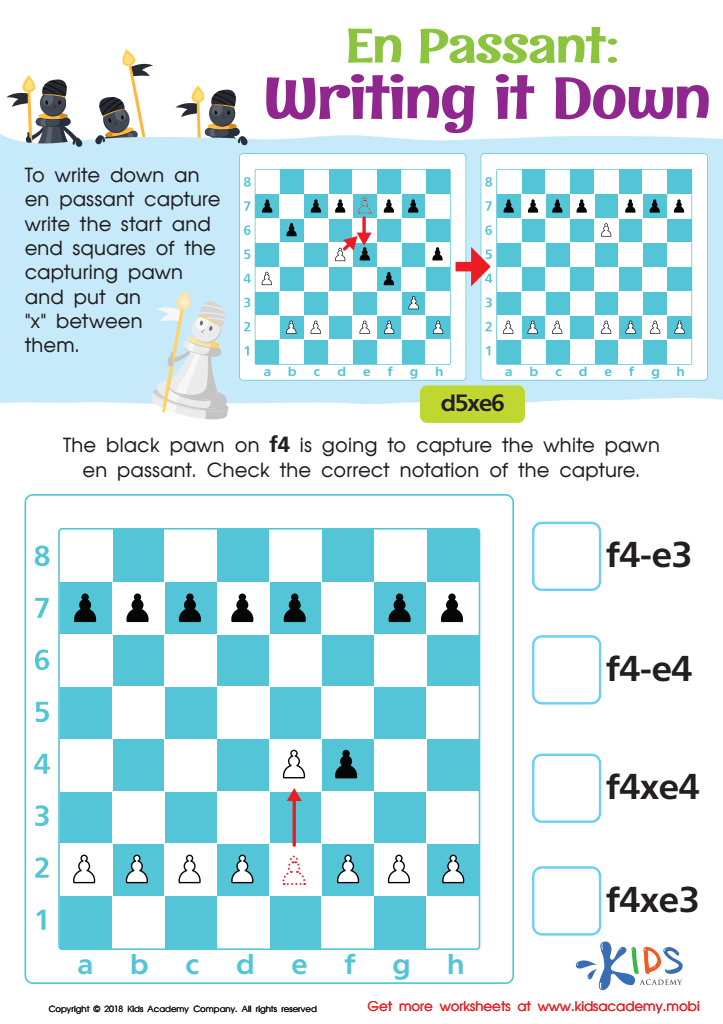
En Passant: Writing it Down Worksheet
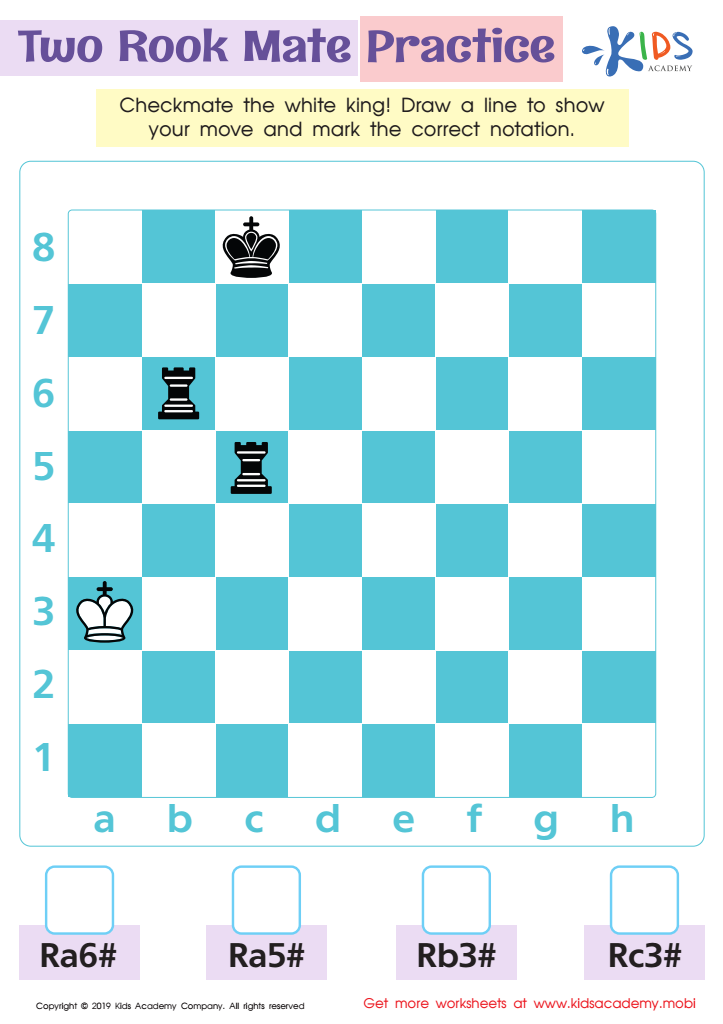
Two Rook Mate Practice Worksheet
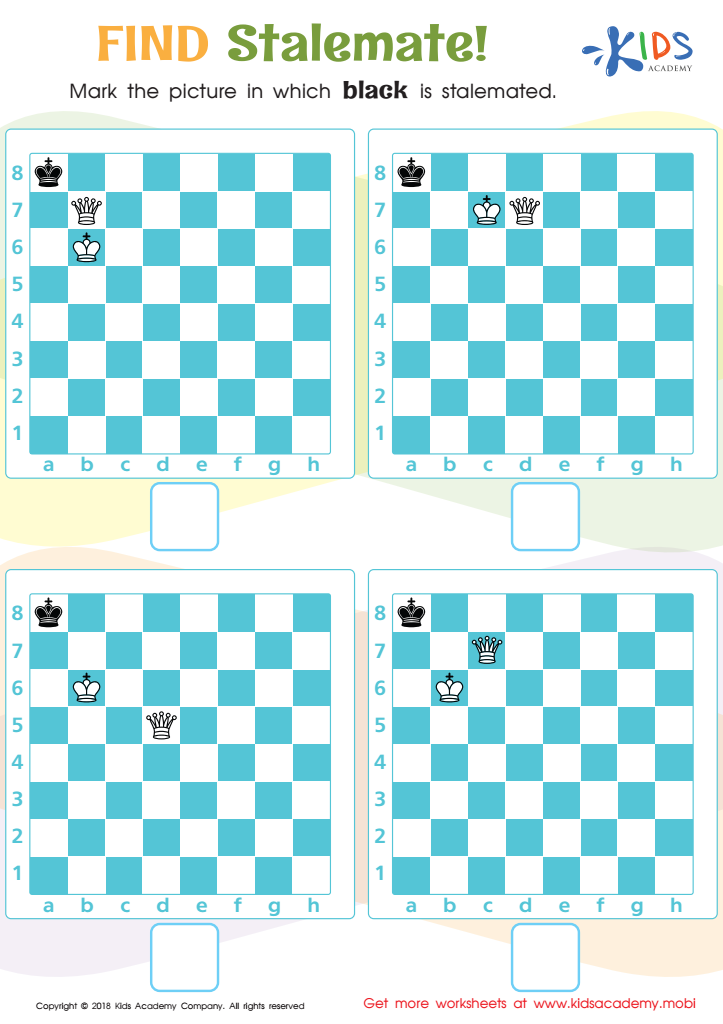
Find Stalemate! Worksheet
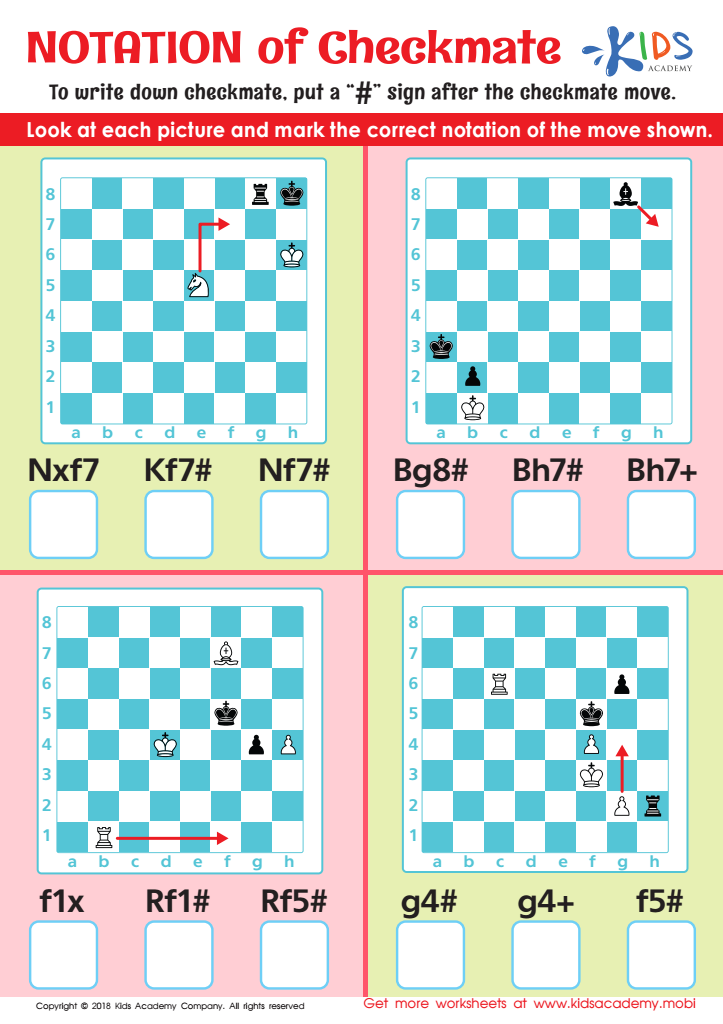
Notation of Checkmate Worksheet






Learning chess strategy at a young age, particularly for six-year-olds, offers numerous benefits that parents and teachers should wholeheartedly support. First and foremost, chess fosters critical thinking skills and enhances cognitive development. Children learn to plan ahead, analyze different scenarios, and anticipate their opponent's moves, which lays the groundwork for strategic reasoning in both academic and real-world situations.
Moreover, chess promotes patience, discipline, and perseverance. Young players must take their time to think through each move, encouraging them to develop a careful and methodical approach to problem-solving. This patience can translate to improved focus and attention in other areas of learning.
Socially, chess can be a great connector, providing opportunities for collaboration and communication among peers. It encourages healthy competition and sportsmanship, as kids learn to win graciously and accept losses as part of the game.
Additionally, chess has been linked to improved math and reading skills due to its emphasis on logic and pattern recognition. Exposure to such strategy-building games equips young children with essential life skills that extend beyond the chessboard, ultimately fostering well-rounded, capable learners who can tackle challenges head-on. Thus, supporting extra challenges in chess learning is a proactive investment in a child's future.








