Critical thinking development Extra Challenge Worksheets for 6-Year-Olds
4 filtered results
-
From - To
Discover our "Critical Thinking Development Extra Challenge Worksheets for 6-Year-Olds," designed to boost analytical skills and foster creativity in young learners. Tailored for curious minds, these engaging worksheets encourage children to explore problem-solving methods and enhance their reasoning abilities through fun activities. With a variety of puzzles, logical reasoning challenges, and activities that promote critical analysis, these printables are ideal for progressive learning environments. Develop your child's cognitive skills in a playful and interactive way, laying a strong foundation for future academic success. Perfect for homeschooling or supplementary practice, our worksheets ignite learning and keep children challenged and inspired!
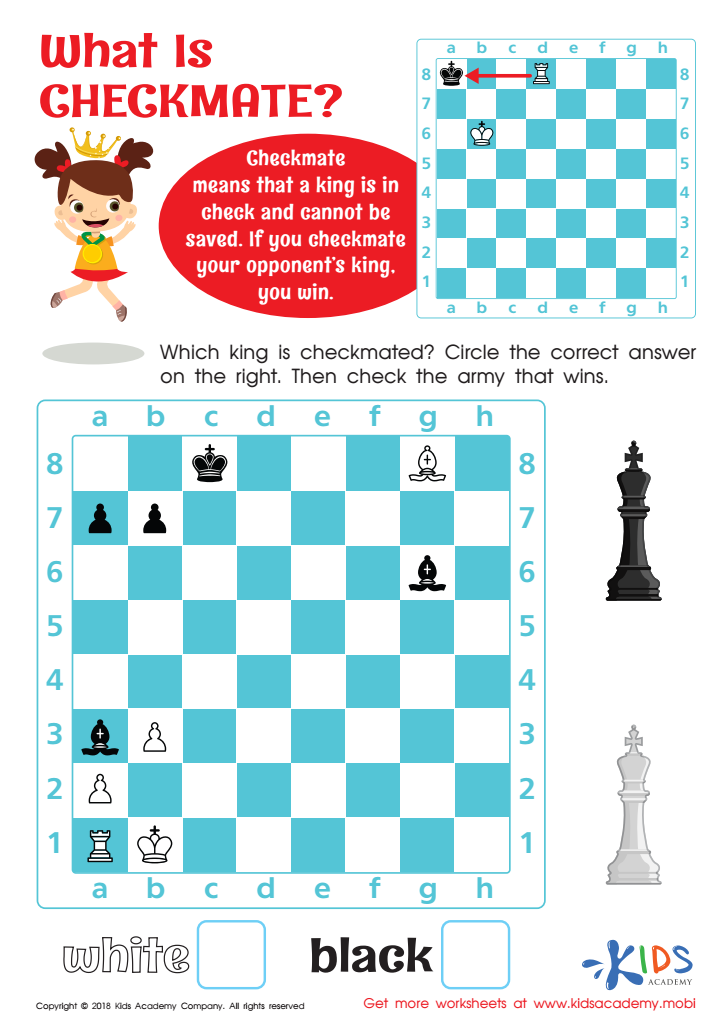
What is Checkmate? Worksheet
 Assign to My Students
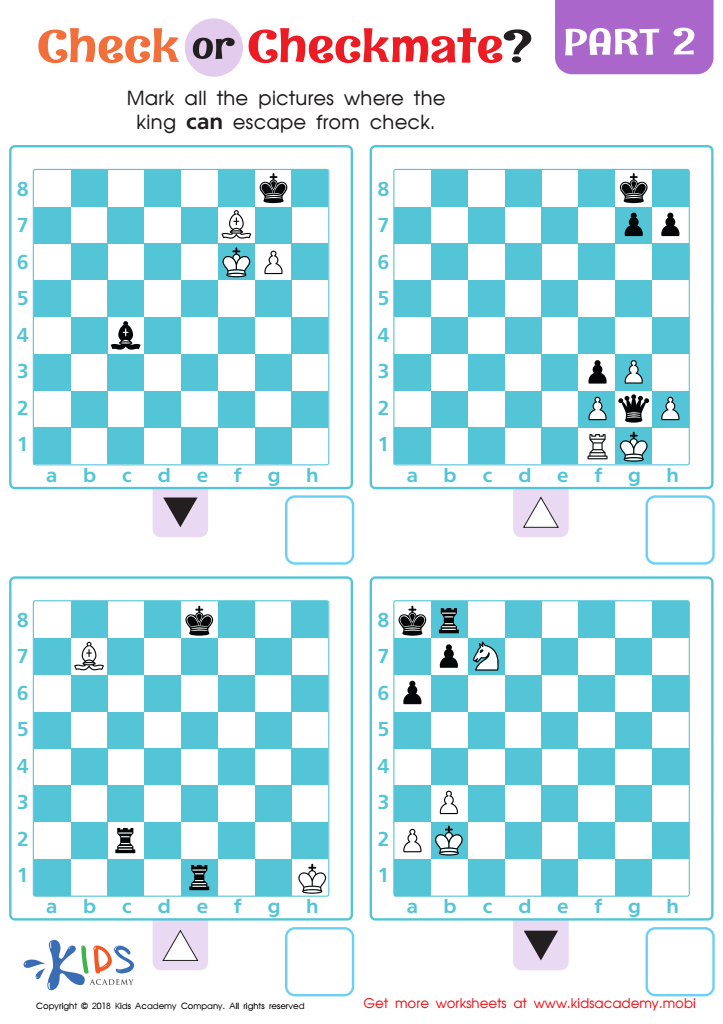
Check or Checkmate: Part 2 Worksheet
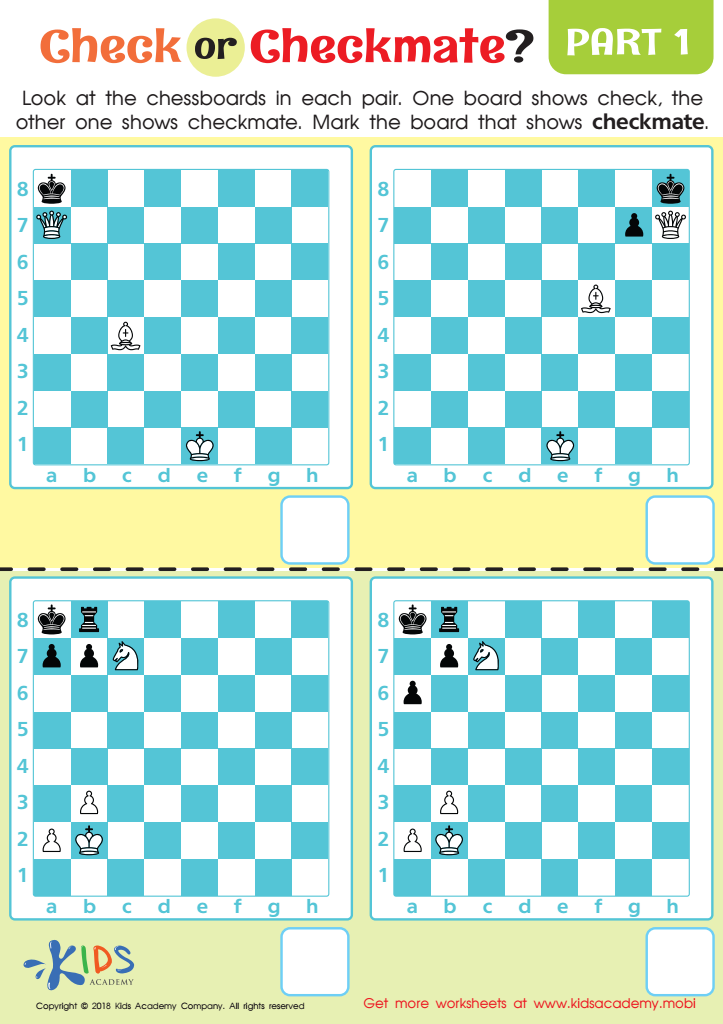
Check or Checkmate: Part 1 Worksheet
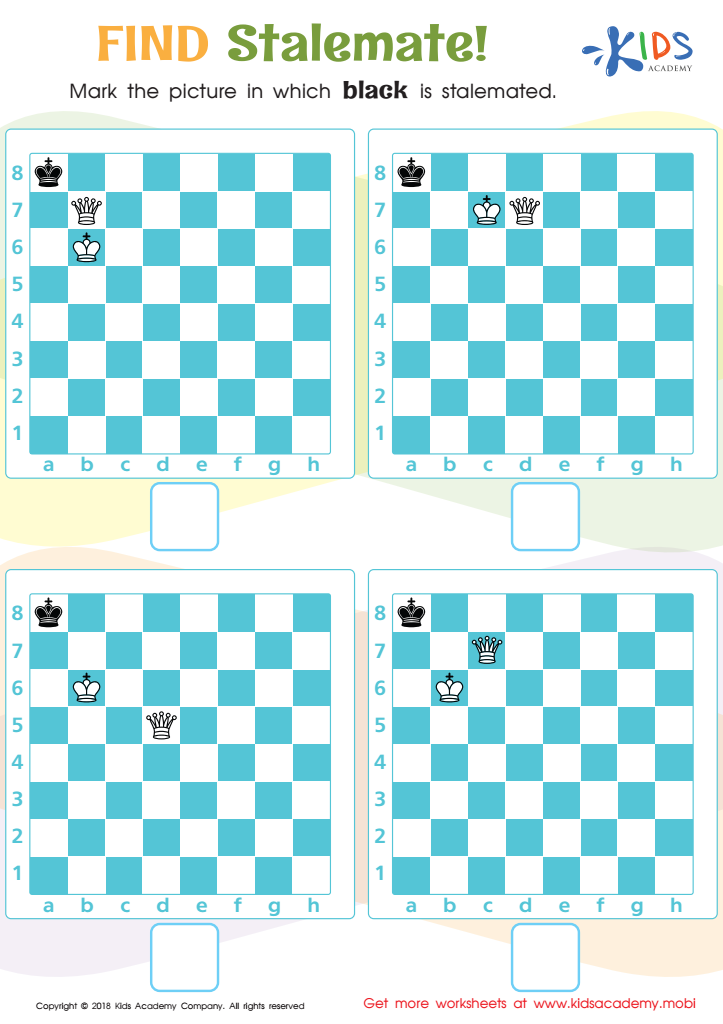
Find Stalemate! Worksheet








Critical thinking development is crucial for six-year-olds as it lays the foundation for lifelong learning and problem-solving skills. Parents and teachers should prioritize this skill because it encourages children to ask questions, evaluate information, and think independently. At this age, children's brains are highly receptive and adaptable, making it an ideal time to nurture critical thinking.
By engaging in activities that promote critical thinking, such as puzzles, games, and open-ended questioning, children learn to approach challenges creatively and with a problem-solving mindset. These experiences help them develop the ability to analyze situations, weigh options, and make informed decisions, all of which are essential for success in school and beyond.
Moreover, fostering critical thinking supports emotional and social development. Children become better communicators and collaborators when they can articulate their thoughts and engage in discussions with peers. In an ever-evolving world, these skills are fundamental; they empower children to navigate complex social landscapes and adapt to new technologies and ideas.
Ultimately, parents and teachers play a pivotal role in guiding and nurturing critical thinking development, ensuring that children grow into confident, resourceful, and thoughtful individuals who are equipped to face the challenges of the future.








