Logical thinking development Extra Challenge Worksheets for 6-Year-Olds
4 filtered results
-
From - To
Boost your child's reasoning skills with our "Logical Thinking Development Extra Challenge Worksheets for 6-Year-Olds." Designed to engage young minds, these worksheets offer stimulating activities that foster problem-solving abilities, critical thinking, and creativity. Each worksheet presents fun challenges, encouraging children to analyze, compare, and make connections. They will enjoy solving puzzles, completing sequences, and practicing categorization—all while enhancing cognitive skills essential for future learning. Our carefully crafted exercises align with early education standards, making them perfect for supplementing classroom learning or providing extra practice at home. Help your child thrive in a supportive and enjoyable environment with these enriching worksheets today!
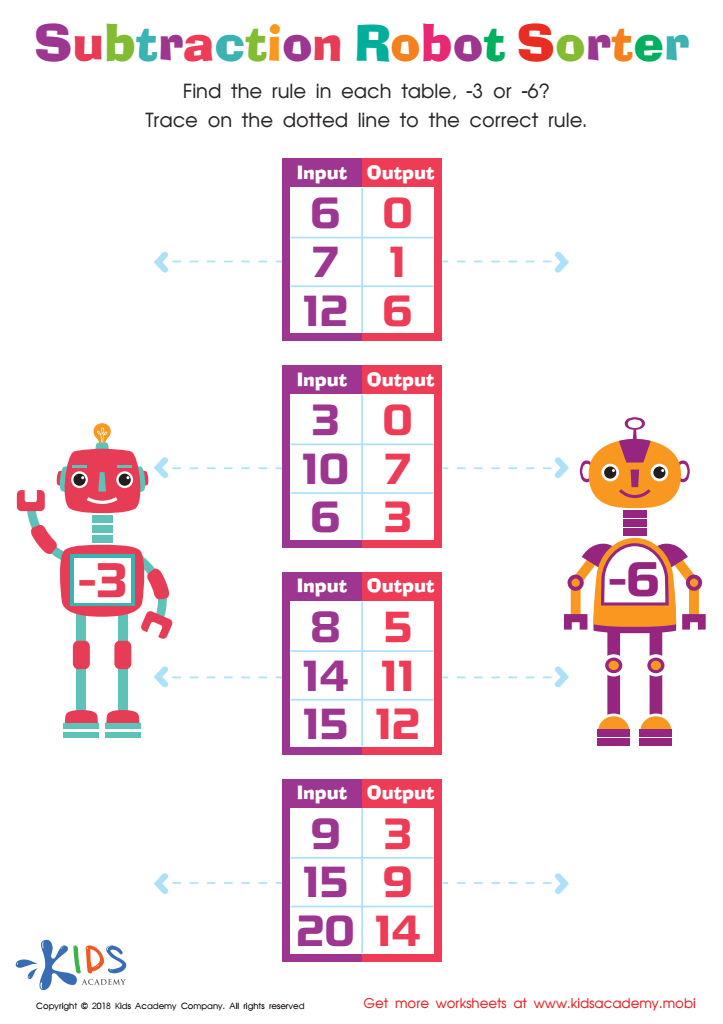
Subtraction Robot Sorter Worksheet
 Assign to My Students
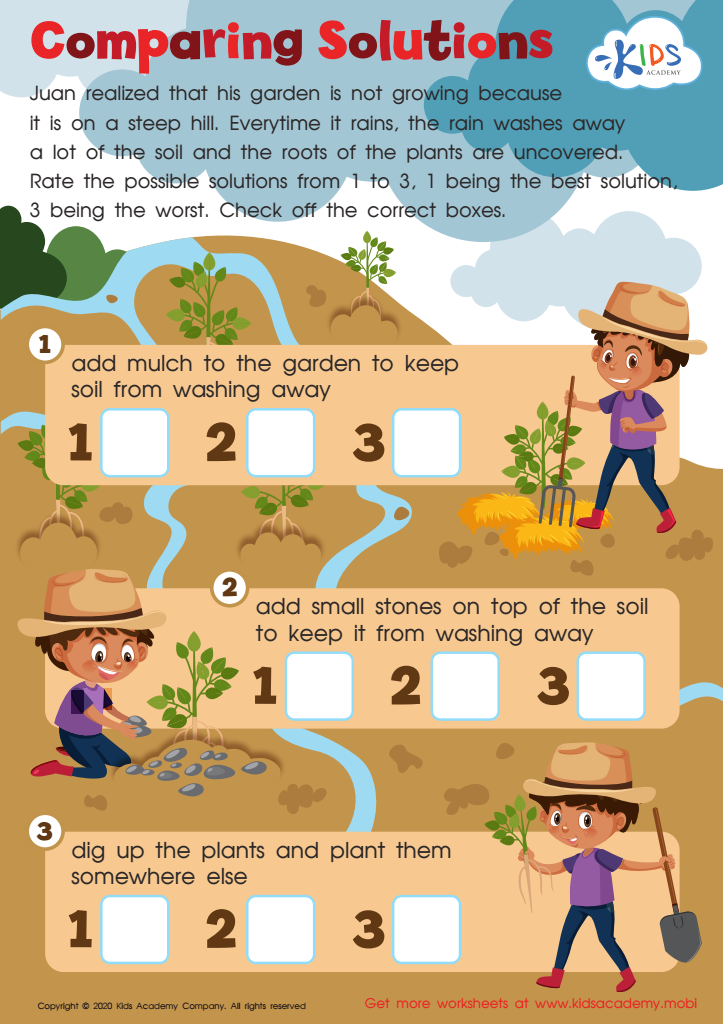
Comparing Solutions Worksheet
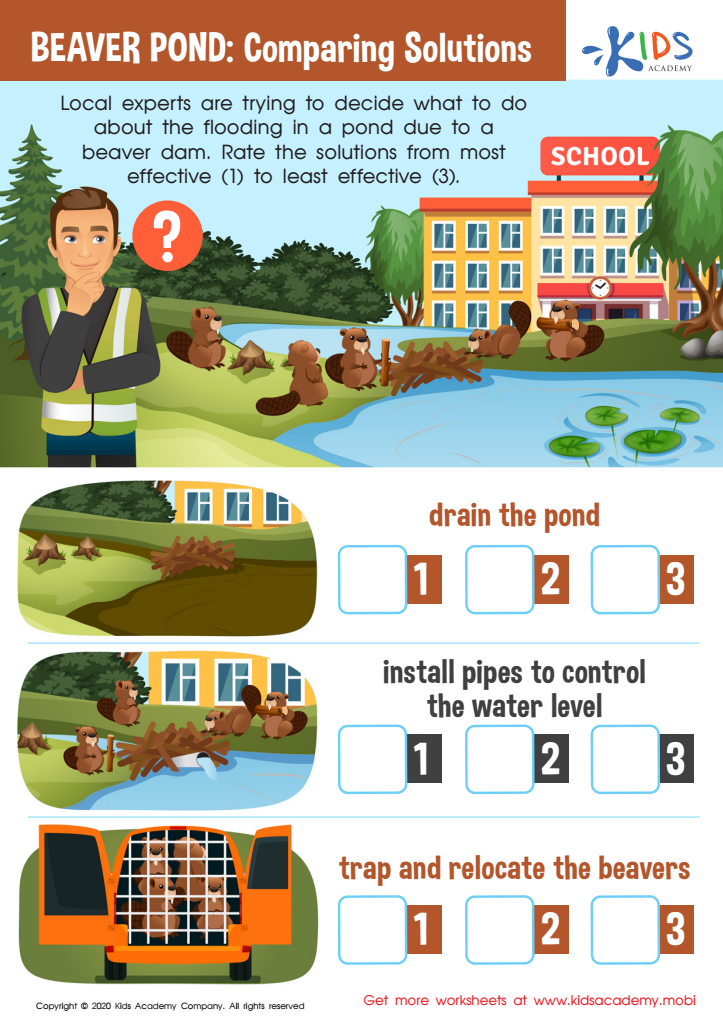
Beaver Pond: Comparing Solutions Worksheet
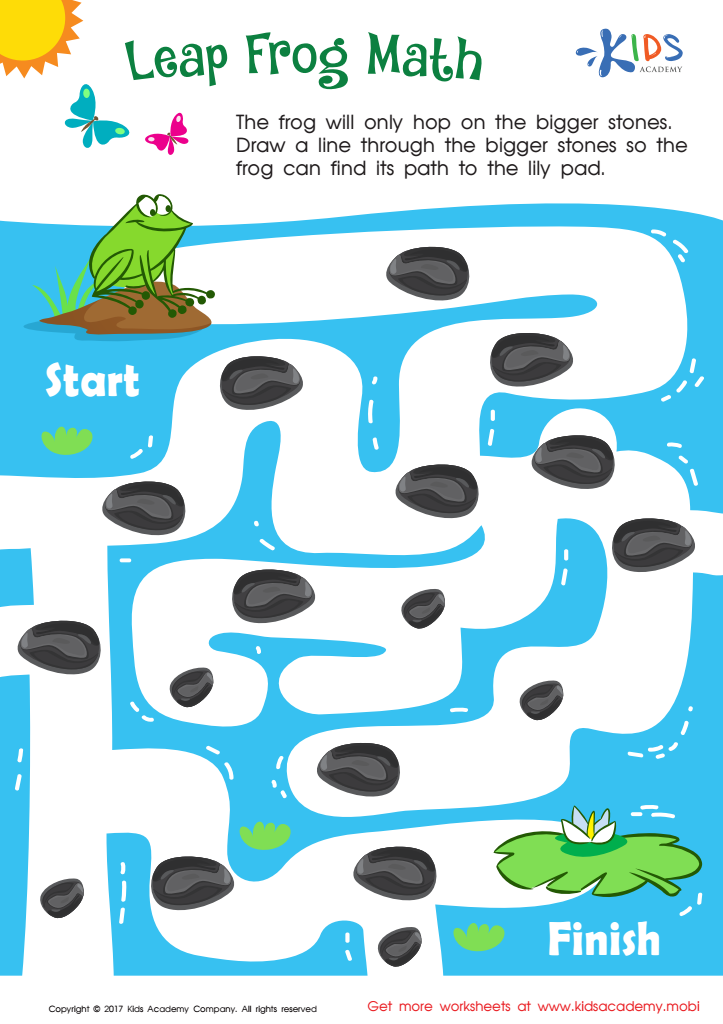
Math Puzzle Worksheet








Logical thinking development is vital for 6-year-olds, as it lays the foundation for problem-solving, decision-making, and critical reasoning skills. At this age, children are naturally curious and intuitive; harnessing this curiosity through logical thinking exercises can significantly enhance their cognitive abilities.
Parents and teachers should care about fostering these skills because they facilitate academic success and everyday functioning. Engaging in logical thinking challenges encourages children to analyze situations, recognize patterns, and make connections, forming a basis for for more complex mathematical and scientific understanding down the road.
Moreover, logical thinking helps in social development. As children learn to think critically, they become better at understanding others' perspectives, resolving conflicts, and cooperative problem-solving, which are essential traits in building healthy relationships.
Additionally, nurturing logical thinking in early childhood creates a sense of achievement and boosts self-esteem. When children successfully navigate challenges, they develop resilience and a growth mindset, preparing them for future learning. Thus, investing in logical thinking activities is not just about immediate academic progress; it's about equipping children with the lifelong skills necessary to comprehend and navigate an increasingly complex world.








