Mental math skills Extra Challenge Addition & Subtraction Worksheets for 6-Year-Olds
3 filtered results
Difficulty Level
Grade
Age
-
From - To
Subject
Activity
Standards
Enhance your child's arithmetic prowess with our "Mental Math Skills Extra Challenge Addition & Subtraction Worksheets" designed specifically for 6-year-olds! These engaging worksheets focus on developing fast, flexible thinking in mathematics, allowing young learners to tackle addition and subtraction problems without reliance on calculators or paper. Featuring colorful illustrations and variations in problem difficulty, these worksheets promote independent learning and foster confidence in budding mathematicians. Encourage your child to master essential math skills while having fun with these thoughtfully crafted exercises. Perfect for home practice, classrooms, or enrichment programs, these challenges are an exciting opportunity for your child to shine in math!
Favorites
With answer key
Interactive
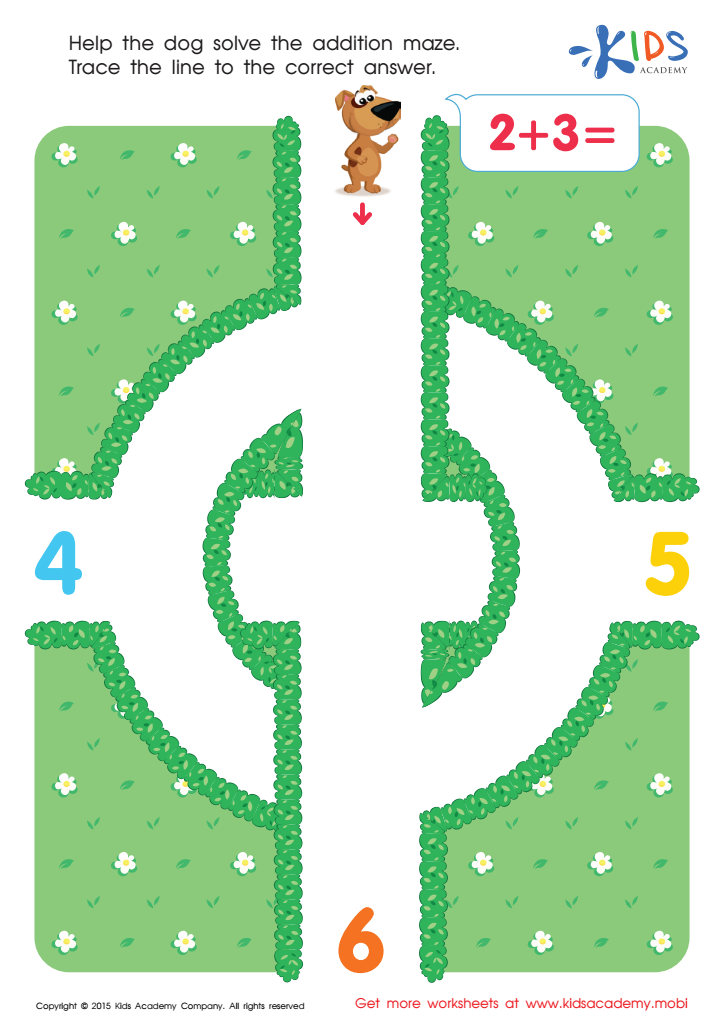
Two And Three Addition Worksheet
Give your children the task and let them find the path to the right answer while they make their way through the maze, and don't forget to let them trace the path.
 Assign to My Students
Two And Three Addition Worksheet
Worksheet
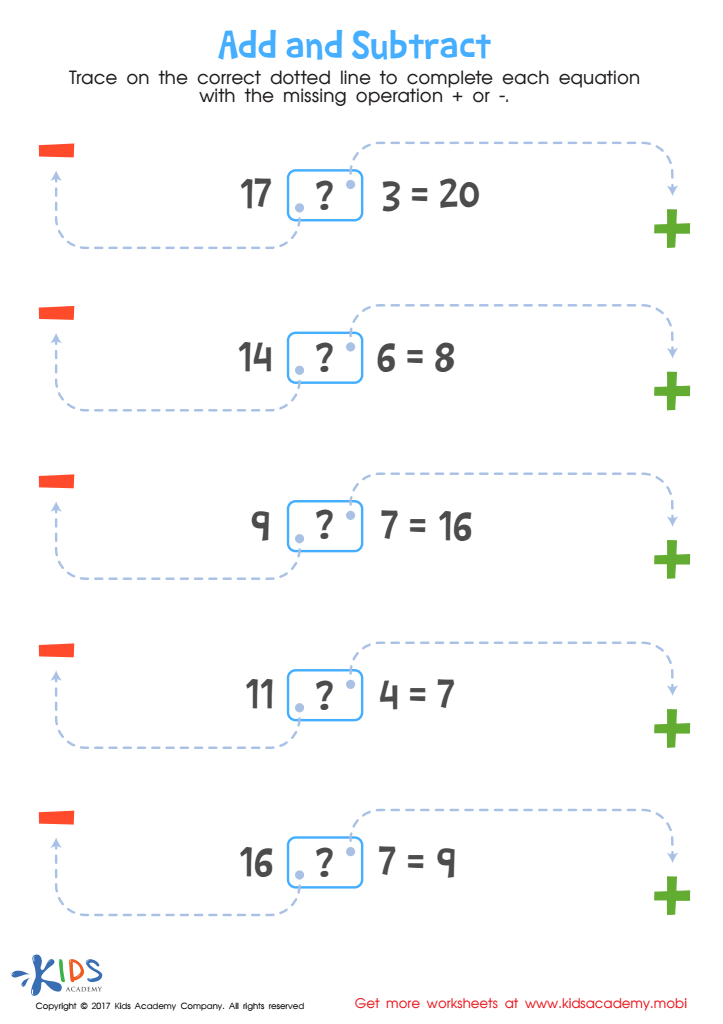
Add and Subtract Worksheet
Introduce your child to equations and advanced math concepts with this worksheet - designed to help them learn add and subtract up to 20. This logical reasoning exercise will help them gain a better understanding of math, preparing them for future success. Start early and watch them excel!
Add and Subtract Worksheet
Worksheet
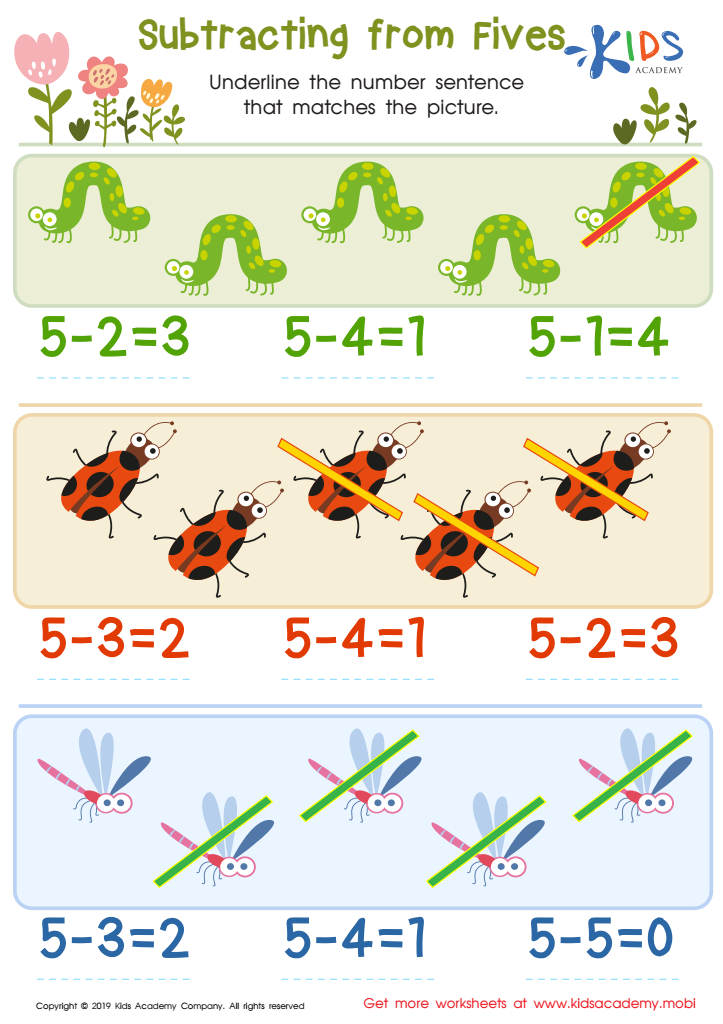
Subtracting From Fives Worksheet
Help your kids practice subtraction with this fun worksheet! Have them identify the insects, then solve the equations and find the matching number sentence. It's a great way to give them an edge in math and enjoy doing it!
Subtracting From Fives Worksheet
Worksheet
Join Kids Academy for Free
Who is primarily going to use this learning content?








Mental math skills are crucial for young learners, particularly in the realm of extra challenge addition and subtraction for 6-year-olds. First and foremost, these skills build a solid foundation for a child’s mathematical understanding. Developing mental math abilities encourages number sense, allowing children to comprehend concepts beyond rote memorization.
Improving mental math fosters confidence and independence in young learners. When children can solve problems in their heads, they gain a sense of accomplishment, which instills a positive attitude towards math. This confidence translates into greater participation in class and a willingness to tackle more complex problems as they progress through their education.
Additionally, mental math enhances critical thinking and problem-solving skills. Children learn to analyze relationships between numbers, enabling them to approach math challenges with creativity and flexibility. Early mastery of these skills can lead to improved performance in various academic areas, as math is often integrated with subjects like science and economics.
Ultimately, by prioritizing and encouraging mental math in this formative stage, parents and teachers equip children with lifelong skills that are essential for academic success and everyday decision-making. Investing in these skills at an early age pays dividends as students progress through their educational journeys.