Understanding fractions Extra Challenge Fractions of Shapes Worksheets for 6-Year-Olds
3 filtered results
-
From - To
Welcome to our "Understanding Fractions Extra Challenge Worksheets" designed for 6-year-olds! These engaging worksheets provide an exciting way for young learners to explore fractions of shapes. Tailored to enhance their mathematical skills, the activities encourage kids to visualize and understand fractions through fun, interactive challenges. As they work through the exercises, they'll gain confidence in identifying fractions and applying them to various shapes. Perfect for reinforcing classroom learning or as extra practice at home, these worksheets ignite a love for math while empowering little minds. Explore, learn, and watch your child's understanding of fractions grow with these stimulating activities!
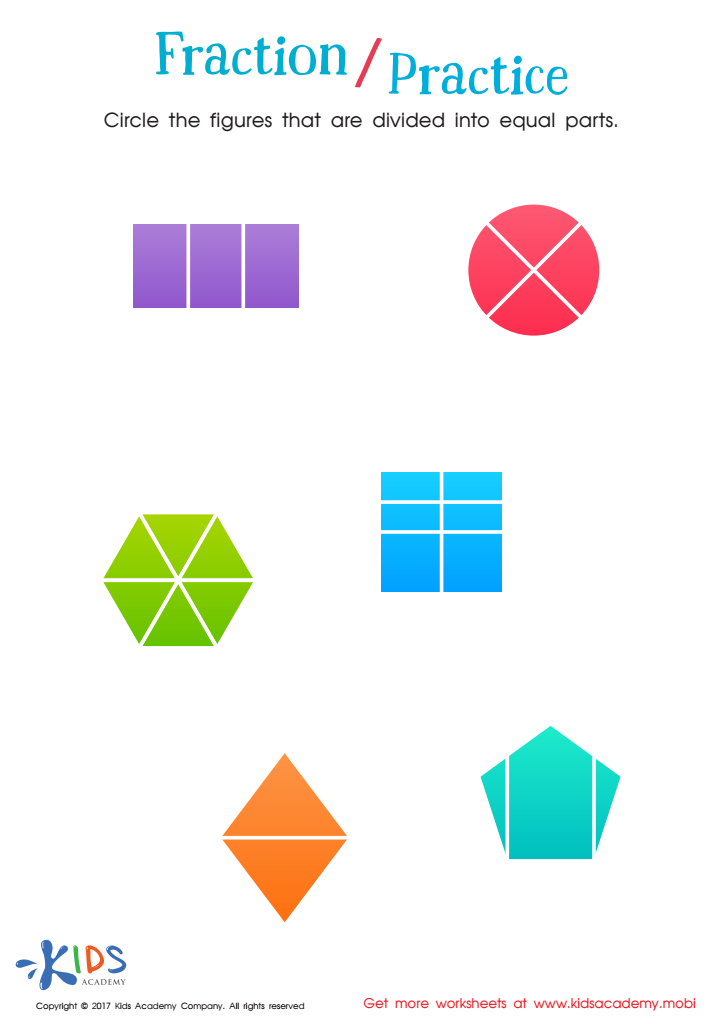
Fractions: Shapes Worksheet
 Assign to My Students
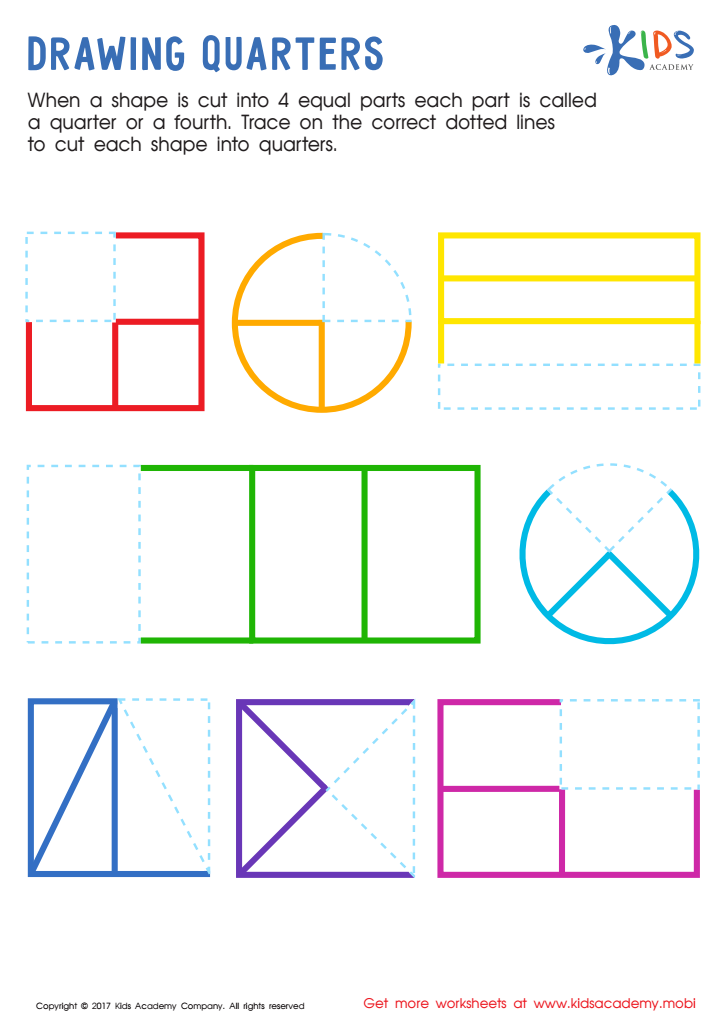
Drawing Quarters Worksheet
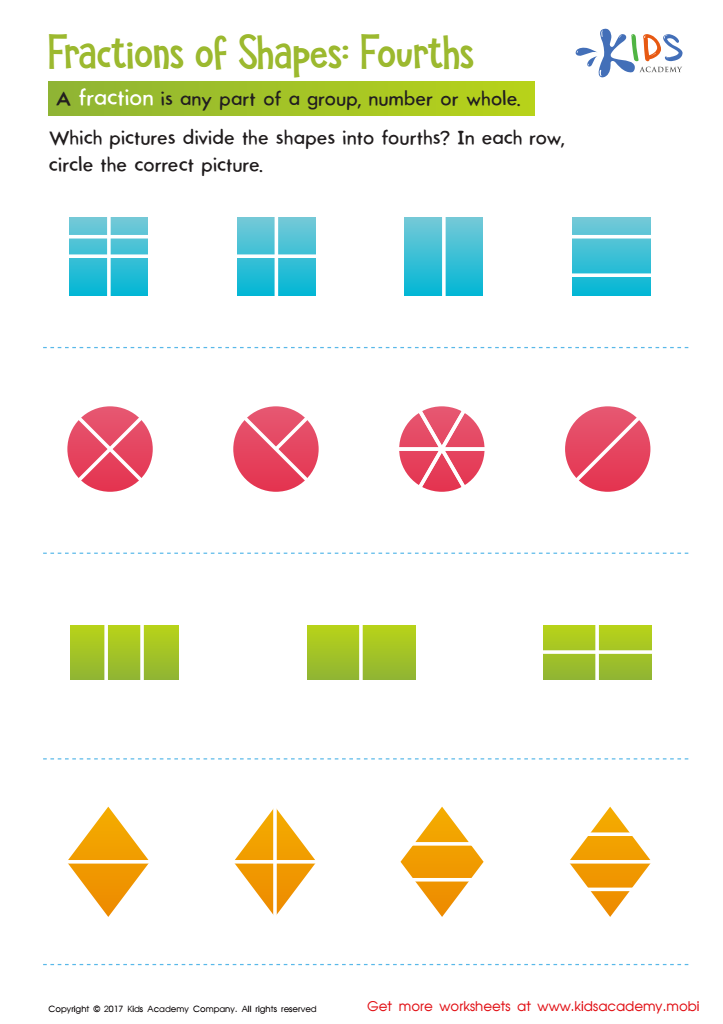
Fractions of Shapes Worksheet








Understanding fractions, particularly through hands-on activities like "Extra Challenge Fractions of Shapes," is vital for 6-year-olds because it lays the foundation for essential mathematical skills. At this age, children are beginning to grasp concepts of sharing and dividing, and fractions help them visualize and comprehend these ideas. When parents and teachers engage with fractions, they encourage critical thinking and problem-solving abilities, essential skills not only in math but across all subjects.
By exploring fractions of shapes, children learn to recognize parts of a whole, enhancing their spatial awareness and logical reasoning. This foundational knowledge is crucial for more advanced concepts such as addition and subtraction of fractions, which they will encounter later in their education. Furthermore, understanding fractions fosters a sense of accomplishment and boosts confidence, nurturing a positive attitude towards math.
Involving parents in extension challenges at home can reinforce what is learned in the classroom, creating a collaborative learning environment. This partnership not only solidifies the child's understanding but also bridges the gap between home and school, making math a fun and engaging subject. Ultimately, recognizing the importance of these early fraction concepts will contribute to a child’s ongoing success in mathematics and rejuvenate a lifelong love for learning.