Pattern recognition Extra Challenge Matching Worksheets for 6-Year-Olds
3 filtered results
Difficulty Level
Grade
Age
-
From - To
Subject
Activity
Standards
Dive into our "Pattern Recognition Extra Challenge Matching Worksheets for 6-Year-Olds," specially designed to enhance cognitive development and critical thinking skills. These engaging, visually appealing worksheets offer the perfect challenge for young minds ready to excel beyond basic pattern recognition. Children will find enjoyment in matching sequences, identifying logical progressions, and solving complex patterns that stimulate mental growth. Tailored for 6-year-olds, these printable resources provide a fun, interactive way to advance learning from the comfort of home or classroom. Ignite your child's potential and make learning an adventure with our carefully crafted worksheets.
Favorites
With answer key
Interactive
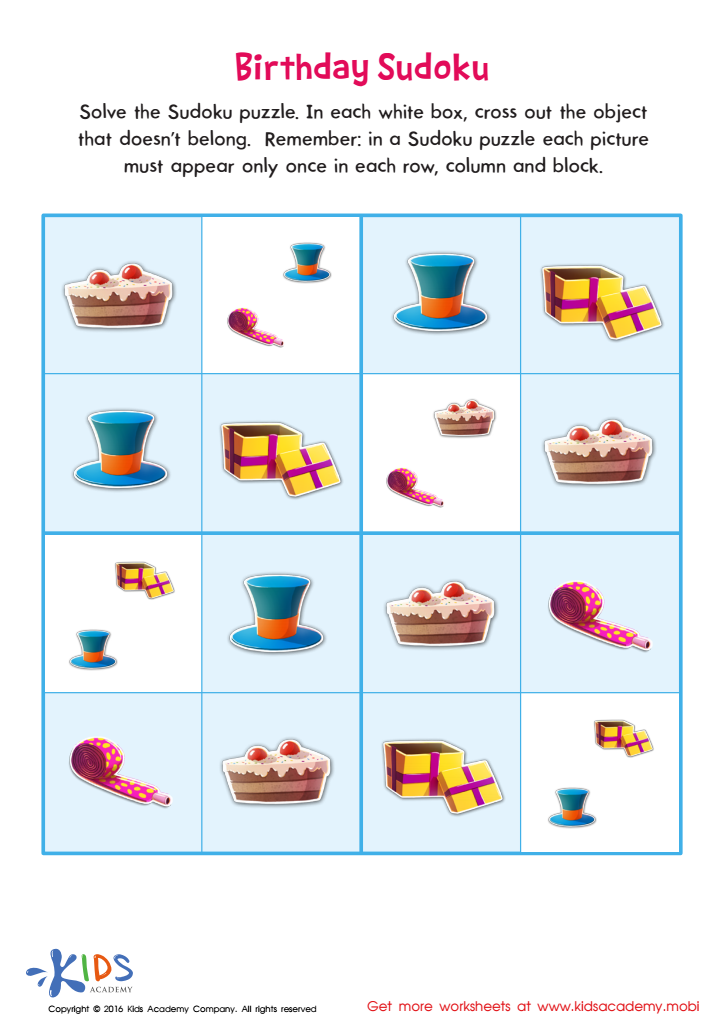
Birthday Sudoku Sorting Worksheet
With this Sudoku printable, your child will have fun and strengthen their problem-solving skills.
 Assign to My Students
Birthday Sudoku Sorting Worksheet
Worksheet
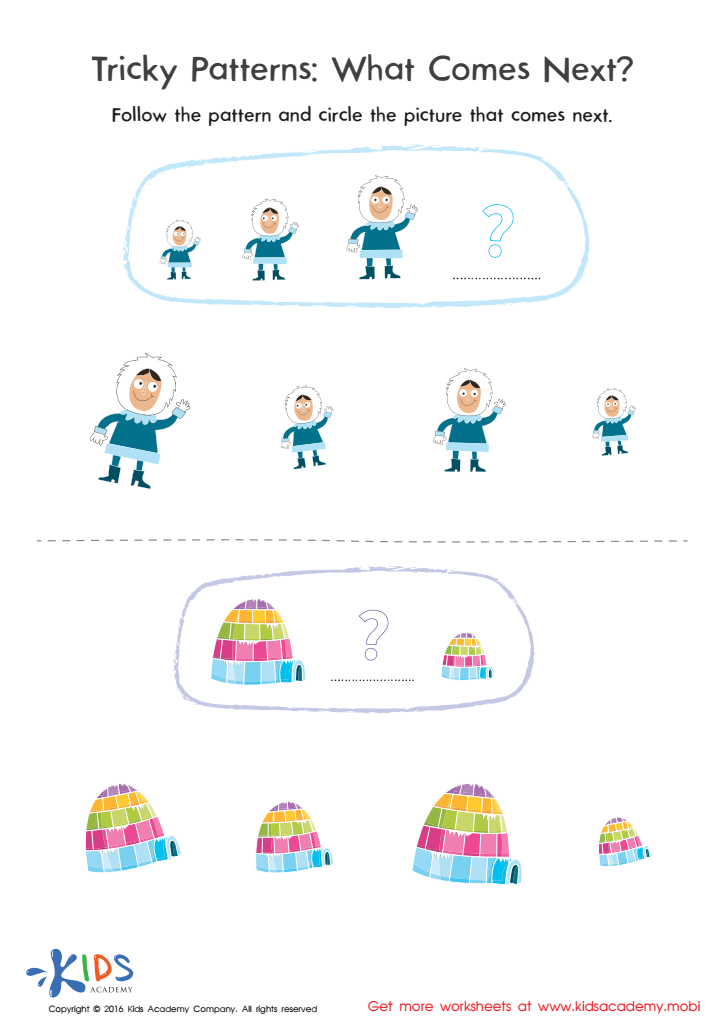
Tricky Patterns Size Worksheet
Give your child a head start on critical thinking with this picture pattern worksheet! It's an intriguingly fun way to help them master important skills like spatial reasoning, critical thinking, and logical reasoning. They'll differentiate between shapes, complete the pattern with a logical answer, and look for and understand patterns. It's the perfect foundation for future math skills, setting them up for future success!
Tricky Patterns Size Worksheet
Worksheet
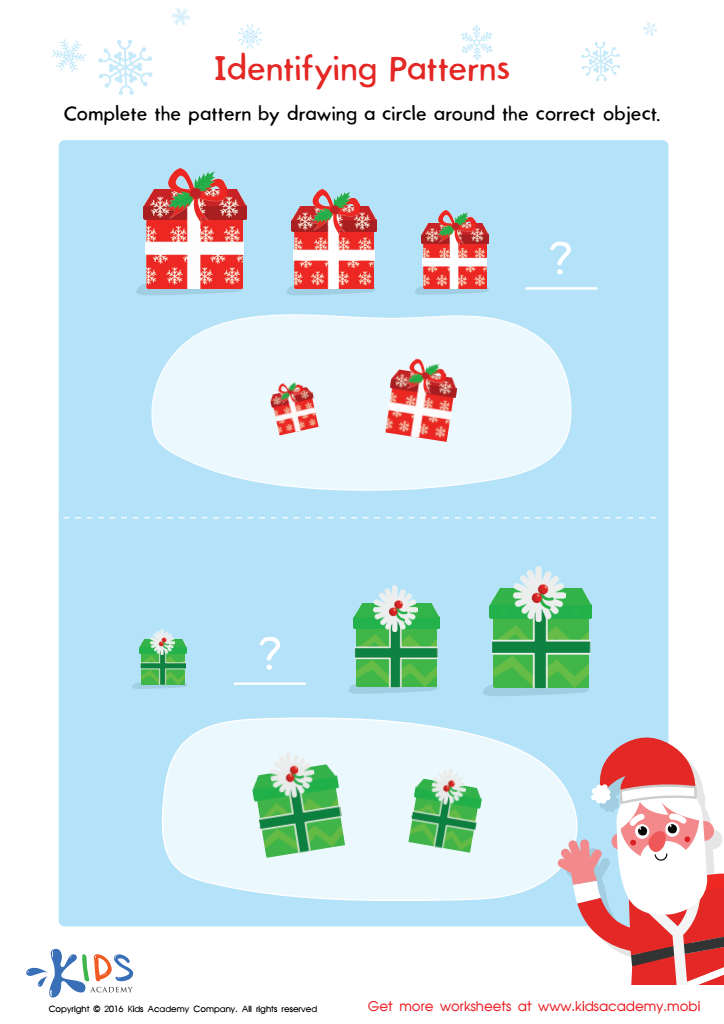
Identifying Patterns Worksheet
Kids can have fun as they learn with this festive worksheet! They'll practice early math skills while identifying patterns with colorful Christmas presents. Have your child get ready for the holidays by finding out which box comes next in the pattern!
Identifying Patterns Worksheet
Worksheet
Join Kids Academy for Free
Who is primarily going to use this learning content?




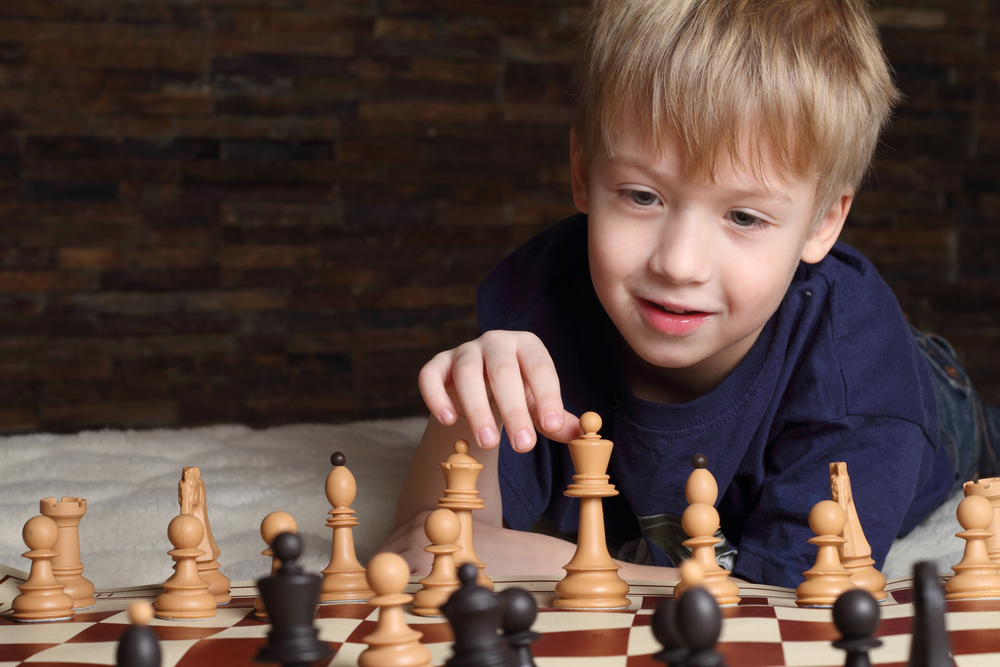



Pattern recognition and matching activities play a crucial role in the cognitive development of 6-year-old children. For parents and teachers, prioritizing these exercises can have long-term benefits in various areas of learning and problem-solving. At this age, children's brains are particularly receptive to identifying and understanding patterns, a skill fundamental to mathematics, reading, and critical thinking.
When children engage in pattern recognition exercises, they enhance their ability to make predictions, draw conclusions, and understand logical sequences. This forms the bedrock for more complex mathematical concepts such as arithmetic and algebra. In reading, pattern recognition assists with word recognition and rhyming, which are essential for literacy development.
Moreover, engaging in extra challenge matching activities promotes concentration, attention to detail, and fine motor skills. These are essential qualities not only for academic achievement but also for everyday problem-solving and decision-making. By fostering these skills early on, parents and teachers provide children with the tools to approach new and unfamiliar situations with confidence and creativity.
In essence, investing time and effort into pattern recognition and matching activities sets a strong foundation for a child’s future learning and development. Parents and teachers who prioritize these exercises support a child's cognitive, mathematical, and literacy skills, preparing them for more complex educational challenges ahead.