Comparing sizes Extra Challenge Measurement Worksheets for 6-Year-Olds
4 filtered results
-
From - To
Enhance your child's understanding of measurements with our "Comparing Sizes Extra Challenge Measurement Worksheets" tailored for 6-year-olds. Designed to promote confidence and skills in mathematics, these engaging worksheets present fun challenges that encourage kids to compare different sizes accurately. From identifying larger and smaller objects to drawing comparisons between various items, our activities foster a hands-on learning experience. Perfect for at-home practice or classroom use, these worksheets not only enrich mathematical knowledge but also develop critical thinking abilities. Give your child a head start in measurement concepts while keeping learning enjoyable and interactive! Explore today and watch them excel!
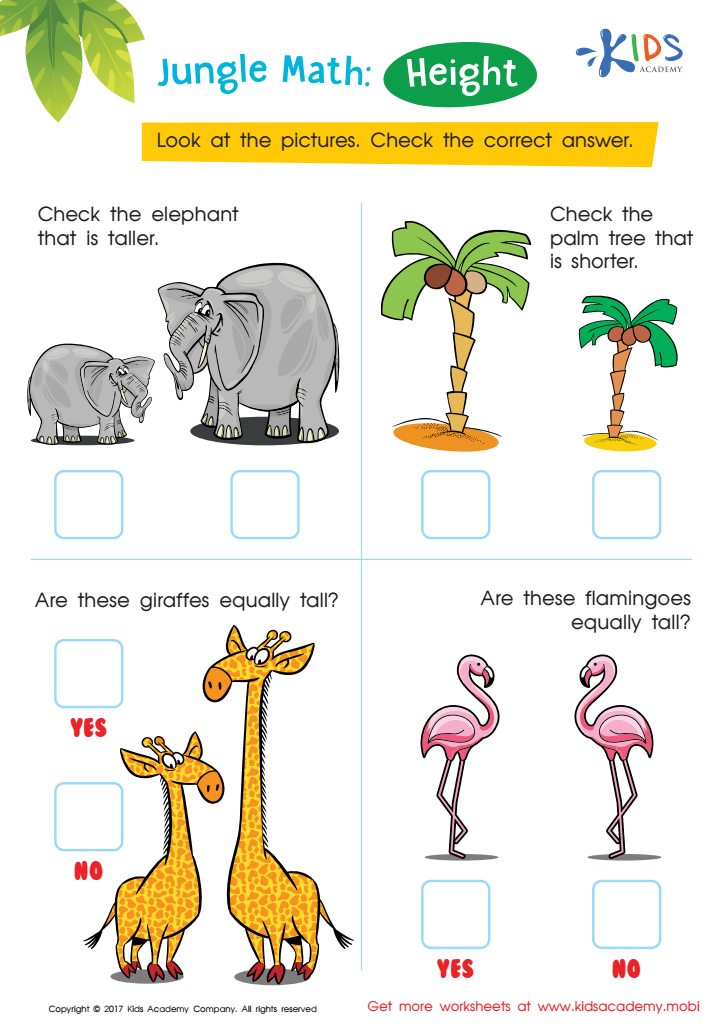
Which Is Taller Worksheet
 Assign to My Students
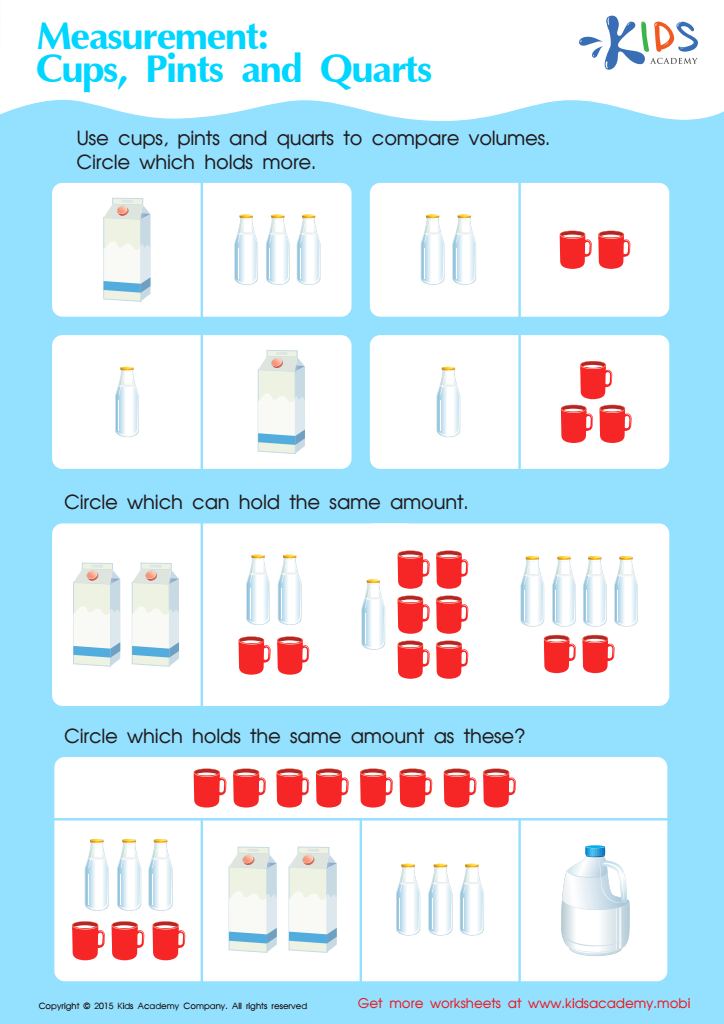
Measurement: Compare Volumes Worksheet
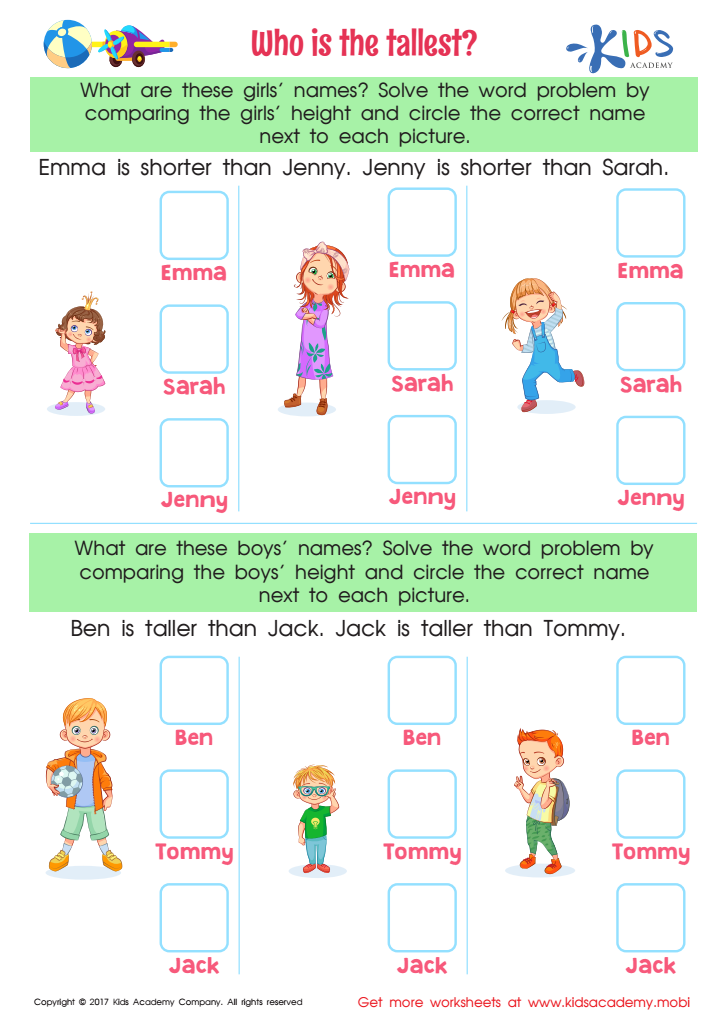
Who Tallest Printable
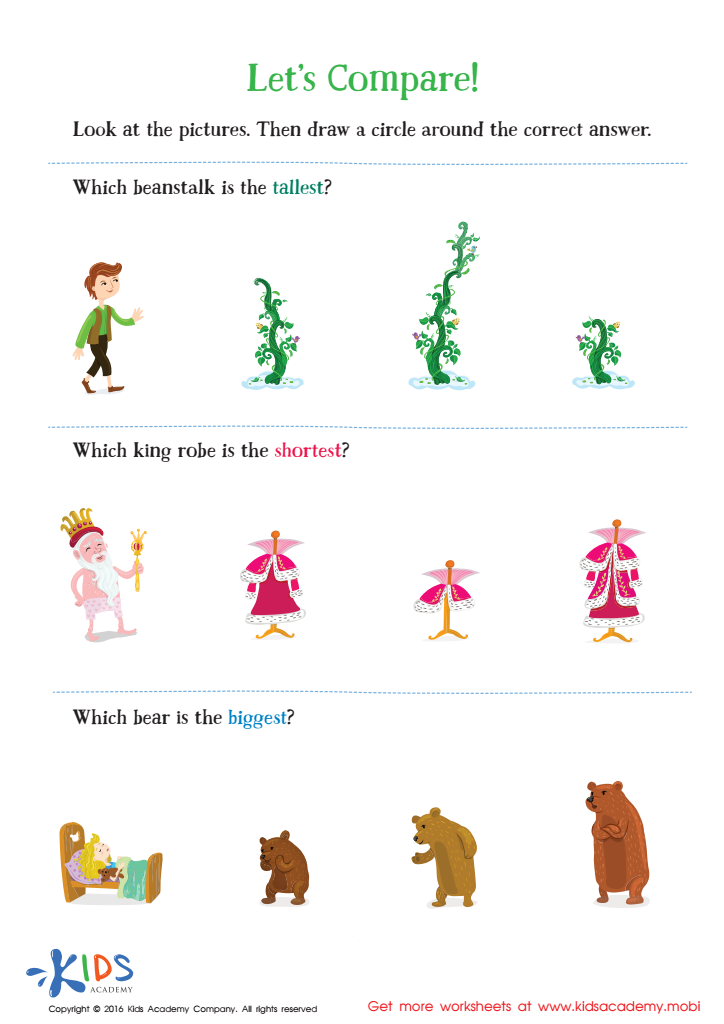
Fairy Tale Worksheet: Let's Compare








Understanding the concept of comparing sizes and measurements is foundational for young learners, particularly for 6-year-olds. This skill not only fosters mathematical understanding but also encourages critical thinking and problem-solving abilities. When parents and teachers engage students in comparing sizes, they help children to visualize and contextualize measurements in a tangible way.
Learning to compare sizes enhances spatial awareness and helps children make sense of the world around them. For example, recognizing which objects are taller or shorter, heavier or lighter, encourages observational skills and cognitive development. These foundational measurement concepts link to everyday life experiences, promoting practical skills that students will utilize later, such as in cooking or in determining the sizes of clothing.
Additionally, this area of measurement introduces children to terminology and vocabulary that is crucial for effective communication in mathematics. Including activities that involve comparing sizes promotes social interaction and teamwork when done in group settings, allowing children to learn collaboratively. These early experiences with size comparison not only build mathematical confidence but also inspire curiosity—key traits for lifelong learners. Therefore, both parents and teachers should prioritize engaging children in size comparison activities to nurture their mathematical and cognitive skills effectively.








