Vocabulary expansion Extra Challenge Writing Worksheets for 6-Year-Olds
7 filtered results
Difficulty Level
Grade
Age
-
From - To
Subject
Activity
Standards
Our "Vocabulary Expansion Extra Challenge Writing Worksheets for 6-Year-Olds" are designed to spark curiosity and improve your child's language skills. These fun and engaging activities encourage young learners to explore new words, enhancing their ability to understand and use a richer vocabulary. Through these thoughtfully crafted worksheets, children can practice recognizing different word meanings, using context clues, and putting new words into practice within sentences. Perfect for early grade kids ready to expand their verbal horizons, these resources will make vocabulary building a fun and rewarding journey. Access now and watch your child’s word knowledge flourish!
Favorites
With answer key
Interactive
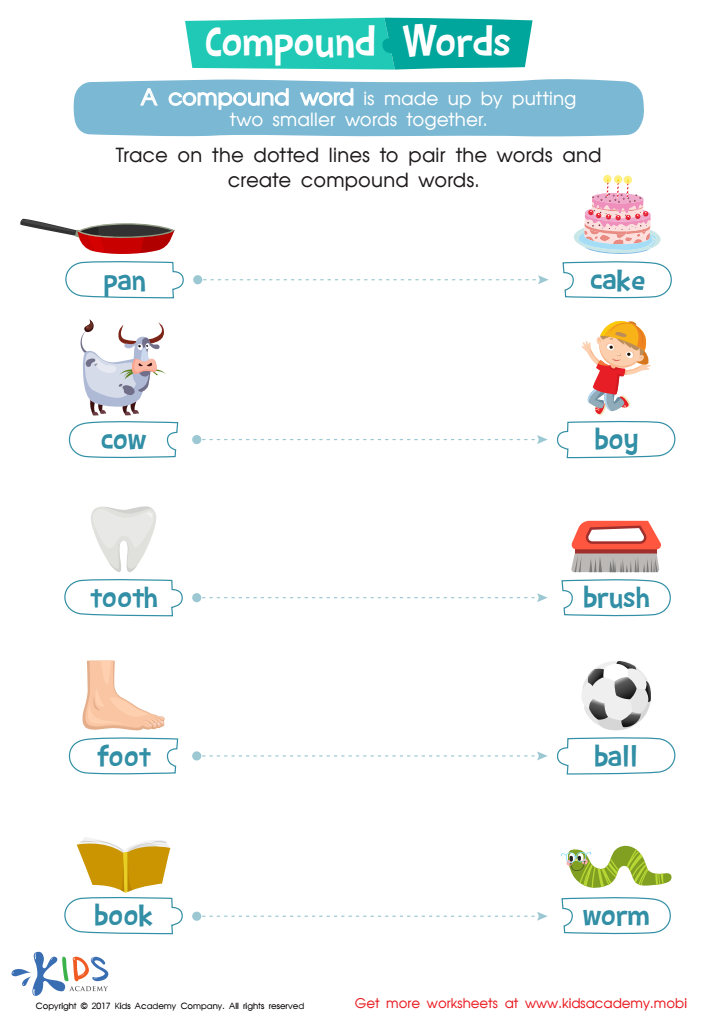
Compound Words Word Structure Worksheet
Studying compound words is a great way to improve reading and writing skills! Try this fun worksheet: Compound Words – trace the lines to make new words! It's an easy and enjoyable way to get better at English.
 Assign to My Students
Compound Words Word Structure Worksheet
Worksheet
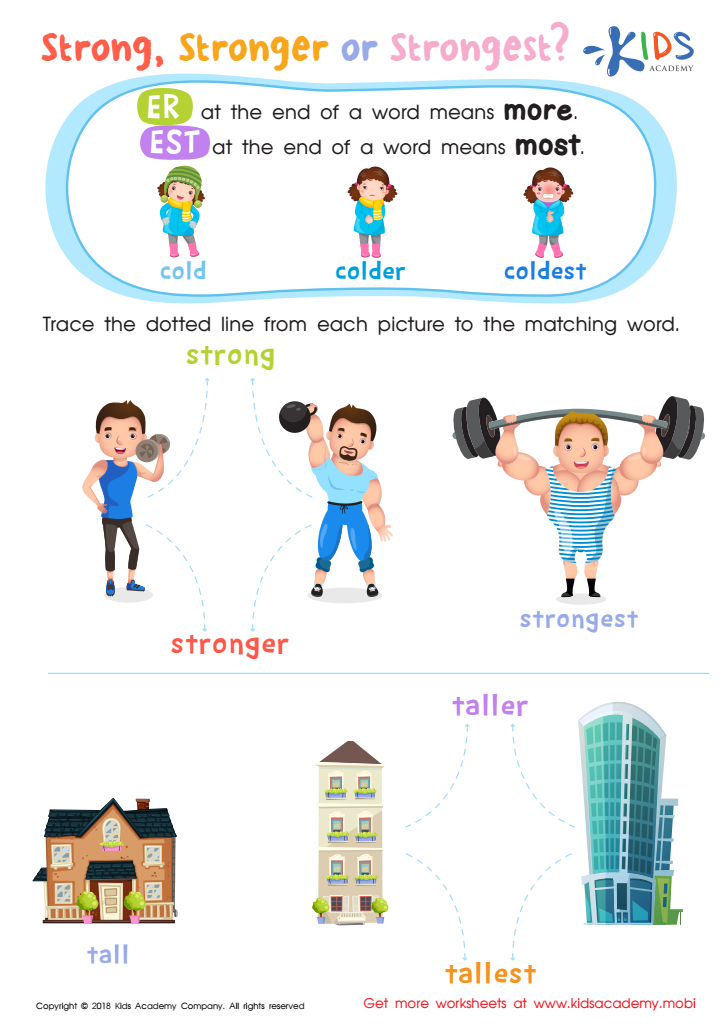
Strong or Stronger? Worksheet
Help your child understand the concept of size gradients with a fun worksheet. Explain to them that adding "-er" to words means "more" and "-est" means "most". Point to the pictures and have your little one trace the dotted line to the corresponding words to learn the concept of highest and lowest.
Strong or Stronger? Worksheet
Worksheet
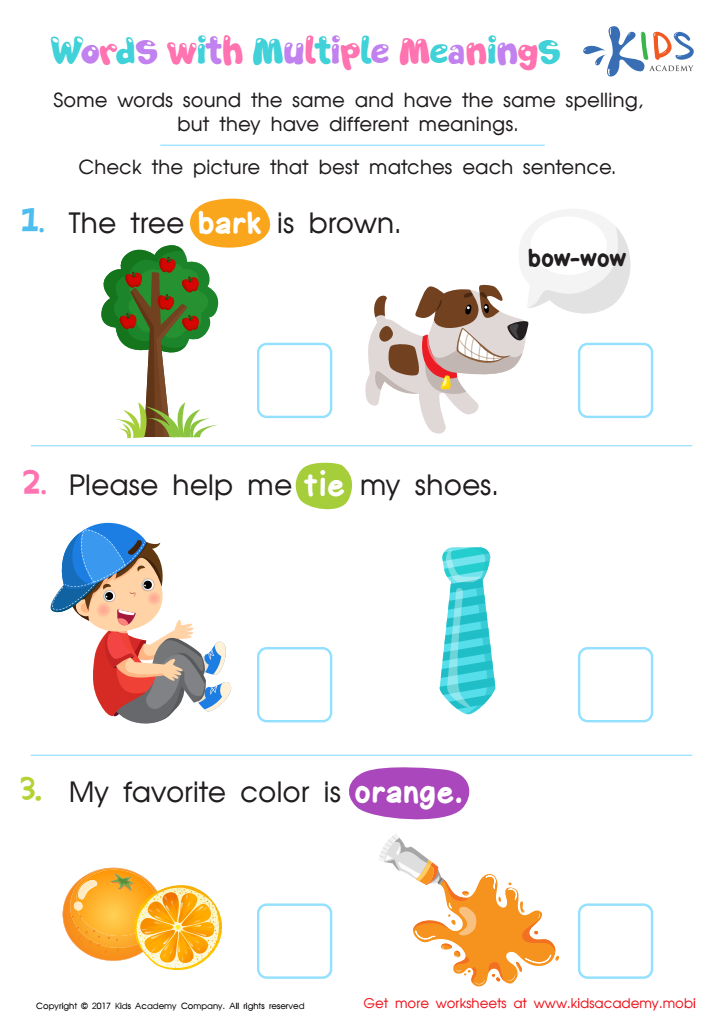
Words with Multiple Meanings Worksheet
Young authors can struggle with homographs – words that sound the same and have different meanings. This PDF worksheet uses pictures to help them easily differentiate homographs and contextualize their use. It's an engaging way to introduce them to homographs, helping them to navigate tricky words when writing.
Words with Multiple Meanings Worksheet
Worksheet
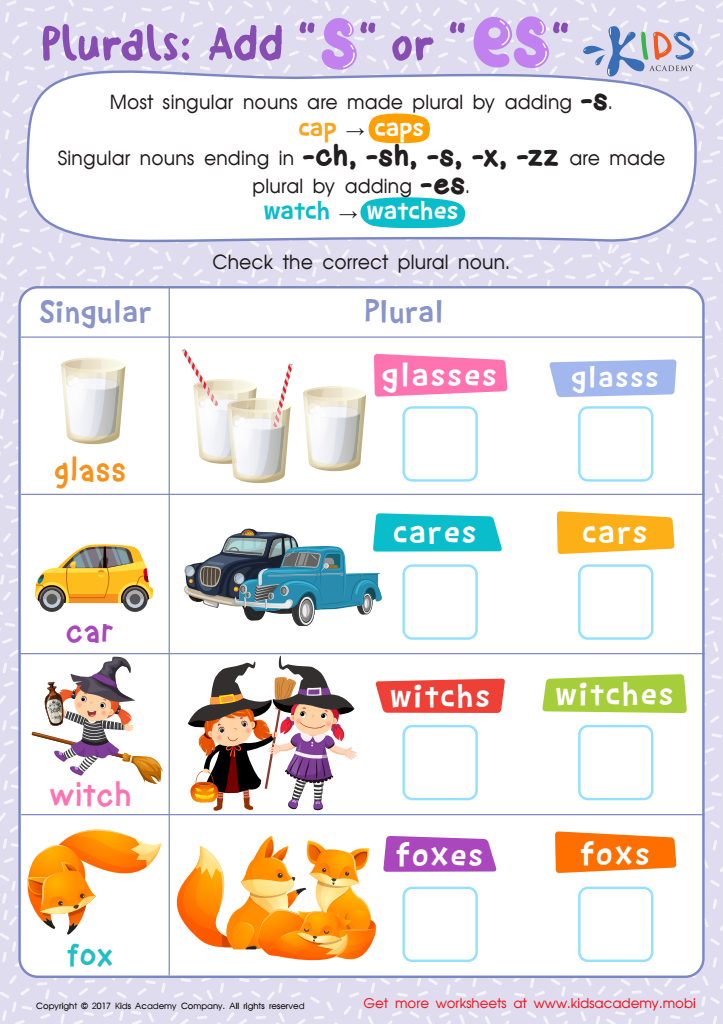
Plurals: "–es" or "–es"? Worksheet
Learning plural nouns can be tough for young readers. This worksheet shows them the difference between singular and plural spelling with cute images. Read each word and check the correct version. Remind them why the other ending can't be used.
Plurals: "–es" or "–es"? Worksheet
Worksheet
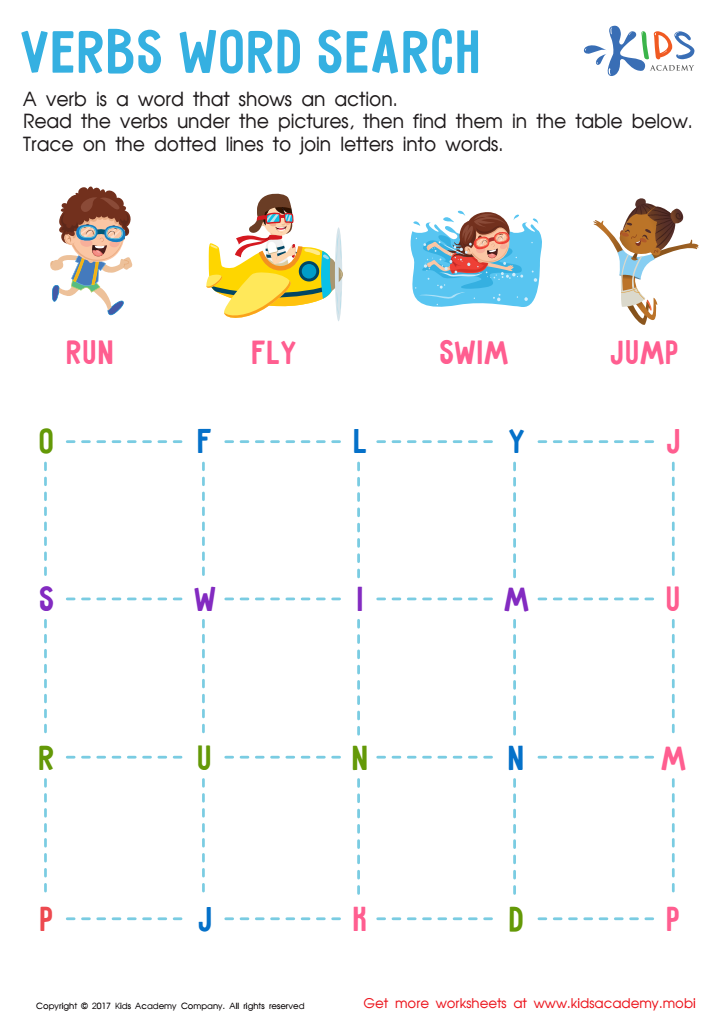
Verbs Word Search Worksheet
Ask your child if they understand the meaning of the word "verb". If not, explain that it's a word that shows an action. Give examples of familiar verbs. Then look at the pictures in the tracing sheet and read the words. Ask your child to follow the dotted lines to find the hidden words. Perfect tool to teach spot and use verbs!
Verbs Word Search Worksheet
Worksheet
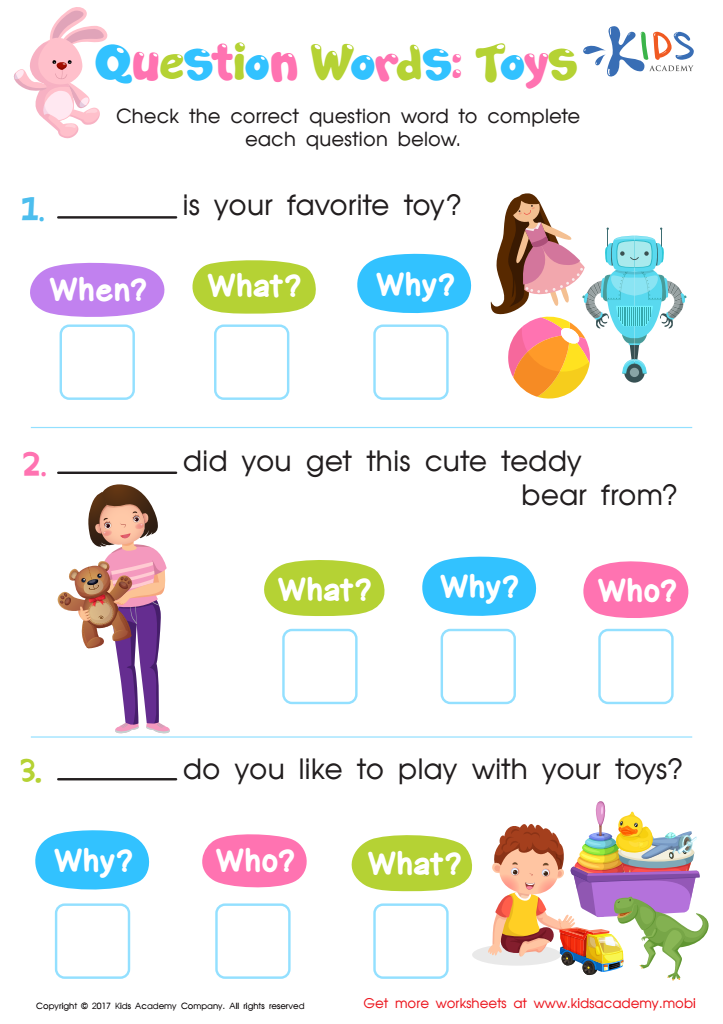
Question Words: Toys Worksheet
Let your kids enjoy learning to ask precise questions with this fun worksheet! Read each sentence fragment and look at the word bank, picking the correct word to complete the sentence. Check the box next to the correct word to use. It's that easy and lots of fun!
Question Words: Toys Worksheet
Worksheet
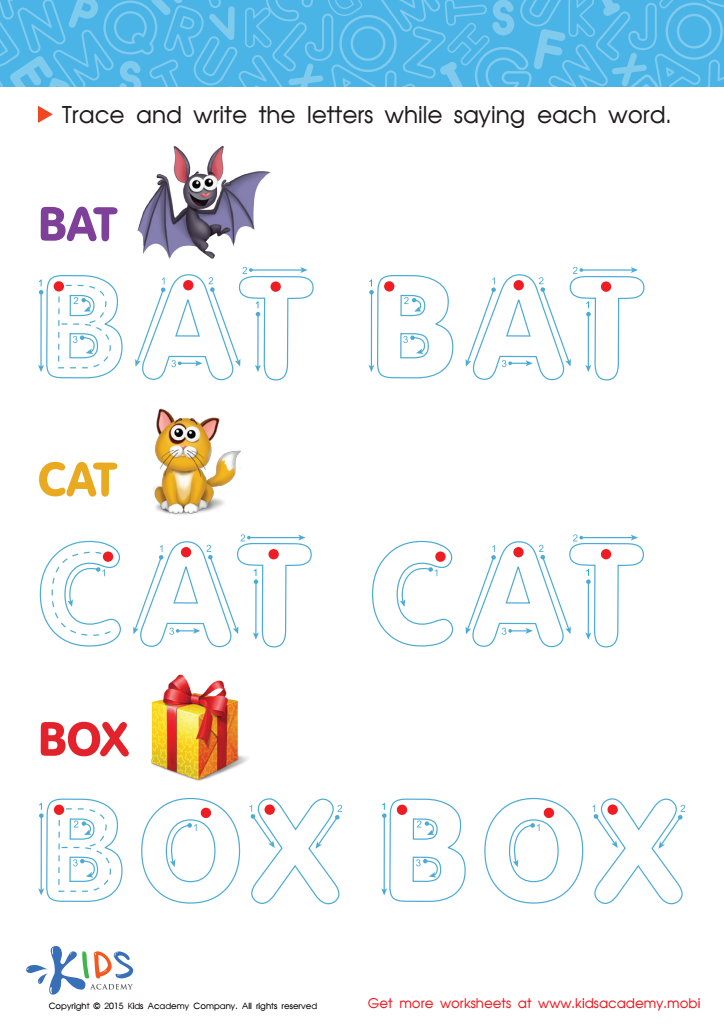
A Bat, a Cat and a Box Spelling Worksheet
Check out this new spelling worksheet, perfect for kids! It includes three lines with three small words to learn. Let's practice pronunciation, reading, and writing them. Trace and write the words on your own, then explore more free vocabulary worksheets at Kids Academy. Learn and make your studies enjoyable!
A Bat, a Cat and a Box Spelling Worksheet
Worksheet
Join Kids Academy for Free
Who is primarily going to use this learning content?








Parents and teachers should prioritize vocabulary expansion and extra challenge writing exercises for six-year-olds because these activities are foundational to children's overall language development and cognitive abilities. A rich vocabulary not only enhances children's communication skills but also boosts their reading comprehension and academic success. When young children are exposed to a wide range of words, they become better equipped to express their thoughts and understand complex concepts.
Furthermore, engaging young learners in extra challenge writing activities encourages creativity, critical thinking, and fine motor development. These exercises push children to use new words in context, thereby reinforcing their understanding and aiding retention. Additionally, writing tasks give children a sense of accomplishment and build confidence in their abilities, which fosters a positive attitude toward learning.
Beyond merely academic benefits, vocabulary expansion and writing skills are important life tools. Effective communication skills are pivotal for building relationships and navigating various social situations. By fostering these skills early on, parents and teachers are setting children up for a future in which they can articulate their ideas clearly, succeed in academic pursuits, and interact effectively with others. Investing time in vocabulary growth and challenging writing activities is, therefore, a critical aspect of early education.