Alphabet Recognition Extra Challenge ABC Letters Worksheets for Ages 7-8
3 filtered results
-
From - To
Introducing our "Alphabet Recognition Extra Challenge ABC Letters Worksheets for Ages 7-8"! Perfect for young learners ready to advance their skills, these worksheets provide fun, engaging activities that go beyond basic alphabet familiarity. Ideal for students who thrive on extra challenges, our tasks include letter identification, alphabetical order puzzles, and matching games, all designed to strengthen cognitive development and boost confidence. Tailored for ages 7-8, each worksheet melds play with education, encouraging a deeper understanding of the alphabet in an enjoyable format. Jumpstart your child's linguistic journey with these advanced activities! Download now and watch them excel.
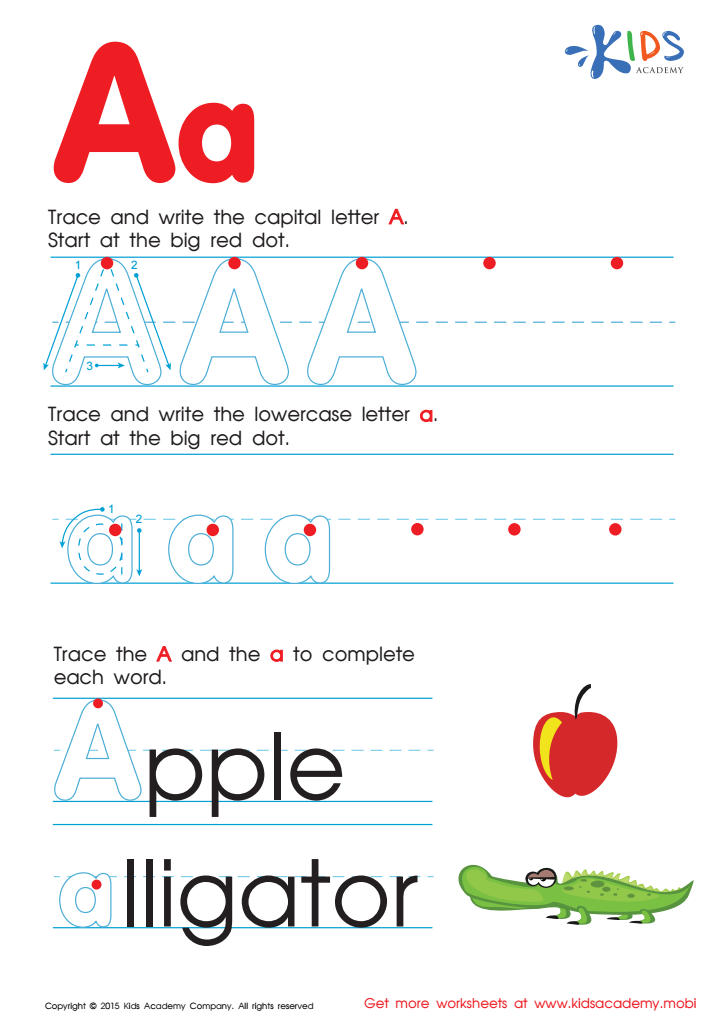
Letter A Tracing Page
 Assign to My Students

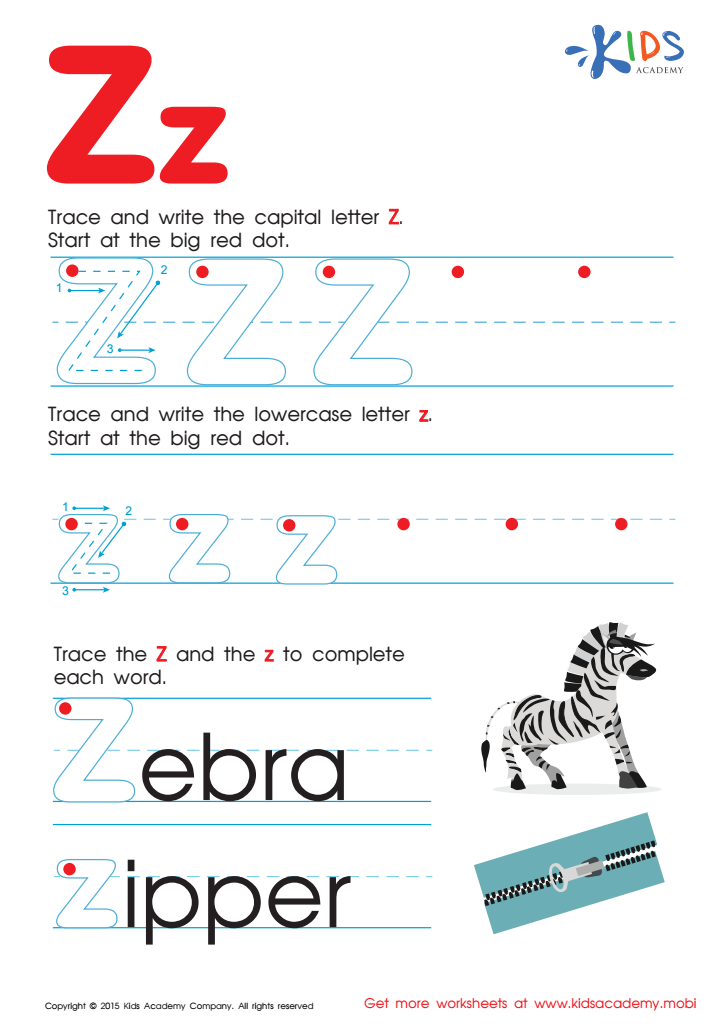
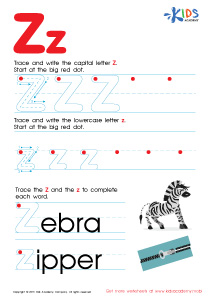
Letter Z Tracing Page
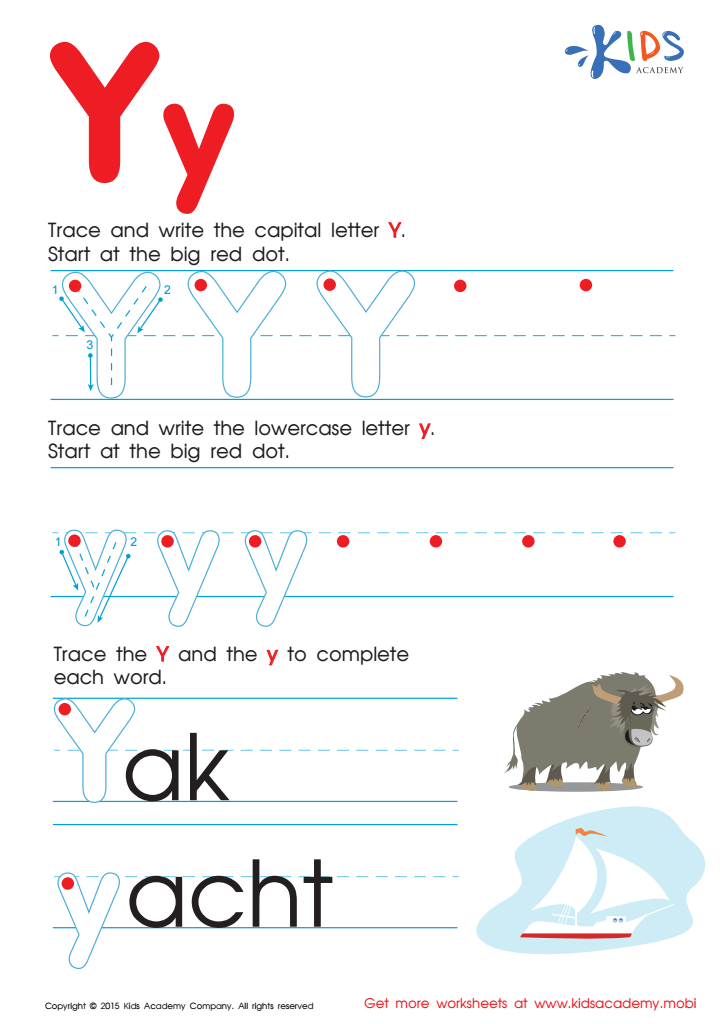
Letter Y Tracing Page






Alphabet recognition is a foundational skill in early childhood education that significantly impacts a child's literacy development. Introducing an extra challenge with ABC letters for ages 7-8 can provide substantial benefits for both parents and teachers to support.
Firstly, reinforcing alphabet knowledge at this age helps cement a child's understanding of letter shapes, sounds, and their relation to words. While most children know the basic alphabet by age 7, advanced challenges—like identifying letters in different fonts, associating letters with complex sounds, or creating words using scrambled letters—can stimulate cognitive development and critical thinking.
Secondly, it encourages engagement and enthusiasm for learning. An extra challenge can transform what might be repetitive into an exciting game, thereby fostering a lifelong love for reading and learning. It also cultivates a growth mindset, where children learn the value of effort and perseverance in mastering skills.
Finally, it prepares them for higher-level literacy skills. Recognizing letters quickly and accurately enables smoother transitions to more complex reading and writing tasks. Early proficiency in these areas can lead to academic success across the curriculum.
For parents and teachers, supporting alphabet recognition beyond the basics reinforces essential literacy skills and sets the stage for future learning and achievement. Investing time in such activities now yields significant educational dividends in a child's academic journey.