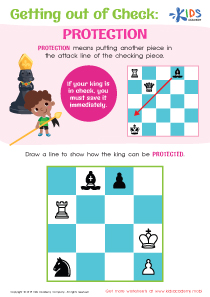
Critical thinking development Extra Challenge Chess Worksheets for Ages 7-8
4 filtered results
-
From - To
Unlock your child’s potential with our "Critical Thinking Development Extra Challenge Chess Worksheets" for ages 7-8! Designed to enhance cognitive skills and strategic thinking, these engaging worksheets introduce young learners to fundamental chess concepts while promoting creative problem-solving. Each printable activity focuses on critical thinking, ensuring your child develops essential reasoning abilities through fun-filled challenges. Perfect for both classroom settings and at-home learning, our worksheets cater to budding chess enthusiasts ready to tackle puzzles and scenarios that stimulate their minds. Join us in fostering a love for chess and a sharper intellect—download the worksheets today and watch your child thrive!
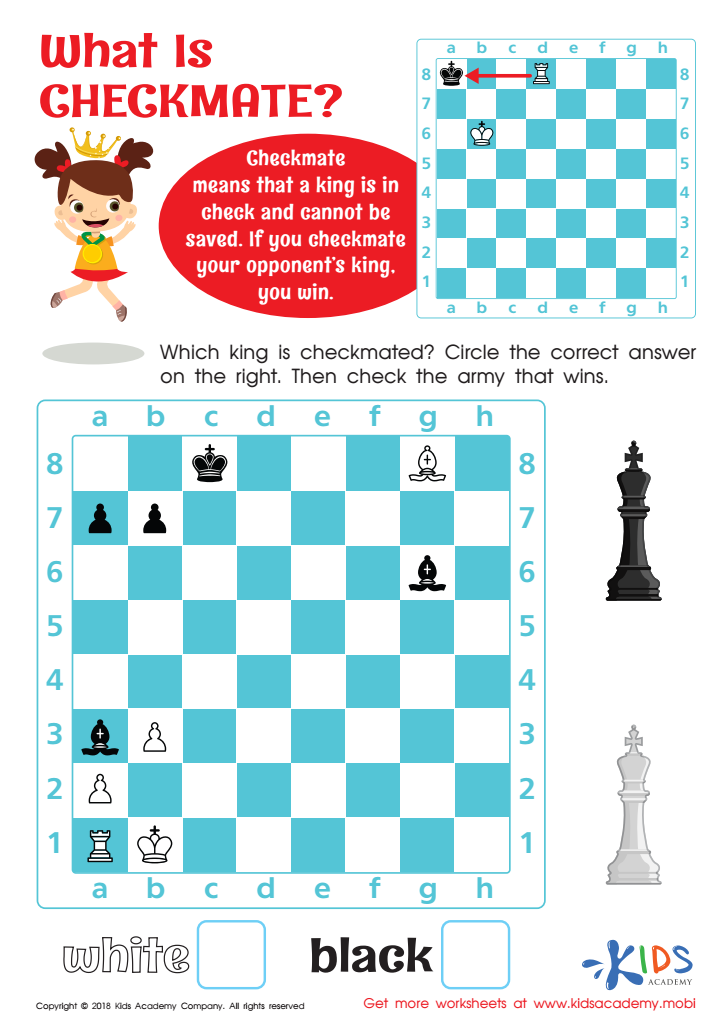
What is Checkmate? Worksheet
 Assign to My Students
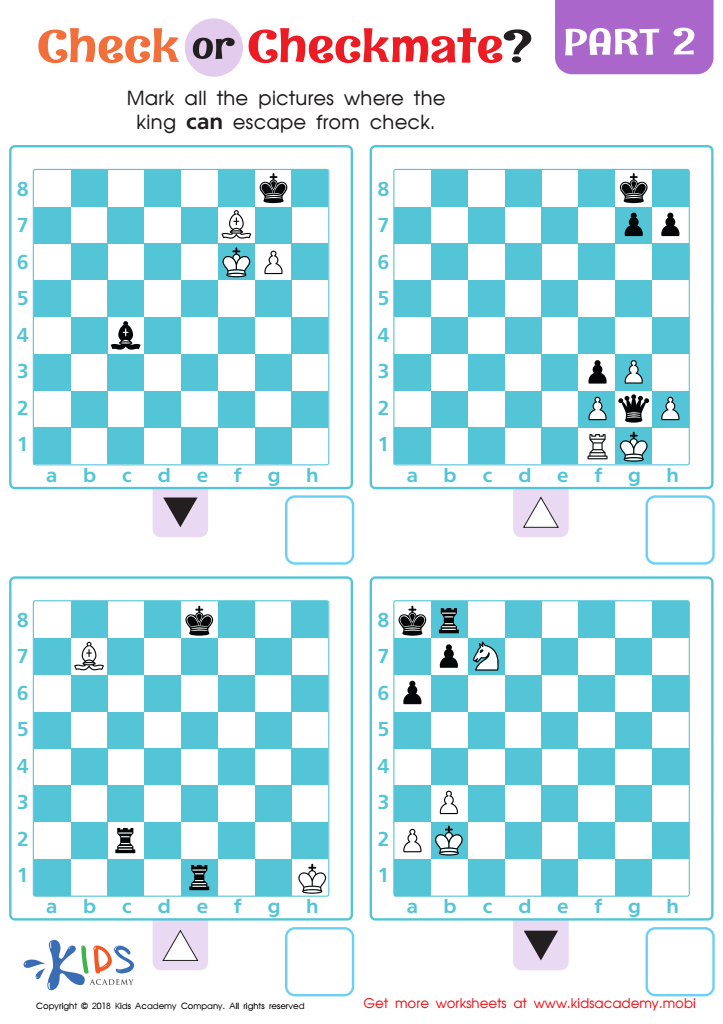
Check or Checkmate: Part 2 Worksheet
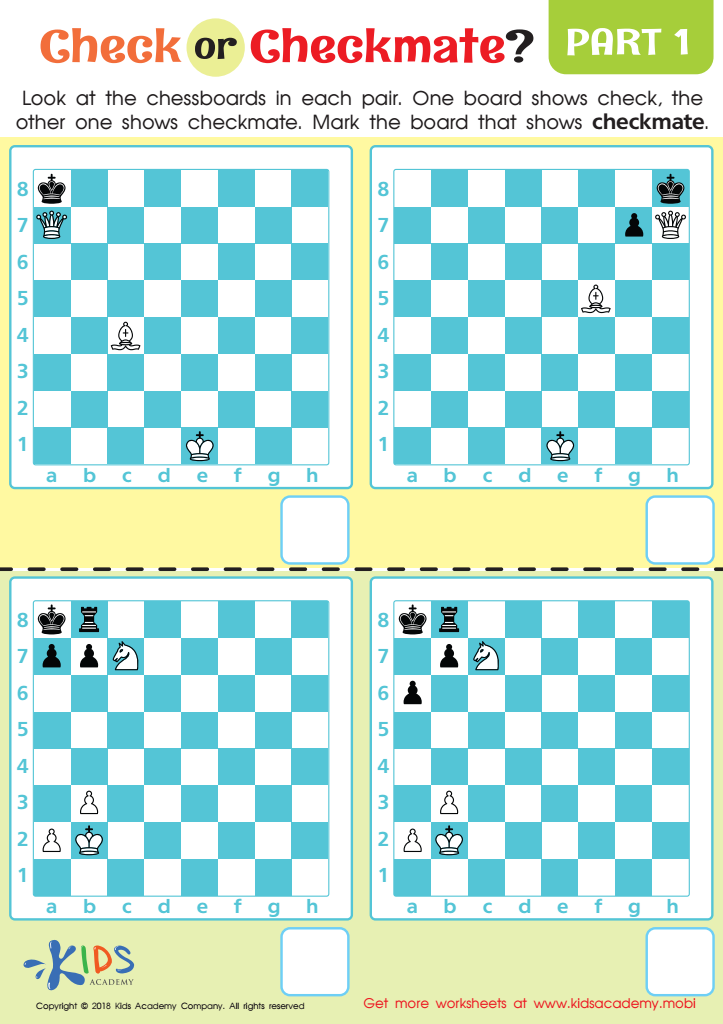
Check or Checkmate: Part 1 Worksheet
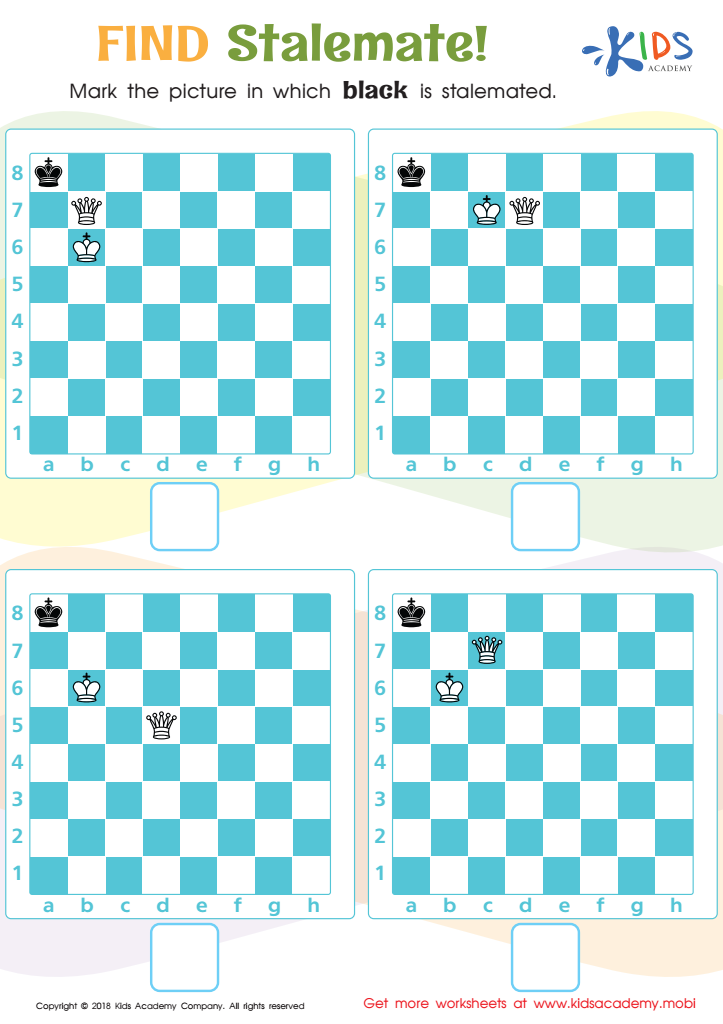
Find Stalemate! Worksheet







Parents and teachers should prioritize critical thinking development through programs like Extra Challenge Chess for ages 7-8 because it fosters essential cognitive skills. At this formative age, children are developing their ability to analyze situations, make decisions, and solve problems creatively. Chess, with its strategic depth and requirement of foresight, serves as an engaging platform for enhancing these skills.
Participating in chess not only encourages critical thinking but also promotes discipline and patience. As children learn to anticipate their opponent's moves and plan their strategies several steps ahead, they cultivate patience and resilience in the face of challenges. They learn to evaluate the consequences of their actions and to think logically, skills that extend beyond the chessboard and translate into academic success in subjects like math, science, and reading.
Additionally, learning chess can improve social skills, as it often involves playing against others. This exposes children to different perspectives and enhances their ability to collaborate. Ultimately, by incorporating Extra Challenge Chess into their learning, parents and teachers can lay a strong foundation for lifelong critical thinking skills, preparing children not only for academic achievements but also for thoughtful decision-making in everyday life.