Chess strategy learning Extra Challenge Worksheets for Ages 7-8
7 filtered results
-
From - To
Unlock young minds with our Chess Strategy Learning Extra Challenge Worksheets tailored for ages 7-8! Designed to boost critical thinking and problem-solving skills while having fun, these worksheets offer engaging puzzles that introduce and reinforce chess strategies. Ideal for budding chess enthusiasts, each worksheet encourages students to think several moves ahead, sharpening their minds and enhancing decision-making abilities. Perfect for teachers and parents seeking to provide a stimulating, educational, and entertaining challenge. Let your child master the art of chess strategy while building a strong foundation for advanced learning. Discover the joy of chess today!
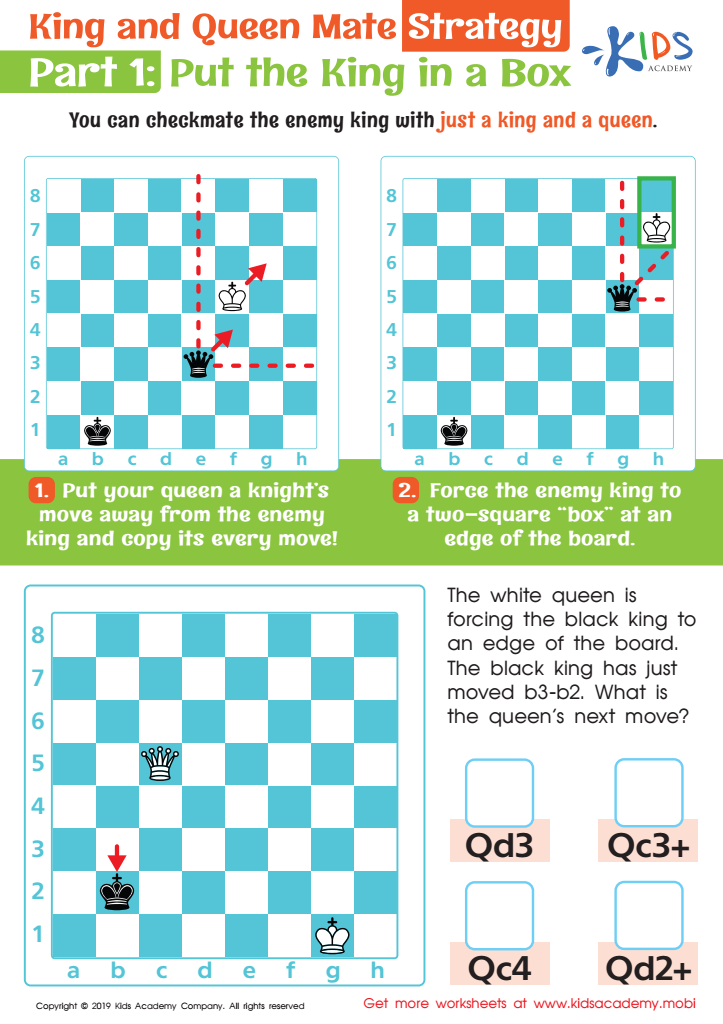
King and Queen Mate Strategy: Part 1 Worksheet
 Assign to My Students
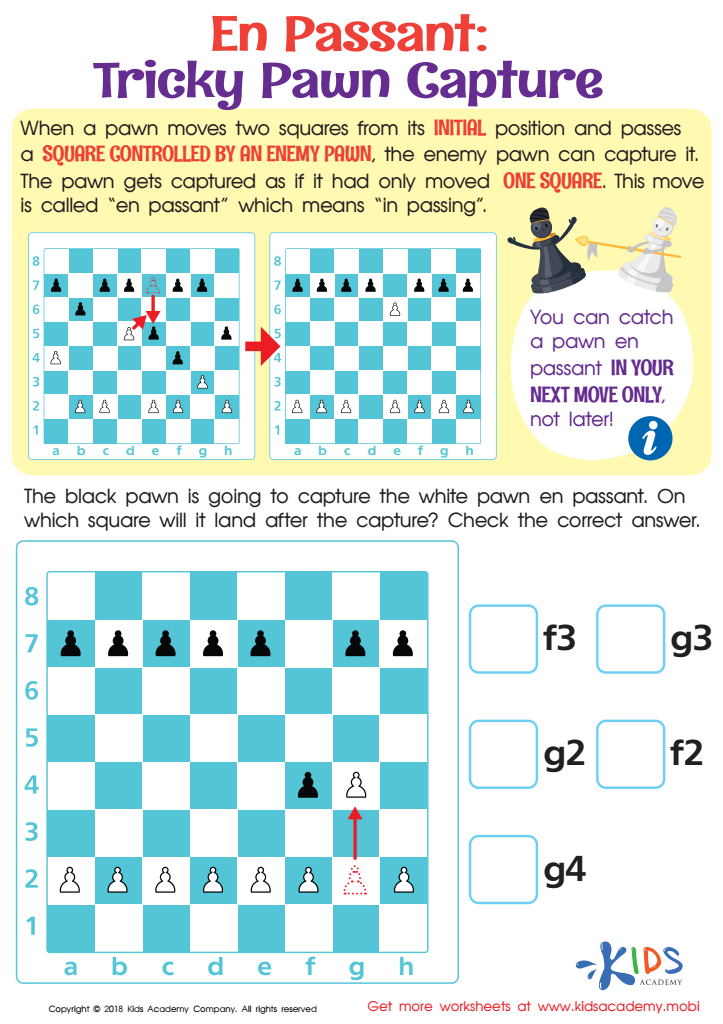
En Passant: Tricky Pawn Capture Worksheet
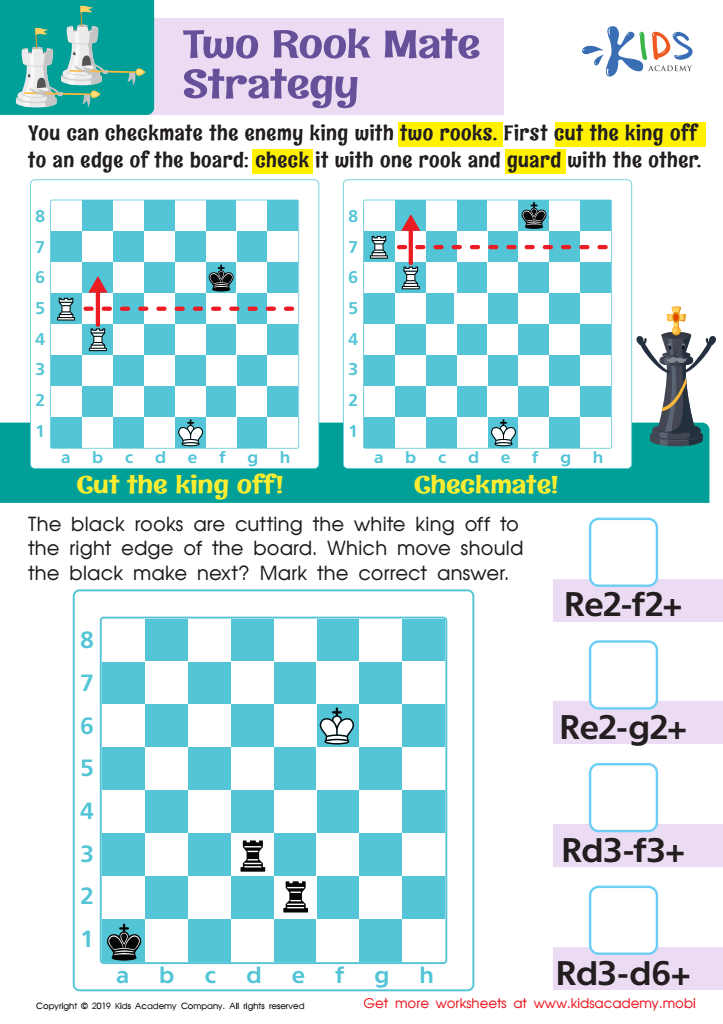
Two Rook Mate Strategy Worksheet
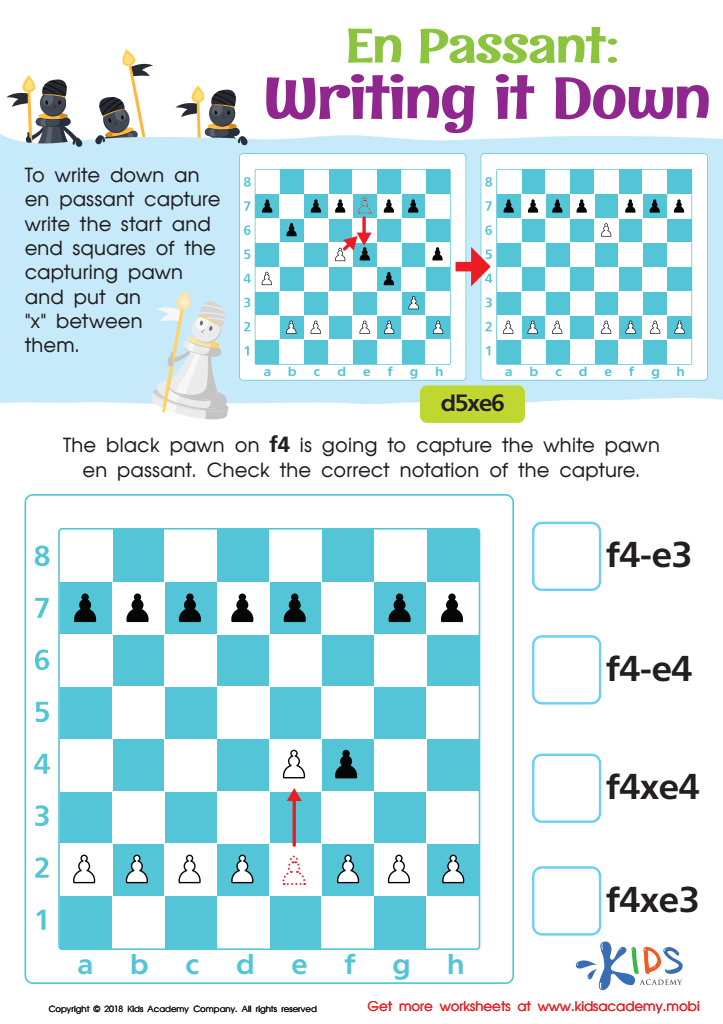
En Passant: Writing it Down Worksheet
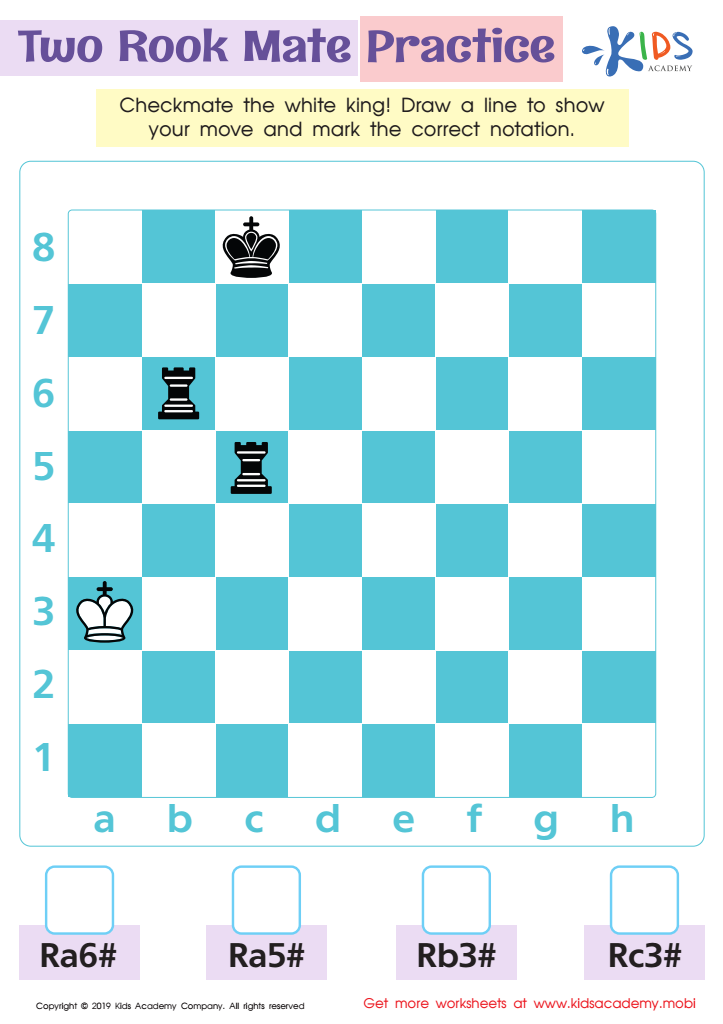
Two Rook Mate Practice Worksheet
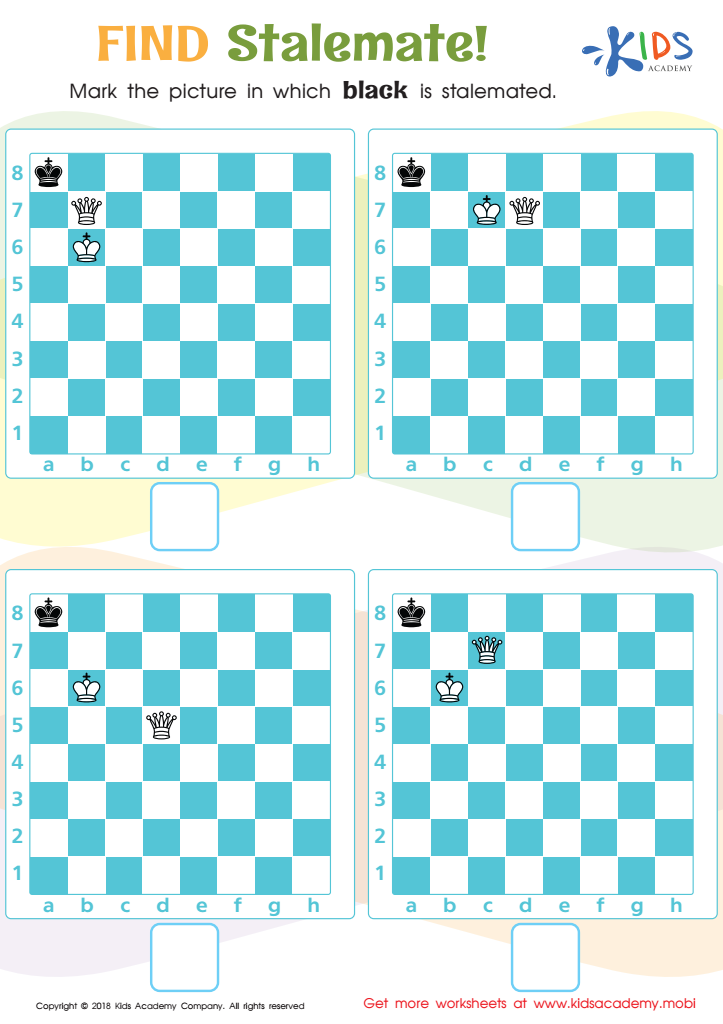
Find Stalemate! Worksheet
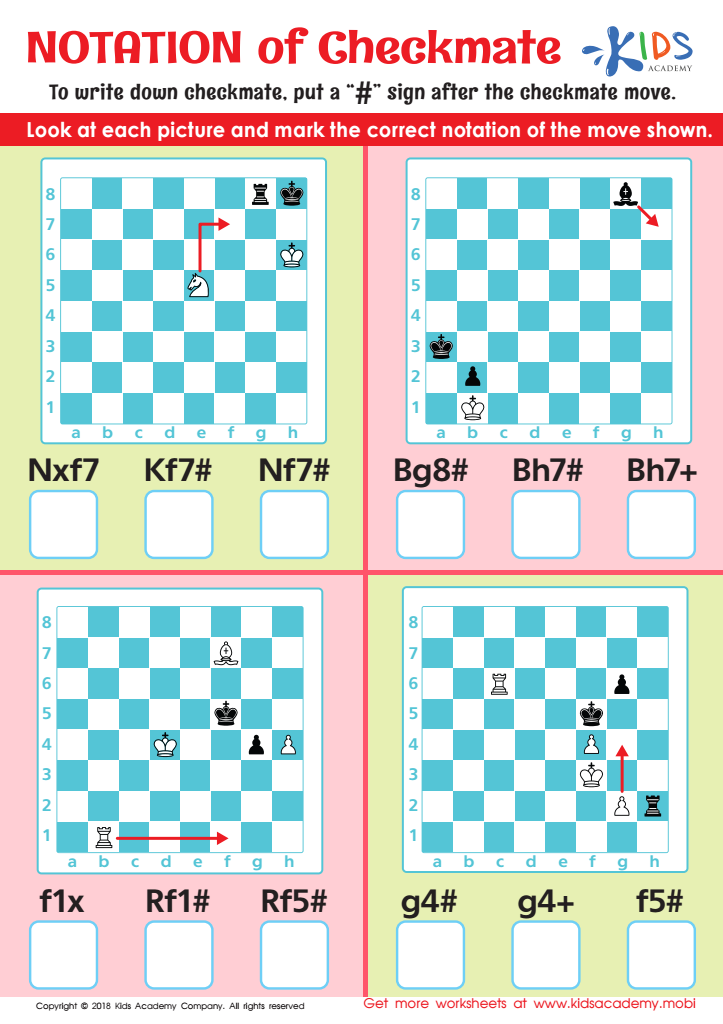
Notation of Checkmate Worksheet






Introducing chess strategy through an extra challenge to children aged 7-8 can significantly benefit their cognitive and emotional development. At this formative stage, children exhibit substantial brain plasticity, meaning they are incredibly capable of learning new and complex skills. Chess, by nature, requires critical thinking, problem-solving, and strategic planning - talents that extend far beyond the chessboard and into everyday life and academics.
Firstly, learning chess encourages patience and concentration. As children focus on anticipating their opponent's moves, they learn to pay attention to details and think several steps ahead. This improved focus can translate into better performance in school subjects like mathematics and reading.
Secondly, chess fosters creativity and resilience. Children are continuously presented with new challenges and opportunities to experiment with different strategies. This allows them to understand not every plan will succeed, promoting a growth mindset where persistence and learning from mistakes are cherished.
Moreover, playing chess is an excellent way for children to build social skills. Whether they’re playing with classmates or family members, they learn about turn-taking, respect for opponents, and handling wins and losses gracefully.
In summary, integrating chess strategy into the lives of children ages 7-8 cultivates essential life and academic skills while providing a fun and intellectually stimulating pastime. Parents and teachers should care because this engagement lays a strong foundation for lifelong learning and personal development.








