Comparing lengths Extra Challenge Worksheets for Ages 7-8
5 filtered results
-
From - To
Explore our "Comparing Lengths Extra Challenge Worksheets" designed for children aged 7-8! These engaging worksheets encourage critical thinking and enhance measurement skills while making learning fun. Your child will tackle various comparison problems that require them to evaluate lengths using different units, developing their understanding of concepts such as shorter, longer, and equal lengths. Perfect for reinforcing lessons in the classroom or at home, these challenges boost problem-solving abilities and foster a love for math. Check out our extensive collection to keep your child excited and motivated to learn about measurement and comparison in an interactive way!
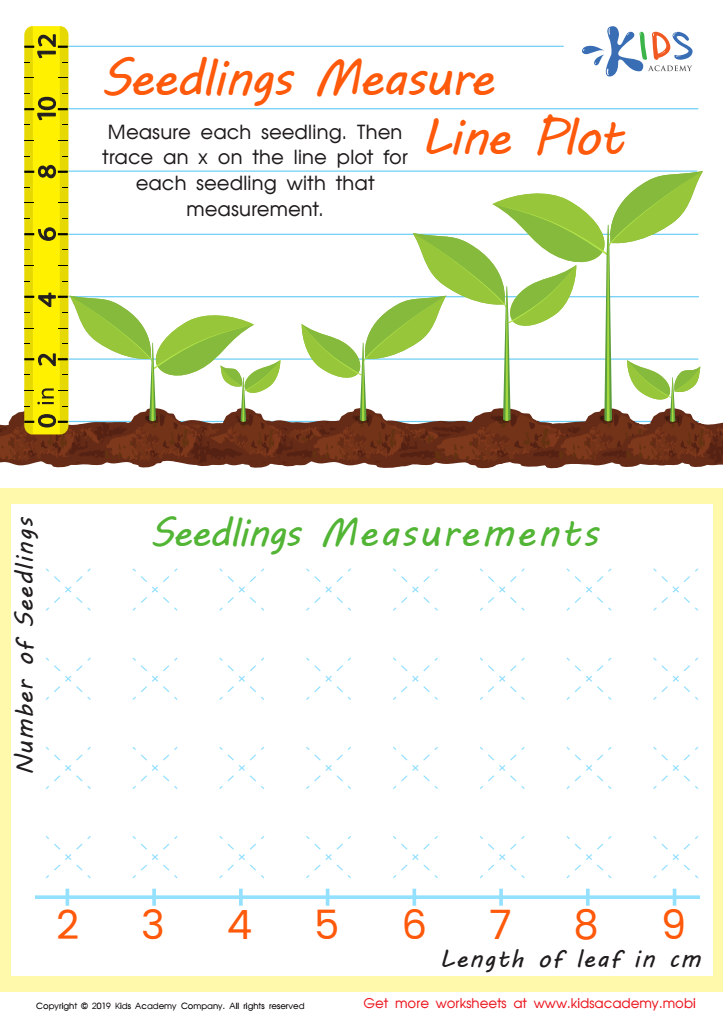
Seedling Measure Line Plot Worksheet
 Assign to My Students
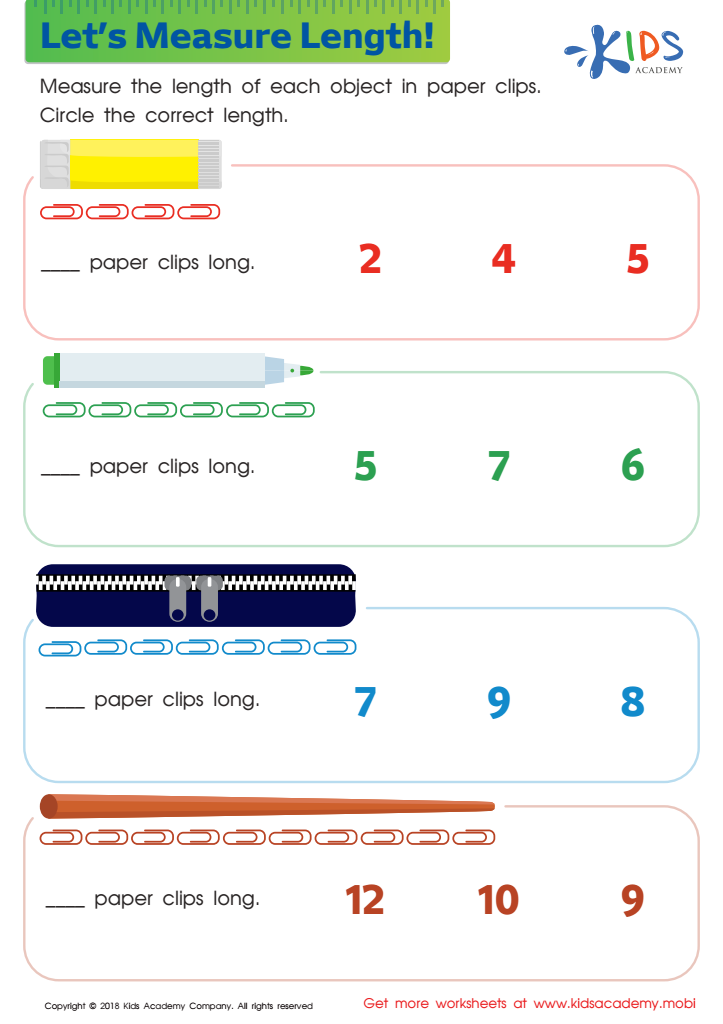
Lets Measure Length Worksheet
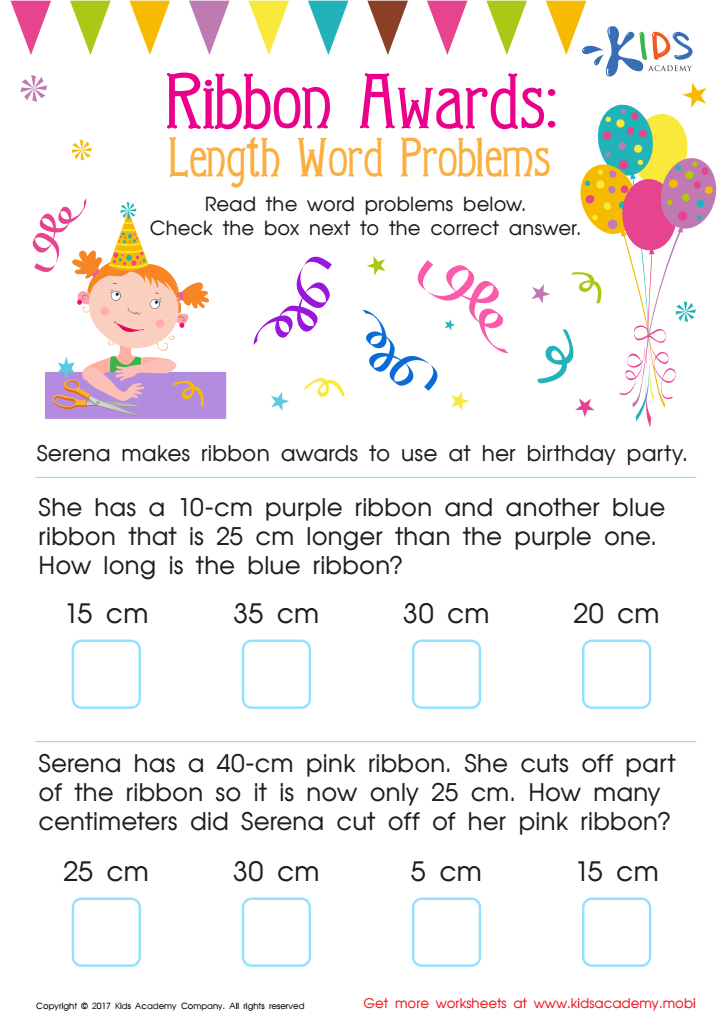
Length Word Problems Worksheet
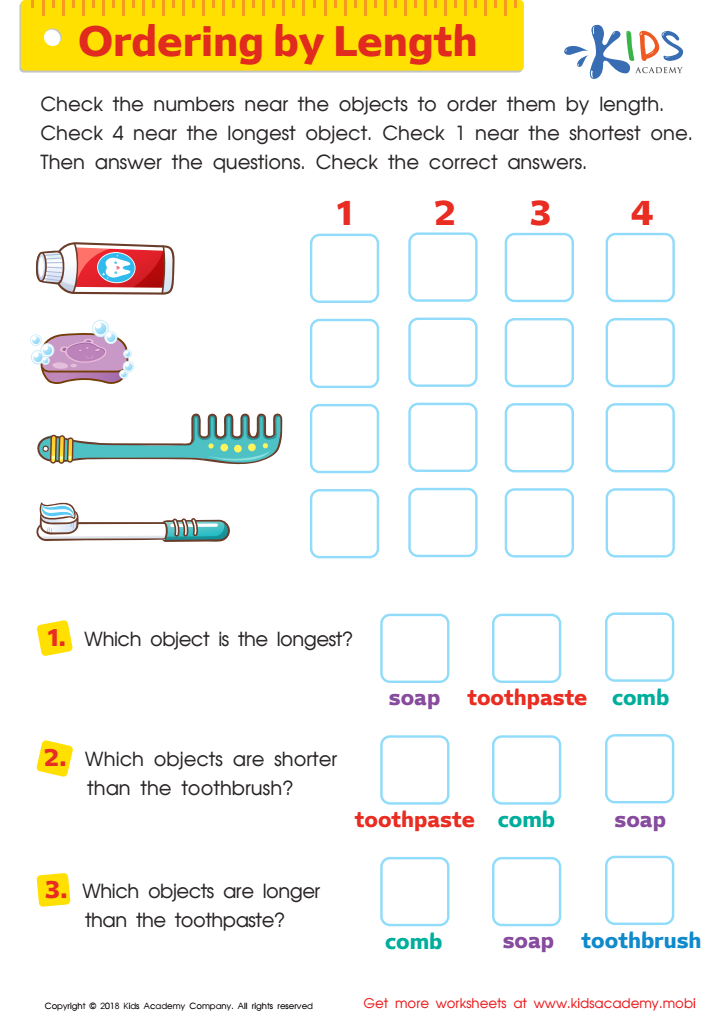
Ordering by Length Worksheet
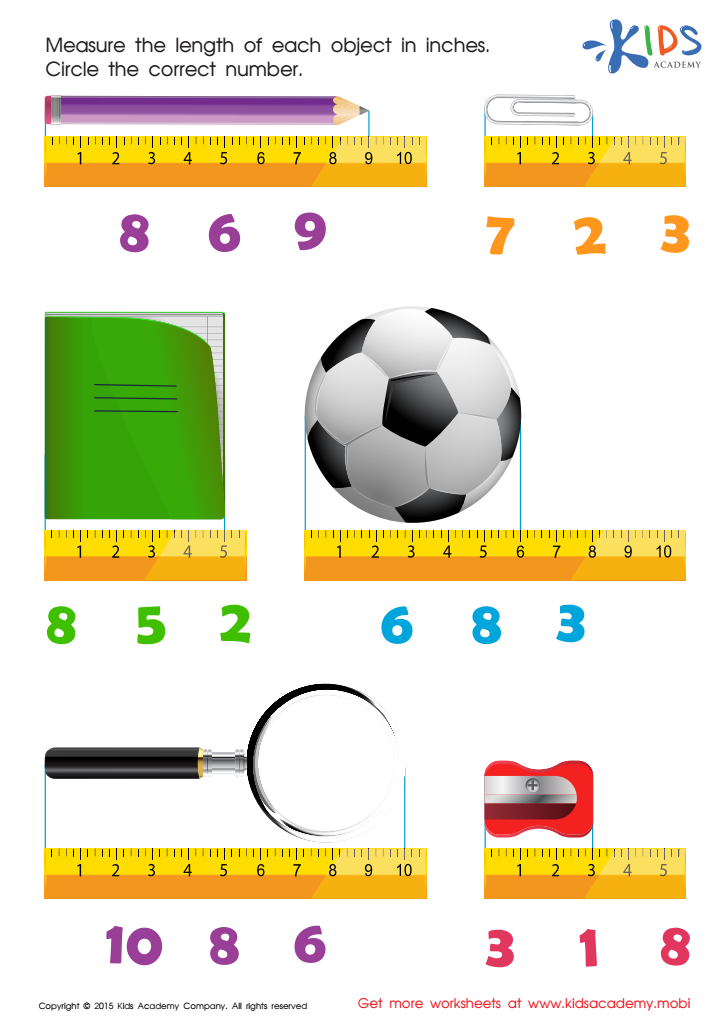
Learning measuring objects in inches Worksheet








Comparing lengths is a fundamental mathematical skill that forms the basis for more complex concepts in measurements and problem-solving. For parents and teachers of children aged 7-8, understanding how to compare lengths can significantly enhance a child's cognitive development and critical thinking skills. This age marks crucial stages in mathematical understanding, where students begin to grasp measurements and relationships between objects.
When children engage in comparing lengths, they learn to observe, measure, and articulate their observations, building a foundation for spatial awareness. These concepts not only enhance mathematical skills but also foster skills such as reasoning and logical thinking. It encourages cooperation and communication when they work with peers on measuring activities, promoting social development.
Furthermore, practical applications in daily life—such as measuring ingredients for cooking or evaluating the length of objects—instill a greater appreciation of mathematics in real-world contexts. This can spark creativity and curiosity, leading to a more engaged and motivated learner. By facilitating challenges and activities that involve comparing lengths, both parents and teachers can support significant educational development, paving the way for success in future mathematical endeavors. Engaging students at this stage is essential for building confidence and a positive mindset towards learning.








