
Comparing sizes Extra Challenge Worksheets for Ages 7-8
3 filtered results
Difficulty Level
Grade
Age
-
From - To
Subject
Activity
Standards
Elevate your child's understanding of sizes with our "Comparing Sizes Extra Challenge Worksheets for Ages 7-8." These engaging worksheets are designed to challenge young learners while fostering critical thinking skills. Covering a range of activities, from identifying and comparing lengths to analyzing dimensions, each worksheet encourages children to think critically and apply their knowledge. Perfect for reinforcing classroom lessons or providing extra practice at home, our resources help children differentiate between various sizes through fun exercises. Nurture their mathematical abilities and boost their confidence by incorporating these thoughtfully crafted worksheets into your child’s daily routine. Explore the world of measurement today!
Favorites
With answer key
Interactive
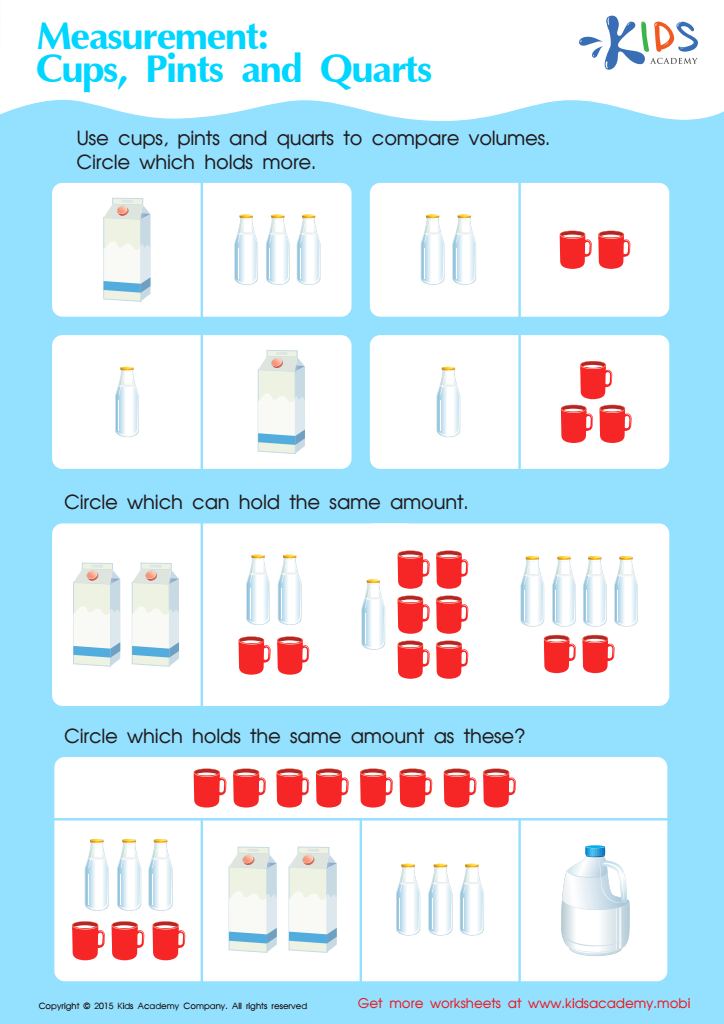
Measurement: Compare Volumes Worksheet
Compare volumes with Kids Academy and have fun! (80 words)
Practice measuring with Kids Academy and have fun! Compare volumes in pictures and circle which holds more. Keep learning with free math worksheets available on our website. Enjoy the process and have fun!
 Assign to My Students
Measurement: Compare Volumes Worksheet
Worksheet
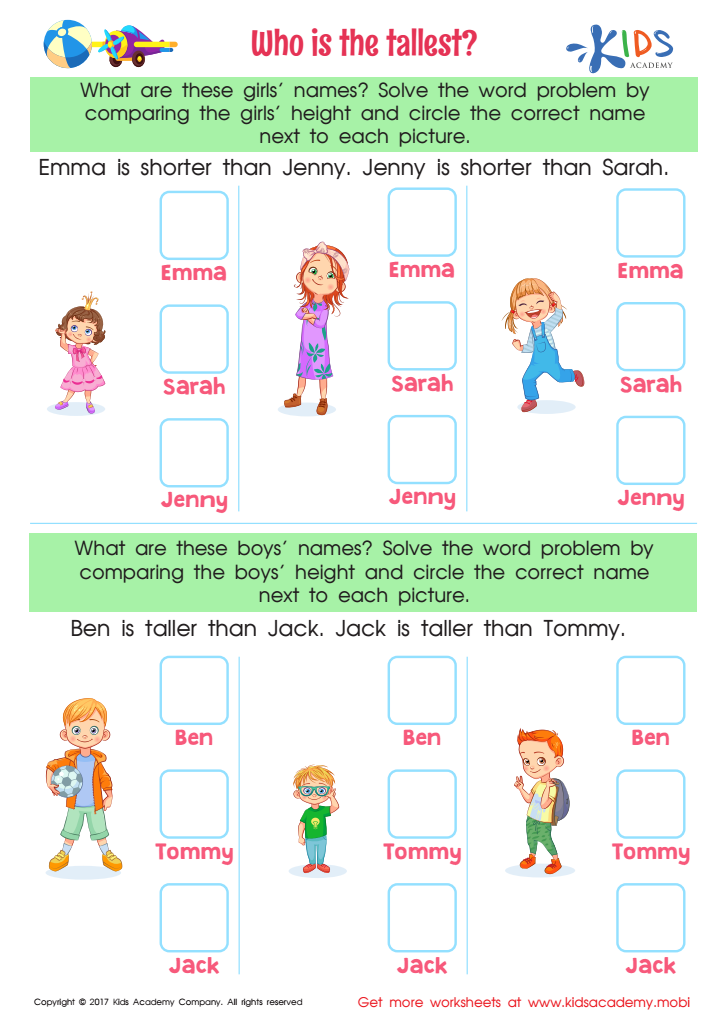
Who Tallest Printable
Help your child observe the kids in the worksheet and compare their heights to answer the question: Who is the Tallest? This is an excellent way for them to practice and better understand measurement concepts.
Who Tallest Printable
Worksheet
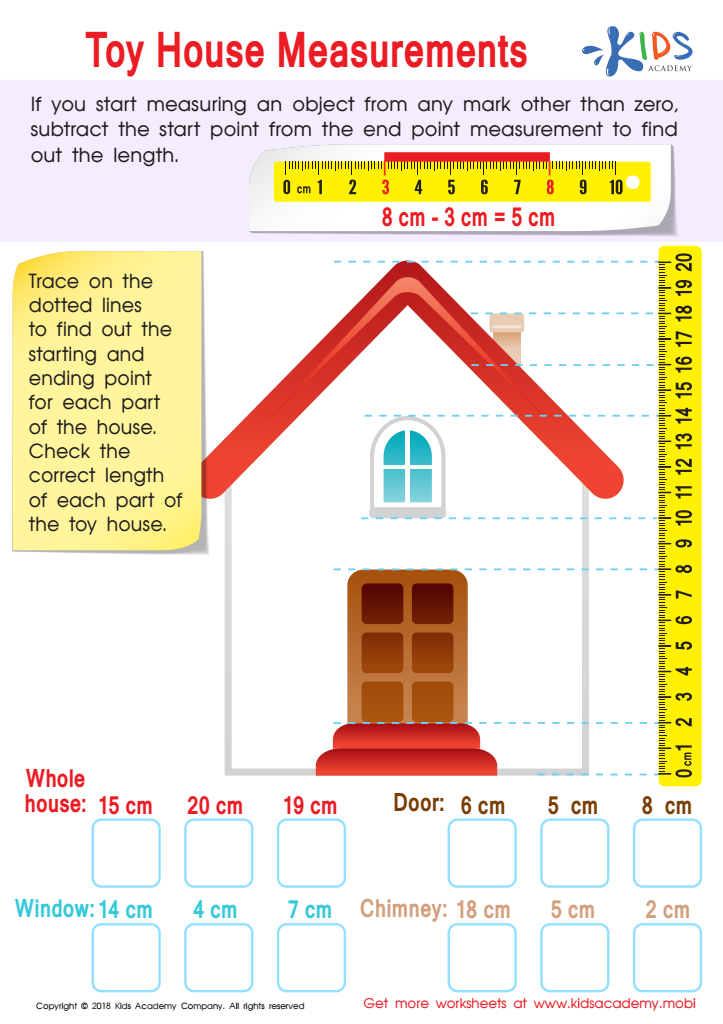
Toy House Measurements Worksheet
This worksheet requires math and measuring skills. When measuring an object from a non-zero starting point, subtract the start point from the end point to get the correct length. Kids must trace the dotted lines to get the right length for each part of the house.
Toy House Measurements Worksheet
Worksheet
Join Kids Academy for Free
Who is primarily going to use this learning content?








Comparing sizes—from identifying the differences between objects to understanding scale—holds significant educational value for children aged 7-8. At this developmental stage, kids are honing critical thinking skills and beginning to grapple with mathematical concepts. Engaging in activities that involve comparing sizes fosters analytical reasoning, helping children categorize and make logical decisions.
These activities encourage creativity and improve problem-solving skills as students learn to visually assess dimensions. Furthermore, they introduce fundamental mathematical language and concepts such as bigger, smaller, taller, shorter, longer, and wider, laying the groundwork for future mathematical success.
For parents and teachers, emphasizing such skills integrates a practical application of lessons and fosters real-world connections, such as understanding measurements in cooking or navigating physical surroundings. Moreover, activities emphasizing size comparison can promote collaborative efforts in learning, encouraging teamwork and communication among children.
Lastly, comparing sizes aids in building spatial awareness, crucial for subjects like geometry and science. By nurturing these skills at an early age, educators and caregivers can provide children with the tools they need for academic advancement and lifelong learning, ensuring they can tackle increasingly complex problems as they grow.








