
Letter recognition Extra Challenge Worksheets for Ages 7-8
7 filtered results
Difficulty Level
Grade
Age
-
From - To
Subject
Activity
Standards
Boost your child's literacy skills with our "Letter Recognition Extra Challenge Worksheets" designed specifically for ages 7-8! These engaging worksheets go beyond basic recognition, providing exciting activities that help children identify letters in various contexts. With fun and challenging exercises, including puzzles, matching games, and reading practice, your young learner will enhance their phonetic awareness and strengthen their reading skills. Ideal for home or classroom use, these worksheets encourage critical thinking and promote a love for learning. Browse our collection today to give your child the boost they need to master letter recognition and excel in their literacy journey!
Favorites
With answer key
Interactive
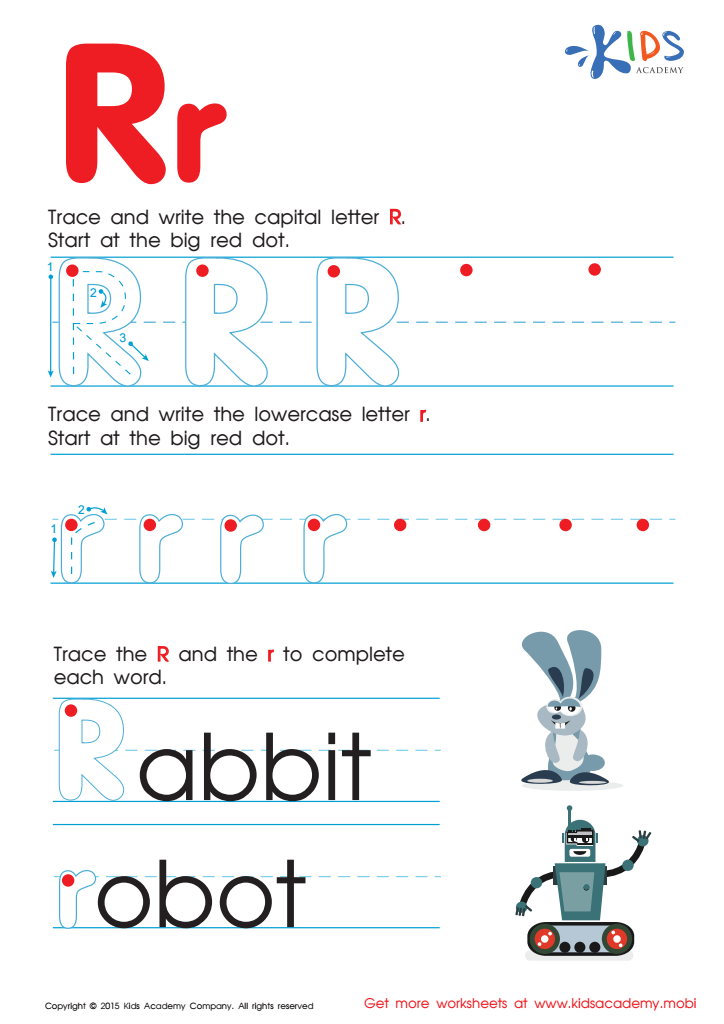
Letter R Tracing Page
Trace and write the letter "R" with this worksheet for kindergarten. Start with the uppercase, then move on to the lowercase. Write the letters several times for practice. Then help complete the words for the rabbit and robot, spelling carefully. More ABC worksheets can be found at Kids Academy.
 Assign to My Students
Letter R Tracing Page
Worksheet
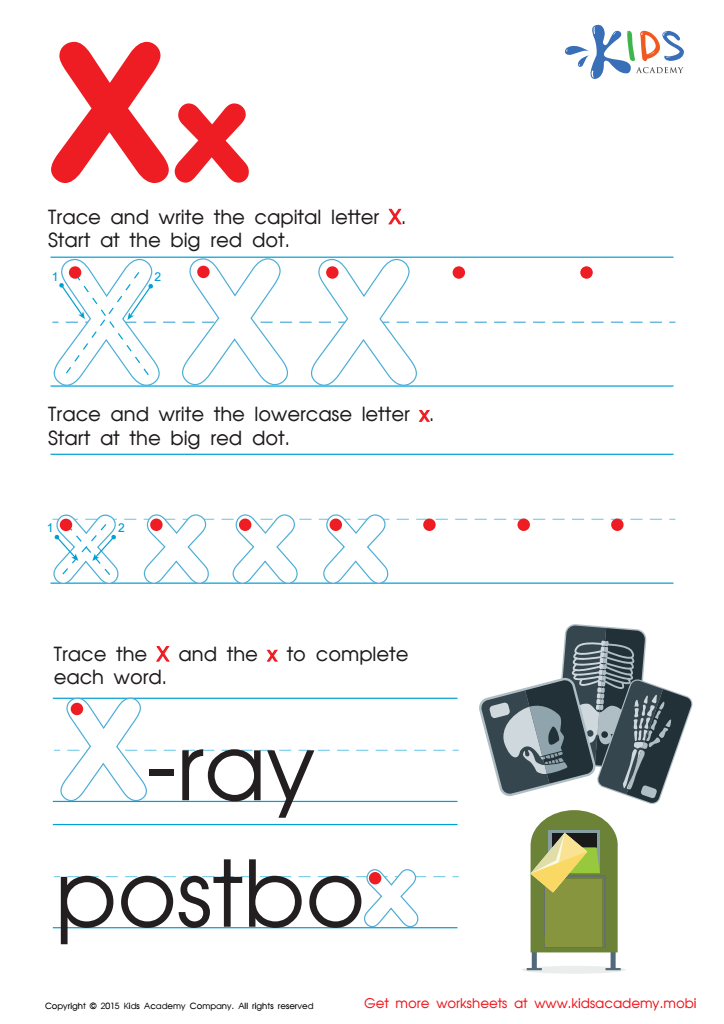
Letter X Tracing Page
Trace the uppercase letter "X" to learn, then write it yourself and practice. Then do the same with the lowercase "x" before completing the words "X-ray" and "postbox". Enjoy our alphabet printables!
Letter X Tracing Page
Worksheet
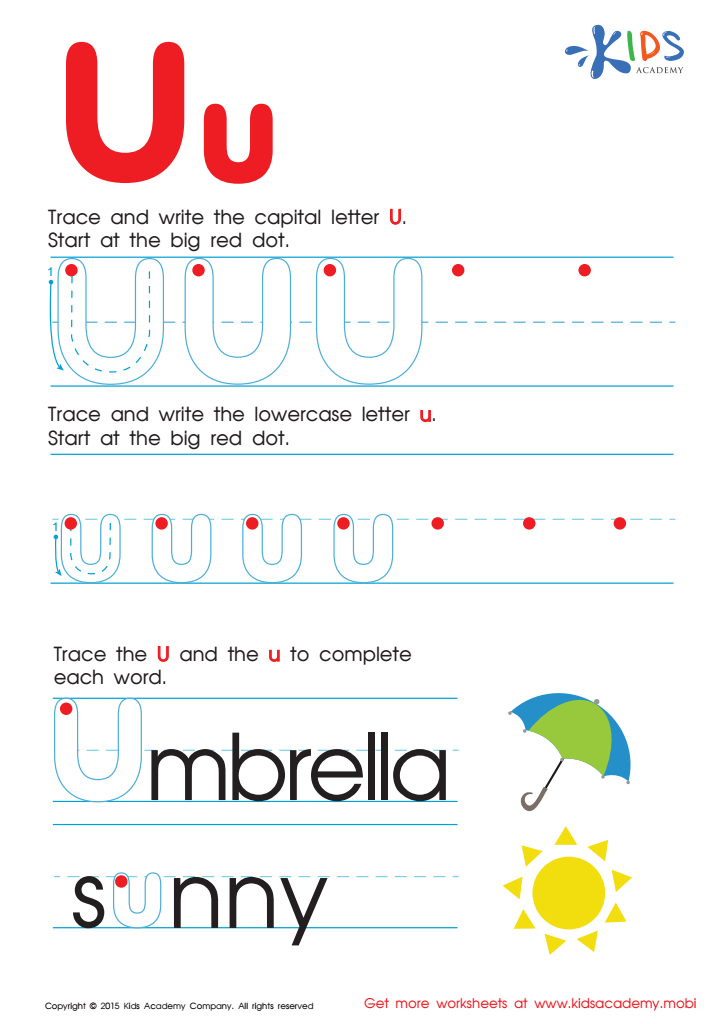
Letter U Tracing Page
Ready to trace and write the letter "U"? Use our worksheet and practice tracing both uppercase and lowercase letters. Complete the words "umbrella" and "sunny" with a capital "U". Check our full collection of alphabet printables for more activities.
Letter U Tracing Page
Worksheet
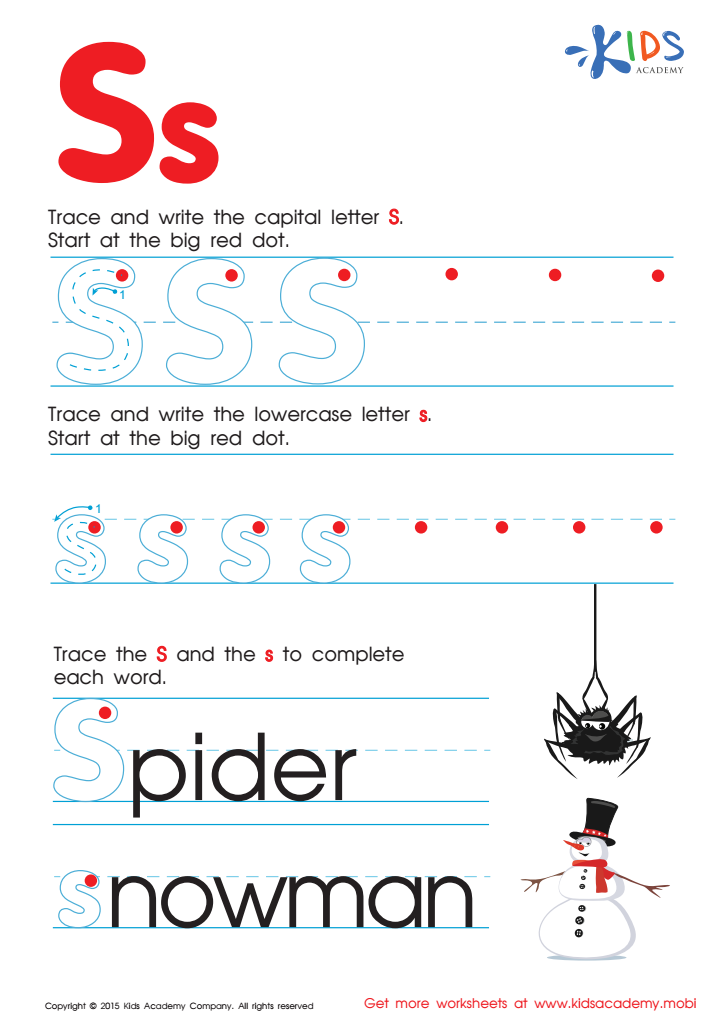
Letter S Tracing Page
Trace and write the capital and lowercase "S" on this ABC worksheet for kindergarten. Start with the big red dot and be careful. When you finish, help the spider and snowman in the pictures restore their words with the capital and lowercase letters. Continue learning the alphabet with Kids Academy.
Letter S Tracing Page
Worksheet
Letter W Tracing Page
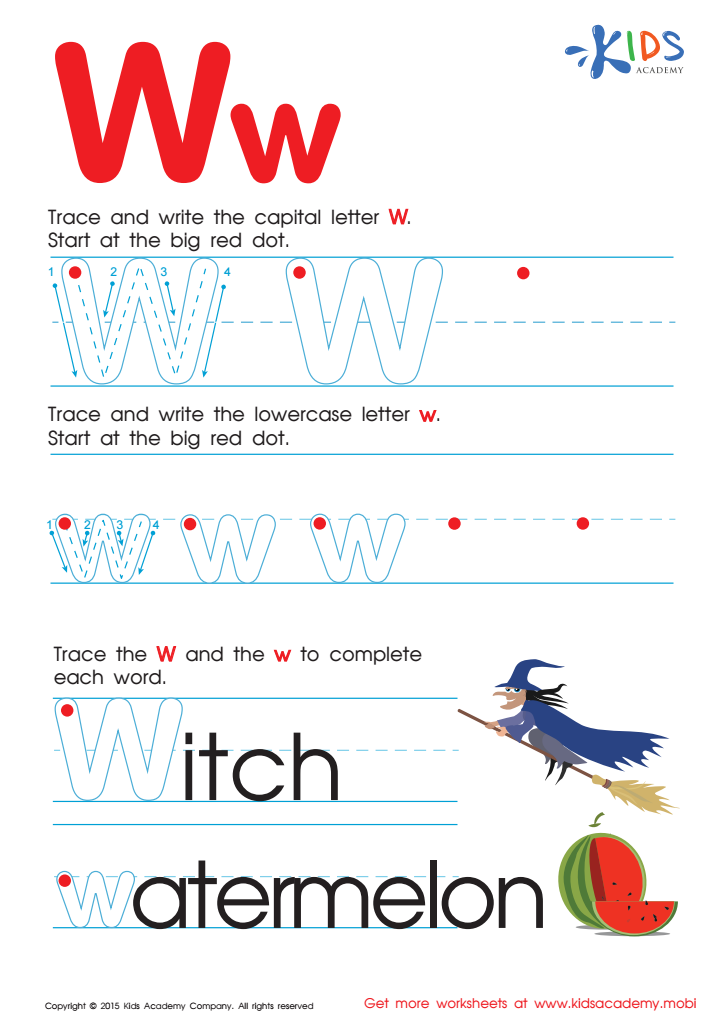
Trace and write the capital and lowercase letter W with this free letter tracing worksheet by Kids Academy. Complete the words "Witch" (capital) and "watermelon" (lowercase). Check out our other kindergarten alphabet worksheets!
Letter W Tracing Page
Worksheet
Letter V Tracing Page
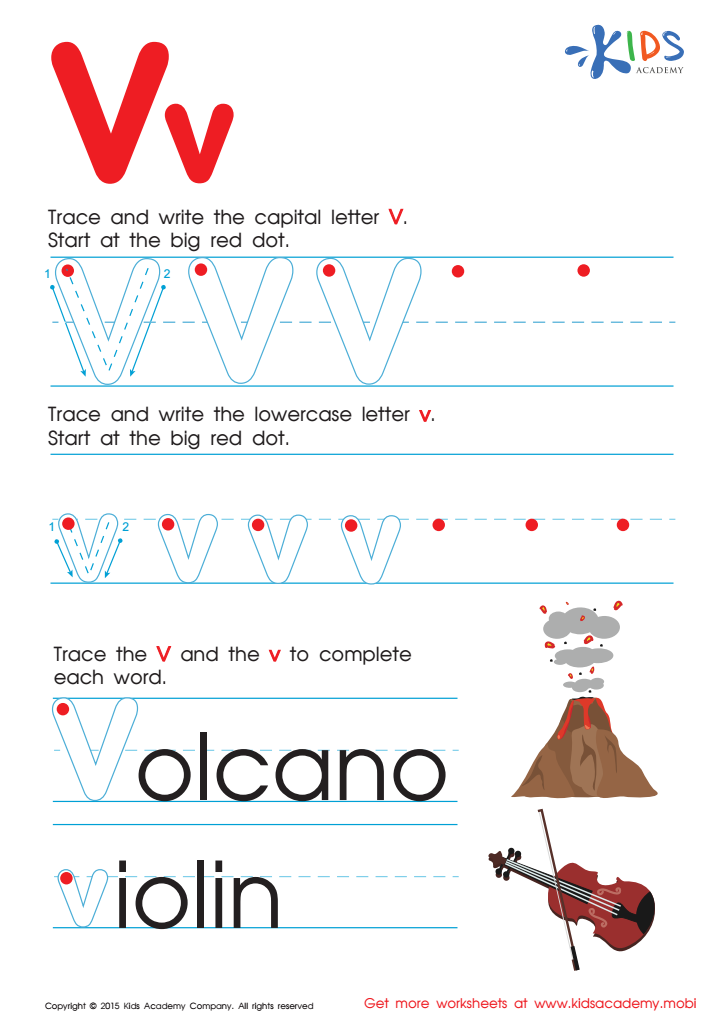
Trace the uppercase and lowercase letter "V" with our kindergarten tracing worksheet. Begin at the red dot and follow the lines. Write it several times. Complete the words "Volcano" and "violin". Get more alphabet activities at Kids Academy.
Letter V Tracing Page
Worksheet
Letter T Tracing Page
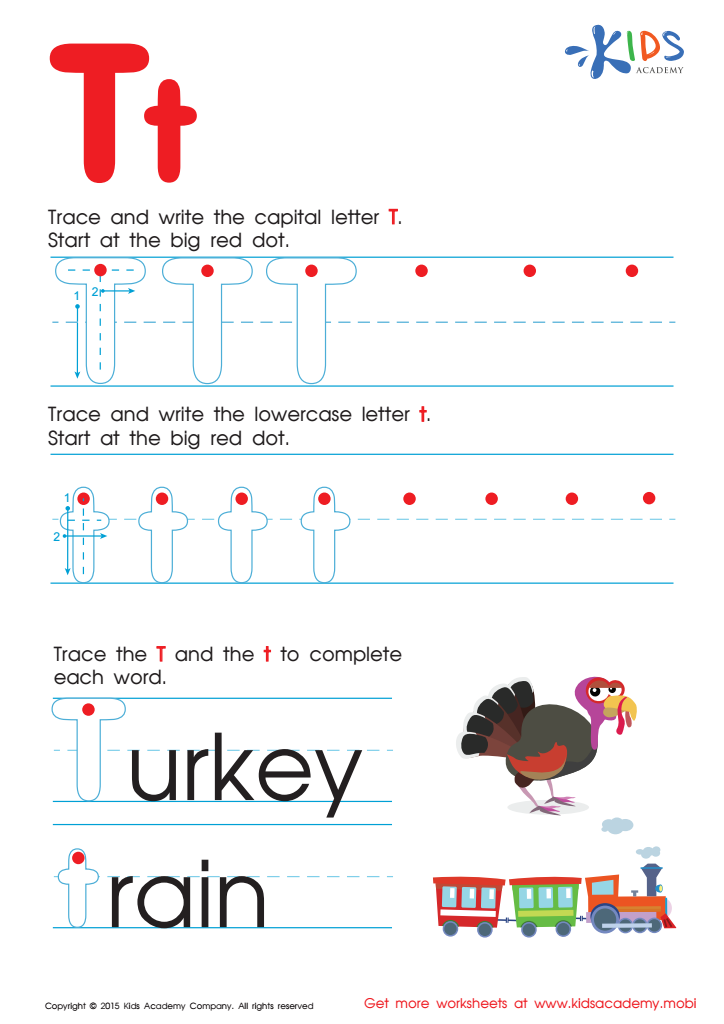
Trace letters, complete words, draw pictures and see your kids having fun!
Kids Academy offers alphabet tracing worksheets to learn to write letters. Start with the big red dot, trace the letter, then write it. Practice uppercase and lowercase. Have fun completing words with a Turkey or a rain-train and draw pictures. Get more printable worksheets to make learning enjoyable.
Letter T Tracing Page
Worksheet
Join Kids Academy for Free
Who is primarily going to use this learning content?







Letter recognition is a foundational skill in literacy development, particularly crucial for children ages 7-8 as they transition from learning to read to reading to learn. For parents and teachers, emphasizing letter recognition holds significant importance for several reasons.
First, it strengthens children's phonemic awareness, enhancing their ability to decode and understand new words. This developmental stage exposes them to increasingly complex vocabulary, where recognizing letters is pivotal to reading comprehension and fluency. Moreover, continuing to challenge children with letter recognition tasks fosters critical thinking and cognitive flexibility.
Engaging activities and extra challenges can make learning fun and interactive, motivating children to explore reading beyond conventional methods. Innovative approaches also support diverse learning styles, accommodating visual, auditory, and kinesthetic learners alike.
In addition, as literacy skills build, so does a child’s confidence. By achieving mastery in letter recognition, children develop resilience and a positive attitude towards learning, promoting lifelong academic success. Encouraging this skill transcends beyond mere academic achievement; it nurtures a love for reading and exploration, which can influence a child’s future opportunities. Therefore, prioritizing letter recognition during ages 7-8 is essential for holistic education and development.








