Recognizing shapes Extra Challenge Geometry Worksheets for Ages 7-8
3 filtered results
-
From - To
Discover our "Recognizing Shapes Extra Challenge Geometry Worksheets for Ages 7-8" designed to enhance your child's understanding of shapes. Perfect for young learners, these worksheets help kids identify, compare, and analyze various geometric shapes in an engaging and challenging way. Each activity will boost critical thinking, spatial awareness, and problem-solving skills, providing a solid foundation in geometry. These resources support parents and teachers in making learning fun and effective. Download now and watch your 7-8 year-old's confidence in math soar as they tackle these educational challenges!
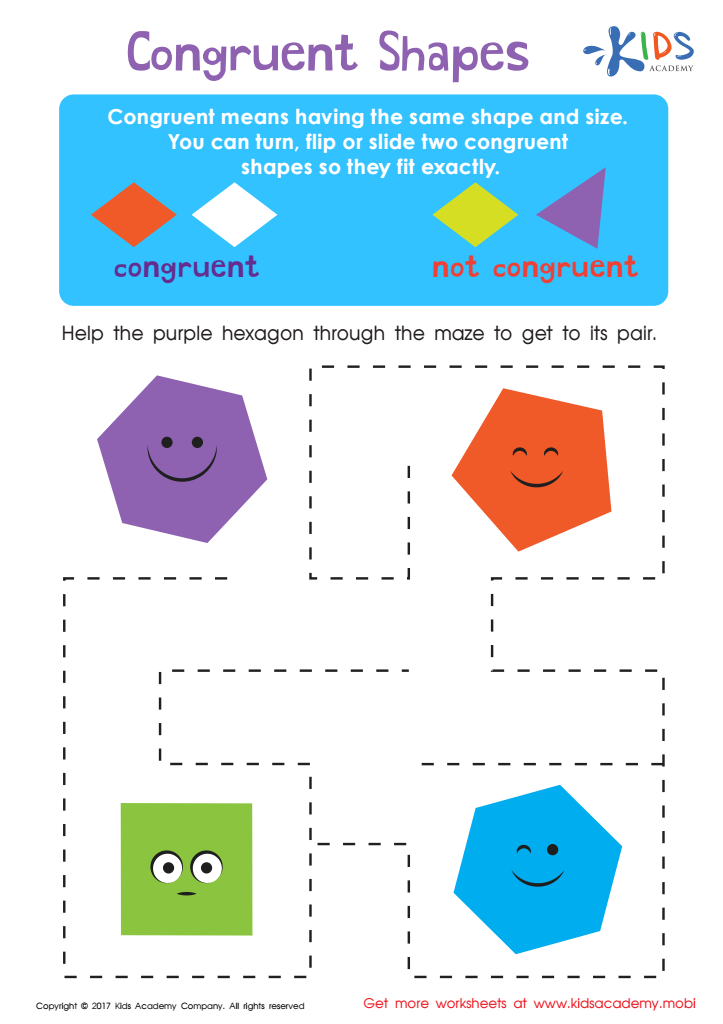
Congruent Shapes Worksheet
 Assign to My Students











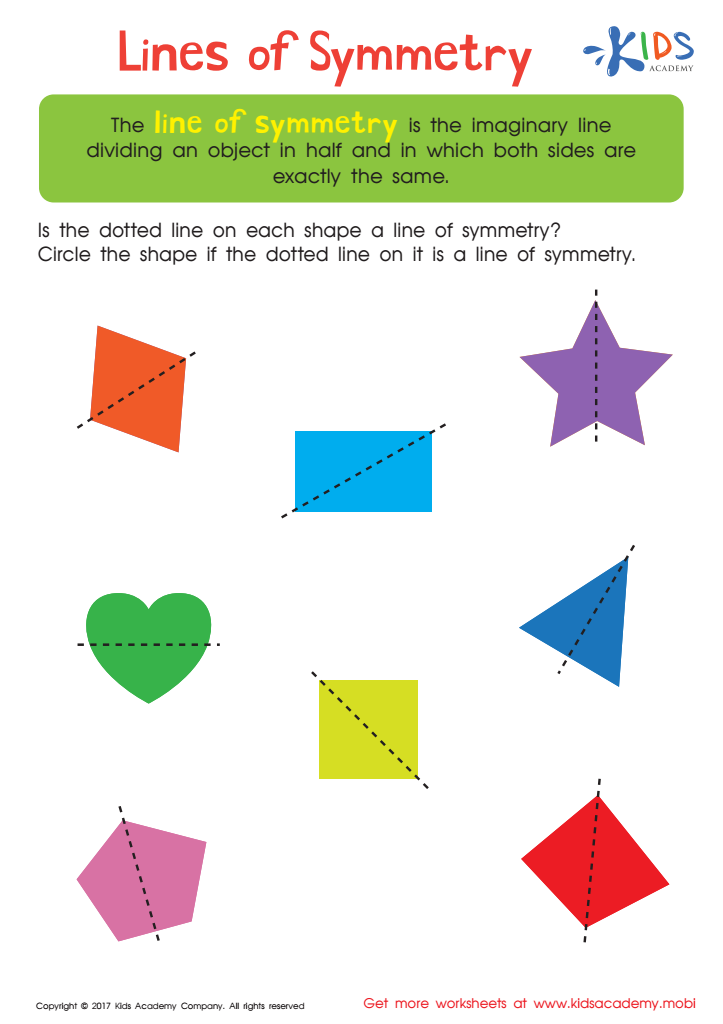
Lines of Symmetry Printable
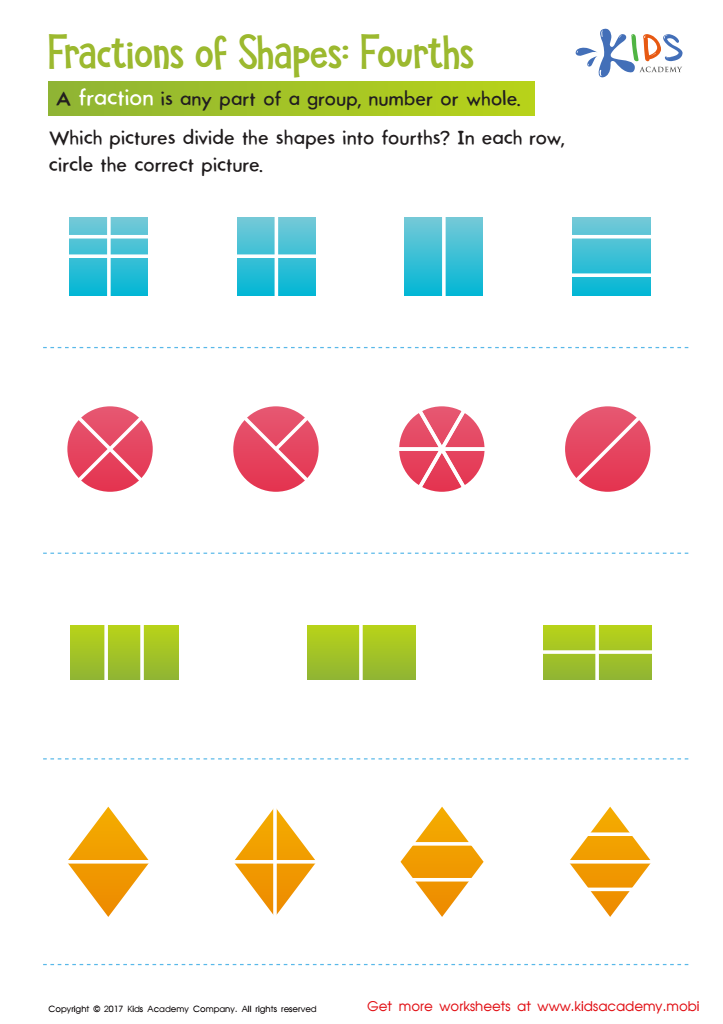
Fractions of Shapes Worksheet








Recognizing shapes and exploring geometry at an early age are crucial for the cognitive and spatial development of children. For ages 7-8, engaging in "Recognizing Shapes Extra Challenge Geometry" activities not only lays the foundation for advanced mathematical concepts but also enhances numerous other skills.
Shape recognition activities allow children to refine their visual-spatial awareness, enabling them to better organize and process visual information. This skill is essential across various subjects, including math, science, and art, fostering better problem-solving abilities. Geometry challenges sharpen logical thinking as children learn to categorize and differentiate shapes based on their attributes like sides, angles, and symmetry.
Moreover, tackling extra challenges in geometry promotes perseverance and resilience as children navigate complex tasks. It encourages a growth mindset where effort and practice lead to mastery. Socially, collaborative shape games enhance communication and teamwork among peers.
Math literacy gained through early geometry influences lifelong learning, signifying the relevance of patterns and shapes in everyday contexts, from architecture to nature. Parents and teachers emphasizing these extra challenges demonstrate a commitment to holistic education, ensuring children are not merely rote learners but critical thinkers ready for future academic pursuits.
Recognizing and mastering shapes is therefore integral in nurturing well-rounded, confident individuals equipped with essential skills for their ongoing education journey.








