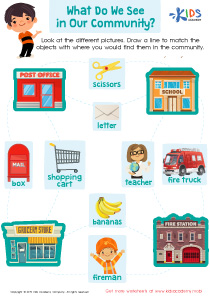
Comparing sizes Extra Challenge Math Worksheets for Ages 7-9
3 filtered results
-
From - To
Enhance your child's mathematical skills with our "Comparing Sizes Extra Challenge Math Worksheets" designed specifically for ages 7-9. These worksheets offer an engaging way to learn and practice the essential skill of comparing sizes through hands-on activities. Children will explore various sizes through fun exercises that develop their critical thinking and problem-solving abilities. With visually stimulating graphics and a variety of questions, these worksheets keep learning exciting and help build a solid foundation in mathematics. Perfect for both classroom use and at-home practice, theseextra challenges will ensure your young learners gain confidence and mastery in comparing sizes. Try them today!
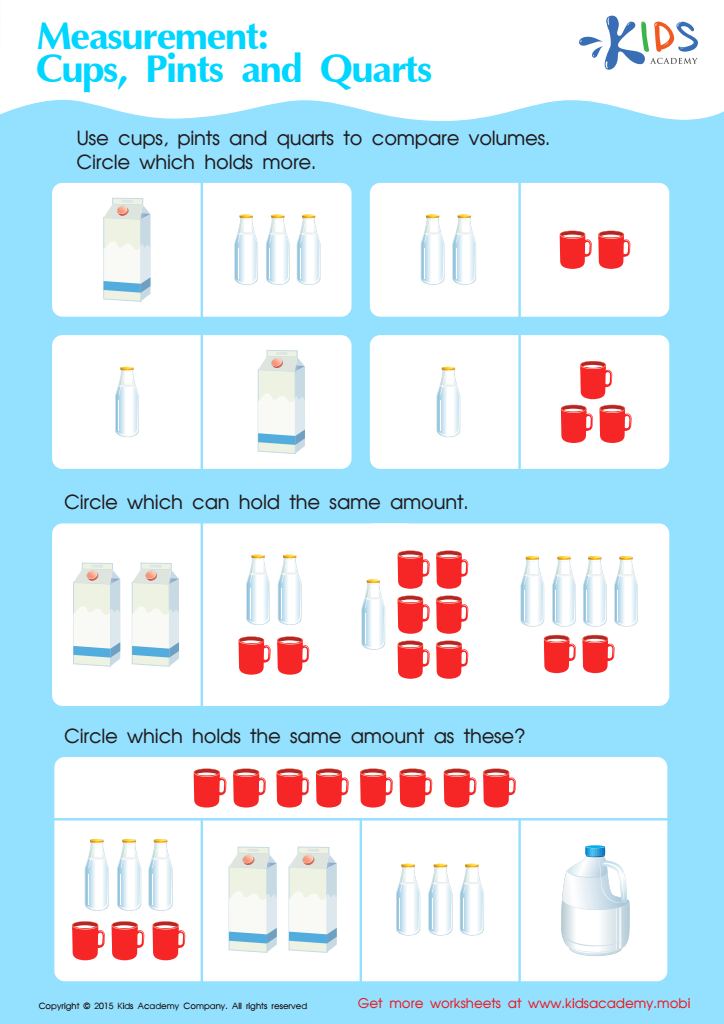
Measurement: Compare Volumes Worksheet
 Assign to My Students
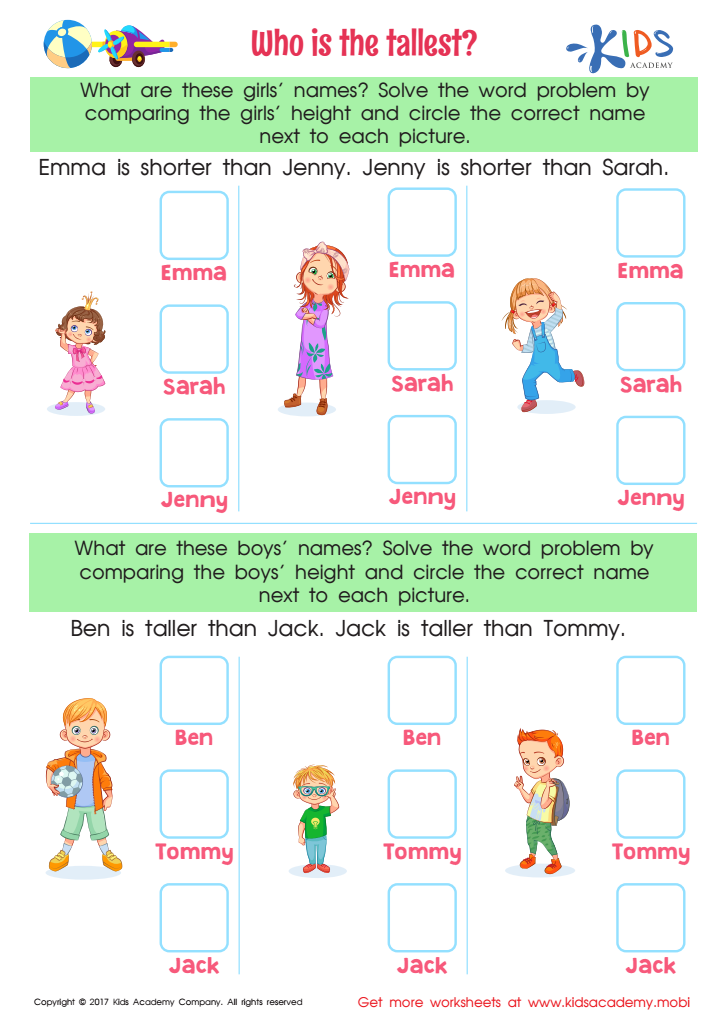
Who Tallest Printable
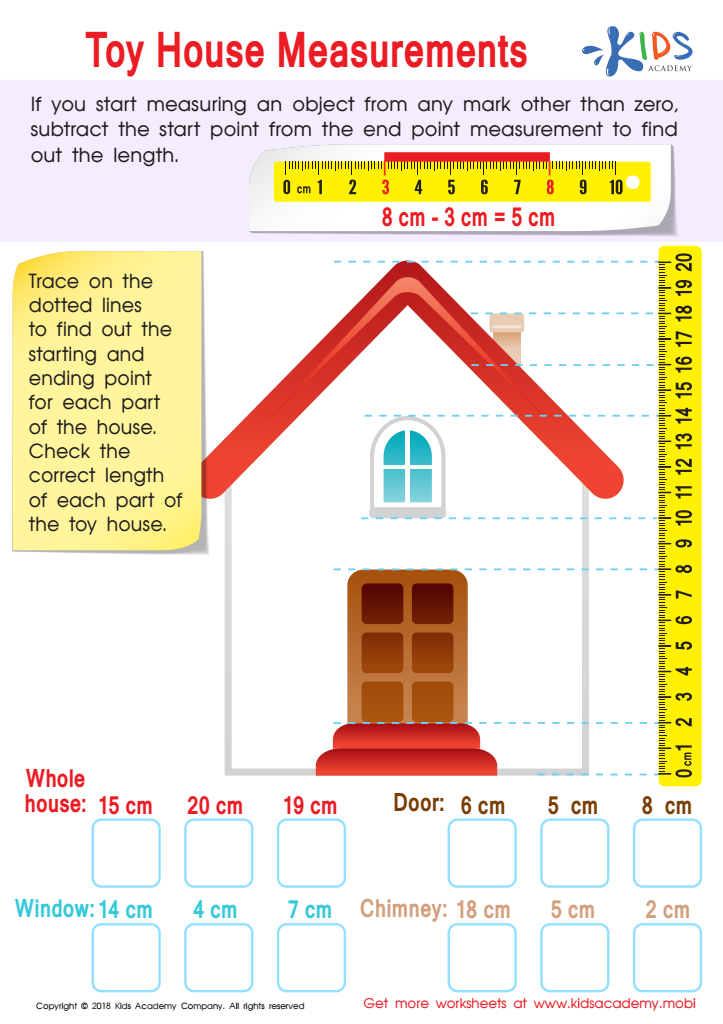
Toy House Measurements Worksheet




.jpg)



Comparing sizes is an essential mathematical skill that forms the foundation for more complex concepts. For children aged 7-9, engaging in Extra Challenge Math activities centered on this topic offers numerous benefits. Firstly, mastery of size comparison fosters critical thinking and problem-solving abilities, as students learn to analyze and evaluate information systematically. For example, comparing lengths, weights, and volumes encourages them to observe, measure, and make informed decisions, which arevaluable skills in real-life situations.
Moreover, these activities elevate a child's spatial reasoning and pattern recognition, playing a crucial role in their overall cognitive development. Gaining proficiency in sizes helps children understand broader math concepts such as fractions and ratios, which are vital as they progress in their education.
Teachers and parents should prioritize such activities because they not only enhance mathematical understanding but also cultivate a positive attitude towards mathematics. The engaging nature of extra challenges can spark curiosity and motivation, important traits for lifelong learning. Additionally, collaborative sizing exercises can promote teamwork and communication skills, as children often discuss their findings and brainstorm solutions together. Ultimately, comparing sizes is significant for both academic success and personal development, making it a critical area of focus for educators and caregivers.