Alphabet Recognition Extra Challenge Alphabet Worksheets for 7-Year-Olds
3 filtered results
Difficulty Level
Grade
Age
-
From - To
Subject
Activity
Standards
Looking for advanced educational resources to challenge 7-year-olds in alphabet recognition? Our Alphabet Recognition Extra Challenge Worksheets are perfect for young learners who have mastered the basics and are eager to enhance their skills. These worksheets offer higher-level activities designed to improve letter identification, phonics, and alphabetical order. With engaging exercises and visually appealing designs, kids will stay motivated while achieving new milestones. Tailored to meet the needs of more advanced students, these enjoyable printables are an excellent tool for boosting literacy development and confidence in young readers on their learning journey. Join us in making learning both fun and rewarding!
Favorites
With answer key
Interactive

Letter A Tracing Page
Trace and write the letter "A"! Start with the big red dot, then do the capital and lowercase versions. Then write it again with two words - apple and alligator. Download more tracing worksheets at Kids Academy.
 Assign to My Students
Letter A Tracing Page
Worksheet
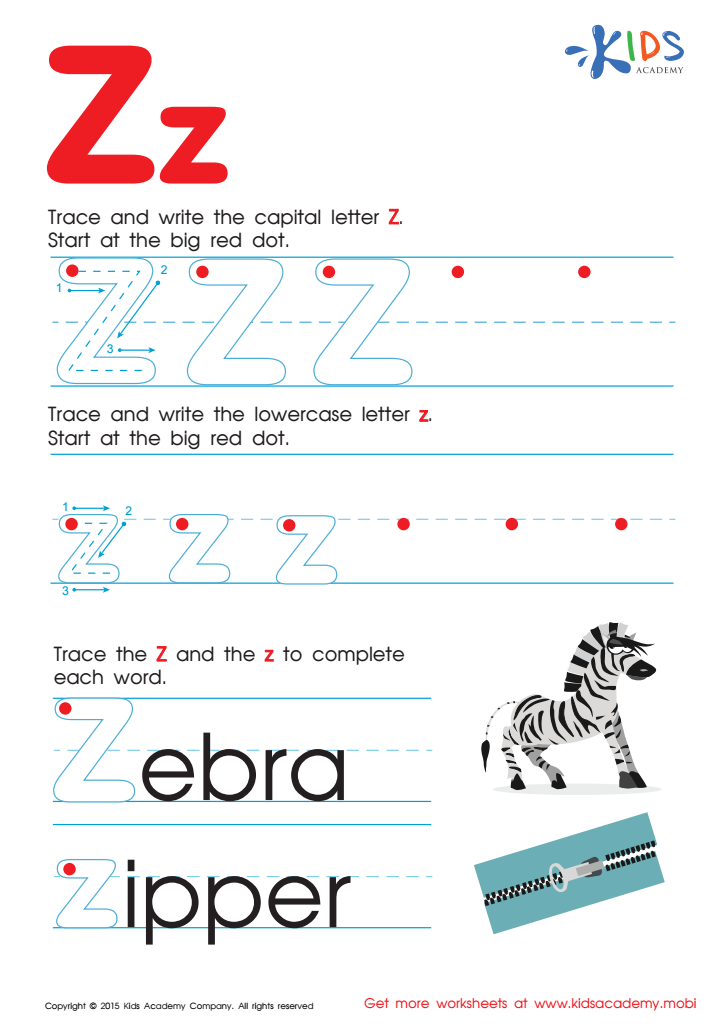
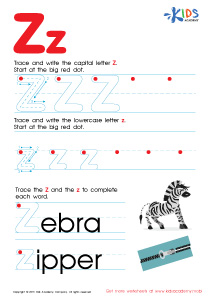
Letter Z Tracing Page
Trace and write capital "Z" and lowercase "z". Complete words "zebra" and "zipper". Be attentive and have fun! (80 words)
Letter Z Tracing Page
Worksheet
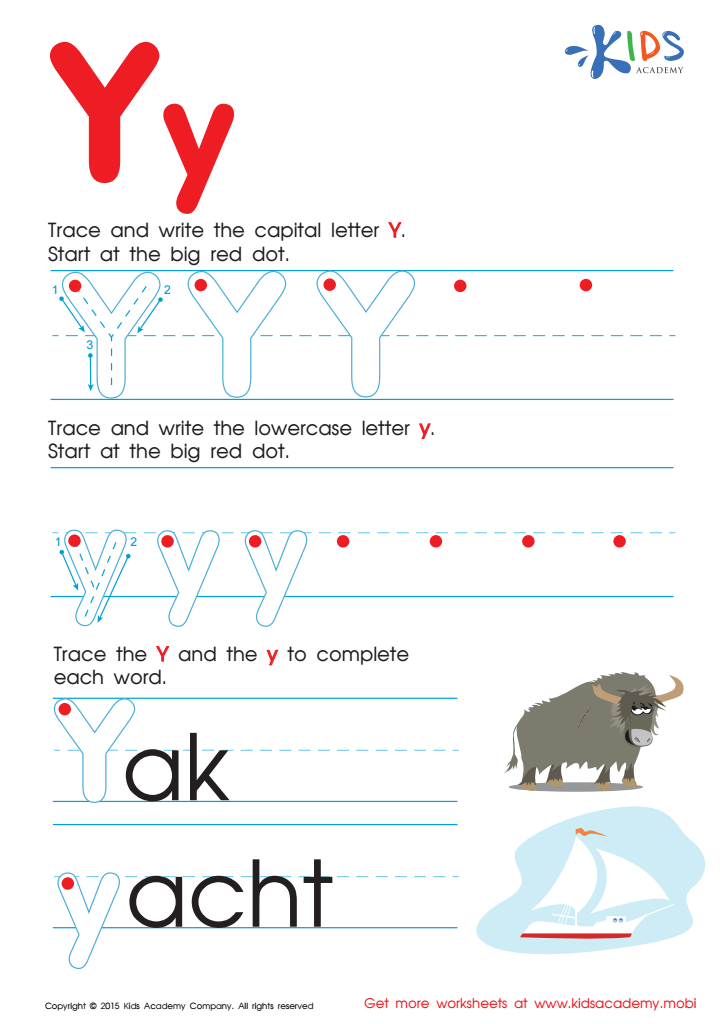
Letter Y Tracing Page
Trace the capital letter "Y" on the red dot, then trace and write the lowercase letter. Complete the words to help the Yak walk and the yacht swim. More worksheets at Kids Academy.
Letter Y Tracing Page
Worksheet
Join Kids Academy for Free
Who is primarily going to use this learning content?








Alphabet recognition is a foundational skill for early literacy, making it crucial for parents and teachers to care about activities like the Alphabet Recognition Extra Challenge Alphabet for 7-year-olds. This exercise goes beyond simply identifying letters; it enhances cognitive development, fine motor skills, and letter-sound associations, vital for reading proficiency.
At 7-years-old, children transition from recognizing letters to reading words, requiring strong, automatic letter recognition. An extra challenge can reinforce this transition by encouraging mastery through engaging and interactive methods. Activities that build on basic skills can motivate students, boost confidence, and foster a positive attitude toward learning.
For teachers, this challenge provides insights into each child’s progress, identifying those needing additional support. It allows differentiated instruction, critical for catering to varied learning paces and styles in a classroom. For parents, engaging in such activities at home strengthens the home-school connection and encourages educational involvement outside the classroom.
Overall, the Alphabet Recognition Extra Challenge offers a holistic approach to literacy development, ensuring children are not just meeting but exceeding early literacy milestones. By investing in these activities, parents and teachers set a strong foundation for lifelong academic success.