Alphabet Recognition Extra Challenge Letter Recognition Worksheets for 7-Year-Olds
3 filtered results
Difficulty Level
Grade
Age
-
From - To
Subject
Activity
Standards
Discover the "Alphabet Recognition Extra Challenge Letter Recognition Worksheets" tailored for 7-year-olds! These engaging worksheets are designed to enhance letter recognition skills through fun activities that challenge young learners. Featuring a variety of interactive tasks, such as identifying letters in different contexts and games that reinforce learning, these worksheets support literacy development in an enjoyable way. Ideal for parents and educators looking to provide extra practice beyond the classroom, these resources ensure that children master their letters while having fun. Help your child become confident in their literacy skills with these exciting and educational worksheets!
Favorites
With answer key
Interactive
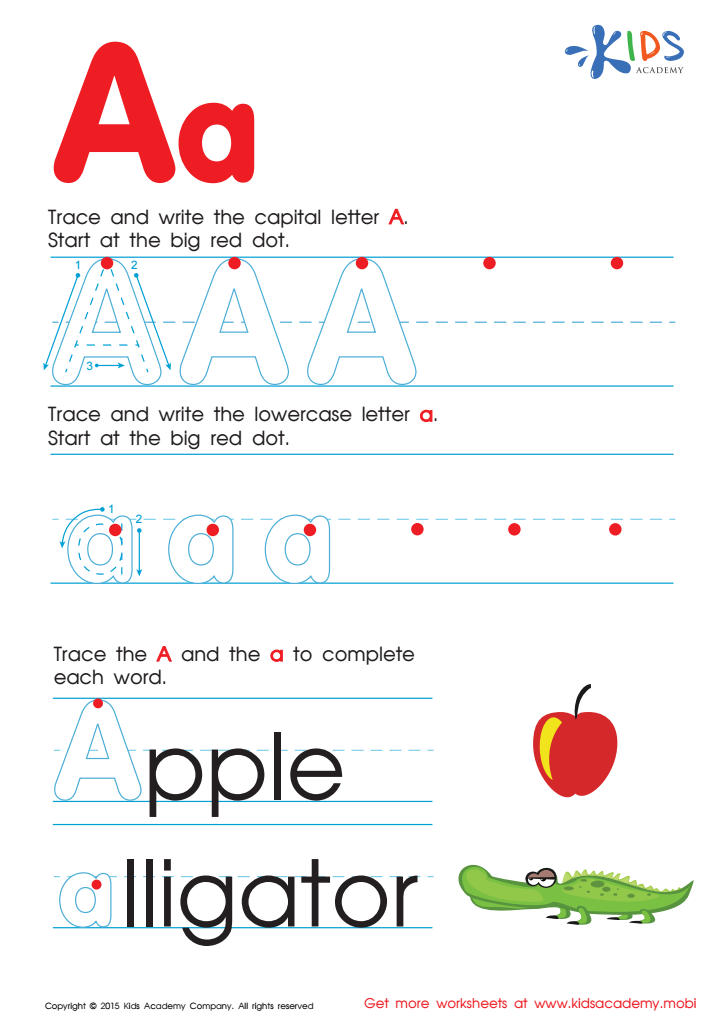
Letter A Tracing Page
Trace and write the letter "A"! Start with the big red dot, then do the capital and lowercase versions. Then write it again with two words - apple and alligator. Download more tracing worksheets at Kids Academy.
 Assign to My Students
Letter A Tracing Page
Worksheet
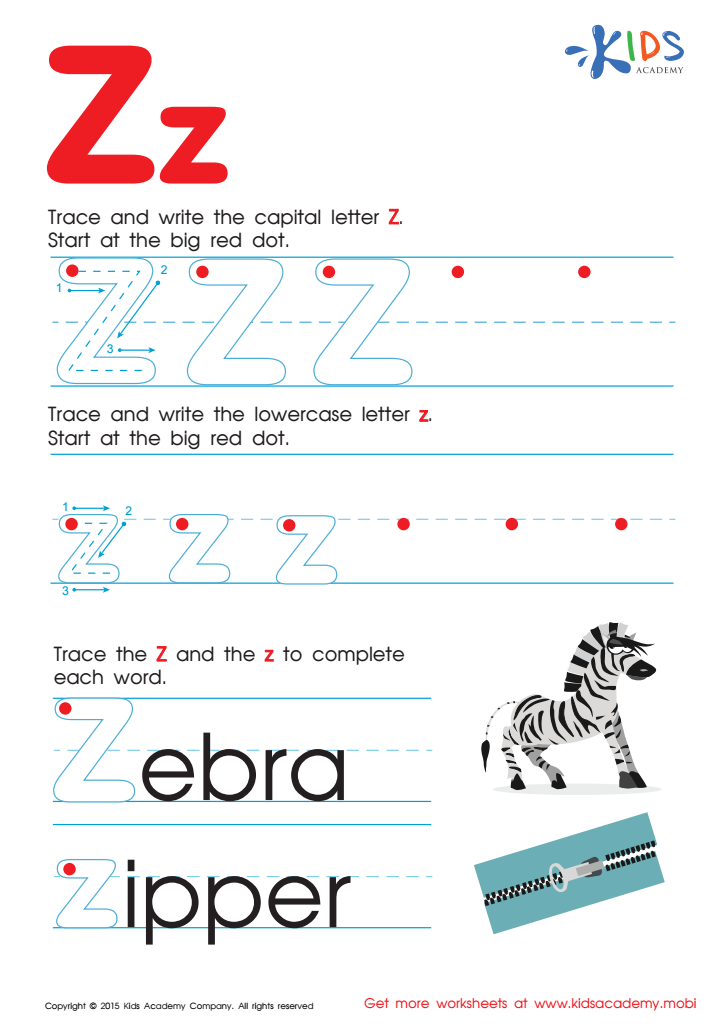
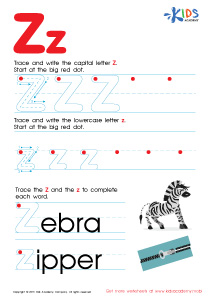
Letter Z Tracing Page
Trace and write capital "Z" and lowercase "z". Complete words "zebra" and "zipper". Be attentive and have fun! (80 words)
Letter Z Tracing Page
Worksheet
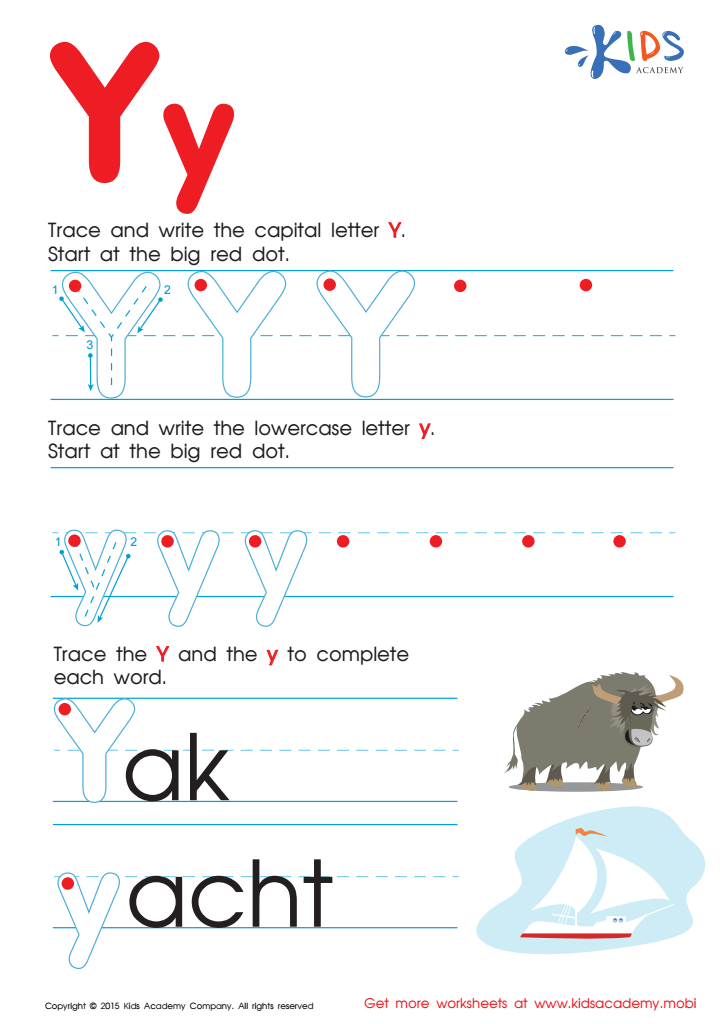
Letter Y Tracing Page
Trace the capital letter "Y" on the red dot, then trace and write the lowercase letter. Complete the words to help the Yak walk and the yacht swim. More worksheets at Kids Academy.
Letter Y Tracing Page
Worksheet
Join Kids Academy for Free
Who is primarily going to use this learning content?








Alphabet recognition, particularly in the early grades, is a fundamental skill that sets the foundation for literacy development. For 7-year-olds, reinforcing letter recognition through extra challenges can enhance their reading and writing capabilities significantly. At this age, children are transitioning from basic decoding skills to more advanced literacy tasks involving comprehension and fluency. Parents and teachers should care about providing extra challenges because it not only boosts confidence but also helps solidify their understanding of letter sounds, the alphabetic principle, and possible word formation.
Extra challenges in letter recognition can involve creative activities like games, puzzles, and crafts that make learning engaging while simultaneously catering to diverse learning styles. These activities foster critical thinking and can promote a growth mindset, showing children that learning can be fun and rewarding. Additionally, ensuring proficiency in letter recognition can significantly impact a child’s academic success in other subjects, paving the way for more complex learning experiences.
Ultimately, when children master alphabet recognition, they gain the tools needed for effective communication, allowing them to express themselves and engage fully in their education. Teachers and parents play a vital role in nurturing this essential skill, which is integral to a child’s overall development.