Money recognition Extra Challenge Money Worksheets for 7-Year-Olds
4 filtered results
-
From - To
Enhance your child's understanding of money with our "Money Recognition Extra Challenge Money Worksheets" designed specifically for 7-year-olds! These engaging worksheets provide a fun way to practice identifying coins and bills, mastering their values, and gaining confidence in financial literacy. With a variety of exercises, including matching, sorting, and solving real-life scenarios, your child will develop essential math skills while enjoying the learning process. Perfect for classroom activities or enriched home learning, these worksheets will challenge young learners to recognize and use money effectively. Foster financial awareness and contribute to your child’s academic success today! Start exploring money concepts with our worksheets now!
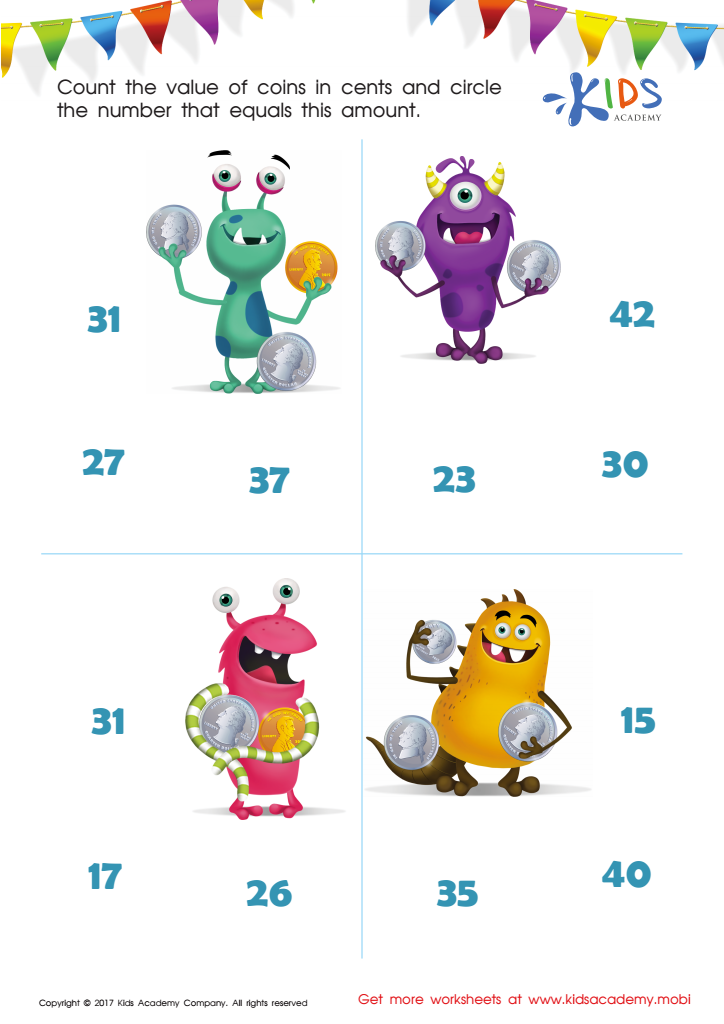
How Many Coins Money Worksheet
 Assign to My Students
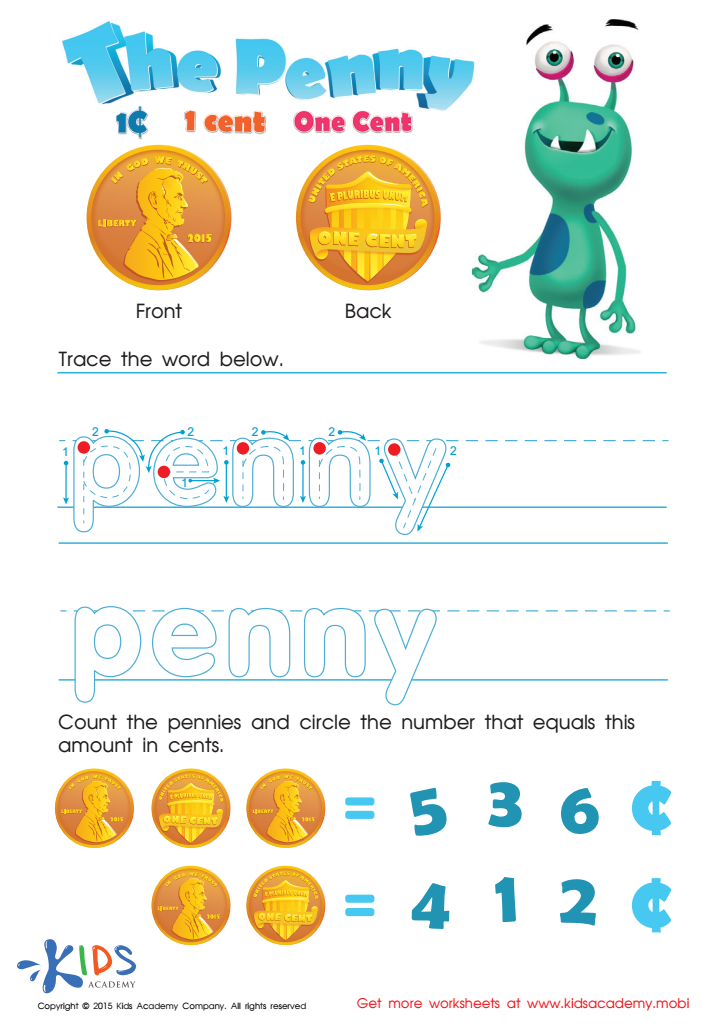
One Cent or the Penny Money Worksheet
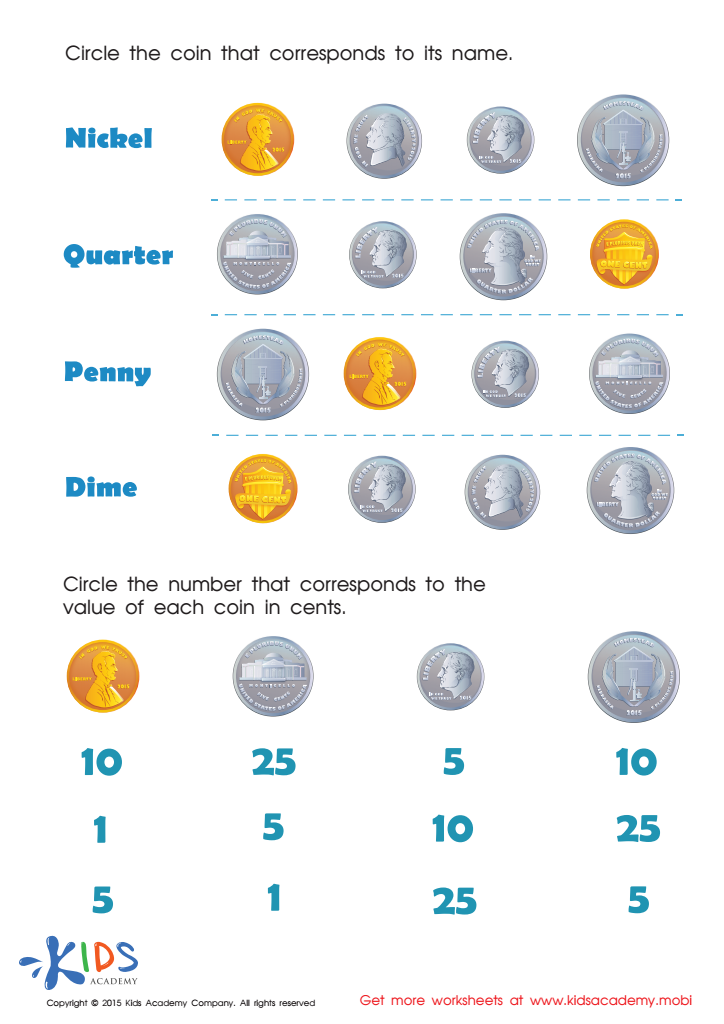
Coin Names and Values Money Worksheet
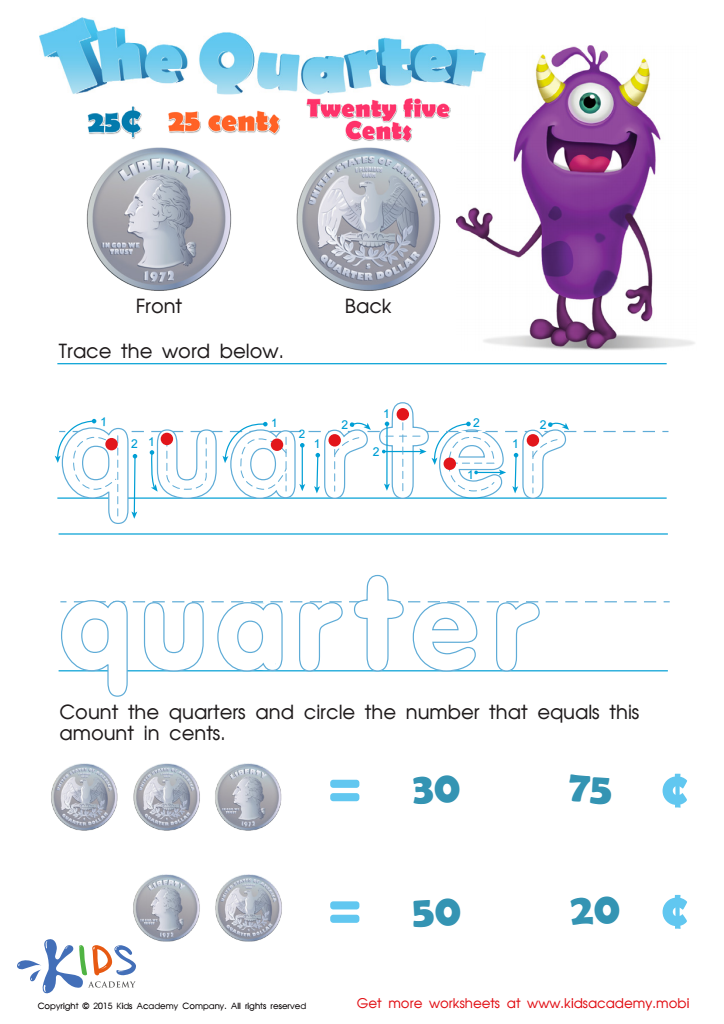
Twenty Five Cents or the Quarter Money Worksheet








Teaching money recognition and management is crucial for 7-year-olds as it lays the foundation for financial literacy later in life. At this age, children transition from a concrete understanding of the world to more abstract thinking, making it the perfect time to introduce concepts related to money.
First, recognizing different denominations helps children develop math skills and enhances their confidence in handling real-world situations, like making purchases or budgeting. By engaging with money, they not only improve their numerical abilities but also understand the value of decision-making regarding spending and saving.
Moreover, instilling money recognition at this early age encourages responsibility and independence. Children learn to differentiate needs from wants, promoting wise financial choices. This skill set will prove invaluable as they grow, ultimately shaping their attitudes towards money in adulthood.
Finally, parents and teachers play a vital role in providing hands-on experiences, such as playing store or using play money at home. Collaborative activities enhance engagement and retention while also encouraging communication about finances. Creating an environment where children can practice and discuss money helps them build a healthy relationship with it, equipping them with essential skills for future success. Ultimately, supporting money recognition is an investment in their education and daily life.








