Recognizing shapes Extra Challenge Geometry Worksheets for 7-Year-Olds
3 filtered results
-
From - To
Discover the "Recognizing Shapes Extra Challenge Geometry Worksheets" tailored for 7-year-olds eager to enhance their geometry skills! Our fun and engaging worksheets make learning about shapes exciting, encouraging young learners to identify, classify, and describe various geometric forms. Designed to challenge and reinforce understanding, these worksheets promote critical thinking and problem-solving abilities in mathematics. Ideal for classroom use or at-home learning, educators and parents will find these resources perfect for enriching their child's educational experience. Boost your child’s confidence and skills in geometry with compelling activities that inspire creativity and growth. Start exploring the world of shapes today!
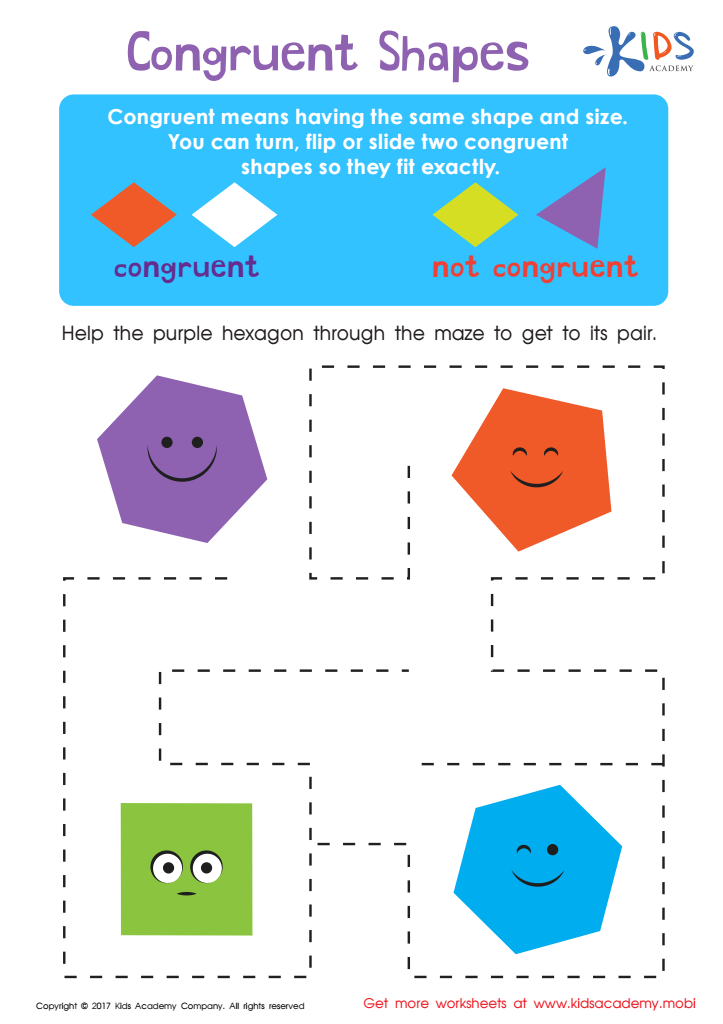
Congruent Shapes Worksheet
 Assign to My Students











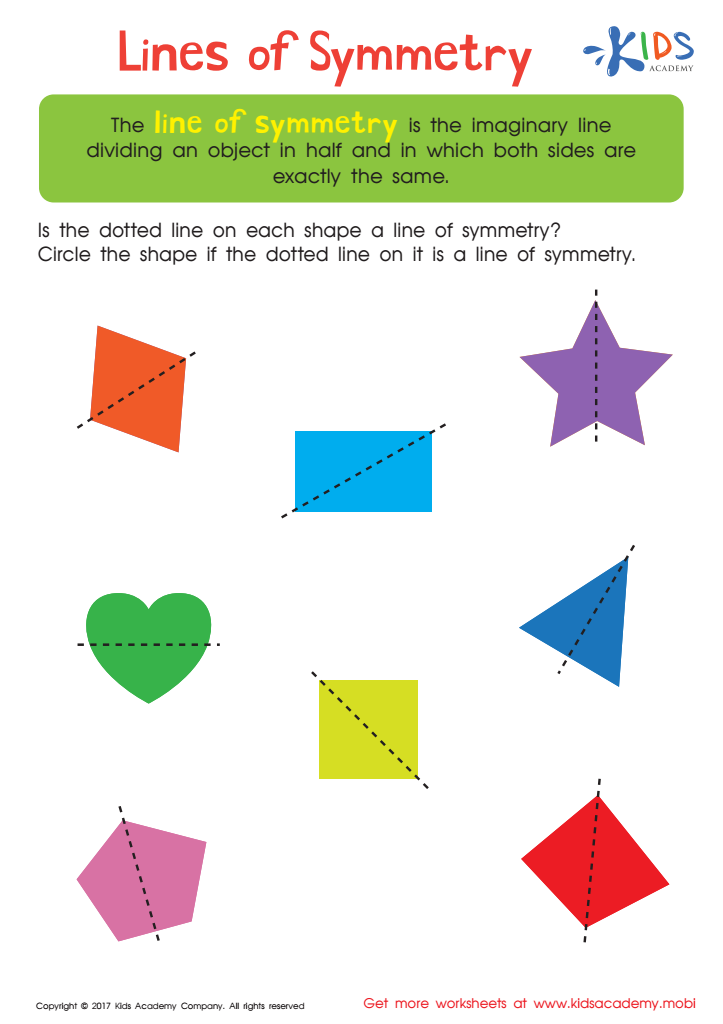
Lines of Symmetry Printable
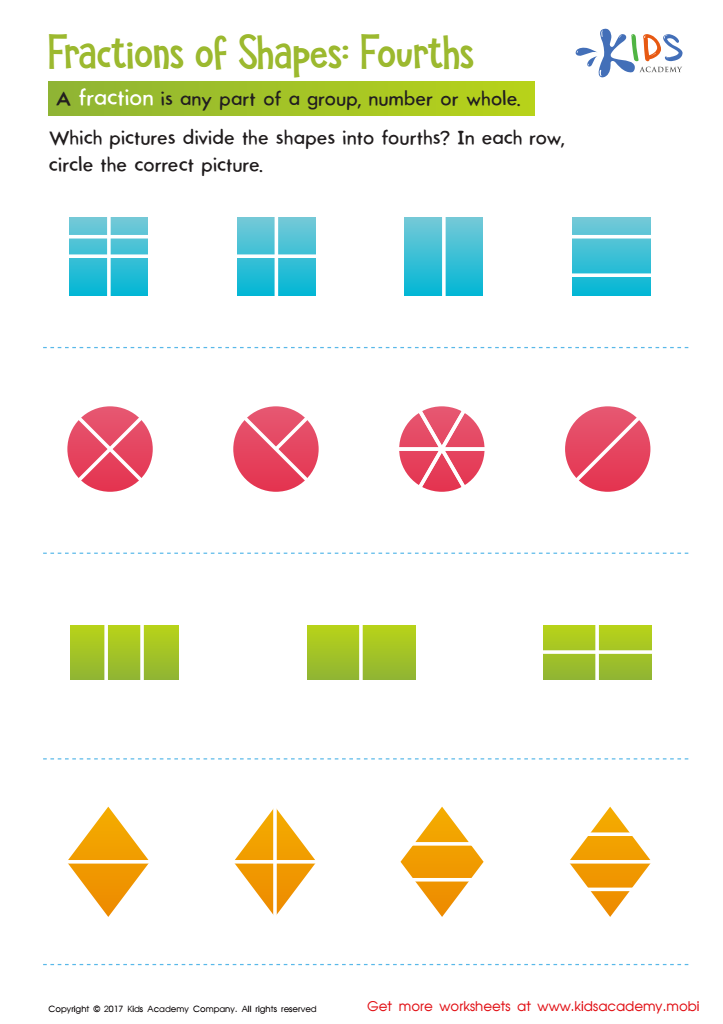
Fractions of Shapes Worksheet








Recognizing shapes is a fundamental skill in early childhood education that lays the groundwork for further mathematical understanding. For 7-year-olds, engaging with geometry helps enhance spatial awareness, critical thinking, and problem-solving abilities. Parents and teachers should care about this because recognizing shapes comes into play in everything from literacy—understanding patterns in letters—to science, where shapes help describe the world around us.
Additionally, the ability to identify and interpret shapes fosters creativity; as children visualize and manipulate different forms, they develop imaginative and artistic skills. By incorporating shape recognition into activities, kids can enhance their cognitive development and boost confidence in their analytical capabilities.
Extra challenge tasks in geometry encourage students to explore shapes more deeply, allowing them to make connections and apply knowledge in practical and meaningful ways. Furthermore, teaching these skills builds a strong foundation for later mathematical concepts, such as fractions and measurements, which are crucial for future academic success.
Incorporating shape recognition into learning encourages cooperative interaction and communication, building social skills as children discuss and share their discoveries. Parents and teachers who prioritize this can support holistic development, laying the groundwork for lifelong learning and a positive attitude toward mathematics.