Understanding measurements Extra Challenge Measurement Worksheets for 7-Year-Olds
3 filtered results
-
From - To
Dive into the fascinating world of measurements with our "Understanding Measurements Extra Challenge Measurement Worksheets for 7-Year-Olds." Tailored to spark curiosity and boost comprehension, these printable activities aid children in mastering various measurement concepts, from length and weight to volume and time. Each worksheet presents engaging, hands-on challenges that encourage kids to explore and apply measurement skills in real-world contexts. Designed for young learners, our resources make learning efficient and fun. Perfect for home or classroom use, these worksheets transform abstract ideas into practical knowledge, ensuring a solid foundation in mathematics for your 7-year-old. Explore and learn today!
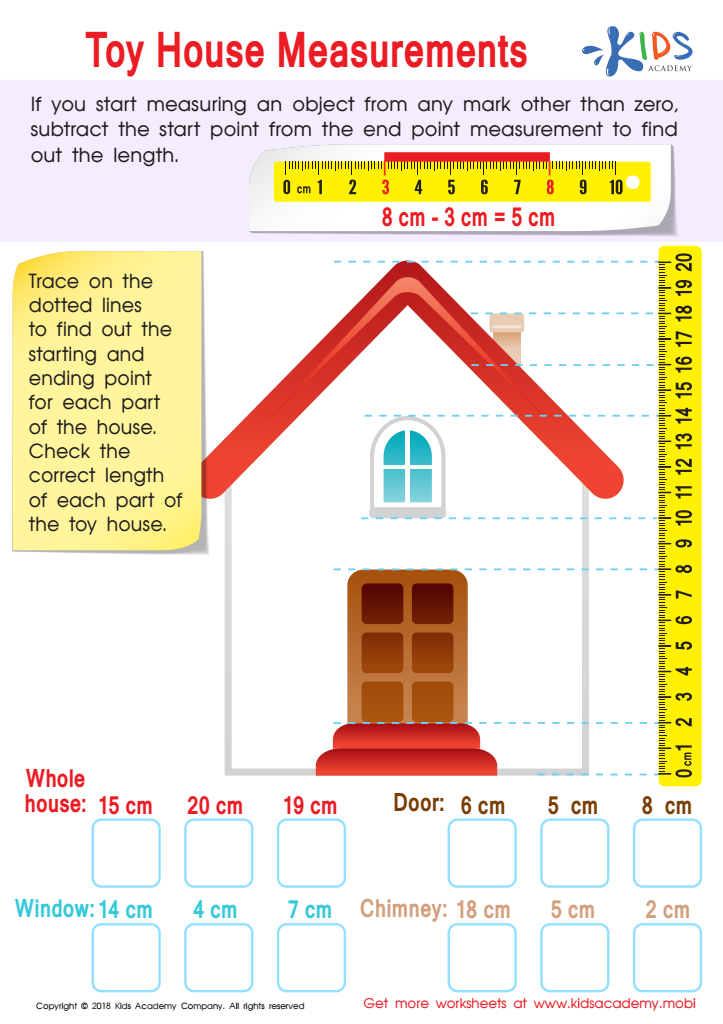
Toy House Measurements Worksheet
 Assign to My Students
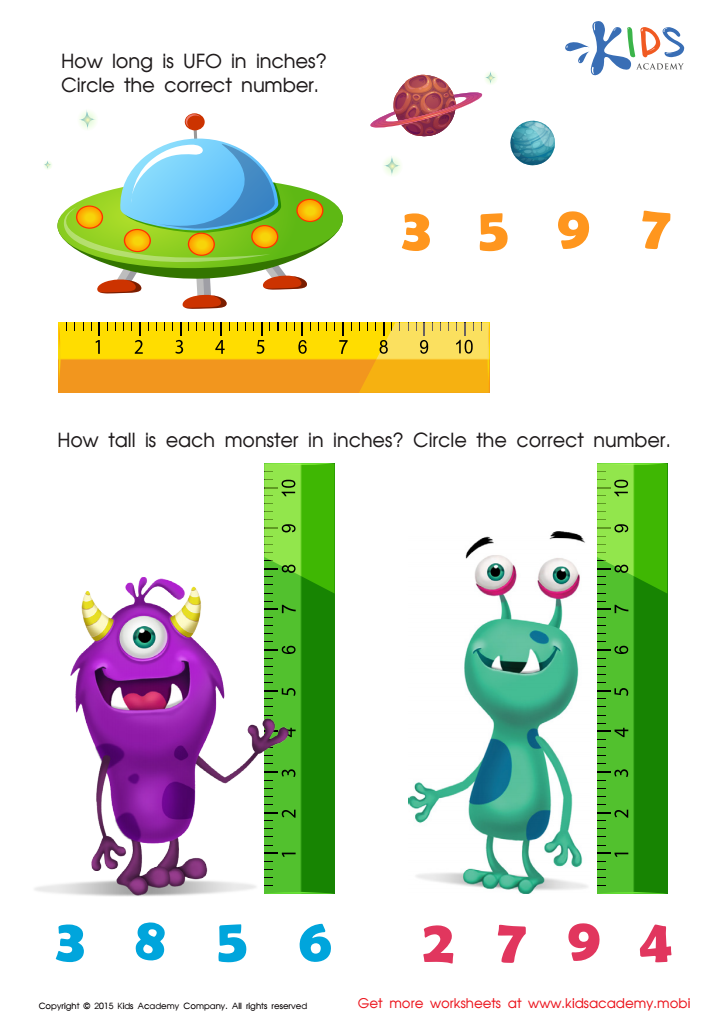
Measuring in Inches Worksheet
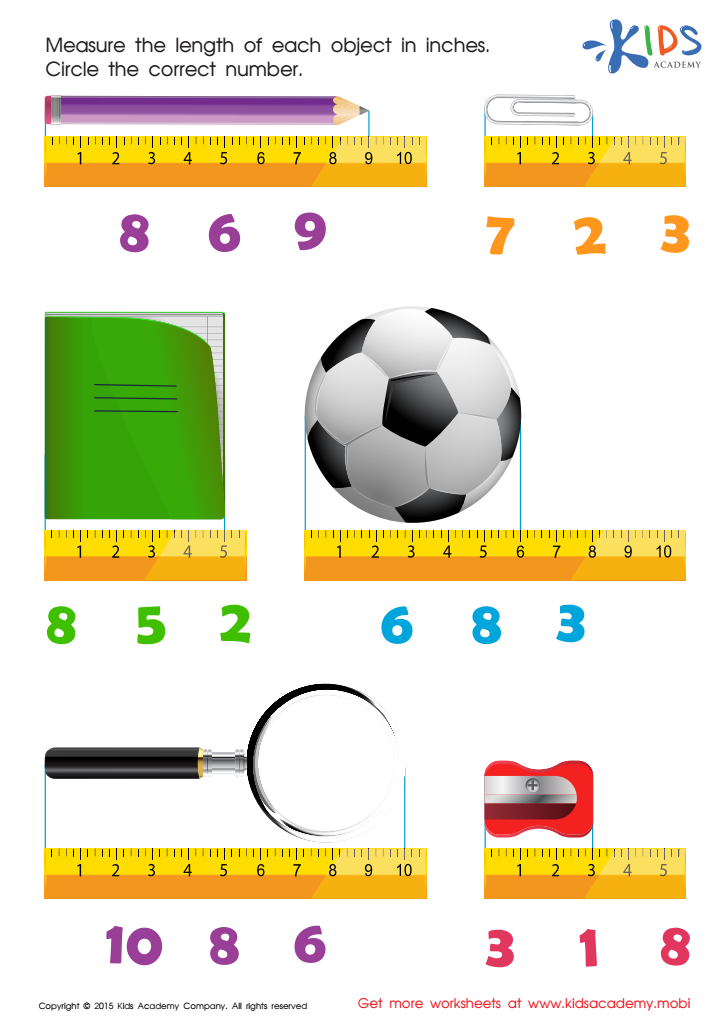
Learning measuring objects in inches Worksheet








Understanding measurements is a essential skill for 7-year-olds, and parents and teachers should prioritize it for several compelling reasons. Measurements are not just critical for academic success but also for practical, everyday life applications. When children learn about measurements, they become more proficient in math, opening up opportunities for advanced learning in subjects like science, engineering, and technology.
At the age of seven, children are naturally curious and eager to understand the world around them. Teaching them about measurements taps into this curiosity, making learning fun and engaging. Activities like measuring ingredients for a recipe or determining the length of a room with a ruler can be both educational and enjoyable, providing hands-on experience that reinforces learning.
Measurements also help children develop critical thinking and problem-solving skills. For example, understanding how to measure lengths, weights, and volumes can aid in reasoning tasks like comparing objects or dividing items equally. These skills are foundational and will benefit children in future complex tasks, such as budgeting or planning projects.
Lastly, familiarizing young children with measurements enhances their sense of independence and competence. They learn to manage real-world tasks effectively, like following simple recipes or decorating their living space, fostering confidence and autonomy. For these reasons, an extra focus on measurement is not just beneficial but crucial in shaping well-rounded, capable future adults.