Recognizing shapes Extra Challenge Geometry Worksheets for Ages 8-9
3 filtered results
-
From - To
Explore our "Recognizing Shapes Extra Challenge Geometry Worksheets" designed specifically for ages 8-9! These engaging worksheets provide a fun and interactive way for children to develop their spatial awareness and shape recognition skills. Each worksheet features unique challenges that encourage critical thinking, including identifying, sorting, and comparing various shapes. Perfect for enhancing classroom learning or home practice, these materials cater to diverse learning styles. With vibrant illustrations and thought-provoking exercises, young learners will be captivated while reinforcing essential geometry concepts. Boost your child's math confidence and creativity—download the worksheets today and watch them shine in their geometry adventures!
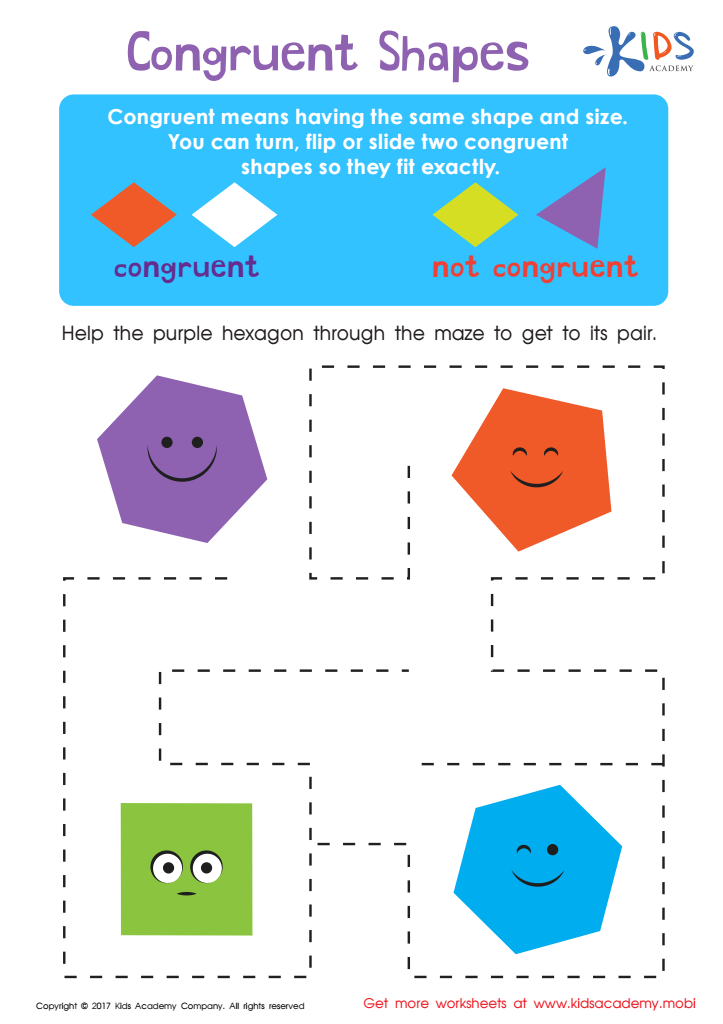
Congruent Shapes Worksheet
 Assign to My Students











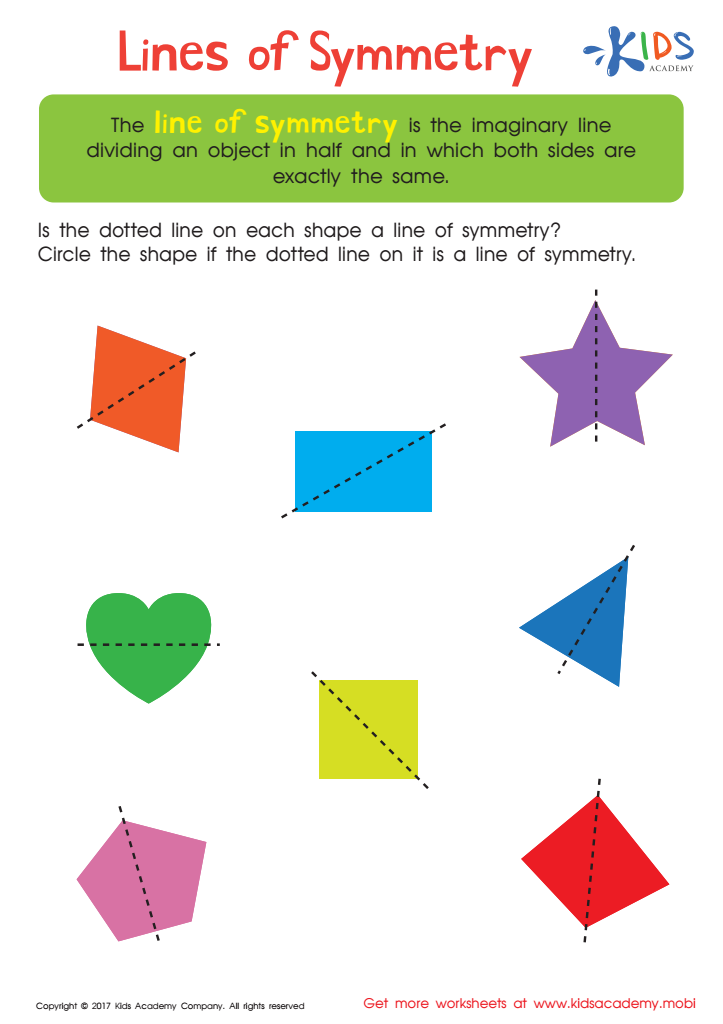
Lines of Symmetry Printable
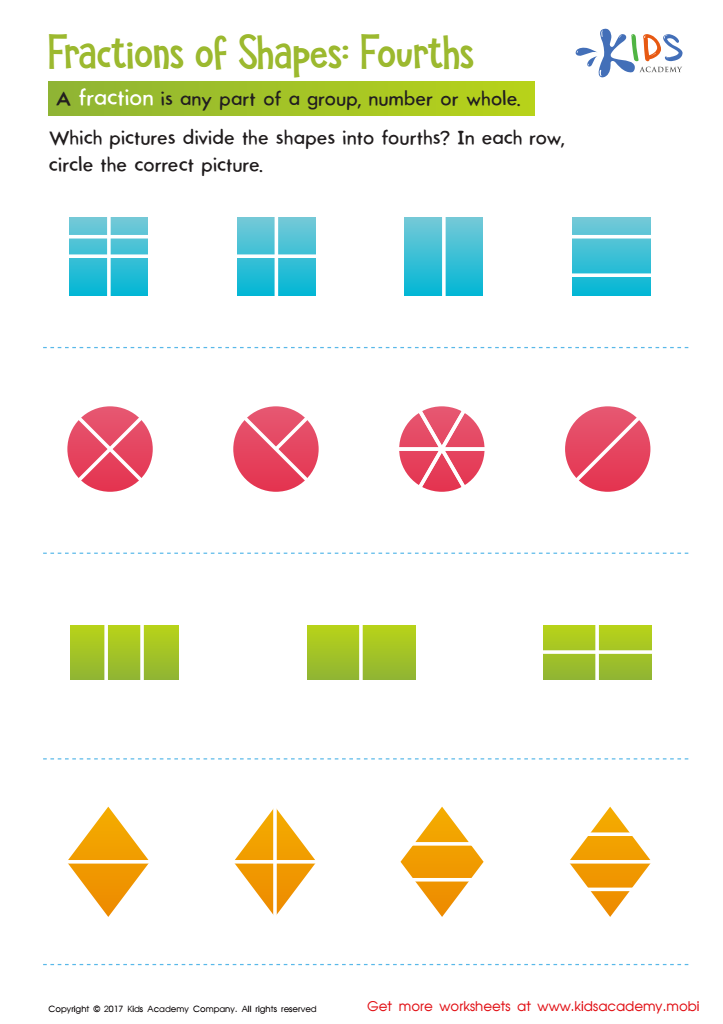
Fractions of Shapes Worksheet








Recognizing shapes is a fundamental building block in early education, particularly for children aged 8-9 as they transition from basic recognition to more complex geometric concepts. Parents and teachers should prioritize this skill because it lays the groundwork for critical thinking, spatial reasoning, and problem-solving abilities.
Firstly, understanding shapes enhances a child's ability to visualize and manipulate objects, which is crucial in daily life and various scientific domains. Mastery of shapes conditions students to interpret data, engage in design, and develop mathematical reasoning skills.
Additionally, recognizing shapes can boost creativity. As children explore patterns and construct their own designs, they harness their imagination, unlocking pathways to careers in arts and sciences. Furthermore, engaging with geometry fosters collaboration in activities that require teamwork, thereby strengthening communication skills.
From a developmental perspective, grappling with geometric concepts encourages cognitive growth, allowing young learners to classify, compare, and analyze different shapes. This supports their overall academic performance, as geometry is interlinked with other subjects like art, science, and technology.
Ultimately, focusing on recognizing shapes not only equips children with essential skills for their current education but also prepares them for future challenges in our increasingly complex world. Engaging students with positive and interactive experiences makes learning geometry enjoyable and effective.