Memorization skills Extra Challenge Math Worksheets for Ages 8-9
3 filtered results
-
From - To
Boost your child's memorization skills with our engaging Extra Challenge Math Worksheets designed specifically for ages 8-9! These printable resources provide a variety of fun and stimulating math problems that help reinforce essential concepts while enhancing memory retention. Each worksheet encourages young learners to practice their mathematics skills, from addition and subtraction to more complex numerical challenges, all while improving their ability to remember and apply what they've learned. Perfect for classroom settings or at-home practice, our worksheets promote critical thinking and problem-solving skills. Download now to unlock a world of math mastery and make learning an enjoyable adventure!
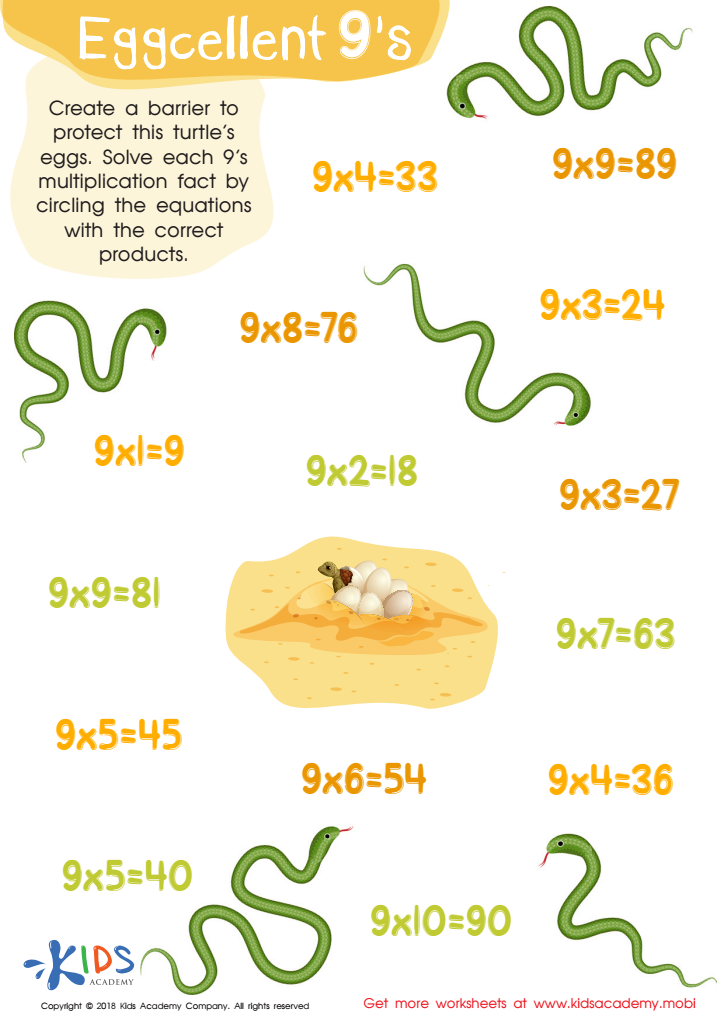
Eggcellent 9’s Worksheet
 Assign to My Students
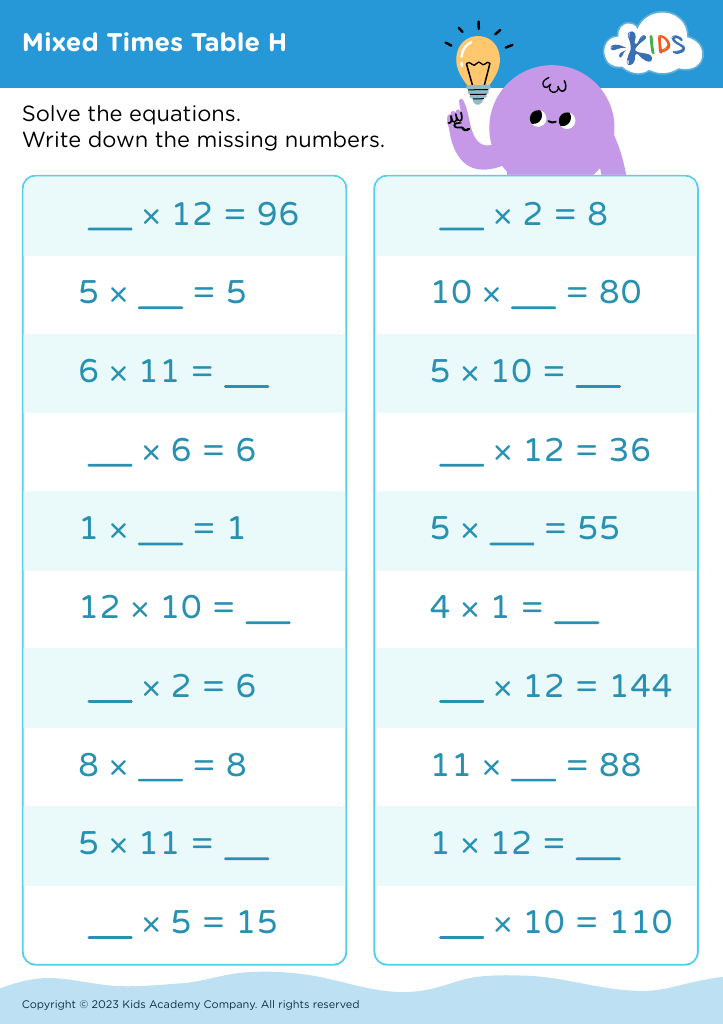
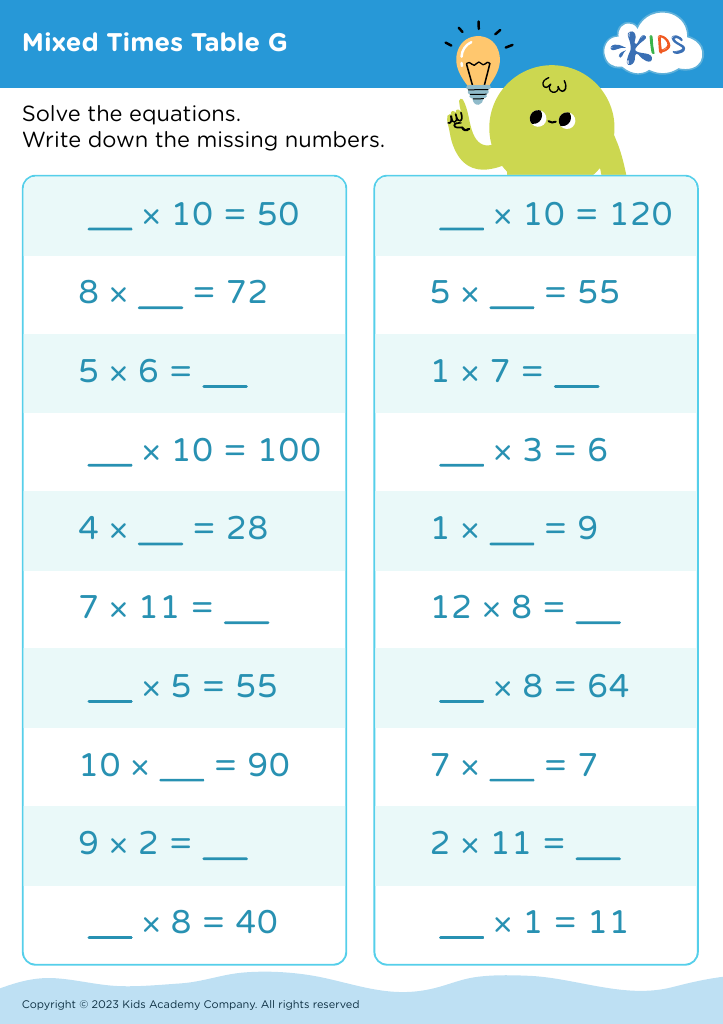







Memorization skills in math are crucial for children aged 8-9, as they serve as a foundation for more complex mathematical concepts. During this developmental stage, children are transitioning from concrete understanding to abstract reasoning, and strong memorization can enhance their problem-solving abilities. By mastering basic math facts, such as addition, subtraction, multiplication, and division, students can perform calculations more quickly and efficiently, which fosters confidence in their mathematical abilities.
Parents and teachers should also recognize that memorization supports cognitive development. Engaging in memorization activities enhances memory retention, improves concentration, and reinforces learning pathways in the brain. This can benefit students beyond math, as strong memorization skills are applicable across various subjects.
Furthermore, building good memorization habits now can ease the learning curve for future math topics, including fractions, decimals, and algebra. It also reduces anxiety during tests and classroom activities, allowing students to focus on comprehension and application rather than struggling with basic facts. By prioritizing memorization in instruction and at home, parents and teachers can empower children to become more self-sufficient learners, ultimately fostering a positive attitude towards math and academic achievement.