Problem-Solving Skills Extra Challenge Math Worksheets for Ages 8-9 - Page 2
25 filtered results
-
From - To
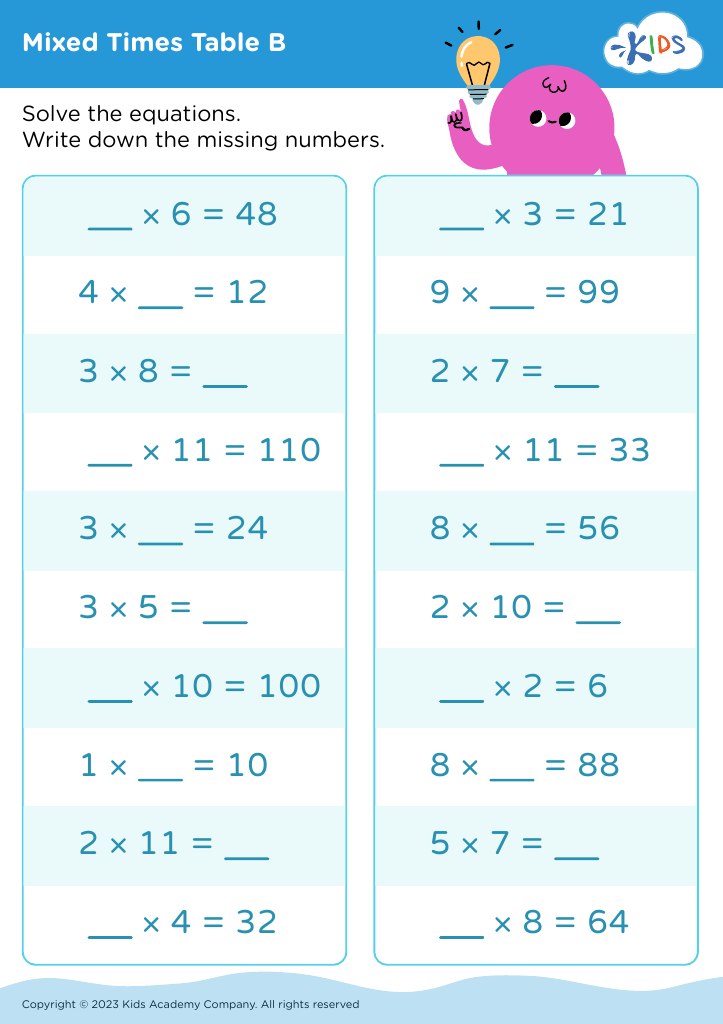








Problem-solving skills are crucial for children, especially between the ages of 8 to 9, as they form the foundation for advanced thinking and critical analysis. Engaging in Problem-Solving Skills Extra Challenge Math can significantly enhance a child's cognitive development. This age group is particularly receptive to challenge because they are transitioning from concrete operational thought to more abstract reasoning.
Teachers and parents should care about fostering these skills because they encourage creativity, logical reasoning, and perseverance. Not only do these challenges help students easily grasp mathematical concepts, but they also prepare them for real-life situations where critical thinking is essential. By solving complex problems, children learn to approach challenges methodically, break them down into manageable parts, and develop effective strategies—all invaluable skills beyond the classroom.
Additionally, the collaborative nature of problem-solving can improve communication skills and foster teamwork. Encouraging students to tackle tougher math problems cultivates a growth mindset, teaching them that abilities can improve with effort and practice. Ultimately, promoting problem-solving skills during these formative years lays the groundwork for academic success and nurtures a lifelong love of learning.








