Alphabet Recognition Extra Challenge Letter Recognition Worksheets for 8-Year-Olds
3 filtered results
Difficulty Level
Grade
Age
-
From - To
Subject
Activity
Standards
Enhance your 8-year-old's alphabet mastery with our Alphabet Recognition Extra Challenge Worksheets! Specifically designed to push young learners to excel, these engaging exercises offer a range of complex letter recognition activities to sharpen their skills. From identifying letters within intricate designs to advanced matching exercises, these worksheets foster a love for learning while promoting critical thinking and fine motor skills. Perfect for classroom or home use, our worksheets are an essential tool for educators and parents aiming to solidify alphabet knowledge. Elevate your child's literacy journey with our fun and challenging letter recognition resources today!
Favorites
With answer key
Interactive
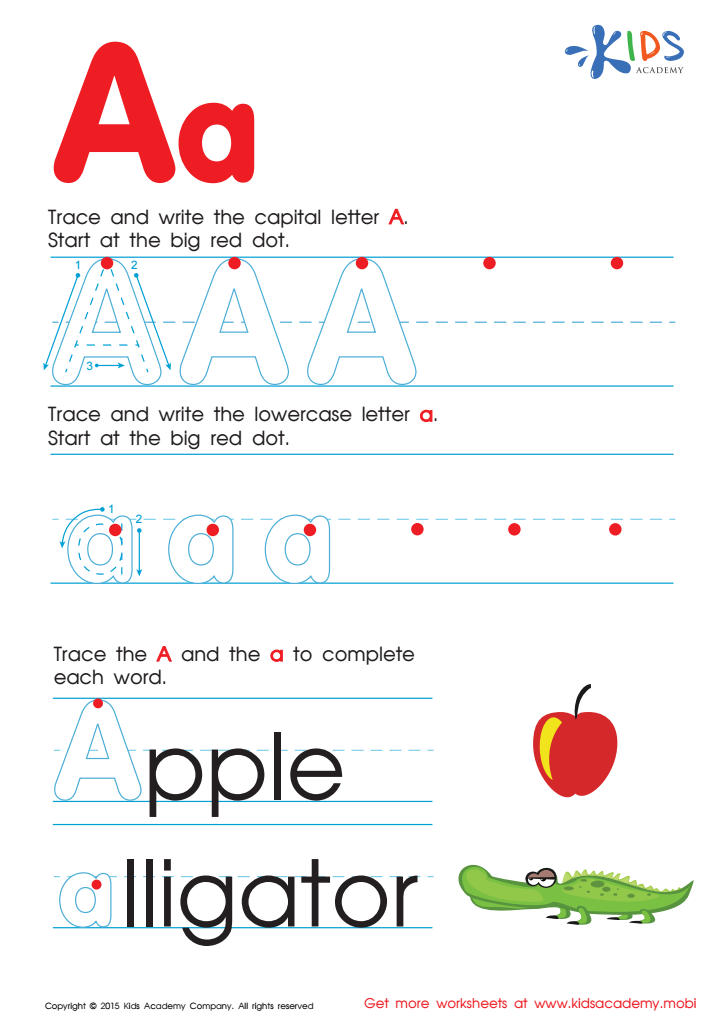
Letter A Tracing Page
Trace and write the letter "A"! Start with the big red dot, then do the capital and lowercase versions. Then write it again with two words - apple and alligator. Download more tracing worksheets at Kids Academy.
 Assign to My Students
Letter A Tracing Page
Worksheet
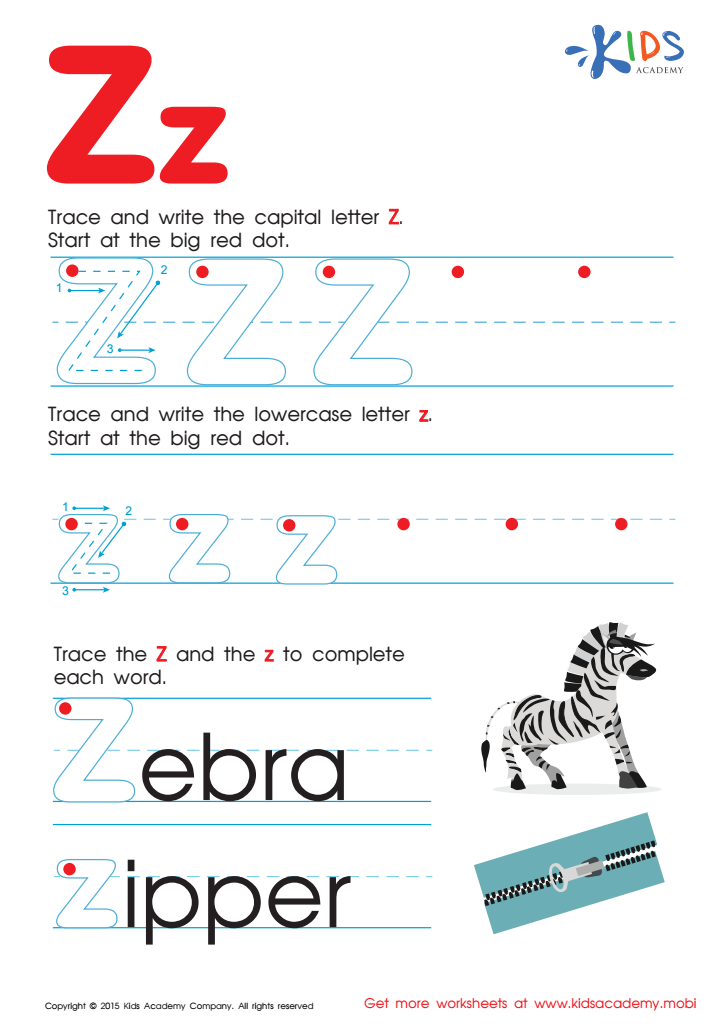
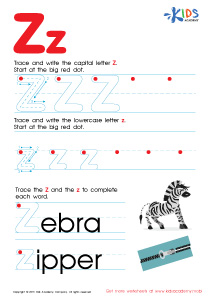
Letter Z Tracing Page
Trace and write capital "Z" and lowercase "z". Complete words "zebra" and "zipper". Be attentive and have fun! (80 words)
Letter Z Tracing Page
Worksheet
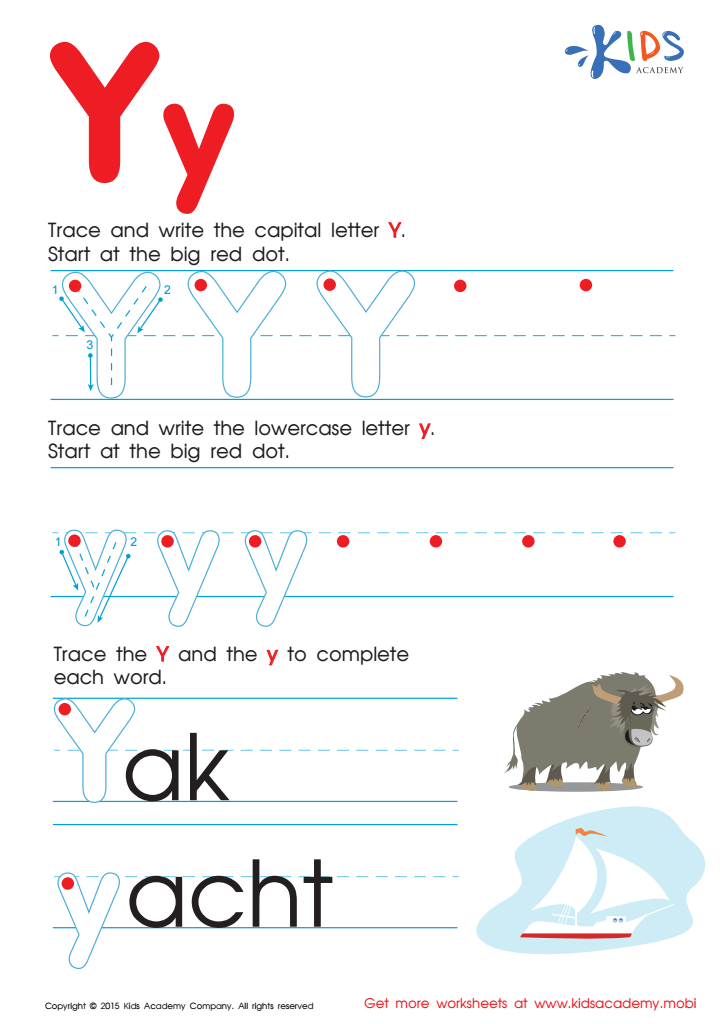
Letter Y Tracing Page
Trace the capital letter "Y" on the red dot, then trace and write the lowercase letter. Complete the words to help the Yak walk and the yacht swim. More worksheets at Kids Academy.
Letter Y Tracing Page
Worksheet
Join Kids Academy for Free
Who is primarily going to use this learning content?








Alphabet recognition is a foundational skill that significantly impacts a child's learning journey, even at the age of 8. Though most children typically master basic alphabet recognition between the ages of 4 and 6, additional focus on letter recognition for 8-year-olds ensures that foundational literacy skills are solidified. The extra challenge sharpens their ability to distinguish between similar-looking letters, enhances their reading fluency, and sustains their interest in complex texts.
8-year-olds transitioning from early readers to more advanced texts face sophisticated sentences requiring seamless decoding. Proficient alphabet recognition supports smoother reading experiences, facilitating comprehension and expanding vocabulary. Struggling with letter recognition hinders their confidence, creates frustration, and can negatively impact their overall attitude toward learning.
Extra challenges in letter recognition also provide a platform to identify and address learning difficulties such as dyslexia early on. Tailored interventions at this stage can profoundly benefit affected children, preventing prolonged academic struggles.
Furthermore, recognizing the importance of alphabet mastery can cultivate lifelong learning skills, including better spelling, writing, and communication, thus laying a robust groundwork for academic success. Parents and teachers can use playful and engaging activities to make reinforcement enjoyable, ensuring children view learning as a rewarding and entertaining endeavor.